English
 Le français
 Türkçe




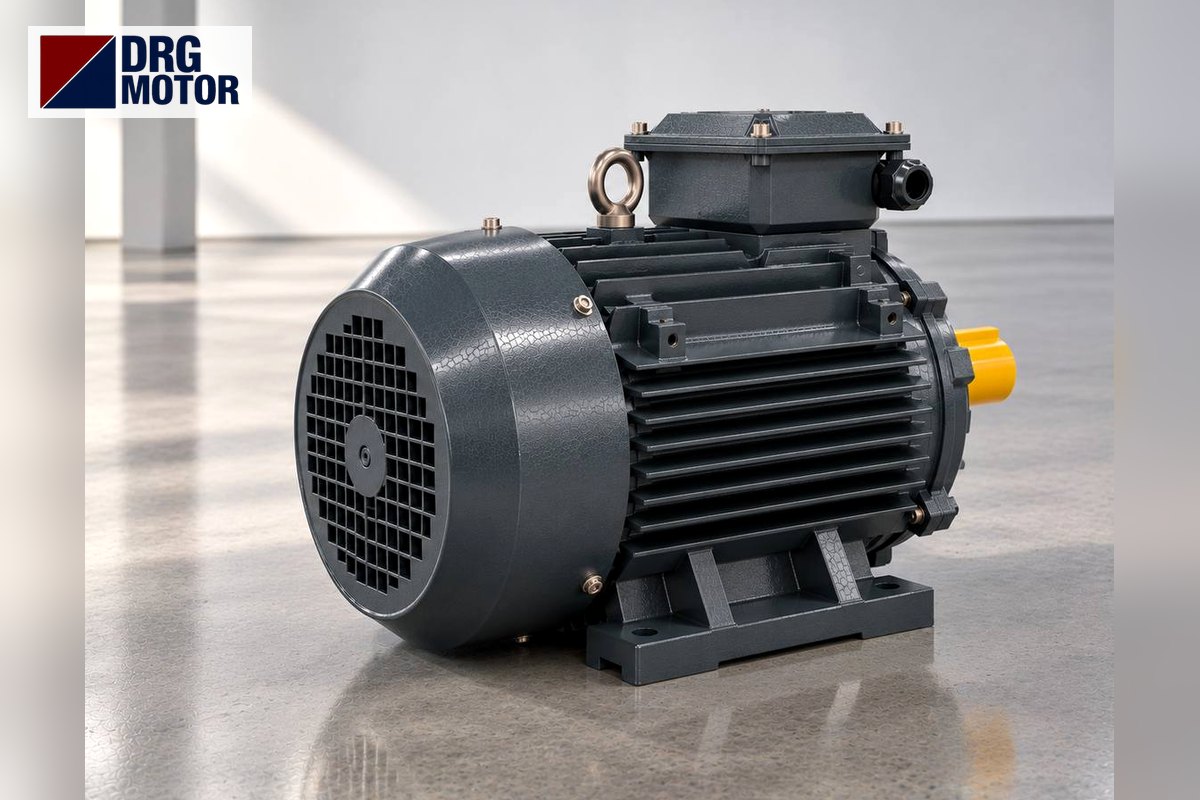

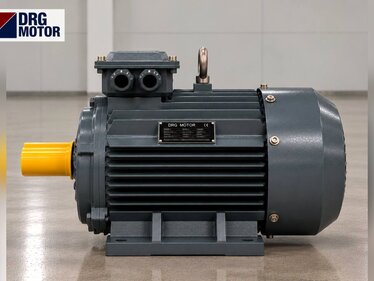
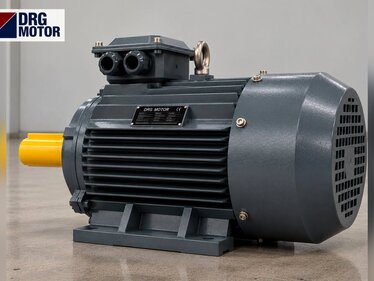
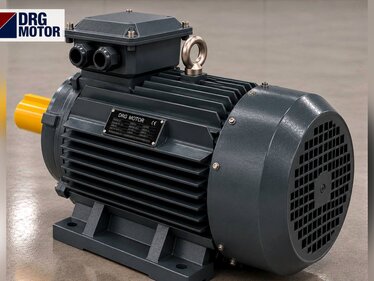
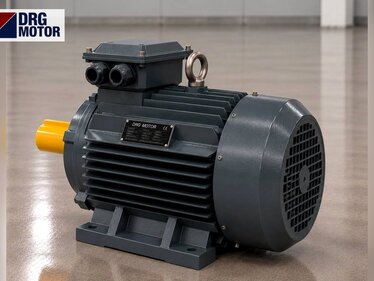
The core difference between asynchronous and synchronous motors is speed behaviour: in an asynchronous motor the rotor turns slightly below the synchronous speed of the rotating field, and this difference is called slip. In a synchronous motor the rotor runs exactly at synchronous speed, locked to the mains frequency. Every three-phase product in the DRG Motor range is of the asynchronous (squirrel-cage) type.
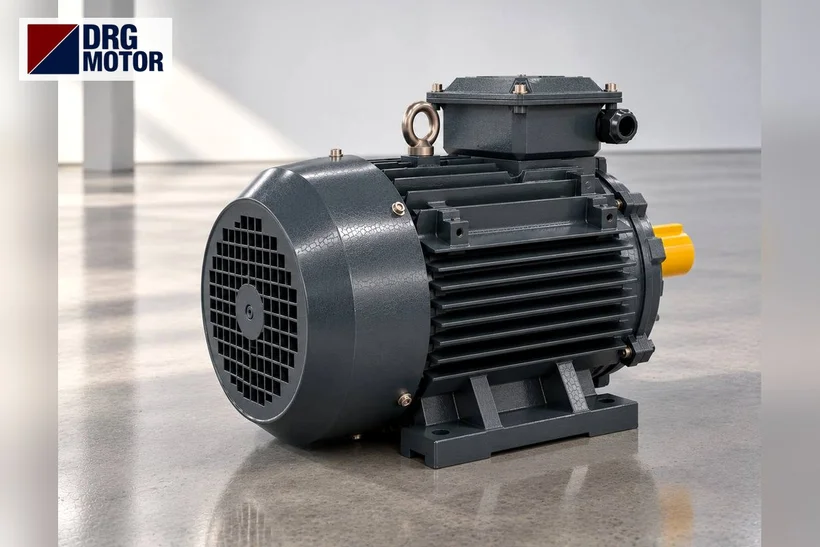
DRG Motor is a manufacturer, supplier and seller of electric motors. The models we supply and sell are listed by power and speed in the online motor shop, and the same motors appear together in the three-phase asynchronous electric motors category.
What is an asynchronous motor and how does it turn?
When three-phase voltage is applied to the stator windings, a magnetic field rotating at synchronous speed is created. This field induces voltage in the rotor cage bars; the induced current creates its own field and the rotor starts to turn. For the rotor to keep turning there must always be a speed difference between the field and the rotor: if the rotor reached full synchronous speed, induction would stop and torque would fall to zero. That necessary speed difference is slip, and it is the reason for the name asynchronous (also called an induction motor).
How is it different from a synchronous motor?
A synchronous motor carries separate excitation (permanent magnets or an external field) and locks to the rotating field, running at exactly synchronous speed; the speed stays constant regardless of load and there is no slip. In an asynchronous motor the speed varies slightly with load: as load rises, slip grows a little and speed drops a little. The practical distinctions are:
- Speed: constant in synchronous (equal to synchronous speed), slightly below it and load-dependent in asynchronous.
- Rotor: a simple cage with no excitation in asynchronous; a magnet or excited rotor in synchronous.
- Starting: an asynchronous motor starts itself directly from the mains; many synchronous types need an extra starting arrangement.
- Maintenance and cost: the cage asynchronous motor is simple and robust and is the most common industrial drive.
Click to see current electric motor prices and order nowSEE PRICES →
Why does slip matter? Synchronous speed calculation
The synchronous speed of the rotating field is ns = 120 · f / p, where f is frequency (Hz) and p is the pole number. On a 50 Hz supply this gives 3000, 1500 and 1000 rpm for 2, 4 and 6 poles. The nameplate (load) speed is a little below this value, the difference being the slip. The table below compares synchronous speed with nameplate speed on a few DRG asynchronous models.
| Model | Poles | Synchronous speed | Load speed (nameplate) |
|---|---|---|---|
| DRG-112M-2-AL | 2 | 3000 rpm | 2905 rpm |
| DRG-112M-4-AL | 4 | 1500 rpm | 1450 rpm |
| DRG-132M1-6-AL | 6 | 1000 rpm | 968 rpm |
On every model the load speed is slightly below the synchronous speed; for the 4-pole DRG-112M-4, synchronous is 1500 rpm while the nameplate speed is 1450 rpm, a slip of about 3.3%. Slip under load is normal and is required for the motor to produce torque.
Which DRG asynchronous model for which power?
As the subject is the asynchronous motor, let us give examples from our own range. In the 4 kW and 7.5 kW class at 1500 rpm (4 poles), the aluminium and cast iron asynchronous models are: DRG-112M-4-AL, DRG-132M-4-AL, DRG-112M-4-GG and DRG-132M-4-GG. Electrical values are independent of the housing material; aluminium is light and easy to mount, cast iron offers a sturdier structure. Use the electric motor calculator and the motor current chart to check power and current.
Do you sell synchronous motors?
Honestly, no: the DRG standard range does not include permanent-magnet or excited synchronous motors. If your application genuinely needs a synchronous motor (speed constant regardless of load), our three-phase asynchronous products will not meet that specific need. For the vast majority of industrial drives, however, the most suitable solution is the three-phase asynchronous motor; where speed stability is critical, an asynchronous motor combined with a drive (frequency control) is usually considered. Contact us to clarify your requirement.
Send a photo of your current motor nameplate and we will find the suitable DRG model together.Send on WhatsApp
If you are not sure whether your current motor is asynchronous, we can review its nameplate and choose the right DRG model together. You can compare all power and speed options and current prices in the shop.
See the three-phase asynchronous motor models and current prices in the shopSEE PRICES
Frequently asked questions
Are DRG motors synchronous or asynchronous?
All of them are asynchronous (three-phase squirrel-cage induction) motors. The rotor turns slightly below synchronous speed; slip under load is normal.
Is slip a bad thing?
No. Slip is required for an asynchronous motor to produce torque. If the rotor reached full synchronous speed, induction and therefore torque would vanish. Slip grows a little with load and is very small at no load.
Why do synchronous speed and nameplate speed differ?
Synchronous speed (n = 120·f/p) is the speed of the rotating field; the nameplate speed is the real rotor speed under load, which is lower by the slip. For 4 poles synchronous is 1500 rpm and a typical nameplate speed is around 1450 rpm.
What if I need a perfectly constant speed?
We do not sell standard synchronous motors; but where speed stability matters, combining a three-phase asynchronous motor with a drive (frequency control) is a common solution. Share your requirement and we will point you the right way.
Electric Motors Related to This Topic — Models and Current Prices
Suitability is not decided by power alone: compare the speed, voltage, mounting, shaft and fixing dimensions of your machine with the product data; if unsure, send us the nameplate of your current motor.

4 kW Three-Phase Motor 1500 rpm – DRG-112M-4 Aluminium
- 4 kW · 1500 rpm (4 poles)
- Aluminium frame · IEC 112M
- Shaft: 28 × 60 mm
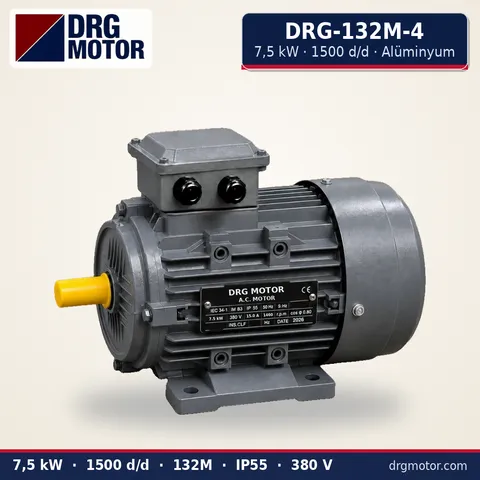
7.5 kW Three-Phase Motor 1500 rpm – DRG-132M-4 Aluminium
- 7.5 kW · 1500 rpm (4 poles)
- Aluminium frame · IEC 132M
- Shaft: 38 × 80 mm
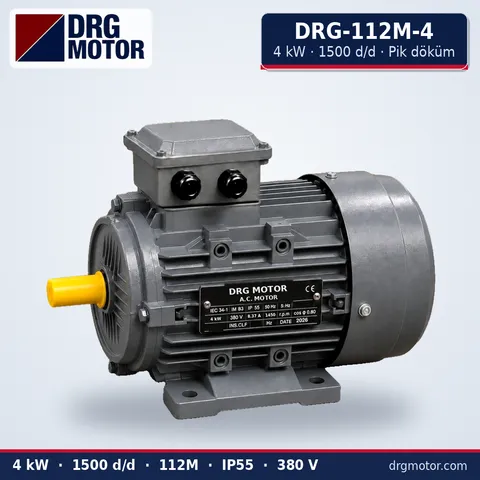
4 kW Three-Phase Motor 1500 rpm – DRG-112M-4 Cast Iron
- 4 kW · 1500 rpm (4 poles)
- Cast iron frame · IEC 112M
- Shaft: 28 × 60 mm
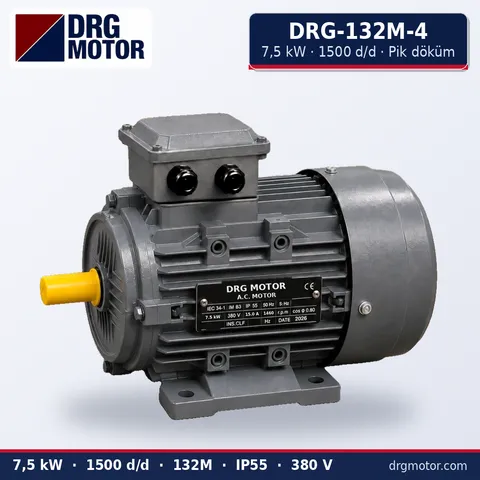
7.5 kW Three-Phase Motor 1500 rpm – DRG-132M-4 Cast Iron
- 7.5 kW · 1500 rpm (4 poles)
- Cast iron frame · IEC 132M
- Shaft: 38 × 80 mm