English
 Le français
 Türkçe




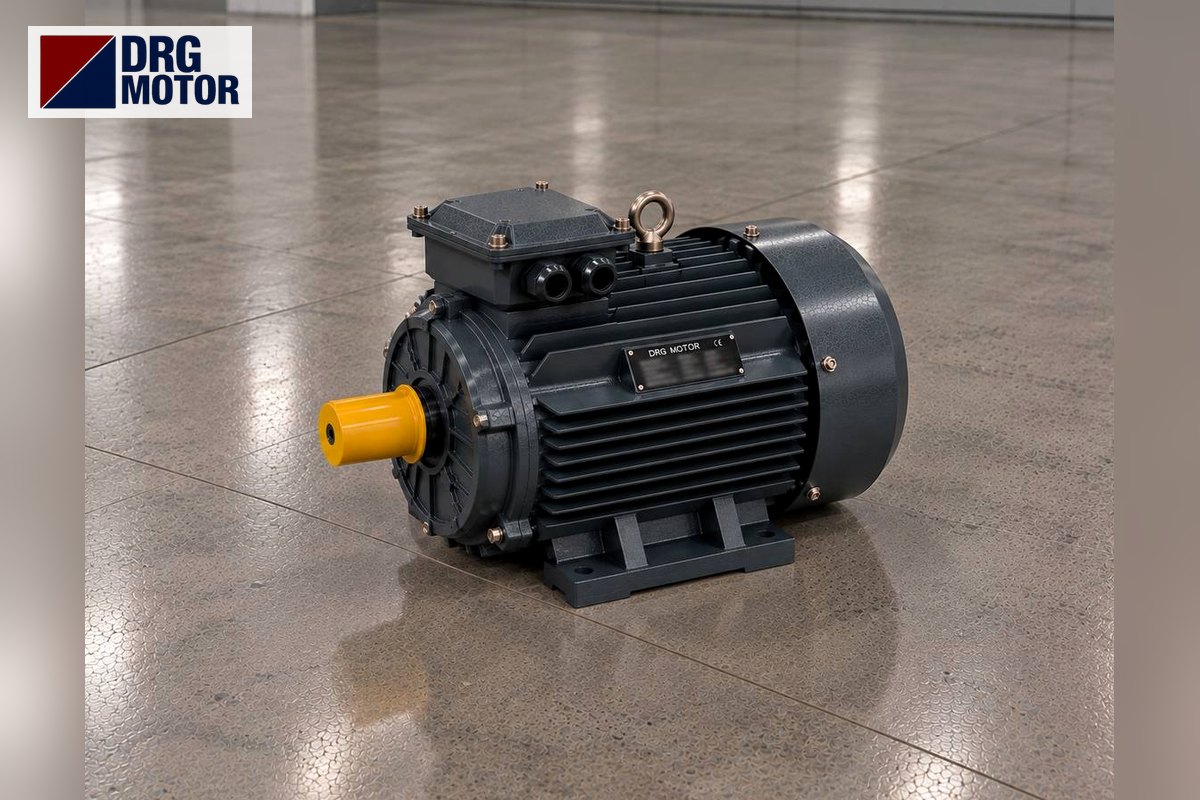

Yes, a three-phase asynchronous motor wound for 50 Hz will also turn on a 60 Hz supply; however, its speed rises by about 20%, and unless this is managed together with the voltage it causes torque and current problems. In short, the motor runs — but "running" and "running correctly" are not the same thing.
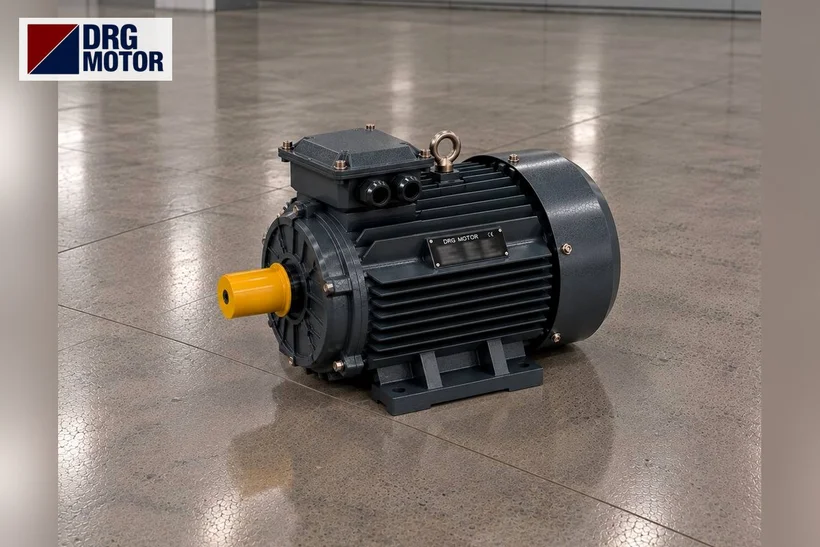
DRG Motor is a manufacturer, supplier and seller of electric motors. You can review the three-phase models you are considering for 50/60 Hz use by speed and power in the online motor shop, and see the same products grouped in the three-phase asynchronous electric motors category.
Short answer: it runs, but it depends on speed and voltage
An asynchronous motor's speed is directly tied to the supply frequency. Applying 60 Hz instead of 50 Hz raises the rotating field speed by 20%, and the shaft speed rises by roughly the same amount. The motor physically turns; the issue is not whether it spins but what voltage feeds it and what you expect from the shaft. That is why a one-word answer to "will it run on 60 Hz?" falls short.
Why does speed rise 20% at 60 Hz?
Synchronous speed is set by pole count and frequency: n = 120 · f / p. Since the pole count of a given motor is fixed, speed changes only with frequency. Going from 50 Hz to 60 Hz multiplies the frequency by 60/50 = 1.2, i.e. +20%. Examples:
- 2-pole motor: 3000 rpm synchronous at 50 Hz → 3600 rpm at 60 Hz.
- 4-pole motor: 1500 rpm synchronous at 50 Hz → 1800 rpm at 60 Hz.
The real shaft speed under load is slightly below the synchronous value, but the increase is still about 20%. When you drive a pump, fan or conveyor with the same motor at 60 Hz, your machine turns 20% faster — a real change that must be accounted for on the mechanical side.
What happens if the voltage does not rise proportionally?
An asynchronous motor's magnetic flux is set roughly by the voltage/frequency (V/f) ratio. If you raise the frequency from 50 to 60 Hz but leave the voltage the same (for example keep it at 400 V), the V/f ratio drops and the flux weakens. The result: speed rises, but the torque and pull-out torque the motor can produce fall and the magnetising balance is disturbed. Conversely, if you also raise the voltage proportionally at 60 Hz (about 480 V instead of 400 V), the V/f ratio is kept and the motor largely retains its torque capacity.
Where you cannot raise the voltage with the frequency, the current and heating behaviour also change; this is why, for 60 Hz use, matching the supply to the motor nameplate values is critical. The table below summarises the main differences between 50 Hz and 60 Hz.
| Quantity | 50 Hz | 60 Hz | Change |
|---|---|---|---|
| Supply frequency | 50 Hz | 60 Hz | +20% |
| Synchronous speed (2-pole) | 3000 rpm | 3600 rpm | +20% |
| Synchronous speed (4-pole) | 1500 rpm | 1800 rpm | +20% |
| Voltage to keep flux | 400 V | ~480 V | +20% (constant V/f) |
| If voltage stays the same, flux | nominal | drops | torque/pull-out falls |
Click to see current electric motor prices and order nowSEE PRICES →
How are power and torque affected?
The link between torque, power and speed is T = 9550 · P / n. Because speed rises at 60 Hz, if the voltage is also raised proportionally and the flux is kept, the power the motor can transmit may rise by roughly the same ratio; the strain at a given shaft torque, however, changes. If the voltage cannot be raised, the flux weakens, torque drops and the motor may struggle with the same load. So when moving to 60 Hz you must ask not only "will it turn?" but also "will it give the torque I need at this voltage?".
50 Hz and 60 Hz speeds across DRG models
Below, the 50 Hz nameplate speed and the approximate 60 Hz speed of some aluminium-housing DRG three-phase asynchronous models are compared. The values are approximate figures derived from the 60/50 ratio; the exact speed varies with load and supply voltage. The model codes link to the product page.
| Model | Poles / 50 Hz speed class | 50 Hz nameplate speed | 60 Hz approx. speed |
|---|---|---|---|
| DRG-132S1-2-AL | 2-pole / 3000 rpm | 2930 rpm | ~3520 rpm |
| DRG-132S-4-AL | 4-pole / 1500 rpm | 1460 rpm | ~1750 rpm |
| DRG-112M-4K-AL | 4-pole / 1500 rpm | 1460 rpm | ~1750 rpm |
| DRG-160M1-2-AL | 2-pole / 3000 rpm | 2945 rpm | ~3530 rpm |
| DRG-160M-4-AL | 4-pole / 1500 rpm | 1465 rpm | ~1760 rpm |
| DRG-132M-4K-AL | 4-pole / 1500 rpm | 1465 rpm | ~1760 rpm |
As the table shows, 2-pole models approach 3500 rpm at 60 Hz; for high-speed applications the bearings, balancing and the suitability of the connected machine to this speed should also be assessed. To check the required current and cable you can use the motor current chart and the electric motor calculator.
Export scenario: motors for 60 Hz countries
While the European and Turkish grid is 50 Hz, many countries use 60 Hz. When you ship a machine to a 60 Hz market there are two paths: choose a motor labelled from the start for that frequency and voltage, or feed a 50 Hz motor at 60 Hz with a suitable voltage. To decide what best fits the need, assess the destination country's voltage/frequency values (for example 60 Hz and its relevant voltage level) together with the speed the machine requires. The right choice lets the motor deliver the expected torque and speed smoothly on the target grid.
For dual-frequency needs, choosing a model whose nameplate carries both 50 and 60 Hz values, or whose winding suits the target voltage, is the soundest route; speed and torque are then clear from the outset.
What to watch on wiring and the nameplate
In every case the motor nameplate is decisive. The frequency, voltage, speed and current it states show which grid the motor was designed for. If you will use a 50 Hz labelled motor at 60 Hz, confirm that the supply voltage and the protection suit this new operating point.
Before any electrical work, switch off the supply, confirm it is de-energised, and let only qualified electrical personnel make the connection. Set protection values such as the thermal current from the rated current on the nameplate, not from memory. For the cable cross-section, the motor cable size calculator is a helpful guide.
Send a photo of your current motor nameplate and we will find the suitable DRG model together.Send on WhatsApp
Once you have picked the right model for 50/60 Hz use, you can compare all speed and power options with current prices through the shop.
See suitable DRG three-phase asynchronous motor models and current prices in the shop for your export or high-speed needSEE PRICES
Frequently asked questions
Is a 50 Hz motor damaged at 60 Hz?
With the supply voltage and protection set correctly, the motor can run at 60 Hz. The problem is the voltage staying out of step with the frequency and the shaft torque not being met under that condition; so the voltage/frequency balance and the current must be checked.
How much faster does the motor turn at 60 Hz?
Synchronous speed rises 20%: a 2-pole model goes from 3000 to 3600 rpm and a 4-pole model from 1500 to 1800 rpm synchronous. The real speed under load is slightly below this.
Must the voltage also be raised at 60 Hz?
To keep torque capacity the V/f ratio must stay constant, which means the voltage rises in proportion to the frequency (for example about 480 V instead of 400 V). If the voltage does not rise, the flux weakens and torque drops.
Which motor should I choose for export?
The best choice is a model labelled for that operating point, matched to the destination country's frequency and voltage and the speed the machine needs. A model with matching nameplate values delivers speed and torque smoothly on a 60 Hz grid.
Electric Motors Related to This Topic — Models and Current Prices
Suitability is not decided by power alone: compare the speed, voltage, mounting, shaft and fixing dimensions of your machine with the product data; if unsure, send us the nameplate of your current motor.
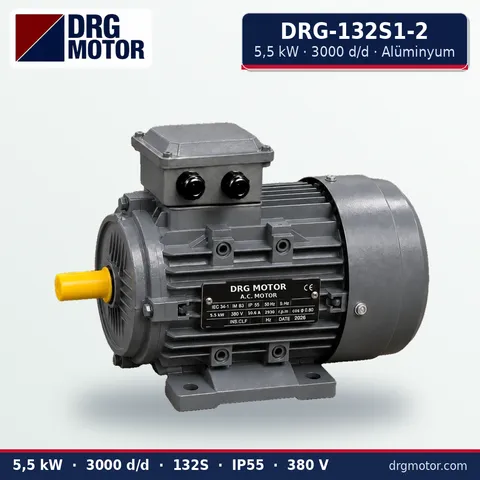
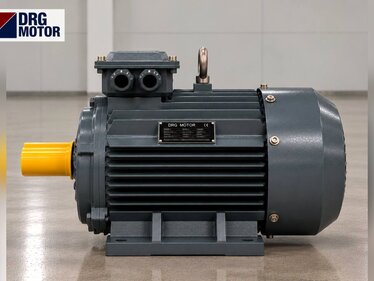
5.5 kW Three-Phase Motor 3000 rpm – DRG-132S1-2 Aluminium
- 5.5 kW · 3000 rpm (2 poles)
- Aluminium frame · IEC 132S
- Shaft: 38 × 80 mm
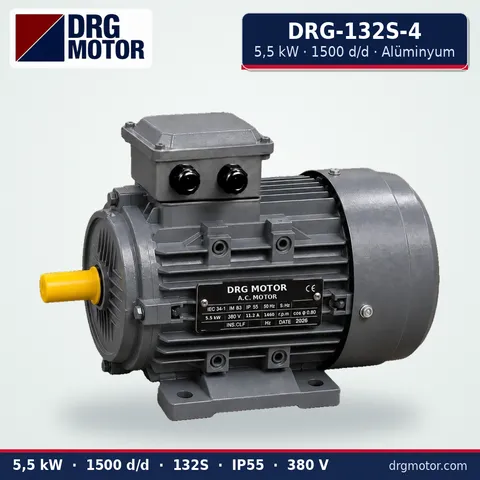
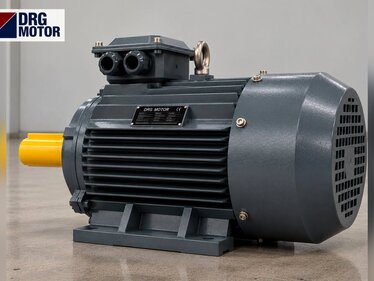
5.5 kW Three-Phase Motor 1500 rpm – DRG-132S-4 Aluminium
- 5.5 kW · 1500 rpm (4 poles)
- Aluminium frame · IEC 132S
- Shaft: 38 × 80 mm
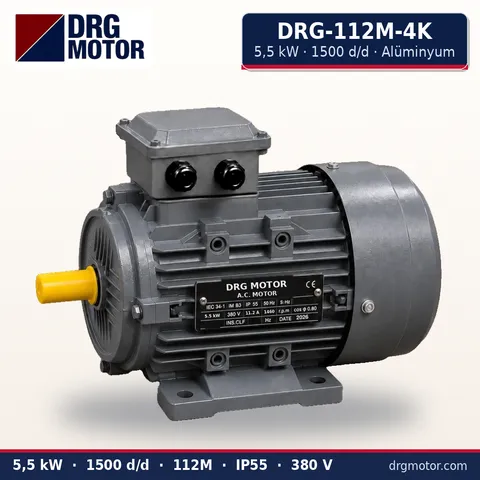
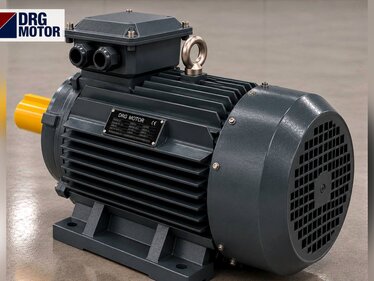
5.5 kW Compact Three-Phase Motor 1500 rpm – DRG-112M-4K Aluminium
- 5.5 kW · 1500 rpm (4 poles)
- Aluminium frame · IEC 112M
- Shaft: 28 × 60 mm
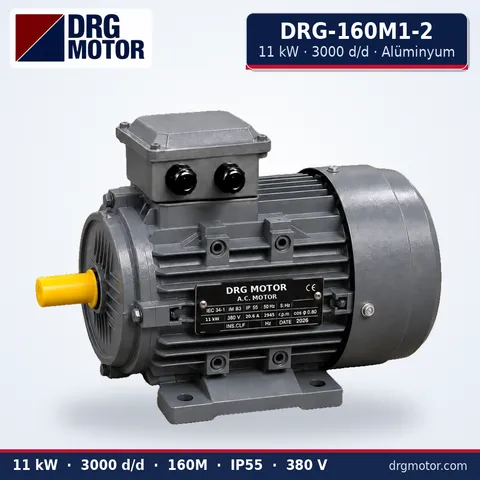
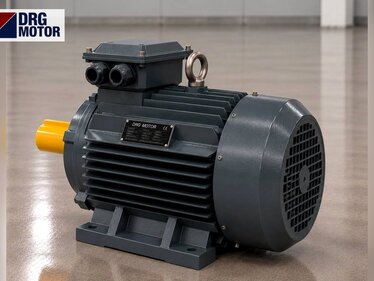
11 kW Three-Phase Motor 3000 rpm – DRG-160M1-2 Aluminium
- 11 kW · 3000 rpm (2 poles)
- Aluminium frame · IEC 160M
- Shaft: 42 × 110 mm
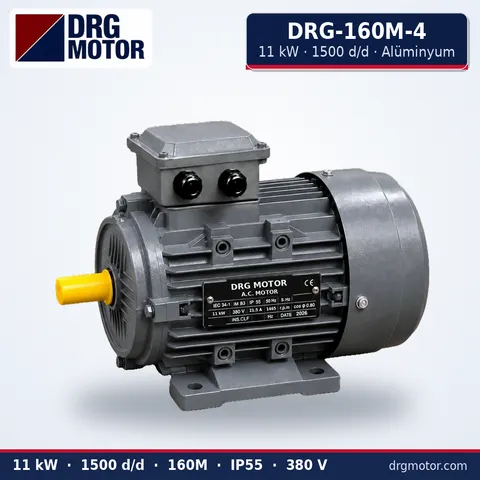
11 kW Three-Phase Motor 1500 rpm – DRG-160M-4 Aluminium
- 11 kW · 1500 rpm (4 poles)
- Aluminium frame · IEC 160M
- Shaft: 42 × 110 mm
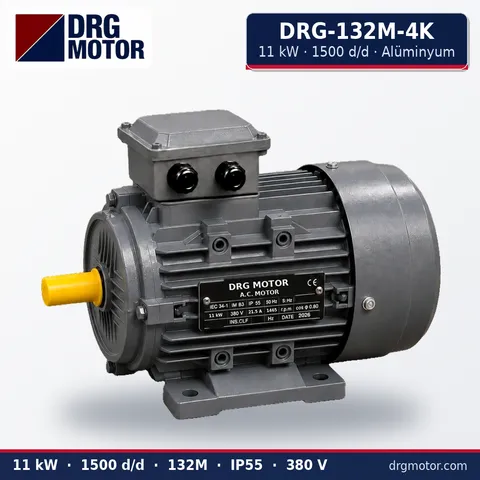
11 kW Compact Three-Phase Motor 1500 rpm – DRG-132M-4K Aluminium
- 11 kW · 1500 rpm (4 poles)
- Aluminium frame · IEC 132M
- Shaft: 38 × 80 mm