 English
 Le français
 Türkçe

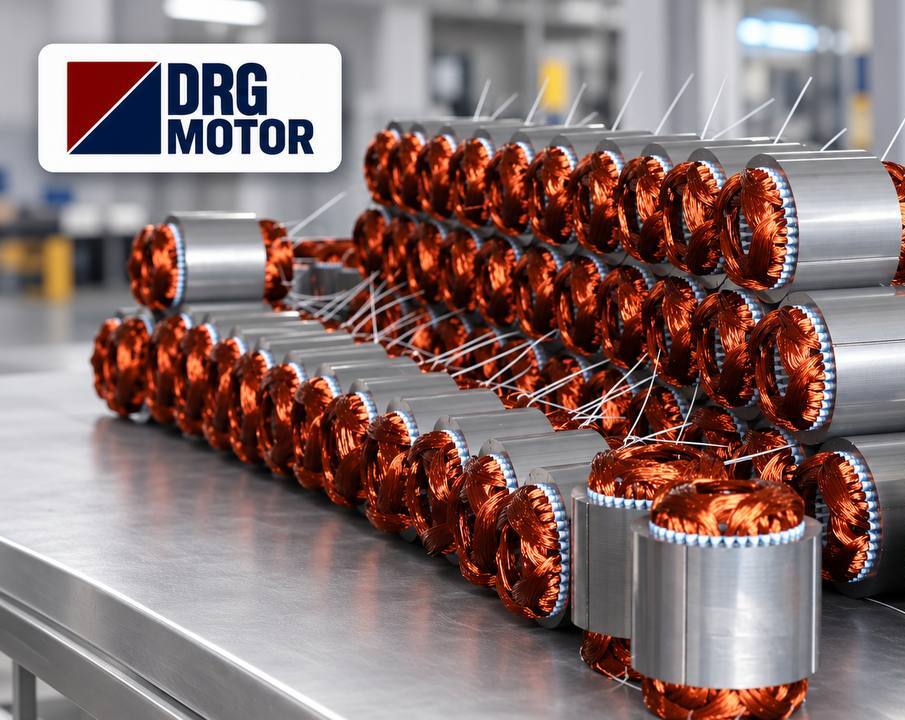

Take a burnt motor to an experienced rewinder and, more often than not, they will open the end shield, glance at the winding and say “this one went on phase loss” or “the bearing killed this one”. That is not intuition, it is a reading skill: a motor leaves traces behind as it burns. The problem is that many plants simply rewind the burnt motor, put it back in the same place and face the same failure again a few months later.
We wrote this article to approach the question “why do electric motors burn out?” not as a memorised list but as a field failure investigation: first we read what a burnt winding tells us, then we group the causes by their source, and finally we share common mistakes, a protection checklist and a practical table for the “rewind or new motor?” decision.
What Actually Happens When a Motor “Burns Out”?
What burns is not the whole motor but the insulation of the stator winding. The enamel coating of the copper wire, the slot liners and the impregnation varnish are designed for a specific temperature limit; for class F insulation that limit is 155 °C. As the winding runs above this limit, the insulation dries out, cracks and carbonises. Eventually a short circuit forms between turns, between phases or between the winding and the frame. In short, heat is the real enemy of a motor; almost every cause below either heats the winding or weakens the insulation in some other way.
What Does a Burnt Winding Tell You? A Guide to Reading the Traces
Before scrapping the motor or sending it for rewinding, take a photo of the winding. The pattern of the burn is the cheapest way to find the root cause:
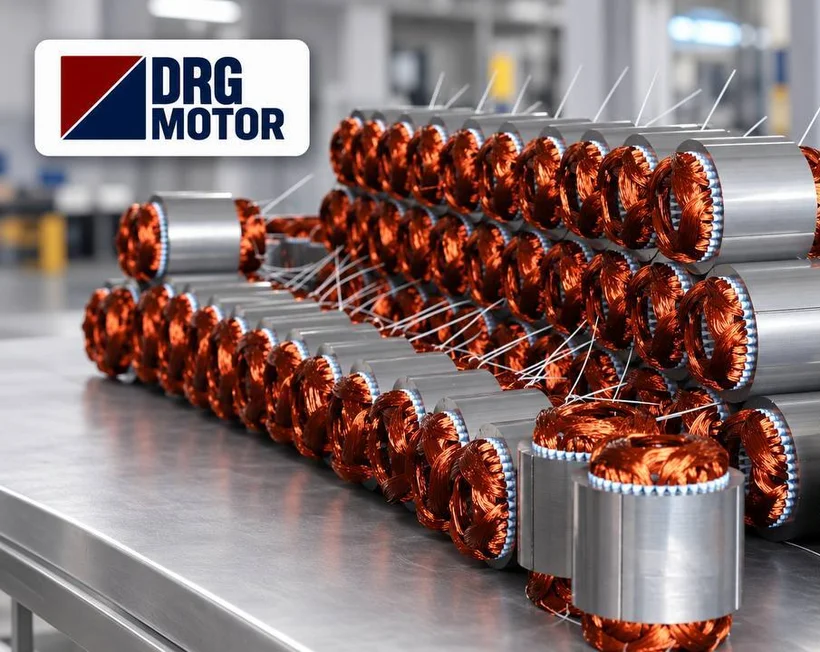
- The whole winding is evenly darkened: Prolonged overheating. Think of overload, insufficient cooling, low voltage or too many starts.
- Two phase groups are clearly burnt, one looks intact: The typical trace of phase loss in three-phase motors.
- One phase is darker than the others: Phase imbalance or a loose connection on that phase.
- A local burn at a single point with clean surroundings: An inter-turn short circuit. Investigate moisture, poor-quality insulation or voltage spikes from a frequency inverter.
- A flashover to the frame at the slot exit: Moisture, contamination or slot insulation worn by vibration.
- Shiny rub marks on the rotor and stator laminations: Bearing play or a bent shaft; here the burn is the result, the cause is mechanical.
If the winding has not burnt yet, let the measurements speak: a low insulation resistance measured with a megger points to moisture or aged insulation, while a winding resistance imbalance between the three phases indicates an inter-turn short or an open circuit. A sharp smell of varnish and discolouration of the winding overhangs are also early warnings.
To complete the reading, answer a few questions right after the failure: Did the motor burn while running or during start-up? Was there a problem with another motor or fuse in the same panel? Have the load, product or operating hours changed recently? Was there any recent intervention such as maintenance, a cable change or the addition of an inverter? Assessed together with the trace on the winding, these answers turn a guess into a concrete finding.
Recognise the Causes by Their Source
Supply-Related Causes
- Phase loss (single phasing): Because of a blown fuse, a burnt contactor contact or a loose terminal, the motor tries to run on two phases and the remaining windings carry excessive current. Symptoms: humming, speed drop; at standstill the motor cannot start. Prevention: phase protection relay, motor protection breaker sensitive to phase loss, regular connection checks.
- Phase imbalance: A small voltage difference causes a much larger difference in phase currents and extra heating. Symptoms: clearly different readings on the three phase currents. Prevention: distribute single-phase loads evenly, use a relay that monitors imbalance.
- Undervoltage or overvoltage: At low voltage the motor does the same work with higher current; at high voltage the magnetising current and iron losses rise. Symptoms: heavy starting, high current even at no load. Prevention: voltage monitoring, correct cable cross-section on long runs.
- Incorrect connection (star/delta error): Terminal links that do not match the supply apply either too little or too much voltage to the winding; a long changeover time in star-delta starting also stresses the winding. Prevention: compare the nameplate voltage with the supply before commissioning.
Load and Duty-Related Causes
- Overload and overcurrent: Continuous operation above rated power heats the winding through copper losses that grow with the square of the current. Symptoms: readings above the nameplate current, frequent overload trips. Prevention: select the motor for the real load, measure current periodically.
- Frequent starts/stops and long starting times: At every start the motor draws several times its rated current; if repeated too often, the winding cannot cool. Prevention: keep starts per hour within the manufacturer’s limit, use a soft starter or inverter where needed.
- Locked rotor: If a jammed pump, gearbox or foreign object stops the rotor, the motor continuously draws starting current. Prevention: do not keep forcing a motor that fails to start, check the driven machine by hand.
Environment and Cooling-Related Causes
- Cooling problems: A broken fan, fins clogged with dust, an unventilated mounting position or high ambient temperature. On motors run at low speed by an inverter, the shaft-mounted fan also becomes less effective. Prevention: clean the fan and fins, add a separate (forced) cooling fan where necessary.
- Moisture and water ingress: Lowers insulation resistance; the risk is higher in wash-down areas and outdoors. Prevention: an IP rating suited to the environment (IP55 is a good starting point for general industry), sealed cable glands, an insulation test before commissioning a motor that has been idle for a long time.
- Dust and dirt: Forms a layer on the frame that blocks heat dissipation; conductive dust opens leakage paths. Prevention: periodic cleaning, a protection class suited to dusty environments.
Mechanical Causes
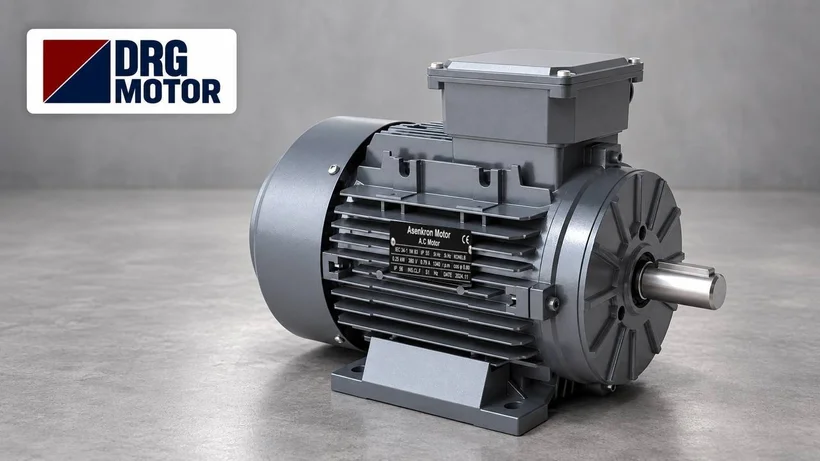
- Bearing failure and rotor rubbing on the stator: A bearing that runs dry, has the wrong grease or is over-greased heats up and develops play; the rotor rubs against the stator and damages both the laminations and the insulation. Symptoms: increasing noise, vibration and bearing temperature. Prevention: correct grease and lubrication interval, vibration monitoring.
- Alignment, coupling and belt tension: Shaft misalignment and over-tightened belts place excessive radial load on the bearings. Prevention: alignment with a dial indicator or laser, belt tension to the manufacturer’s values.
Drive, Protection and Quality-Related Causes
- Voltage spikes from variable frequency drives (VFD): Fast switching pulses create high peaks at the motor terminals, especially with long cables, and stress the first turns. Prevention: inverter-duty insulation, short cables, a dv/dt or sine filter if needed, shielded cable and proper earthing.
- Wrong overload setting: An overload relay set well above the nameplate current will not trip under overload. Prevention: set the relay to the nameplate current.
- Poor-quality winding and insulation: Weak enamelled wire or careless impregnation means premature ageing even under normal conditions. Prevention: a reliable manufacturer and an experienced rewinding workshop.
The Most Common Mistakes in the Field
- Raising the overload setting because it trips often. The relay is warning you; silencing it leaves the motor unprotected.
- Rewinding a burnt motor without investigating the cause and refitting it to the same panel with the same connection.
- Pressing start again and again on a motor that hums and will not start.
- Running a motor that has sat in storage or in an idle plant for months without measuring its insulation.
- Ignoring cooling on a motor that runs continuously at low speed on an inverter.
- Directing water or compressed air straight at the terminal box and winding side when washing or cleaning the motor.
Protection Checklist
When reviewing your panel and maintenance plan, tick off the following items one by one:
- Is the thermal overload relay set to the motor’s nameplate current?
- Is a phase protection relay active against phase loss, phase sequence and imbalance?
- Is the motor protection circuit breaker sized for the motor power?
- Do critical and frequently started motors have a PTC thermistor connected to a relay? It is the best way to catch situations where the current barely rises, such as cooling problems.
- Does the periodic maintenance plan include bearing lubrication, fan cleaning, terminal tightness and insulation measurement?
- Are panels and motors scanned with a thermal camera at regular intervals?
Rewind or New Motor? A Practical Decision Table
There is no hard threshold, but the following situations show which way the decision should lean:
- Large motor, no mechanical damage, root cause found and eliminated → Rewinding usually makes sense.
- Small motor, rewinding cost close to the price of a new motor → A new motor comes to the fore.
- Stator laminations damaged by rubbing, bent shaft or cracked frame → Rewinding alone is not a solution.
- Old, low-efficiency motor → A new IE3, IE4 or IE5 motor saves energy in the long run.
- High cost of downtime → A new motor delivered from stock is the faster solution.
- The motor has been rewound before or the same failure keeps recurring → A new motor is the safer choice.
If you decide to buy a new motor, ask the supplier: What is the efficiency class? What are the insulation class and IP rating? What is the frame material? Is it suitable for inverter use? Are technical drawings and catalogue data available? Is it in stock? DRG Motor’s IE3, IE4 and IE5 single-phase and three-phase motors from 0.25 to 355 kW are built with cast iron frames, class F insulation and IP55 protection. You can browse them on our products page.
Frequently Asked Questions
How can I tell if a motor has burned out?
A smell of burnt varnish, darkening of the winding overhangs and a fuse or breaker that trips immediately are the first signs. For a definitive result, measure insulation resistance with a megger and the three phase winding resistances with an ohmmeter.
Does a thermal overload relay fully protect the motor from burning out?
A correctly set overload relay is effective against overload, but it can miss situations where the current does not rise noticeably, such as cooling problems. That is why it is recommended together with a phase protection relay and a PTC thermistor.
How quickly does phase loss burn out a motor?
It depends on the motor’s load and the protection arrangement. A loaded motor without phase protection can heat up seriously and burn out in a short time.
Should a burnt motor be rewound or replaced?
Motor power, mechanical damage, efficiency class and downtime cost should be assessed together. If there is mechanical damage or the motor belongs to an old efficiency class, a new motor is usually the better investment.
Send us a photo of your burnt motor’s winding along with its nameplate details, and our technical team will assess the likely cause and a suitable replacement model with you. Reach us at +90 (542) 666 11 11 or +90 (533) 777 04 44, by email at [email protected] or via our contact page.