 English
 Le français
 Türkçe


Single-Phase Electric Motors 220V Electric Motors
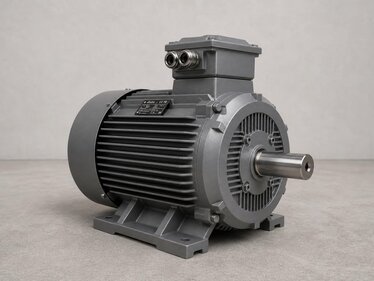
Single-phase electric motors are widely used where a three-phase power supply is not available or where a practical drive solution is needed at lower power ratings. Operating on 220V power, these motors are used in a broad range of applications, from domestic and light-commercial equipment to small workshop machinery, water pumps, and ventilation systems.
DRG Motor provides technical support for single-phase electric motor solutions according to the power requirement and operating conditions of each application. A proper selection should consider more than the motor's power rating: speed, starting torque, capacitor design, mounting arrangement, and the load characteristic of the driven machine are also important.
What Is a Single-Phase Electric Motor?
A single-phase electric motor is designed to operate on single-phase alternating current. In many applications, it operates on a 220–230V, 50 Hz supply. For this reason, the terms 220V electric motor, single-phase motor, and monophase motor are often used for the same product category.
While a rotating magnetic field is naturally produced in three-phase motors, single-phase motors require an auxiliary starting circuit to begin rotation. Depending on the motor design, this function is provided by a capacitor, auxiliary winding, or centrifugal switch.
Where Are 220V Electric Motors Used?
220V electric motors are an important solution in locations without a three-phase power supply. Common applications include:
- Booster and small water pump systems
- Garden irrigation and agricultural pump applications
- Ventilation and small fan systems
- Small compressors
- Woodworking, grinding, and workshop machinery
- Packaging equipment, small conveyors, and light-duty machines
- Domestic and small commercial equipment
- Doors, shutters, and auxiliary mechanical drive systems
Every application has a different load characteristic. For example, the starting requirement of a fan is not the same as that of a piston compressor. The correct motor type must therefore be selected, particularly for equipment that requires high starting torque.
Click to see current electric motor prices and order nowSEE PRICES →
Types of Single-Phase Electric Motors
Permanent Capacitor Single-Phase Motors
In permanent capacitor motors, the capacitor remains connected during operation. These motors can provide smooth and quiet operation and are frequently used in fans, small pumps, ventilation equipment, and light-load applications. Their starting torque may not always be sufficient for equipment that starts under a heavy load.
Capacitor-Start Single-Phase Motors
Capacitor-start motors use a capacitor to help the motor produce higher torque during initial starting. When the motor reaches a certain speed, this circuit is generally disconnected by a centrifugal switch or a suitable device. These motors may be preferred for compressors, certain pump types, and machinery with more demanding starting conditions.
Capacitor-Start, Capacitor-Run Motors
Capacitor-start, capacitor-run motors use both a starting capacitor and a running capacitor. This design combines high starting torque with stable running performance and can offer an advantage in demanding applications.
Shaded-Pole Motors
Shaded-pole motors are generally used in low-power, simple applications. Small fans, certain household appliances, and equipment requiring low torque are typical examples. They are not suitable for heavy loads or industrial applications that require high performance.
What Is the Difference Between Single-Phase and Three-Phase Motors?
The main difference between single-phase and three-phase motors is the power supply they use. Single-phase motors operate on a 220–230V single-phase supply, while three-phase motors generally operate on a 380–400V three-phase supply.
Three-phase motors are more common at medium and higher power ratings. In continuous-duty and heavy industrial applications, they can offer smoother operation, a wider range of power ratings, and an efficient solution when correctly matched to the application. Single-phase motors provide a practical choice for lower-power applications where only single-phase power is available.
What Should Be Considered When Selecting a 220V Electric Motor?
- Motor power in kW or HP
- Required speed: 1000, 1500, or 3000 rpm
- Supply information: 220–230V, 50 Hz
- Machine type and load characteristic
- Starting torque requirement
- Continuous or intermittent operating duty
- Shaft diameter, shaft length, and frame dimensions
- Foot-mounted or flange-mounted arrangement
- Ambient temperature, humidity, dust, and ventilation conditions
The starting moment is particularly important in pump and compressor applications. An unsuitable motor with insufficient starting torque may struggle during start-up, leading to overheating, capacitor failure, or the activation of protective devices.
What Determines Single-Phase Electric Motor Prices?
Single-phase electric motor prices vary according to power, speed, motor type, capacitor configuration, housing material, and mounting arrangement. Two 220V motors with the same power rating may have different prices because their starting torque, insulation class, protection level, bearing structure, and duty rating may differ.
The fastest way to receive a quotation is to share a photo of the existing motor nameplate. If the nameplate is unavailable, please provide the motor's kW or HP rating, speed, foot-mounted or flange-mounted design, shaft diameter, the machine where it will be used, and the available power supply.
220V Single-Phase Motor Solutions from DRG Motor
DRG Motor offers suitable electric motor solutions for pumps, fans, ventilation, small machinery, and workshop applications. The correct single-phase motor should be selected by considering the machine's starting load, operating duration, mounting arrangement, and environmental conditions.
For support with 220V electric motor selection or single-phase motor prices, you can share your existing motor's nameplate details. This allows the appropriate power, speed, and mounting option to be determined more accurately for your application.
DRG Electric Motors Suited to This Topic
The models below are available in the DRG Motor online shop. Click a model code to see its technical data, dimensions and current price, and order right away.
- DRG-711-4 – 0.25 kW – 1340 rpm – aluminium frame
- DRG-712-4 – 0.37 kW – 1340 rpm – aluminium frame
- DRG-801-4 – 0.55 kW – 1400 rpm – aluminium frame
- DRG-802-4 – 0.75 kW – 1420 rpm – aluminium frame
Click to see current prices of all electric motors and order nowSEE PRICES →