 English
 Le français
 Türkçe

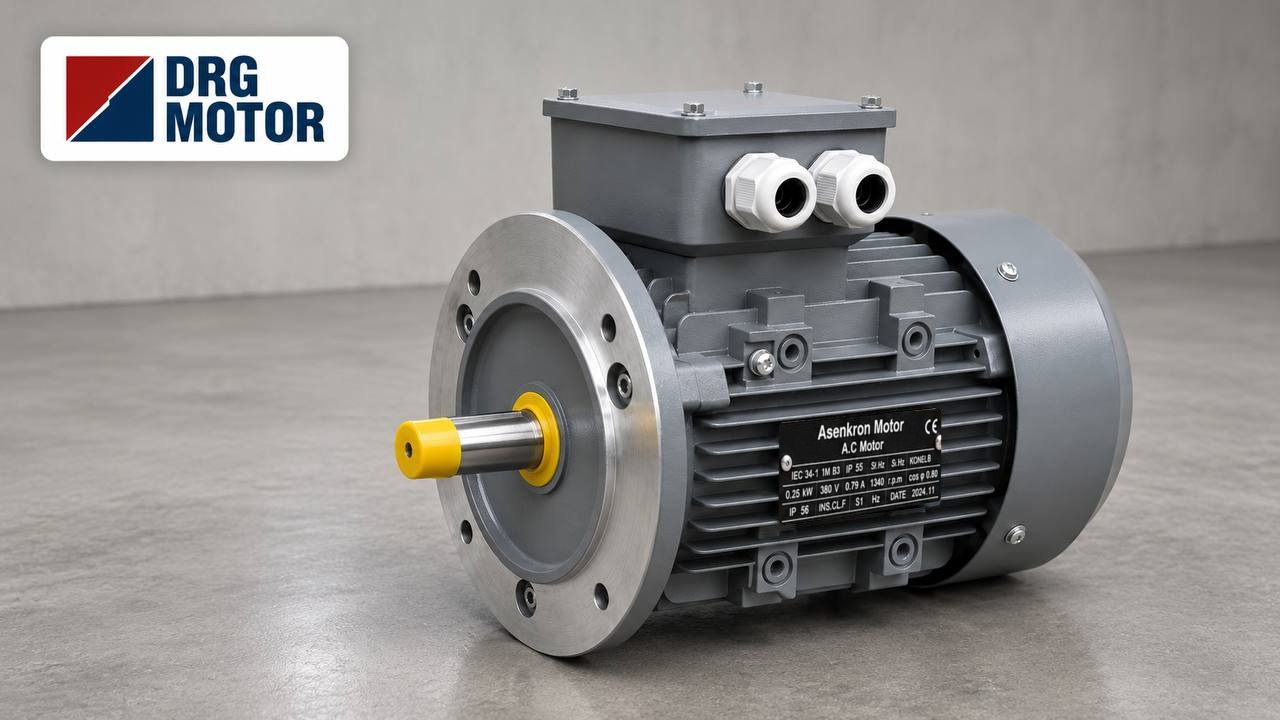

One of the sentences we hear most often on the phone is: "Last time we bought the same motor for less, so why the difference now?" Same nameplate, same power, same frame size; yet a few months later the quotation may have changed. We wrote this article to answer that question from inside the production line. At DRG Motor, while manufacturing motors in İzmir/Buca, we see which cost items move the price and how, where the buyer actually has a say, and which questions you should ask at the negotiating table. We go through each of them here.
A note: you will not find exact figures or percentages here. Raw material prices change from week to week, so a ratio written today would be misleading tomorrow. If you want to see approximate price ranges, our article Electric Motor Prices 2026–2030 was written for exactly that.
Let's Take the Motor Apart: Where Is the Cost Hidden?
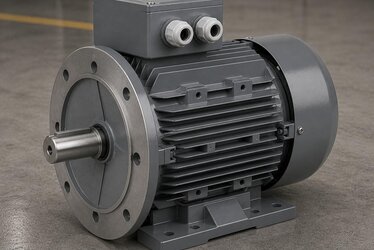
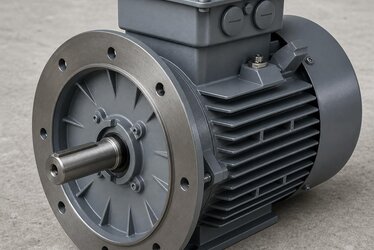
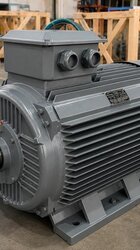
Imagine laying an asynchronous motor on the table and taking it apart. Behind each part there is a separate supply chain, a separate market and a separate risk. The quickest way to understand price changes is to know what each part depends on:
- Copper winding → international metal exchange. The most volatile item in the motor. The higher the efficiency class, the more copper goes into the slots.
- Electrical steel (silicon steel) → a limited number of producers. Stator and rotor cores are made of these thin laminations; low-loss grades cost more and lead times can stretch.
- Cast iron frame → scrap, pig iron, coke and foundry energy. We choose this frame for durability and heat dissipation, and it brings the melting furnace's energy bill with it.
- Bearings → imports and exchange rates. The key to quiet, long-lasting operation; their price depends heavily on foreign currency.
- Shaft steel → the general steel market and machining.
- Insulation (enamel, slot paper, varnish, resin) → petrochemicals. These materials, which define the insulation class, depend on oil-derived inputs.
- Labour → wage regulations. Winding, assembly, balancing and testing require craftsmanship that cannot be left entirely to automation.
- Energy → industrial electricity and natural gas tariffs. Casting, varnish ovens, machine tools and test stations consume energy continuously.
- Logistics → freight and fuel. Getting raw materials to the factory and the motor to the site.
The first lesson from this list: a motor's price is not set by one dial but by nine dials turning at the same time. Some turn on world markets, others at home.
In practice, this means that when you interpret the gap between two quotations, first ask which dial has moved. If the difference comes from copper or the exchange rate, it is a market movement that affects all manufacturers at once, and waiting does not always bring the price back down. If it comes from lamination grade, frame material or bearing choice, you are not looking at two prices for the same motor but at two different motors. A buyer who can make this distinction avoids choices that look cheap but prove expensive in the field, and negotiates on the right item.
What Turned the Dials Up in 2026
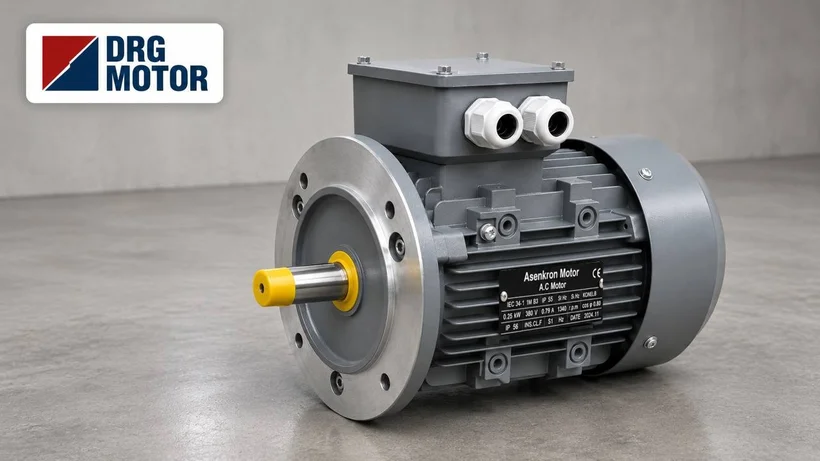
Copper: the bill for the energy transition
Solar and wind farms, electric vehicles, charging stations and upgraded power grids all want the same metal: copper. While demand grows structurally, new mines take many years to start producing. The result is a high and volatile copper price. For a motor manufacturer the meaning is clear: because IE3 and IE4 motors in particular carry more copper in their windings, every move on the exchange feeds straight into unit cost.
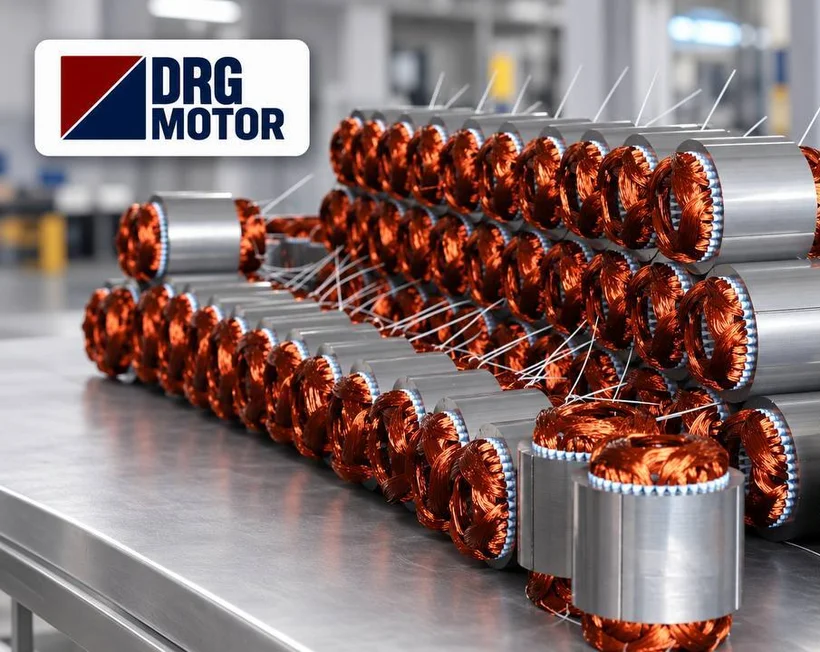
Looking at the stators above, it is worth remembering that "saving" copper in the winding lowers the price in the short term but harms efficiency, heating and motor life. That is why a serious manufacturer updates its price when copper gets dearer rather than thinning the winding. For the buyer, a suspiciously cheap quotation is often a question to be answered inside the winding.
Steel, laminations and casting
Silicon steel shares the same source with electric vehicle motors and transformers, and this competition can show up in lead times and prices. For cast iron frames, the energy bill of the foundry is decisive alongside scrap and pig iron prices. Shaft steel follows the trend of the general steel market.
Exchange rates
Copper, laminations, bearings and some insulation materials are priced in dollars or euros. Even if a motor is made locally, the language of its raw materials is foreign currency. When exchange rates are volatile, manufacturers shorten quotation validity periods; this is often where the buyer's feeling that "prices change too often" comes from.
Energy
Melting metal, moulding, heat treatment, varnish impregnation and curing are energy-intensive processes. Every increase in industrial electricity and natural gas tariffs is added to the motor's cost before it even leaves the factory.
Labour and inflation
Minimum wage adjustments and general inflation push up not only salaries but also maintenance, spare parts and outsourced services at the same time. In motor production, no machine can fully replace an experienced winder or assembler.
Freight and logistics
Disruptions in shipping, risks on some trade routes and fuel prices can at times sharply change the cost of getting imported inputs to the factory. Domestically, fuel and transport fees determine delivery costs.
Efficiency regulation: IE3 as the floor, IE4 on the horizon
The EU ecodesign regulation 2019/1781 raised minimum motor efficiency: IE3 became the floor in many applications, and IE4 became a requirement in certain power ranges. Ecodesign rules in Türkiye are also moving in line with EU legislation. Higher efficiency means better laminations, more copper, tighter tolerances and more extensive testing. In other words, expecting "IE3 at the old IE2 price" is not technically realistic.
Demand
Factory modernisation, the spread of pumps and booster sets in agricultural irrigation, solar-powered irrigation systems and renewable energy projects keep motor demand strong. Stocks of certain power ratings melting away as irrigation season approaches is something we see in the field every year.
5 Common Purchasing Mistakes in the Field
- Buying only when something breaks: With the line stopped, you have no bargaining power; you take whatever motor is in stock at whatever price it carries.
- Comparing only the sticker price: Putting two motors with different efficiency classes, frame materials, bearing brands and insulation classes side by side is comparing apples with oranges.
- Saying "let's go one size up, just in case": An oversized motor costs more and runs inefficiently at low load.
- Not reading the quotation validity period: If you approve weeks later, a price update should not come as a surprise.
- Ignoring the energy bill: As is widely accepted, the electricity a motor consumes over its life far exceeds its purchase price and makes up most of its total cost.
Questions for the Negotiating Table: A Checklist
- Until when is this price valid, and how will it be updated if exchange rates or raw materials change?
- Is the motor in stock or will it go into production? What is the lead time?
- What is the efficiency class, and according to which standard were the nameplate values measured?
- Is the frame cast iron or aluminium? What are the insulation and protection classes?
- Can the price be fixed for bulk or project-based purchases?
- Can technical drawings and catalogue data be shared? (For us, see our product range.)
Decision Guide: What to Do in Which Situation?
You cannot stop price increases, but you can choose when and how you are exposed to them. The pairings below are meant to help you find the line closest to your own operating conditions and start from there.
- If the motor runs all year, for long hours and at high load: Seriously consider IE4; energy savings can offset the difference in initial investment over time.
- If the motor runs in short, intermittent cycles: IE3 is usually a sufficient and economical choice.
- If you need to keep spare motors: Buying from stock now for the power ratings and frame sizes of your critical lines reduces both downtime risk and price update risk.
- If you will buy several motors during the year: Group the requirement under a single project, fix the price and ask for scheduled deliveries.
- If you are preparing for irrigation season: Order before the season starts; at peak demand, both price and lead time turn against you.
Where DRG Motor Fits In
At our plant in İzmir/Buca we manufacture single-phase and three-phase motors from 0.25 kW to 355 kW in IE3, IE4 and IE5 classes. Our choice of cast iron frames is about long life in demanding industrial and agricultural conditions. Thanks to our wide stock, we can deliver standard motors quickly and prepare tailored quotations for project-based requests. The full range is on our electric motor products page.
Frequently Asked Questions
Why are electric motor prices rising in 2026?
Persistently high copper and other commodity prices, steel and casting costs, exchange rates, energy and labour expenses, freight and regulations requiring higher efficiency classes all act together. When these items move in the same direction, it shows in the final price.
How much does the copper price affect the motor price?
It depends on the motor's power, winding design and efficiency class. Because high-efficiency motors use more copper, they are more sensitive to copper price swings.
Does an IE4 motor make sense compared with IE3?
Usually yes in applications running long hours at high load; since energy makes up most of the lifetime cost, the savings can close the gap over time. For intermittent duty, IE3 may be enough.
What can I do to avoid price increases?
Plan your needs in advance, buy in bulk or per project where possible, clarify the quotation validity period in writing and prefer products that can be delivered from stock.
Contact Us for Current Prices and Stock
Take the checklist above and put your questions directly to the manufacturer. Phone: +90 (542) 666 11 11 and +90 (533) 777 04 44, email: [email protected]. You can also send your request via our contact page; our team will get back to you shortly.