English
 Le français
 Türkçe




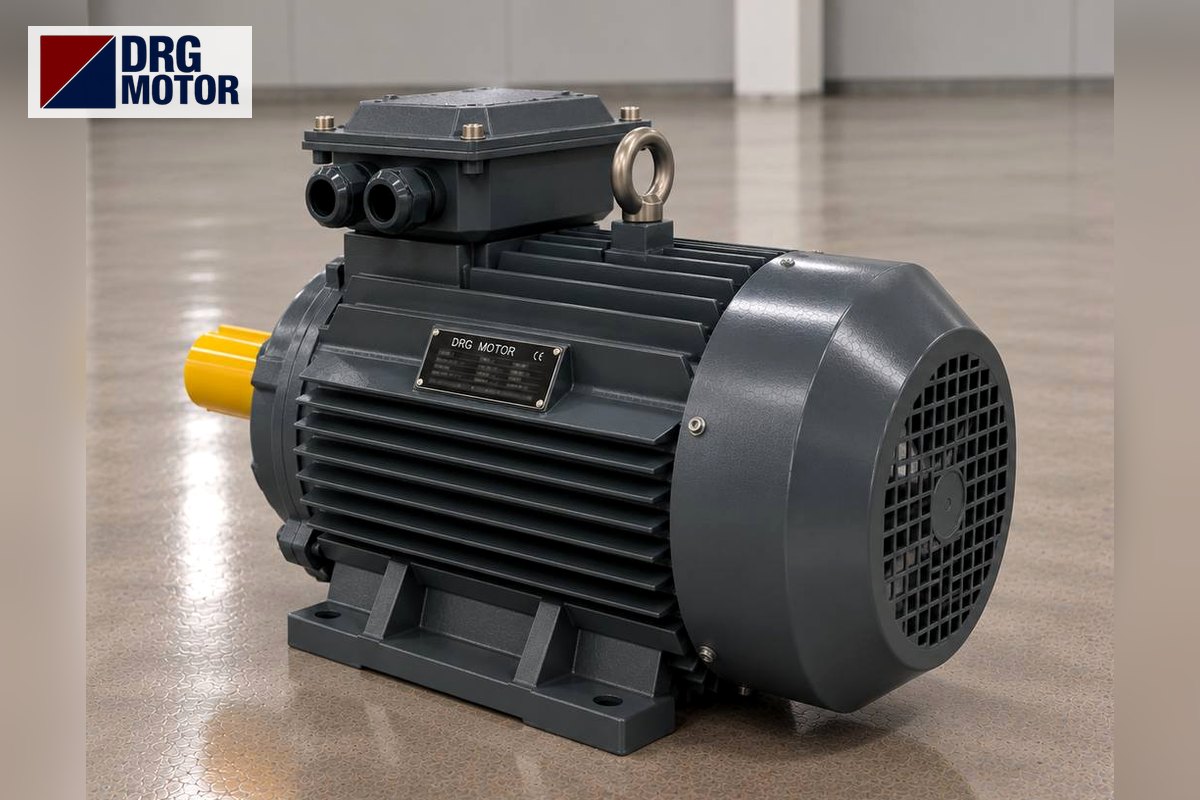

Project-based electric motor supply means planning the entire motor requirement of a plant or a machine line from the outset and running it through a single point of contact, instead of buying motors one by one. It starts with a site survey; power and mounting type are matched to the machine, shipment is planned around the installation schedule, and technical support is given during commissioning. DRG Motor, as a manufacturer, supplier and seller of three-phase asynchronous electric motors, brings these steps together under one contact.
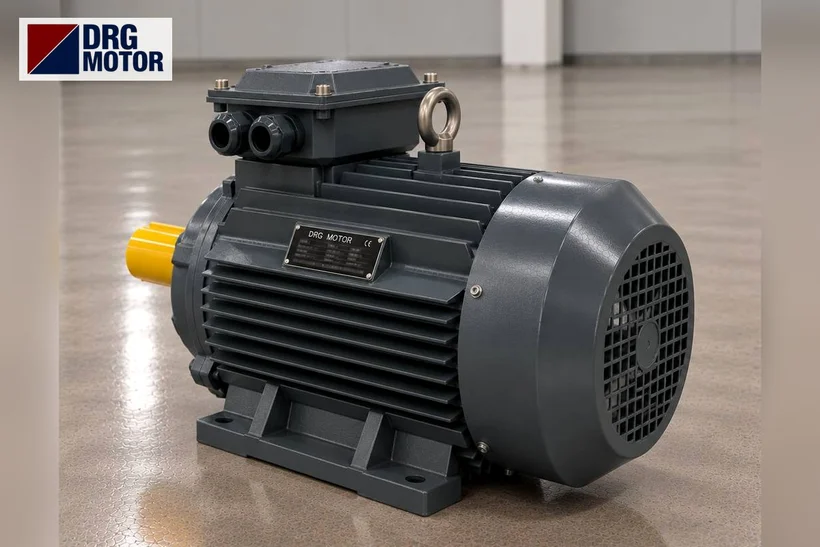
You can review each electric motor on your list by power and speed in the online electric motor shop and see the same range together in the three-phase asynchronous electric motors category. Once the project scope is clear, sending the list as a single file speeds everything up from the start.
How does project-based supply differ from a single purchase?
When you buy one spare electric motor for a workshop, the whole decision sits in a single product. Setting up a new line, relocating a plant or renewing many machines at once changes the picture: dozens of electric motors at different powers, speeds and mounting types are tied to one schedule. What matters here is not individual payment but a complete list, dimensions that match the machines, and delivery that does not disrupt the installation order.
The case we meet most often in the field is a list half gathered from old motor nameplates and half from machine catalogues, with the two not agreeing. The first benefit of the project-based approach begins right here: every item is recorded with the same logic and clarified from the outset.
1. Site survey and building the motor list
The work starts on site, not at a desk. In an existing plant the most reliable path is to read the nameplate of each machine's electric motor one by one: power, speed, voltage, connection and frame size. On new lines this data comes from the motor specification the machine builder asks for. Marking every collected item against its match in the online electric motor shop turns the list into something concrete.
The most practical method is to photograph each motor nameplate. Where plates are faded or unreadable, noting the shaft diameter and flange size alongside power and speed prevents later surprises. A line left incomplete at this stage is usually noticed on installation day.
- Power and speed: how many kW, how many rpm (2/4/6 poles).
- Mounting type: foot (B3) or flange (B5).
- Shaft diameter and length: must match the coupling, pulley or gearbox input.
- Voltage and connection: 400 V, star/delta.
- Operating environment: dust, moisture, outdoor conditions.
Click to see current electric motor prices and order nowSEE PRICES →
2. Matching power and mounting type
Once the list is gathered, the second step is to match each line to the right electric motor. The same power can appear at different speeds and in different housings, so power alone is not a sufficient criterion. The 1500 rpm, 4-pole range is the balance point most often requested in line projects. The table below shows a few examples from DRG's aluminium-housing 1500 rpm range, together with shaft size.
| Model | Power | Speed | Shaft D×E |
|---|---|---|---|
| DRG-112M-4-AL | 4 kW (5.5 HP) | 1500 rpm | 28x60 mm |
| DRG-132S-4-AL | 5.5 kW (7.5 HP) | 1500 rpm | 38x80 mm |
| DRG-132M-4-AL | 7.5 kW (10 HP) | 1500 rpm | 38x80 mm |
| DRG-160M-4-AL | 11 kW (15 HP) | 1500 rpm | 42x110 mm |
Mounting type is as decisive as power. A foot (B3) housing is bolted to the base on most conveyors and pumps, while a flange (B5) housing connects directly to a gearbox or pump body. When shaft diameter and length do not match the coupling, pulley or gearbox input, even the right-power electric motor will not fit the machine. Having the mounting type and shaft size next to every line takes the guesswork out of matching. For power figures you are unsure about, use the electric motor calculator.
3. Planned shipment around the installation schedule
The clearest difference from a single purchase is the shipment plan. All motors rarely need to land on site at the same time; delivery can follow whatever order the installation runs in. The motors for the first line to be commissioned go first, and later stages leave on their own schedule.
DRG Motor is based in İzmir and delivers fast by cargo across all of Türkiye, that city included. Staged shipment avoids needless pile-up on site and lets the installation team move with the motors in hand. Discussing the delivery schedule against the project's installation plan from the start is one of the biggest time-savers.
4. Commissioning and technical support
The process does not end when the motors reach site. During commissioning the connection, rotation direction and protection settings are checked together with the machine. Because this work is done on live equipment, the power must first be cut, the de-energised state verified, and connections and measurements made by authorised electrical staff. Protection values are set according to the motor nameplate and the device documentation.
Working with the same contact throughout the project means questions are resolved quickly. When a model's dimension is uncertain or an item is added to the list later, the communication set up at the start makes these changes easy. DRG carrying the manufacturer, supplier and seller roles together means one door for ordering, delivery and afterwards.
Points often missed when preparing a project list
The small-looking details that cost the most time on installation day are usually the same. Adding a short note next to each line while building the list clearly shortens the later steps.
- Stating only power without the shaft size.
- Skipping the mounting type (B3/B5).
- Leaving a spare-motor allowance off the list.
- Not noting the operating environment (outdoor, dust, moisture).
- Confusing the speed class; same power, different speed.
Frequently asked questions
After how many motors does project-based supply make sense?
There is no fixed number. Even when renewing a few machines at once, drawing up a list and working with one contact makes things easier. What decides it is less the item count than the need being tied to one schedule.
Can I take delivery of the motors in stages?
Yes. Staged shipment can be planned by installation order; the first line's motors go first, later stages leave on their own schedule. You only need to share the delivery plan up front.
What information should I have ready when building the list?
For each motor, power, speed, mounting type (B3/B5), shaft diameter and length, voltage and operating environment are enough. Where possible, a photo of the existing motors' nameplates speeds up matching.
I am not sure of my old motor's dimensions — how do I proceed?
Sharing a photo of the nameplate and the shaft area is usually enough; the suitable DRG model is decided together. Marking uncertain items from the start prevents later surprises.
Send a photo of your current motor nameplate and we will find the suitable DRG model together.Send on WhatsApp
Click to see current electric motor prices and request a quote for your project listSEE PRICES
Electric Motors Related to This Topic — Models and Current Prices
Suitability is not decided by power alone: compare the speed, voltage, mounting, shaft and fixing dimensions of your machine with the product data; if unsure, send us the nameplate of your current motor.
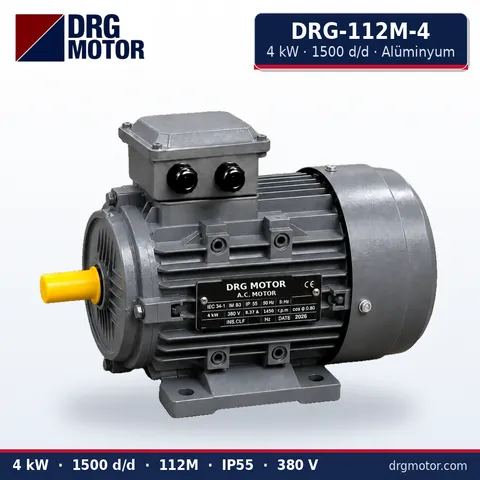
4 kW Three-Phase Motor 1500 rpm – DRG-112M-4 Aluminium
- 4 kW · 1500 rpm (4 poles)
- Aluminium frame · IEC 112M
- Shaft: 28 × 60 mm
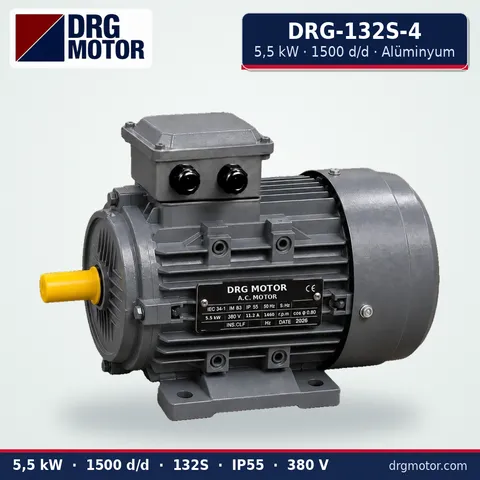
5.5 kW Three-Phase Motor 1500 rpm – DRG-132S-4 Aluminium
- 5.5 kW · 1500 rpm (4 poles)
- Aluminium frame · IEC 132S
- Shaft: 38 × 80 mm
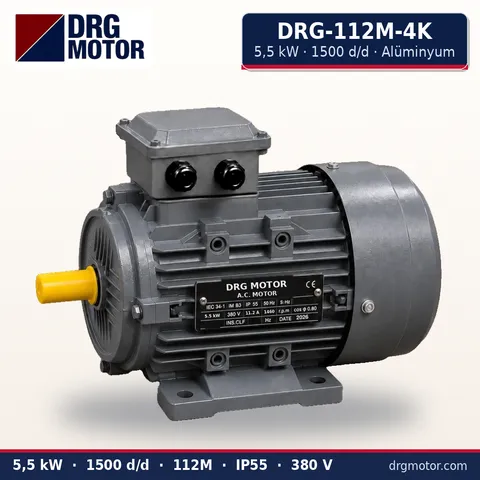
5.5 kW Compact Three-Phase Motor 1500 rpm – DRG-112M-4K Aluminium
- 5.5 kW · 1500 rpm (4 poles)
- Aluminium frame · IEC 112M
- Shaft: 28 × 60 mm
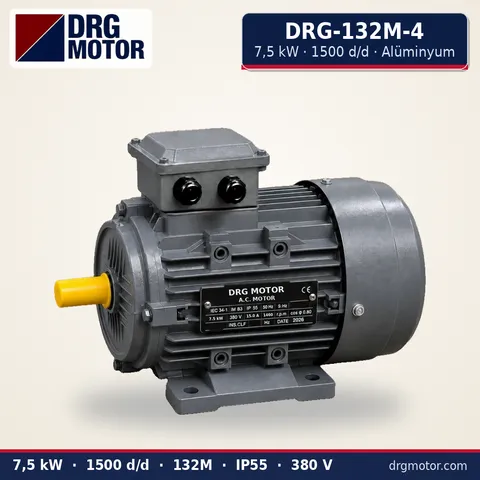
7.5 kW Three-Phase Motor 1500 rpm – DRG-132M-4 Aluminium
- 7.5 kW · 1500 rpm (4 poles)
- Aluminium frame · IEC 132M
- Shaft: 38 × 80 mm
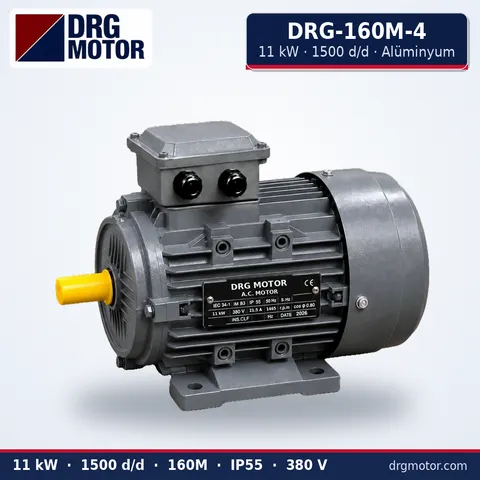
11 kW Three-Phase Motor 1500 rpm – DRG-160M-4 Aluminium
- 11 kW · 1500 rpm (4 poles)
- Aluminium frame · IEC 160M
- Shaft: 42 × 110 mm
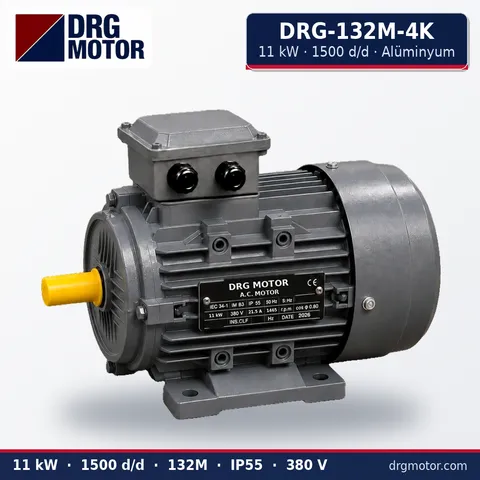
11 kW Compact Three-Phase Motor 1500 rpm – DRG-132M-4K Aluminium
- 11 kW · 1500 rpm (4 poles)
- Aluminium frame · IEC 132M
- Shaft: 38 × 80 mm