 English
 Le français
 Türkçe

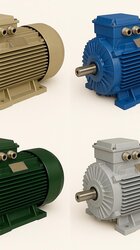
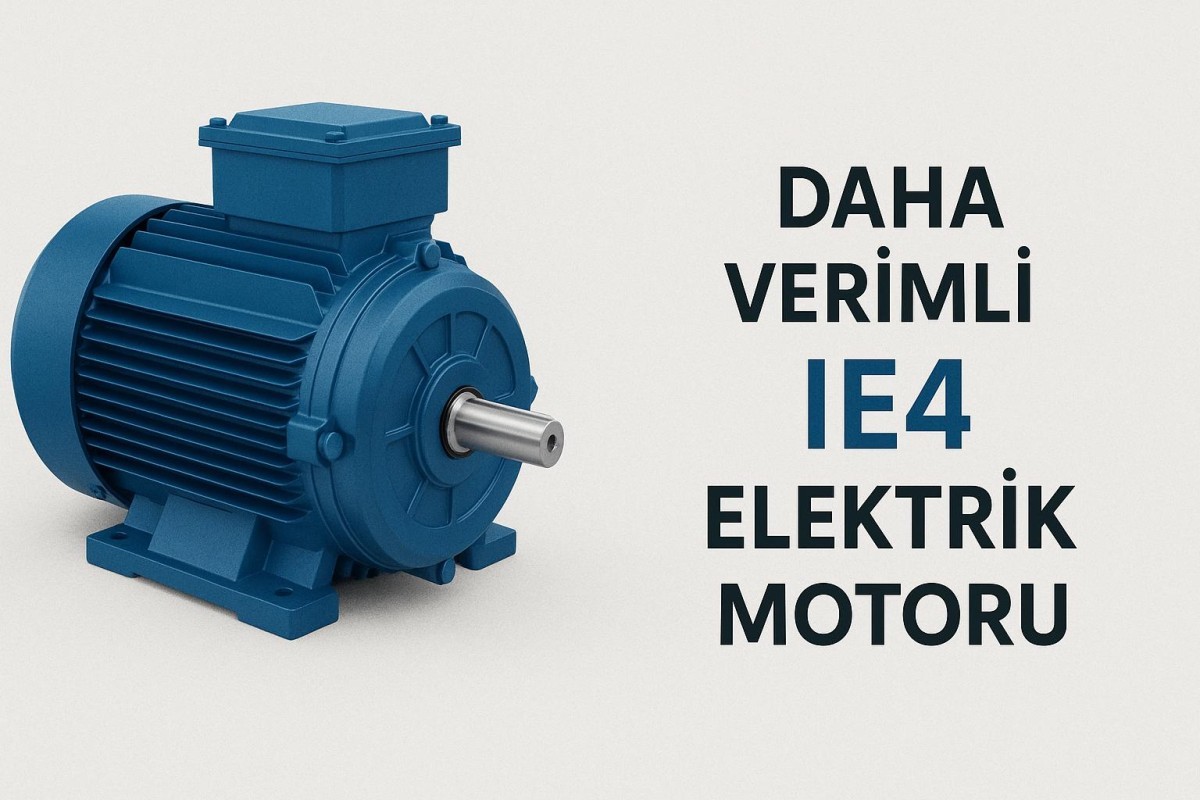

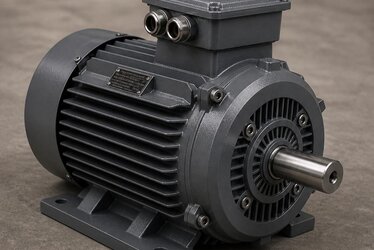
IEC 60034-30-1 places IE4 on the super premium step of the efficiency ladder, and the class exists for one reason: where a shaft turns long hours, what the meter records outweighs what the invoice said, several times over. That arithmetic, more than the frame size or the catalogue price, decides whether IE4 belongs on a given drive.
What the IE4 Class Measures
Efficiency classes run from IE1 up to IE5, and each step upward delivers identical shaft power while wasting less of it. Against IE3 premium, an IE4 machine cuts total losses by roughly 15 percent. On a drive that never stops, that reduction shows up in the yearly consumption figure rather than in any single measurement. Behind each percentage point sits a chain of design work reaching from the magnetic circuit to the cooling path.
Where the Extra Efficiency Comes From
No single component produces the gain. It accumulates.
- Windings with a high fill factor, which cut stator copper losses
- A core stack built from thin, low-loss electrical steel
- An optimised fan and low-friction bearings
- A precisely machined air gap that trims magnetic losses
- Lower operating temperature, and with it longer insulation life
Applied together, these deliver identical mechanical output on less drawn power, and the frame stays cooler while it works.
Standard Ratings
IE4 units are supplied on 400 V / 50 Hz supply with F class insulation rated to 155 °C, IP55 protection and S1 continuous duty. Mounting comes as IM B3 foot, B5 flange or B14 face flange. Power coverage starts at 0.55 kW and reaches well above it depending on the application. On an IE4 frame the winding pole number fixes no-load speed at 3000 rpm for two poles, 1500 rpm for four and 1000 rpm for six, with the loaded speed sitting slightly below each figure because of slip.
IE3 or IE4: the Running Hours Decide
IE3 remains a balanced choice over a broad range of duties. IE4 trades a higher purchase figure for a lower operating figure, and the crossover point depends almost entirely on annual hours. Past roughly 12 hours a day of running, the saved energy pays off the price difference quickly and turns into net gain afterwards. On intermittent or short-duty machines the calculation often lands the other way.
A Worked Example at 22 kW
Take a four-pole 22 kW motor running 6000 hours a year. At 92.7 percent for IE3 and 94 percent for IE4, the difference in drawn power comes to about 0.33 kW, which works out near 2000 kWh over the year. One motor already shows a visible gain; a plant with dozens of them multiplies it. The real load point matters in that sum, since peak efficiency sits in the 75 to 100 percent band of rated power, and an oversized motor gives back the advantage it was bought for.
Frames for Rough Rooms
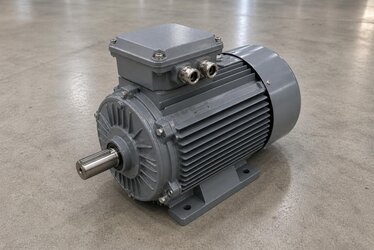
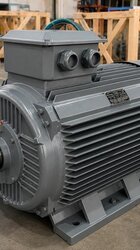
Cast iron frames handle heavy industrial environments better, damping vibration, spreading heat and standing up to mechanical knocks. Aluminium remains practical on lighter, lower-power duties. IP55 covers dust and water jets; harsher surroundings call for a higher protection rating rather than a heavier frame alone.
Running IE4 Behind an Inverter
Variable-flow pumps and fans reward speed control over throttling, because power on a centrifugal load drops with the cube of shaft speed. Two details govern service life on inverter supply: winding insulation that withstands voltage pulses, and insulated bearings where shaft currents are a risk.
Duty Cycle Before Power Rating
S1 continuous duty covers most installations. Frequent starting changes the picture, since each start draws a high current that heats the winding, so S3 and S4 patterns need the thermal behaviour checked rather than assumed. Read the annual hours and the measured load point off the existing drive first; those two numbers, not the frame number, tell you whether IE4 pays back on that shaft.