 English
 Le français
 Türkçe

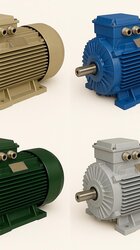
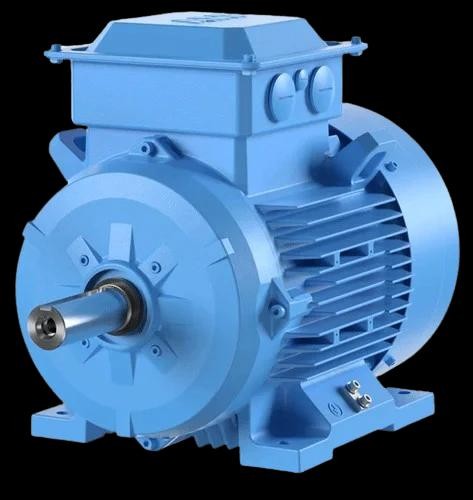

Ceramic production involves many stages, including raw material preparation, forming, drying, firing, and glazing. Electric motors are at work in nearly all of these stages. A wide range of motors is used, from mills to conveyors and from fans to pumps. Choosing the right motor is critical for the efficient and uninterrupted operation of a ceramic plant.
In this article we examine electric motor selection for ceramic plants. We cover general industrial motors in our industrial electric motors article. The right choice ensures production continuity.
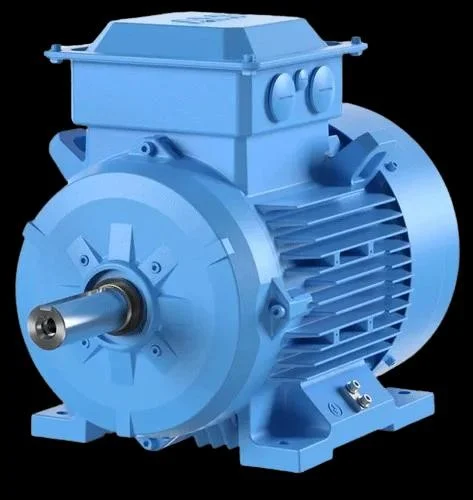
The Role of Motors in Ceramic Production
In ceramic plants, motors drive every stage of production. Motor power is used at each step, from grinding raw materials to transporting the finished product. For this reason, motors are the backbone of ceramic manufacturing.
The uninterrupted operation of motors ensures production continuity. This is critical for any ceramic plant, where a single stoppage can ripple across the entire process line.
Raw Material Grinding Motors
Ceramic raw material is ground into a fine powder in ball mills. The motors that drive these mills must have high torque and a continuous duty capacity. Grinding is one of the most energy-intensive stages of the entire process.
We cover mill motors in our mill and grinding motor article. Grinding demands high torque and a sturdy mechanical design.
The Need for High Torque
The grinding and mixing stages expect high torque from the motor. A powerful starting torque is required to rotate the heavy load. Insufficient torque leads to motor strain and inefficient operation, and over time it shortens the working life of the machine.
A motor that struggles to start a loaded mill draws excessive current, heats up, and may trip its protection repeatedly. Selecting a motor with the correct torque characteristics for the specific load curve of a ceramic mill is therefore essential. Torque is the decisive factor in grinding applications.
Operating in a Dusty Environment
Ceramic plants contain heavy dust. Motors must be selected with a high IP protection class to be shielded from this dust. If dust enters the motor, it damages the windings and bearings and gradually degrades performance.
We explain protection ratings in our IP protection class article. Dust protection is critical in ceramic environments.
Choosing the IP Protection Class
In the dusty ceramic environment, motors are generally preferred with an IP55 or higher protection class. This protection prevents the ingress of dust and water into the motor. The correct IP class extends motor life and reduces the frequency of unplanned maintenance.
A high IP class is well suited to the dusty atmosphere of a ceramic plant. This means safe and reliable operation, even where fine abrasive particles are constantly suspended in the air.
Conveyor and Transport Motors
In ceramic production, raw materials and products are transported on conveyors. The motors that drive these conveyors must operate continuously and reliably. If a conveyor motor stops, it halts the entire production line.
We cover conveyor motors in our conveyor belt motor article. Transport keeps the production flow moving without interruption.
Kiln and Drying Fans
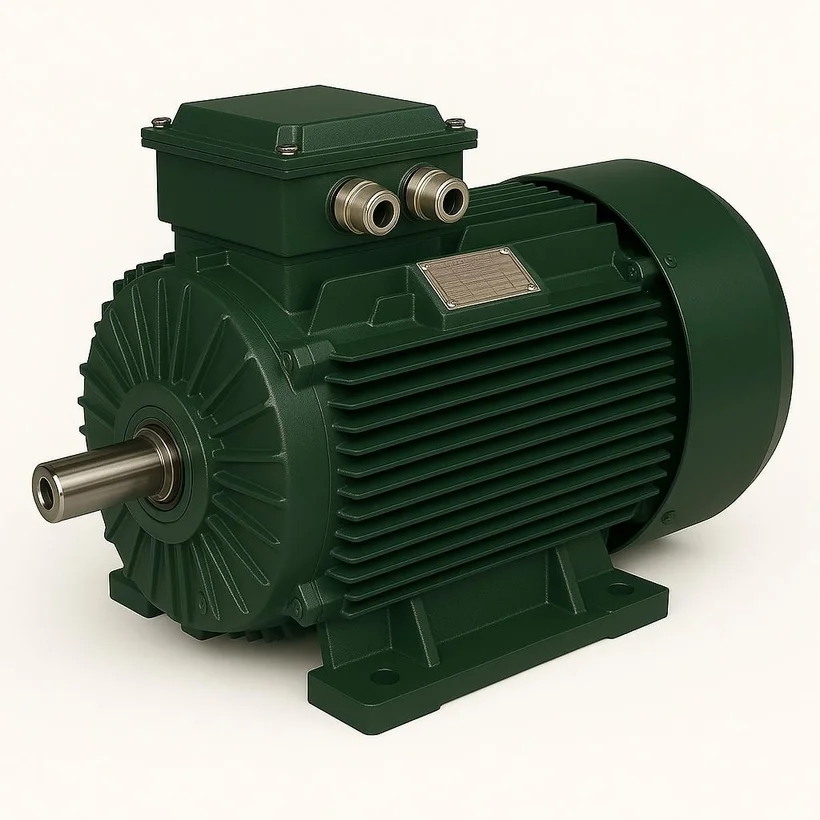
In ceramic kilns and dryers, hot air circulation is provided by fans. The motors that drive these fans must withstand high temperatures. Fan motors are the foundation of temperature management throughout the firing process.
We examine fan motors in our fan and blower motor article. Fans are critical during firing and drying.
High Temperature Resistance
Motors operating near the kiln are exposed to high ambient temperatures. These motors must be selected with a suitable insulation class and cooling. Excessive heat reduces both the efficiency and the lifespan of the motor.
When ambient temperature rises, the allowable load on a motor falls, so derating must be considered during selection. Adequate ventilation, the right cooling method, and sometimes forced cooling are required for motors placed close to firing zones. Temperature resistance is important for kiln motors.
The Importance of Insulation Class
Ceramic plant motors operating in hot environments should have an F or H insulation class. A high insulation class allows the winding to withstand elevated temperatures. The correct insulation protects the motor from burning out.
We discuss insulation in our insulation class article. Insulation is critical in hot environments.
Glazing and Pumps
In the ceramic glazing process, liquid glaze is transported by pumps. The motors that drive these pumps must operate continuously and reliably. If a pump motor stops, it halts the glazing line.
We cover pump motors in our water pump motor selection article. Pumps are central to glazing.
Pressing and Forming
Powerful motors are used in ceramic forming presses. These motors must have the power to operate under high pressure. Press motors directly affect product quality, since inconsistent pressing produces dimensional faults in the finished pieces.
Forming is an important stage of ceramic production. This requires a sturdy, high-power motor that can sustain repeated high-load cycles without overheating.
Continuous Duty Cycle
Ceramic plants generally run 24 hours a day without interruption. Motors must be selected to withstand this continuous regime. S1 duty class motors are preferred for continuous operation.
Continuous running requires a durable motor with adequate thermal margin. This means a high-quality motor built for sustained, heavy-duty service rather than intermittent use.
Energy Efficiency
Ceramic plants consume a great deal of energy, so efficient motors provide significant savings. IE3 and IE4 class motors lower the electricity bill. Efficiency means substantial long-term gains for the business.
We explain efficiency classes in our high-efficiency electric motors article. Efficiency is critical in ceramic operations.
Choosing IE3 and IE4
IE3 and IE4 motors should be preferred in ceramic plants that run for long hours. These high-efficiency motors deliver major energy savings in continuous operation. The efficiency class accelerates the payback of the investment.
We cover payback in our payback period article. A high IE class pays for itself quickly in ceramic plants.
Using Frequency Inverters
In ceramic plants, fan and pump motors are controlled with frequency inverters. The inverter adjusts speed according to demand, providing energy savings. This means both efficiency and precise process control.
We explain inverters in our frequency inverter and energy saving article. Inverters are common in ceramic plants.
Efficiency and Operating Cost
In a ceramic plant, motor efficiency directly affects operating cost. In industrial facilities, the largest share of electricity is consumed by motors. An efficient motor significantly reduces this cost over the life of the installation.
We discuss monitoring in our energy monitoring article. Efficiency determines cost.
Wear and Durability
Ceramic dust is abrasive and puts strain on motors. A durable housing and good sealing protect the motor from wear. A solid motor runs for a long time in the demanding ceramic environment.
Durability is the decisive factor in ceramic plant motors. This requires a high-quality motor with strong mechanical construction and effective ingress protection.
The Advantage of a Cast Iron Body
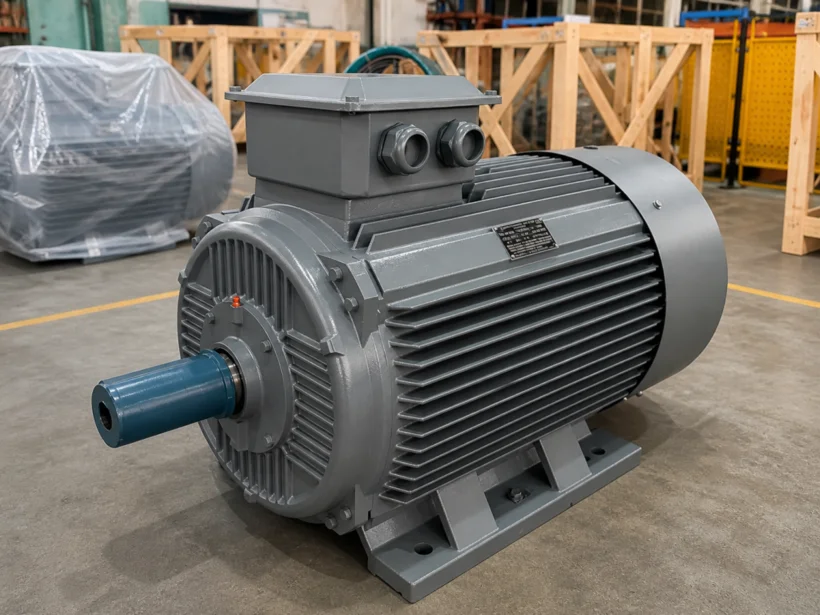
In ceramic plants, cast iron body motors are advantageous in terms of durability and heat dissipation. A cast iron housing withstands harsh conditions and vibration better than lighter alternatives. This provides a longer service life.
We explain this in our cast iron electric motor article. Cast iron is preferred in ceramic applications.
Vibration Management
Vibration occurs during the grinding and pressing stages. This vibration puts strain on motors and bearings. Correct mounting and balancing reduce vibration and extend motor life.
Persistent vibration loosens fasteners, accelerates bearing fatigue, and can crack housings if left unaddressed. Proper alignment between the motor and the driven machine is just as important as balancing. Vibration must be managed in ceramic plants.
Bearings, Grease and Dust
In the dusty and vibrating ceramic environment, bearings are heavily stressed. Regular lubrication and inspection extend bearing life. Healthy bearings keep the motor running smoothly.
Worn bearings produce noise and heat and ultimately seize, taking the motor out of service. A planned lubrication schedule suited to the contamination level of the plant is essential. Bearing maintenance is important in ceramic operations.
Catching Faults Early
Because ceramic plant motors operate under harsh conditions, they require regular maintenance. Periodic cleaning, lubrication, and inspection prevent unexpected failures. Regular maintenance ensures production continuity.
We cover maintenance principles in our maintenance steps article. Maintenance protects production in ceramic plants.
Service Plan and Spares
In ceramic plants, predictive maintenance detects faults in advance and prevents unplanned downtime. Vibration and temperature monitoring continuously track motor health. This reduces production losses and extends the life of the equipment.
We explain this in our predictive maintenance article. Early detection is valuable in ceramic plants.
Overload Protection
Ceramic plant motors must be protected against overload. A thermal relay and phase protection guard the motor against strain and burnout. The correct protection makes the motor long-lasting.
We cover this in our overload protection article. Protection is mandatory in ceramic plants.
Protection Against Phase Loss
Three-phase ceramic plant motors must be protected against phase loss. The loss of one phase causes the motor to overheat and burn out. A phase protection relay prevents this danger.
We explain this in our phase loss article. Phase protection is important in ceramic plants.
Three-Phase Supply
Ceramic plant motors are generally three-phase. A three-phase supply provides high power and efficient operation. This makes it possible for large machines to run smoothly and continuously.
We cover this in our three-phase motor in industry article. Three-phase power is the standard in ceramic plants.
Motor Power Calculation
The correct motor power must be calculated for each ceramic machine. Insufficient power strains the motor, while excessive power leads to wasted energy. A correct power calculation provides both efficiency and durability.
Matching the motor rating to the real load profile of each machine prevents both oversizing and undersizing. Power calculation is the foundation of correct motor selection, and it leads to an efficient plant.
Grounding and Safety
Ceramic plant motors must be correctly grounded for electrical safety. Grounding prevents leakage current risks and protects workers. Correct grounding means a safe plant.
We explain this in our grounding safety article. Grounding is mandatory in ceramic plants.
Production Continuity
In a ceramic plant, the failure of a single motor can stop all production. For this reason, reliable motors are the guarantee of production continuity. A high-quality motor minimizes unplanned downtime.
Production continuity is a critical priority for a ceramic plant. This requires reliable motors backed by sound maintenance practices.
The Importance of Correct Motor Selection
In a ceramic plant, the right motor must be selected for each application. Grinding, transport, fans, and pumps each demand different motor characteristics. Correct matching provides an efficient and durable plant.
The right choice secures both efficiency and production continuity. This makes motor selection a conscious, well-informed investment.
The Value of a Quality Motor
In a demanding environment like a ceramic plant, a quality motor provides value over the long term. A durable and efficient motor means both energy savings and production continuity. This brings real gains to the business.
A quality motor makes a difference in a ceramic plant. This is a deliberate, well-considered investment that rewards the operator for years.
Drying Stage Motors
Formed ceramic products are dried before entering the kiln. Motors are used in dryers for air circulation and transport. The continuous and balanced operation of these motors directly affects drying quality.
Drying is a sensitive stage of ceramic production. This requires a reliable motor that maintains a steady, even airflow throughout the cycle.
Agitator and Mixer Motors
Agitators are used when preparing ceramic slip and glaze. These mixer motors must have high torque and a continuous duty capacity. A homogeneous mixture is critical for product quality.
We discuss torque needs in our power factor article as part of overall motor selection. Mixing demands a powerful motor.
Sieve and Separation Motors
Raw materials and slip are passed through sieves to separate out unwanted particles. Vibration motors drive these sieve systems. The correct motor increases sieving efficiency.
We explain these in our vibration motor article. Sieving requires a special type of motor.
Exhaust and Stack Fans
The exhaust gases of ceramic kilns are expelled by stack fans. These fan motors must withstand hot and dirty gas. A reliable exhaust ensures kiln efficiency and safety.
We cover fan motors in our fan and blower motor article. Exhaust fans are critical in the kiln.
Mounting and Position
Motors in a ceramic plant must be installed with a mounting type suited to the machine. Correct mounting ensures vibration-free and safe operation. Incorrect mounting leads to premature failure.
We explain this in our mounting type selection article. The correct position ensures smooth operation.
Power Factor and Efficiency
Power factor is important in ceramic plants where many motors operate. A low power factor means unnecessary reactive power and cost. Correct selection and compensation improve the power factor.
We cover this in our power factor article. Power factor affects cost.
Soft Starting
The sudden starting of large motors in a ceramic plant strains the grid and the mechanics. Soft starting reduces this strain. A gradual start protects both the motor and the system.
We explain this in our soft starting article. A soft start is important for large motors.
Cast Iron Durability
In the harsh and abrasive environment of a ceramic plant, cast iron body motors are preferred. Cast iron provides both durability and good heat dissipation. This means a long service life.
We cover industrial motors in our industrial electric motors article. Cast iron is advantageous in ceramic applications.
The Effect of Harmonics
Harmonics can occur in ceramic plants full of inverters. Harmonics cause motors to heat up and lose efficiency. Correct filtering reduces the effect of harmonics.
We explain this in our harmonics effect article. Harmonic management is important in ceramic plants.
Energy Monitoring System
In a ceramic plant, energy monitoring tracks the energy consumed by the motors. This monitoring catches inefficient motors and problems early. This means both savings and safety.
We cover this in our energy monitoring article. Monitoring lowers cost.
Keeping a Spare Motor
Keeping a spare motor for critical machines guarantees production continuity. When one motor fails, the spare is quickly brought into service. This minimizes unplanned downtime.
A spare plan is a smart precaution for the continuity of a ceramic plant. This means secure, uninterrupted production even when a failure occurs.
Choosing the Right Supplier
When sourcing motors for a ceramic plant, it is important to choose a reliable supplier. The right supplier provides both quality motors and technical support. This is a long-term assurance.
We explain supplier selection in our electric motor dealers article. The right supplier makes a difference.
Return on Investment
In a ceramic plant, the investment in high-efficiency motors pays for itself through energy savings. This payback is fast for motors that run continuously. This makes an efficient motor a smart investment.
We cover payback in our payback period article. Efficiency repays itself quickly.
A Total System Approach
In a ceramic plant, motors should be evaluated as a system rather than one by one. The correct selection of each motor affects the efficiency and continuity of the entire plant. A holistic approach gives the best result.
A total system view is the foundation of a ceramic plant's success. This means conscious, careful planning across every stage of production.
Ceramic Plant Solutions with DRG Motor
Selecting durable and high-efficiency motors suited to the demanding conditions of your ceramic plant is important for production continuity. At DRG Motor, we offer suitable motor solutions for every stage of ceramic production. You can review our electric motor products to find the right solution for your facility.
For the correct motor choice, you can visit our home page and get support from our technical team. DRG Motor provides reliable motor solutions for the ceramic industry.