 English
 Le français
 Türkçe

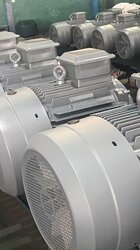
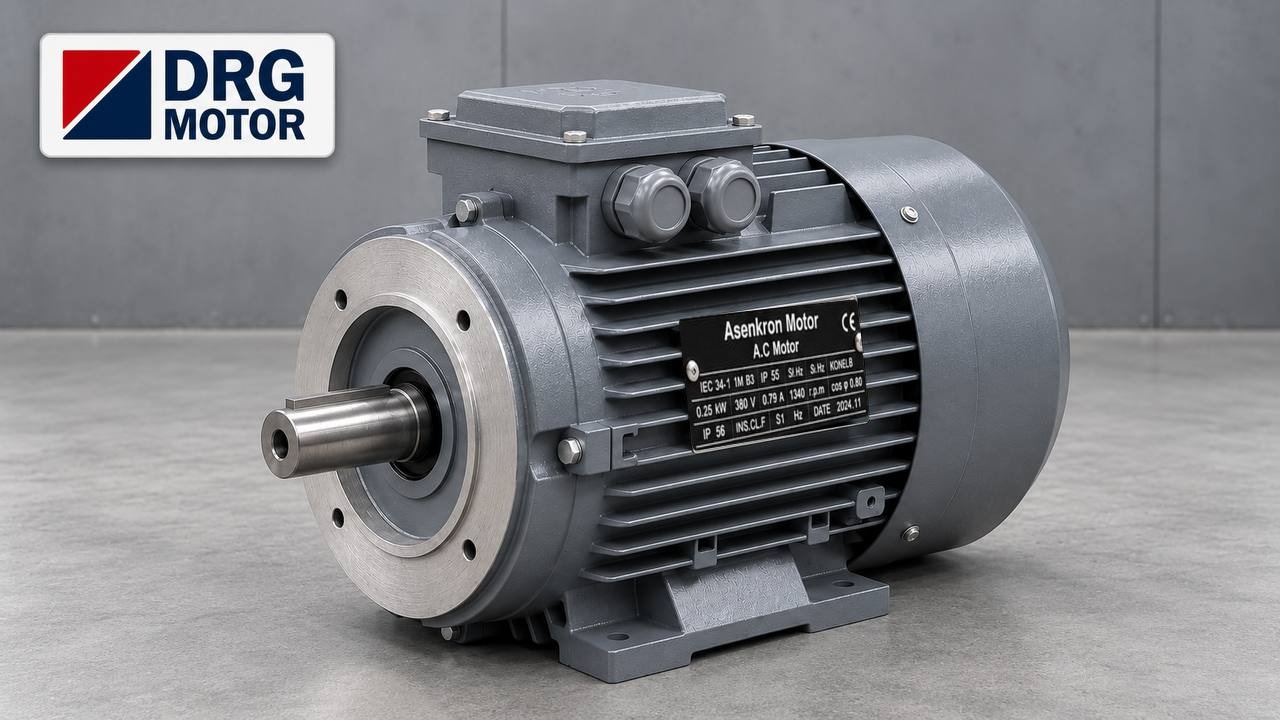

An electric motor can be priced by four different places on the same day: the factory itself, the authorised dealer in your region, the electrical supplies shop in the industrial estate and an online listing. All four appear to sell the same product, yet each builds its price on a different logic. One follows the exchange rate, one is trying to clear its stock, one hides freight inside the price, and one never mentions the warranty at all. The real job when buying an electric motor is to tell these logics apart. In this guide we look at the types of sellers, common pricing policies in the market, the hidden costs of a cheap motor and the checklist you should have in hand when choosing a supplier.
Types of Electric Motor Sellers
In Türkiye, electric motors can be bought through several channels. Each has its own strengths and limits; the right choice depends on what you need.
Manufacturer (direct factory sales)
Buying directly from the company that makes the motor removes intermediary layers. Technical questions are answered by production and engineering, and for special mounting types, flange sizes or voltages you know exactly who to talk to. Responsibility for warranty and spare parts lies in one place.
- Advantages: No intermediary margin, clear technical information, warranty directly from the manufacturer, flexibility for volume and project orders.
- Disadvantages: Some manufacturers only work with bulk orders and may refer single-unit buyers to the nearest dealer.
Authorised dealer and distributor
An authorised dealer is the manufacturer's regional representative. Dealers hold local stock and provide fast delivery and after-sales support. Distributors usually supply products to several regions.
- Advantages: Nearby location, local stock, manufacturer warranty remains valid.
- Disadvantages: The price includes a dealer margin; if the dealer's stock is limited, delivery depends on the manufacturer.
Wholesaler
Wholesalers offer a wide range from different brands. They are practical for businesses that want to source several product groups from one place.
- Advantages: Variety, one-stop sourcing.
- Disadvantages: Technical support may be limited; warranty claims can take longer because they are passed on to the manufacturer.
Retail, Online and Second-Hand Channels
Hardware stores and electrical suppliers
Useful for urgent needs with small, standard motors. However, the shelf price is usually the highest, the range is limited and it can be hard to find a technical contact to confirm nameplate data.
Online marketplaces
Comparing prices is easy, but it is not always clear whether the seller is a manufacturer, a dealer or simply a reseller. Always ask whether the product delivered matches the listing photos, in whose name the invoice is issued and who will honour the warranty.
Second-hand and rewound motor sellers
These may be an option for short-term use or as a spare. But whether the winding has been renewed, whether the bearings have been replaced and the motor's real efficiency class often cannot be documented. A rewound motor may run below its original efficiency. In continuous-duty applications, energy costs can quickly wipe out the initial price advantage.
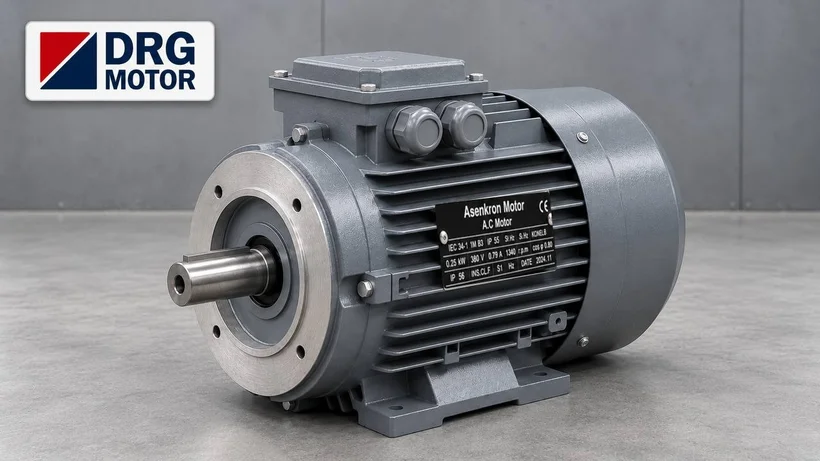
How Electric Motor Pricing Policies Work
To compare quotations properly, you need to know how the price is built. The following terms are widely used in the industry.
List price and discount logic
Many companies publish a list price and apply discounts to it depending on the customer group. When comparing two offers, look at the net unit price after discount, not at the discount rate. A high discount may simply be the result of an inflated list price.
Currency-based pricing and exchange rate updates
Because key inputs such as copper, steel and bearings are largely tied to foreign currencies, electric motor prices are often set in EUR or USD. Clarify whether the offer is in a foreign currency or Turkish lira and, if in a foreign currency, which date and which source of exchange rate will apply. For a general view of price trends, see our article on electric motor prices 2026–2030.
Volume, project and dealer pricing
Single-unit, volume and project purchases are usually priced differently. Dealers work with a separate price structure because they buy regularly. If you need a project price, sharing the total quantity, the motor mix and the delivery schedule at the outset helps you get a more realistic offer.
Cash versus deferred payment
With deferred payment, the cost of financing is reflected in the price. Stating the payment method clearly in the offer (cash in advance, bank transfer, cheque, payment term) prevents later disputes.
VAT, freight and offer validity
- VAT included or excluded? Industrial offers are mostly quoted excluding VAT; compare all offers on the same basis.
- Freight included? Ex-works, ex-warehouse and delivered-to-site are different costs. With large, heavy-frame motors, freight should not be underestimated.
- Offer validity: Because exchange rates and raw material prices change, offers are valid for a limited period. Ask for an update before ordering on an expired offer.
Stock price versus made-to-order
Standard motors in stock are delivered quickly. For special voltage, special shaft, a different flange or special paint, the motor is made to order, which may change both price and lead time. Stating in the offer whether the motor comes from stock or from production makes planning easier.
Cheap Motor Traps
The lowest price on the market does not always mean the lowest total cost. The main risks to watch for are:
- Motors that do not meet nameplate efficiency: The efficiency and power values on the label may not be verified by testing. A motor with lower real efficiency consumes more energy for years.
- Aluminium winding or reduced copper: To cut costs, aluminium may be used instead of copper in the winding, or the amount of copper may be reduced. This can increase heating and losses and shorten motor life.
- Poor-quality bearings: Bearings are among the most common sources of motor failure. Bearings of unknown origin increase the risk of vibration, noise and early failure.
- Misleading IE class claims: Phrases such as “IE3 compatible” or “high efficiency” do not necessarily mean the motor is actually IE3. Ask for the class on the nameplate, the efficiency value and the technical documents together.
- Unclear warranty: If who provides the warranty, its duration, its scope and where the motor is sent in case of failure are not written down, a cheap motor can turn out to be expensive.
Common Mistakes at the Quotation Stage
The situations that cause trouble in purchasing tend to look alike, and most of them can be avoided with a little care before ordering.
Asking for “the same one” without checking the old nameplate
When replacing a failed motor, buyers often state only the power and skip shaft diameter, flange size, frame length and speed. When the new motor arrives, the coupling or flange does not fit. Before ordering, share a photo of the old nameplate and the mounting dimensions with the seller.
Comparing offers on different terms
Comparing an offer that includes VAT and delivery to site with one that excludes VAT and is ex-works leads to the wrong decision. Convert all offers to the same terms first, then compare.
Not getting stock confirmation in writing
If “in stock” was said over the phone and approval takes a while, the stock may run out in the meantime and the motor may join the production queue. For urgent work tied to a stoppage, ask for written stock confirmation when you place the order.
Looking only at the purchase price
A fan that runs a few hours a day and a pump motor that turns throughout a shift should not be chosen with the same logic. The longer the operating time, the greater the impact of the efficiency class; weigh the price gap between IE3 and IE4 together with energy consumption.
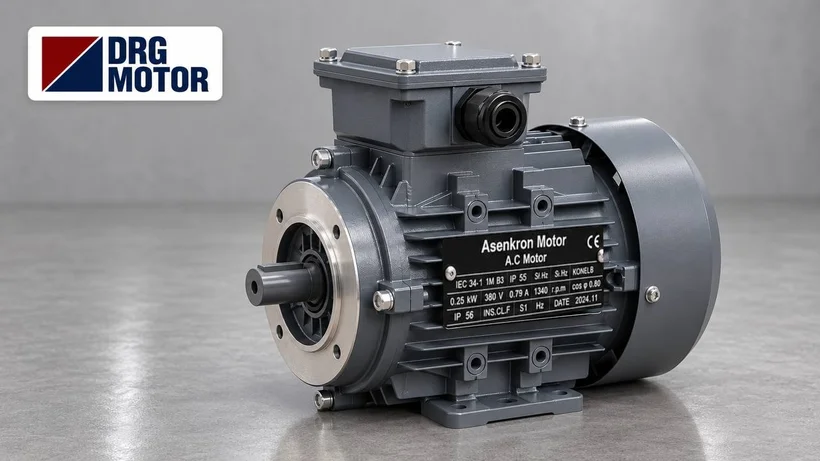
Checklist for Choosing the Right Supplier
When requesting and comparing offers, make sure each of the following is stated in writing:
- Power (kW): The rated power you need.
- Speed: The rpm corresponding to 2, 4, 6 or 8 poles.
- Mounting type: B3 (foot), B5 (flange), B14 (face flange), B35 (foot and flange).
- IE efficiency class: IE3, IE4 or IE5 and the efficiency value.
- Voltage and phase: Single-phase or three-phase; connection data such as 230 V, 400 V or 400/690 V.
- Protection class (IP): An IP rating suited to the environment.
- Warranty: Duration, scope and the company providing it.
- Lead time: From stock or from production; delivery in how many days.
- Freight: Included or excluded; place of delivery.
- Payment: Cash or deferred, currency, exchange rate basis and offer validity.
Decision guide: which seller for which situation?
- The line has stopped and a standard motor is needed: A manufacturer with written stock confirmation, or a nearby authorised dealer.
- A special flange, voltage or shaft is needed: Go directly to the manufacturer.
- A multi-item project: A project quotation from the manufacturer.
- Other product groups are bought along with the motor: A wholesaler, after confirming that the warranty comes from the manufacturer.
- Only a temporary spare is needed: A rewound motor may be considered; ask for a written record of the winding and bearing work.
DRG Motor's Approach
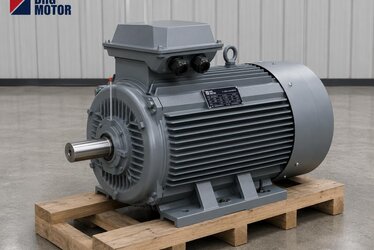
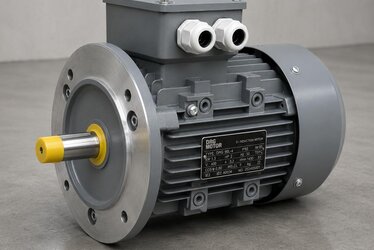
DRG Motor is an electric motor manufacturer producing in Buca, İzmir. We manufacture single-phase and three-phase motors from 0.25 kW to 355 kW in IE3, IE4 and IE5 efficiency classes. Our motors have cast iron frames and are available in B3, B5, B14 and B35 mounting types. You can see the full range on our products page.
- Direct factory sales: You work directly with the manufacturer, without intermediaries.
- Transparent offers: Our offers clearly state power, speed, mounting type, IE class, voltage, IP, warranty, lead time, freight and payment terms.
- Stock information: We tell you up front whether a motor will come from stock or from the production schedule, and we deliver in-stock motors quickly.
- Shipping across Türkiye: We ship orders to every region of the country.
- Dealership and partnership: We are open to dealership and partnership talks with companies that want to sell electric motors in their region.
Since prices vary with exchange rates and raw material conditions, we provide current pricing through quotations. You can send your request via our contact page.
Frequently Asked Questions
Should I buy an electric motor from the manufacturer or a dealer?
Both can be the right choice. If you have a special technical requirement or a project-based purchase, talking directly to the manufacturer is an advantage. If nearby stock and fast local support are the priority, an authorised dealer is practical. What matters is that the warranty is provided by the manufacturer.
Why do electric motor prices change so often?
Motor costs change as the prices of key inputs such as copper, steel and bearings, and exchange rates, change. That is why offers are usually given with a limited validity period.
Why should VAT and freight be stated separately in an offer?
If it is not stated whether VAT and freight are included, offers cannot be compared on the same basis. An offer that looks cheaper may become more expensive once these items are added.
How can I tell whether a motor is really IE3?
Check the IE class and efficiency value on the nameplate and ask the seller for technical documents and a catalogue. Rely on the class clearly printed on the nameplate and a written warranty rather than vague phrases such as “IE3 compatible”.
Contact us for a quotation, stock availability or dealership information: +90 (542) 666 11 11 – +90 (533) 777 04 44 – [email protected]. For more details, visit our contact page.