English
 Le français
 Türkçe




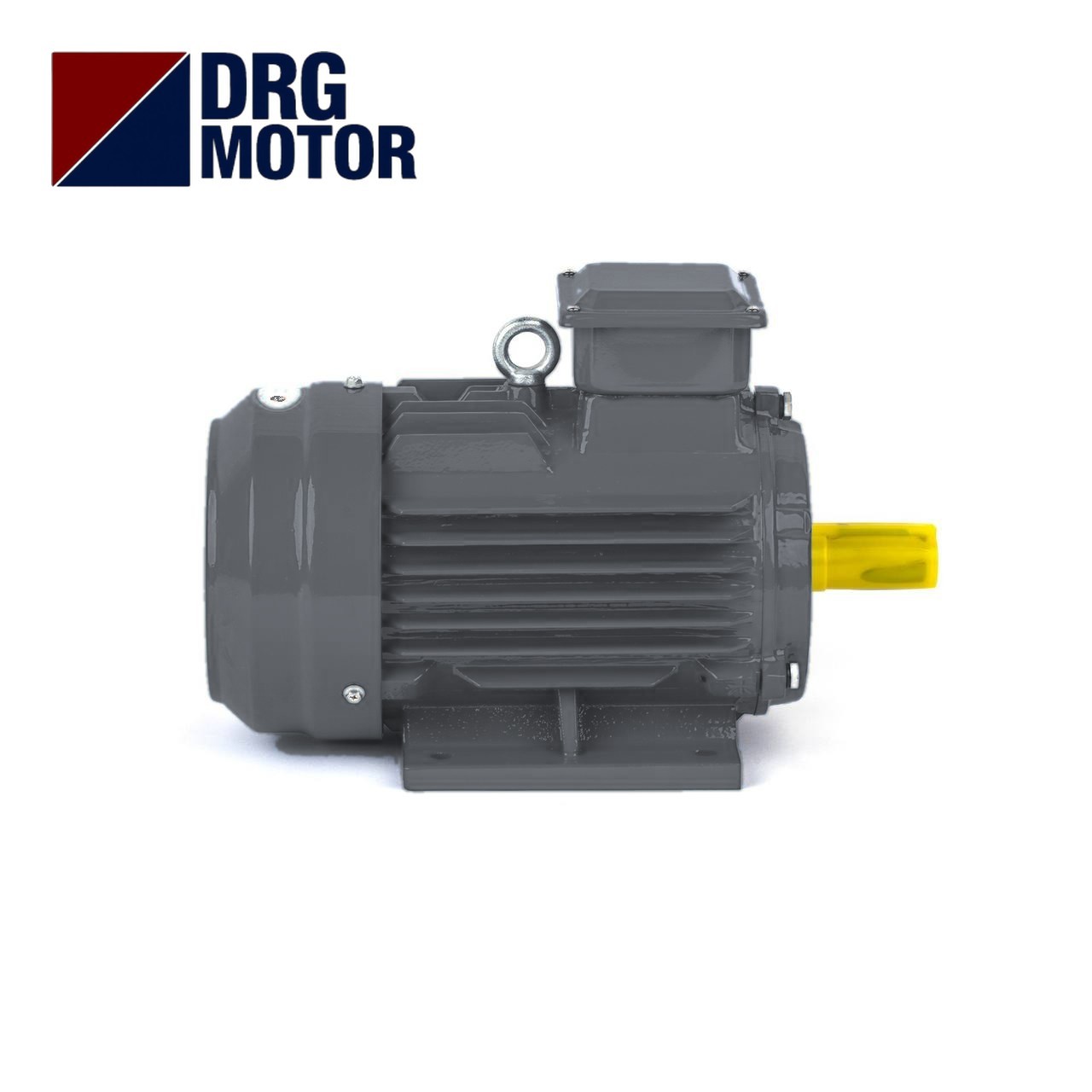

When a motor burns out, the request that reaches the purchasing department is usually a single line: “11 kW, 380 V, 1500 rpm, urgent.” That line looks sufficient for a price inquiry, yet what actually separates one quotation from another are the details it leaves out: frame material, efficiency class, mounting arrangement, the connection voltage on the nameplate and the delivery date. In this article we have gathered sample prices for cast iron IE3 three-phase motors sold from stock on the market as of October 2026, shown in figures how speed changes the price at the same power, and prepared a checklist to help you tell which “promotional” offer will really serve you.
What Should You Read First on a “380 Volt” Nameplate?
In Turkey the industrial grid is 380–400 V between phases at 50 Hz. A three-phase motor nameplate, however, often shows two voltages side by side, and you need to understand what they mean before comparing prices.
A motor marked 380 V Δ / 660 V Y delivers its full power on a 380 V grid when connected in delta (Δ); the 660 V value refers to star connection. A motor with this nameplate is suitable for star-delta starting: when connected in star at start-up, each winding sees roughly 380/√3 ≈ 220 V, starting current and torque fall to about one third, and the motor is switched to delta once it has accelerated.
The 220 V Δ / 380 V Y nameplate, common on small motors, says something different. This motor runs on a 380 V grid in star and is not suitable for star-delta starting; switched to delta, its windings would receive more voltage than they were designed for. When replacing an old motor on a line whose panel is wired for star-delta, this distinction is the first line to check, before price. The 380 V three-phase motors we supply are listed on our products page.
The 400 V nameplate and 50 Hz
New motors frequently show 400 V instead of 380 V on the nameplate. This is because IEC standards define the nominal grid voltage as 400 V. Under IEC 60034-1 a motor is designed to operate continuously within ±5% of its rated voltage; 380 V sits at the lower edge of this band, so a 400 V motor works normally on a 380 V grid. As for frequency, Turkey uses 50 Hz; if a motor designed for 50 Hz is supplied at 60 Hz, its speed rises by about 20%, which directly changes the load on a pump or fan.
Sample Price Table: Cast Iron IE3 Motors (1500 rpm)
The table below shows sample prices for cast iron, IE3 efficiency class, 4-pole (1500 rpm), 380 V three-phase motors sold from stock on the market as of October 2026. The figures are approximate, rounded to 50 TRY and excl. VAT; 20% VAT is added separately on the invoice.
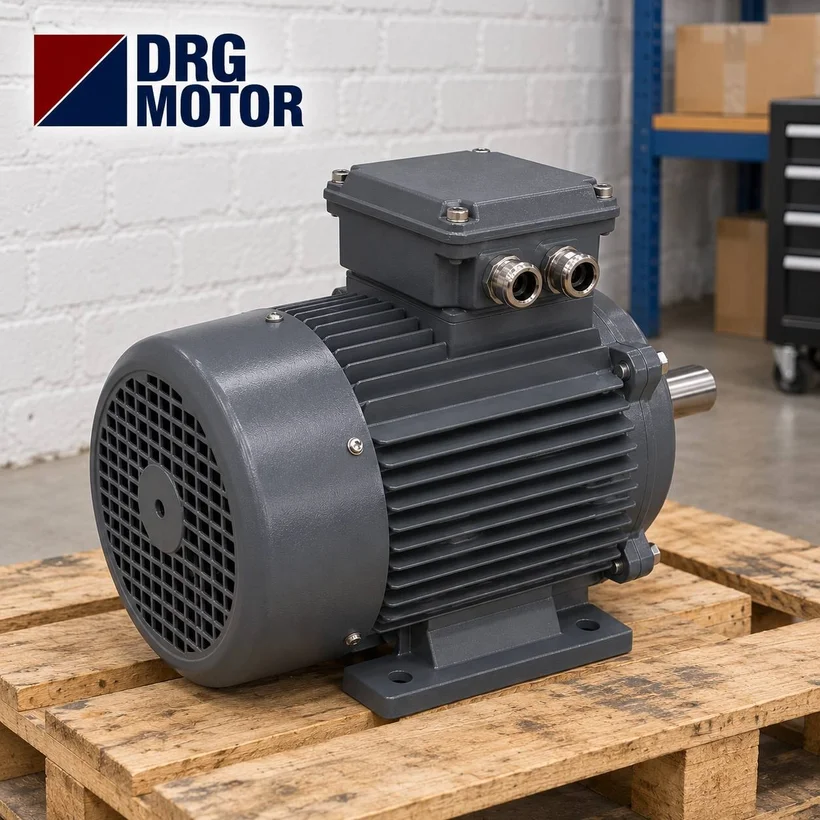
| Power (kW) | Speed (rpm) | Sample price (excl. VAT) |
|---|---|---|
| 0.75 kW | 1,500 rpm | 5,050 TRY |
| 1.5 kW | 1,500 rpm | 7,150 TRY |
| 2.2 kW | 1,500 rpm | 9,350 TRY |
| 4 kW | 1,500 rpm | 12,650 TRY |
| 5.5 kW | 1,500 rpm | 17,000 TRY |
| 7.5 kW | 1,500 rpm | 19,600 TRY |
| 11 kW | 1,500 rpm | 28,250 TRY |
| 15 kW | 1,500 rpm | 33,650 TRY |
| 22 kW | 1,500 rpm | 45,650 TRY |
| 30 kW | 1,500 rpm | 61,300 TRY |
| 37 kW | 1,500 rpm | 75,850 TRY |
| 45 kW | 1,500 rpm | 83,850 TRY |
| 55 kW | 1,500 rpm | 102,550 TRY |
| 75 kW | 1,500 rpm | 144,850 TRY |
| 90 kW | 1,500 rpm | 162,300 TRY |
| 110 kW | 1,500 rpm | 241,450 TRY |
| 132 kW | 1,500 rpm | 279,150 TRY |
| 160 kW | 1,500 rpm | 304,650 TRY |
| 200 kW | 1,500 rpm | 353,300 TRY |
| 250 kW | 1,500 rpm | 487,950 TRY |
| 315 kW | 1,500 rpm | 566,900 TRY |
This table is not a price list; it is a reference for budgeting and comparing quotations. Motor prices can change quickly with exchange rates and with copper and electrical steel prices; choices such as mounting type, shaft dimensions or protection class also affect the figure. For an exact price, send us the power, speed and mounting details and request a quotation.
Two things stand out when reading the table. First, the price per kW falls as power increases: the amount per kilowatt for a 0.75 kW motor is more than double that of an 11 kW motor, because fixed items such as the terminal box, bearings, fan, assembly and testing make up a larger share of the total price on a small motor. Second, the price steps up at certain points; for example, the increase from 90 kW to 110 kW is clearly larger than the previous steps. At these points the motor moves to the next IEC frame size: a bigger casting, a longer shaft, heavier bearings. If your power selection is borderline, knowing which side of this step you are on directly affects the budget.
Why Does the Price Change with Speed at the Same Power?
The 1000, 1500 and 3000 rpm versions of a motor with the same kW rating are not priced the same. The examples below are again for cast iron IE3 three-phase motors, excl. VAT:
| Power (kW) | Speed (rpm) | Sample price (excl. VAT) |
|---|---|---|
| 7.5 kW | 1,000 rpm | 28,750 TRY |
| 7.5 kW | 1,500 rpm | 19,600 TRY |
| 7.5 kW | 3,000 rpm | 18,350 TRY |
| 22 kW | 1,000 rpm | 59,300 TRY |
| 22 kW | 1,500 rpm | 45,650 TRY |
| 22 kW | 3,000 rpm | 42,600 TRY |
| 75 kW | 1,000 rpm | 193,100 TRY |
| 75 kW | 1,500 rpm | 144,850 TRY |
| 75 kW | 3,000 rpm | 143,200 TRY |
The source of the difference is torque. Shaft torque is approximately T (Nm) = 9550 × P (kW) / n (rpm). A 7.5 kW motor produces about 25 Nm at roughly 2900 rpm, 49 Nm at 1450 rpm and around 74 Nm at 970 rpm. Delivering the same power at a lower speed means higher torque, which requires a stator–rotor stack of larger diameter and greater length, in other words more electrical steel and more copper winding.
As the number of poles increases (2 poles ≈ 3000 rpm, 4 poles ≈ 1500 rpm, 6 poles ≈ 1000 rpm), the motor usually moves up one or two frame sizes. That is why the 6-pole motors in the table are noticeably more expensive. The small gap between 2-pole and 4-pole motors is not surprising either: a 2-pole motor uses less active material, but its high speed calls for extra care in bearing, balancing and fan design.
The practical conclusion: choose the speed according to the machine, not the price. Speed can be changed with a belt-and-pulley ratio or a gearbox, but the cost of pulleys, belts and gearboxes should be weighed together with the motor price difference.
Other Factors That Determine the Price
Efficiency class: IE3, IE4, IE5
Under ecodesign regulations in Turkey, the minimum for 2, 4, 6 and 8-pole three-phase motors from 0.75 to 1000 kW is IE3. IE4 and IE5 motors cost more because reducing losses requires more active material, lower-loss laminations and optimised slot and fan designs; IE5 is often reached with different rotor technologies that run on a drive, in which case the drive also enters the calculation. Looking at the price difference on its own is misleading; the right question is how many years it takes for the difference to be recovered through energy savings. We calculate this with an example below.
Frame: cast iron or aluminium?
An aluminium frame is light and an economical solution for low power and light loads. A cast iron frame is more resistant to vibration, impact and dusty environments, and is preferred for crushers, large pumps, fans and heavy conveyors. Because a cast frame requires more material and machining, it is generally more expensive at the same power. When comparing quotations, make sure the frame material is the same.
Mounting: B3, B5, B14, B35
A B3 foot-mounted motor sits on the floor or a base frame. B5 attaches directly to a machine, gearbox or pump with a large flange, B14 with a small face flange. B35 has both feet and a flange. Flange machining and extra parts create a price difference between mounting types at the same power. When replacing a motor, the flange diameter, spigot and shaft dimensions must match the old motor exactly.
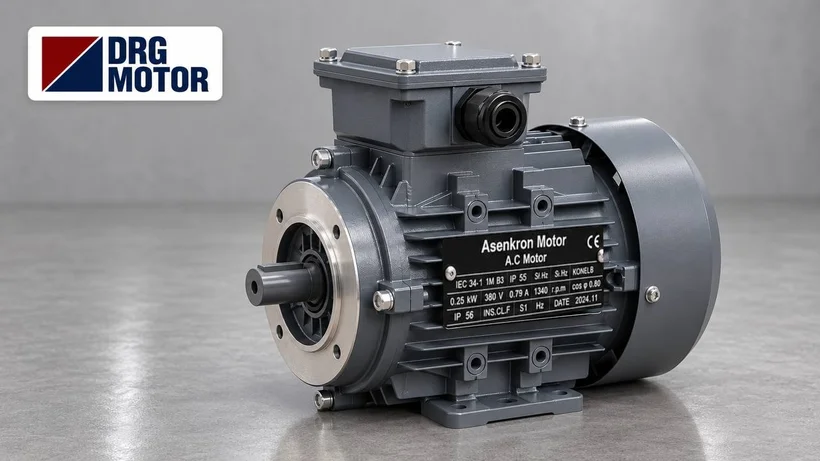
IP55 protection and other options
IP55, the accepted standard in industry, indicates that the motor is protected against dust and resistant to water jets from any direction. Higher protection, special paint, insulation selected for the ambient temperature, insulated bearings for drive operation or anti-condensation heaters all raise the price. Listing these items from the start when requesting a quotation makes the comparison fair.
Reading the Efficiency Gap in Numbers: an 11 kW Example
In IEC 60034-30-1, the minimum efficiencies for a 50 Hz, 4-pole, 11 kW motor are 91.4% for IE3 and 93.3% for IE4. The electrical power drawn from the grid is the shaft power divided by efficiency. Let us assume the motor runs at full load for 4,000 hours a year:
- IE3: 11 / 0.914 ≈ 12.04 kW input power
- IE4: 11 / 0.933 ≈ 11.79 kW input power
- Difference: about 0.245 kW × 4,000 hours ≈ 980 kWh/year
General formula: ΔE (kWh/year) = P (kW) × hours × (1/η₁ − 1/η₂). Multiply the kWh difference by your own kWh unit price to get the annual saving, and divide the price difference between IE4 and IE3 by that annual saving to obtain the payback period (years). If you run the same calculation for an old IE1 motor still in service (the IE1 minimum for 11 kW 4-pole is 87.6%), switching to IE3 gives a difference of about 2,090 kWh/year; this is the logic behind moving to a newer class instead of “finding the same one” when an old motor fails.
In a real plant a motor rarely runs at full load. For partial load, multiply the shaft power by the load ratio and take efficiency values from the supplier's partial-load data. Run the same formula with your own load profile before deciding. You can repeat this calculation for your own motor with our electric motor calculators; other articles on the topic are listed under 380 V electric motor.
Types of Promotions for 380 V Motors
The word “promotion” covers very different practices in the motor market. To read an offer correctly, you need to know which one you are dealing with:
- Quantity and project discount: a special price set according to the power mix and quantity when several motors are bought at once for a plant or a machine series.
- Cash or bank transfer payment: terms tied to the payment method, priced differently from deferred-payment sales.
- Fast delivery from stock: an advantage based on time rather than price; for a stopped line it is often worth more than a discount.
- Old motor replaced with a new one: offers aimed at renewing old, low-efficiency motors with IE3, IE4 or IE5 motors.
- Shipping on bulk orders: the seller covering shipping, or offering better shipping terms, for orders above a certain volume.
Since DRG Motor's current promotion and stock situation change from period to period, the most accurate information is available by phone; just tell us the power, speed, mounting type and quantity you need.
What to Check When Evaluating a Promotional Offer
An offer that looks discounted is not discounted if the items being compared are not the same. Before deciding, clarify these four points:
Nameplate and efficiency class
The efficiency class, voltage and connection details in the offer must appear exactly on the motor nameplate. For a motor offered as IE3, look for the IE3 marking, the rated efficiency value and the 380 V Δ / 660 V Y or 400 V information on the nameplate. If possible, ask for a photo of the nameplate before ordering.
Warranty
The warranty period and scope should be in writing: how are windings, bearings and transport damage treated, where is the motor sent in case of failure, is it replaced or repaired? A verbal warranty turns into an argument at the first failure.
Real stock
Turn “in stock” into a concrete delivery date and put it in writing with the order. If the promotion was given for a motor that is not actually in stock, the advantage can disappear along with the waiting time.
Scope of the quotation
Check whether the price is excl. VAT, whether shipping is included, whether the quotation is in TRY or foreign currency, and how many days it remains valid. Comparing offers without putting quotations of the same scope side by side gives misleading results.
Pre-Purchase Checklist
- Were power (kW) and speed (rpm) chosen according to the machine's needs, or simply copied from the old motor?
- Does the nameplate voltage suit the grid and the starting method (380 V Δ / 660 V Y for star-delta)?
- Is the frequency 50 Hz?
- Has the efficiency class (IE3, IE4, IE5) been confirmed in writing?
- Is the frame material (cast iron or aluminium) suitable for the operating environment?
- Are the mounting type (B3, B5, B14, B35), flange size, shaft diameter and shaft height the same as the old motor?
- Is the protection class at least IP55; does the environment involve dust, humidity or washing?
- Will the motor be driven by a frequency inverter, and has the seller been told?
- Is the price excl. VAT, is shipping included, how long is the quotation valid?
- Are the delivery date and warranty terms in writing?
For the motor groups we supply and their technical specifications, see our DRG electric motors page.
Frequently Asked Questions
Do the prices in the table include VAT?
No. All figures in the table are excl. VAT, and 20% VAT is added separately. The values are indicative as of October 2026; you need to request a quotation for an exact price.
Can I use a motor marked 400 V on a 380 V grid?
Yes. 380 V is within the ±5% operating band defined in the standard for a 400 V rated voltage. Simply make the connection according to the Δ/Y information on the nameplate.
Why is a 1000 rpm motor more expensive at the same kW?
Delivering the same power at a lower speed requires higher torque. That means a larger frame, more electrical steel and more copper, which is where the price difference comes from.
Is buying an IE4 motor always worthwhile?
It usually is for motors that run many hours a year at high load; for a motor that runs little, the price difference can take a long time to pay back. To decide, multiply the annual kWh difference by your own unit price and calculate the payback period.
How can I find out about DRG Motor's current promotion?
Because promotions and stock levels change, we recommend calling us. Sending the power, speed, mounting type and quantity is enough for us to prepare a clear quotation quickly.
Contact Us for a Quotation and Information
For your 380 V three-phase motor requirements, project pricing or current promotions, call us at +90 (542) 666 11 11 and +90 (533) 777 04 44, or write to [email protected]. For our address and other details, visit our contact page.