English
 Le français
 Türkçe




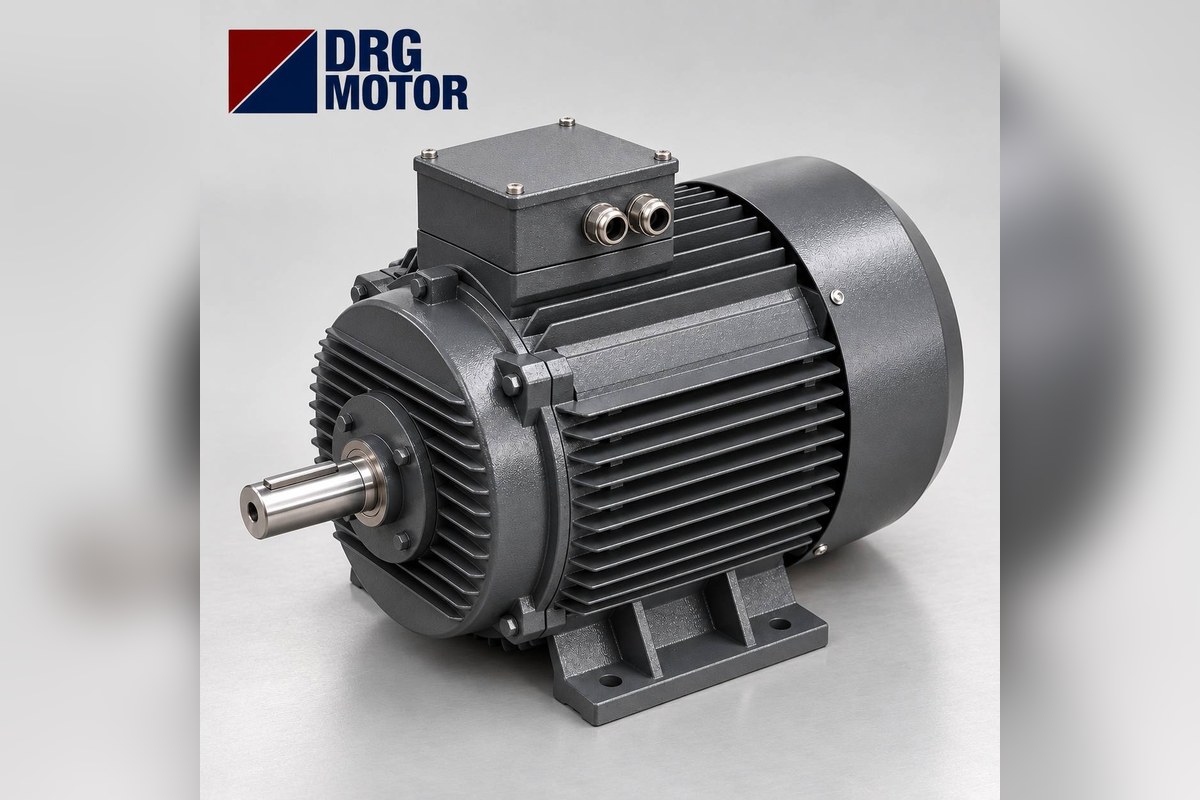

The motor power of a tahini mill is set by stone diameter and hourly output; three-phase 4-pole (1460–1470 rpm) belt-driven motors of 5.5–7.5 kW are common on workshop stone mills and 11–18.5 kW on industrial stone and steel mills. The exact power is the value on the machine nameplate; the real issue here is that the motor can start with loaded stones and that its current does not exceed the nameplate value while the stone gap is being set. For example, the 15 kW DRG-160L-4 draws 27.3 A at 400 V and delivers 2.2 times its rated torque at start.
Tahini, ground sesame paste, is an oily product that becomes more fluid as it warms between the stones and thickens when it stops. So if the mill stops at the end of the day with product between the stones, the next morning the motor must start by breaking through a cold, stiff layer. Panel and connection work must be done by a qualified electrician. You will find motors of suitable power and current prices among the 120 models in our online store.
3 habits that burn out tahini mill motors
- Starting with the stones tightened: When the stone gap is left at last night's fine setting, the motor tries to turn stones full of cold tahini; starting drags on, the overload trips or the winding overheats.
- Increasing fineness without watching the current: Bringing the stones closer makes the product finer but raises the torque. On a panel without an ammeter the operator does not notice that the motor is at its limit.
- Turning the overload up: Setting the overload above the nameplate "so it doesn't trip" leaves the motor unprotected; the winding burns in weeks instead of seasons.
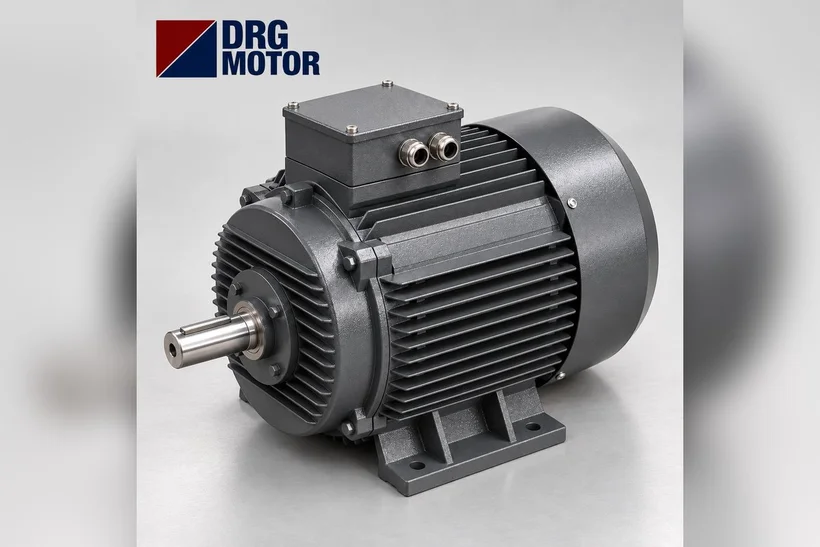
How do you set the stone gap by watching the current?
The most practical way to see the motor load on a mill is to fit an ammeter (or a motor protection relay with current display) to the panel. In an induction motor current rises with load; but because cos φ drops at low load, current is not strictly proportional to power. Read the table below as a "setting window": the aim is to finish the fine adjustment below the motor's nameplate current. Example: 15 kW DRG-160L-4, rated current 27.3 A at 400 V.
| Ammeter | Share of rated current | What it means | What to do |
|---|---|---|---|
| ≈ 13.7 A | 50% | Stones open, little product | Raise feed or tighten |
| ≈ 19.1 A | 70% | Comfortable running | Fine adjustment can begin |
| ≈ 23.2 A | 85% | Recommended upper zone | Stay in this zone |
| 27.3 A | 100% | Nameplate limit | Open the stones slightly |
| ≈ 30 A | 110% | Overload | Open at once, check heat |
Adapt the percentages by multiplying them by your own motor's nameplate current. The overload relay is set to the nameplate current, not above it; check the selection with the overload-fuse-contactor selection tool and the currents of other ratings in the motor current chart. If the ammeter stays close to 100% even without tightening, the motor is too small for the machine; before moving up a size, check stone wear and belt slip.
Starting with loaded stones: is star-delta enough?
In the DRG catalogue, motors from 4 kW upwards are 400/690 V, run in delta on a 400 V network and are suitable for star-delta starting. But in star the motor torque falls to one third. The 15 kW DRG-160L-4 gives a direct-on-line starting torque of 97.8 × 2.2 ≈ 215.2 Nm, which drops to roughly 71.7 Nm in star; that is below the 97.8 Nm rated torque. So with cooled tahini between the stones, the motor often cannot accelerate in star, and the switch to delta causes a large current surge.
- Simplest fix: At the end of the day empty the stones and stop with them open; start in the morning with the stones open and adjust only once the motor has reached full speed.
- Direct-on-line start: If the supply allows, the short starting current at 15 kW is 27.3 A × 7.8 ≈ 212.9 A; fuses and cable are chosen accordingly.
- Soft starter: Limits current but also reduces torque; for a loaded start the current limit must be set high.
- Inverter: Can give high torque at low speed, keeps starting current near rated and lets you adjust stone speed to the product.
We compare the pros and cons in our article star-delta or soft starter; you can calculate for your own motor with the starting methods tool.
Click to see current electric motor prices and order nowSEE PRICES →
4-pole with belt, or 6-pole? Stone speed calculation
Stone speed is set by the pulley ratio: nstone = nmotor × d1 / d2; torque at the stone shaft grows in the same proportion: Tstone ≈ Tmotor × d2 / d1 (belt losses ignored). The example below assumes a 400 mm stone pulley and a target stone speed of about 440 rpm; these are example values, your machine's value is in the maker's documents.
| Option | Motor pulley | Stone speed | Torque at stone shaft |
|---|---|---|---|
| DRG-160M-4 · 11 kW | 120 mm | ≈ 440 rpm | ≈ 239 Nm |
| DRG-160L-6 · 11 kW | 180 mm | ≈ 436 rpm | ≈ 241 Nm |
At the same power both options give almost the same torque at the stone shaft; the difference is in the details. Because the 6-pole motor runs with a larger pulley, the belt wraps around it at a wider angle and slips less, and the belt force on shaft and bearing is lower. On the other hand, the 6-pole 11 kW motor draws 22.0 A at 400 V (20.4 A for the 4-pole), its cos φ is 0.80 (0.85 for the 4-pole) and its frame is larger (160L). If the old machine has a 4-pole motor with a small pulley, keeping the same layout means the fewest changes. You can try pulley diameters with your own values in the pulley-belt calculator.
Heat: is the motor hot, or the product?
Tahini heats up by friction between the stones, and that heat can pass from the stone housing to the frame and from the frame to the motor. A motor housing too hot to touch is not a fault in itself; but if the temperature rises day after day, look for the cause.
- Mount the motor on a separate slide rail or base rather than on the mill housing if possible; belt tension is adjusted with the rail.
- Do not let sesame sacks, crates or dust pile up in front of the fan cover.
- Sesame dust and oil vapour form a sticky layer on the housing fins; wipe it off regularly.
- If the motor heats up while current is below the nameplate value, have the voltage and the balance of the three phases measured.
- Do not over-tighten the belt; drive-end bearing heat often comes from belt force.
Stone mill or steel mill: the difference for the motor
On a stone mill the inertia of the heavy stone lengthens the start but steadies the load while running; on a steel (disc or colloid-type) mill the rotating mass is small and the motor accelerates quickly, but fine adjustment is more sensitive and current rises fast with a small turn of the adjusting screw. That makes the ammeter even more important on a steel mill. On a stone mill, because the start is long, the trip class of the overload relay and the fuse type must be chosen to tolerate a long start; if starting hangs, first make sure the stones are open.
Which DRG motor should you buy for a tahini mill?
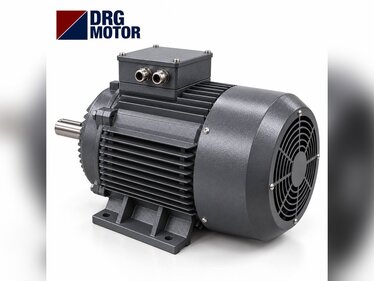
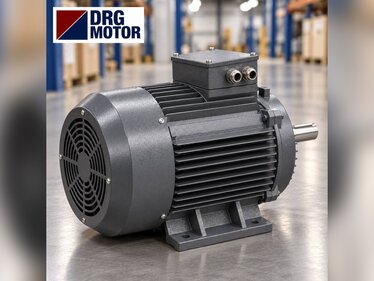
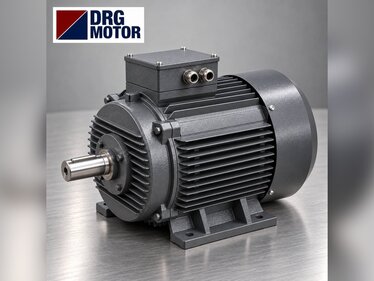
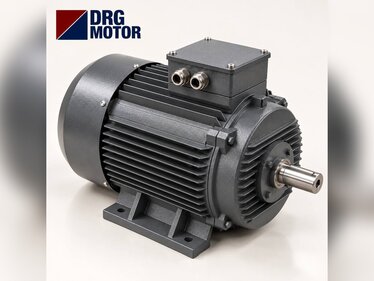
Below are 4-pole cast iron models for the usual range of belt-driven stone and steel mills, plus a 6-pole option for a large-pulley layout. Choose while keeping the old motor's pole number and shaft size.
| Model | Power / speed | Frame | Current 400 V |
|---|---|---|---|
| DRG-132S-4 | 5.5 kW / 1460 rpm | 132S · cast iron | 10.7 A |
| DRG-132M-4 | 7.5 kW / 1460 rpm | 132M · cast iron | 14.3 A |
| DRG-160M-4 | 11 kW / 1465 rpm | 160M · cast iron | 20.4 A |
| DRG-160L-4 | 15 kW / 1465 rpm | 160L · cast iron | 27.3 A |
| DRG-180M-4 | 18.5 kW / 1470 rpm | 180M · cast iron | 33.5 A |
| DRG-160L-6 | 11 kW / 970 rpm | 160L · cast iron | 22 A |
Data for the 15 kW 4-pole model often found on an industrial stone mill:
- Power: 15 kW
- Rated speed: 1465 rpm
- Frame: 160L · cast iron
- Current 400 V: 27.3 A
- cos φ: 0.86
- Rated torque: 97.8 Nm
- Starting torque: 2.2 × Tn
- Starting current: 7.8 × In
- Shaft D × E: 42 × 110 mm
- Bearing: 6309-C3
- Voltage: 400/690 V (Δ/Y)
DRG Motor is a manufacturer, supplier and seller of electric motors; DRG MOTOR motors are guaranteed against material and manufacturing defects for 2 years from the date of delivery (warranty certificate).
Motors in this power range
- DRG-132M-4 – 7.5 kW – 1460 rpm – 132M cast iron
- DRG-160M-4 – 11 kW – 1465 rpm – 160M cast iron
- DRG-160L-4 – 15 kW – 1465 rpm – 160L cast iron
- DRG-180M-4 – 18.5 kW – 1470 rpm – 180M cast iron
- DRG-160L-6 – 11 kW – 970 rpm – 160L cast iron
Click to see current prices and order these motors nowSEE PRICES →
Frequently Asked Questions
How many kW should a tahini mill motor be?
It depends on stone diameter and output: 5.5–7.5 kW is common on workshop stone mills and 11–18.5 kW on industrial stone and steel mills. The exact value is on the machine nameplate.
What speed is a tahini mill motor?
Mostly a 4-pole motor at 1460–1470 rpm, with the stone speed reduced by belt and pulley. On large-pulley layouts a 6-pole (970 rpm) motor can also be used.
Why does a tahini mill trip its overload?
Most often because it starts with the stones tight and cold product between them, or because the current exceeds the nameplate value during fine adjustment. Start with the stones open, adjust while watching the ammeter, and never set the overload above the nameplate current.
How many amps does a 15 kW tahini mill motor draw?
The DRG-160L-4 (15 kW, 4-pole) takes 27.3 A on a 400 V supply and 28.8 A on 380 V; fuse selection must allow for the starting surge of about 7.8 times.
Send us your mill's nameplate, pulley diameters and the starting method in the panel, and we will choose the right DRG model together. Phone +90 (542) 666 11 11, e-mail [email protected], contact page. Current prices of motors suited to your mill: Buy Electric Motors Online.