 English
 Le français
 Türkçe

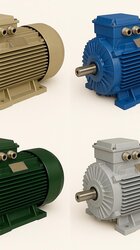
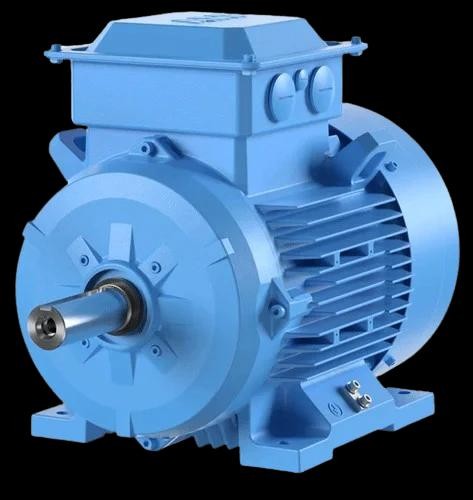

Glass manufacturing is an uninterrupted chain of processes that stretches from melting raw materials at extreme temperatures to controlled cooling of the finished product. Every link in this chain involves air movement, material handling, mixing and heat management, and behind all of them sits a rotating electric motor. In a glass plant, dozens of drive points depend on a correctly selected AC induction motor: from the fan that feeds combustion air to the furnace, to the exhaust fan that pulls hot flue gas out, from the agitator that homogenizes the melt to the conveyor that carries product into the annealing lehr. This article examines the special demands that the glass industry places on motors, the conditions of heat and continuous operation, and why energy efficiency is so decisive in this branch of production.
Motor selection in glass plants differs from an ordinary industrial application. Production runs around the clock, seven days a week; once a furnace is commissioned it operates for years without cooling down. As a result, a failure of the drive equipment puts not just a single machine but the entire line at risk. For readers who want a broad framework on the subject, our article on industrial electric motors offers a good starting point.
The Role of the Motor in the Glass Production Process
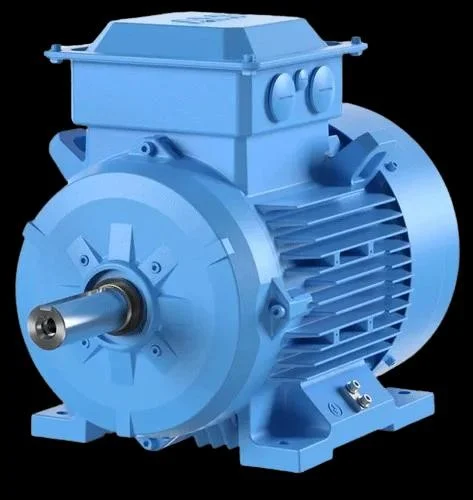
When we view a glass factory as a whole, the electric motor is an invisible backbone that keeps every stage standing. Batch preparation, feeding into the furnace, processing of the melt, forming and cooling: rotating drive elements work throughout all five of these main phases. The power range of these motors spans from a few kilowatts to several hundred kilowatts, and a different load character emerges at each point.
Furnace Combustion Air Fan
At the heart of the glass furnace, continuous and controlled combustion is required to melt raw material at temperatures approaching 1500 °C. The combustion air fans that feed this process carry oxygen to the furnace in the right proportion. Here the fan motor must run with both high flow and stability; even the smallest fluctuation in air affects the flame temperature and therefore the glass quality. For this reason the efficiency and speed stability of fan motors are critical. We examined the fundamental principles of fan selection in detail in our article on fan and blower electric motor selection.
Exhaust and Flue Gas Fans
The hot flue gases produced during melting must be evacuated in a controlled manner. Exhaust fans draw the high-temperature gas out of the system, balancing furnace pressure and directing the gas toward heat recovery units. Because the motors driving these fans are located in areas of high ambient temperature, they are thermally stressed. A motor chosen in the correct class keeps its winding temperature within a safe range even under continuous load.
Melt Agitator and Homogenizer Drives
The homogeneity of the glass melt in terms of color, density and viscosity directly determines the optical quality of the final product. The agitator drives that stir the melt must produce high torque at low speed in a dense and viscous medium. In this application the motor is usually paired with a gearbox to achieve slow but powerful rotation. Proper operation of the agitator ensures that bubbles and temperature differences in the melt are eliminated.
Annealing Lehr Conveyor Drive
The formed glass product is passed through the annealing lehr at a controlled speed to relieve its internal stresses. The motor driving the conveyor belt of this furnace must provide constant, vibration-free speed, because the smallest fluctuation in speed leads to permanent stresses and fractures within the glass. You can find the subtleties of motor and gearbox selection for conveyor drives in our article on conveyor belt electric motor selection.
Cooling Fans and Air Management
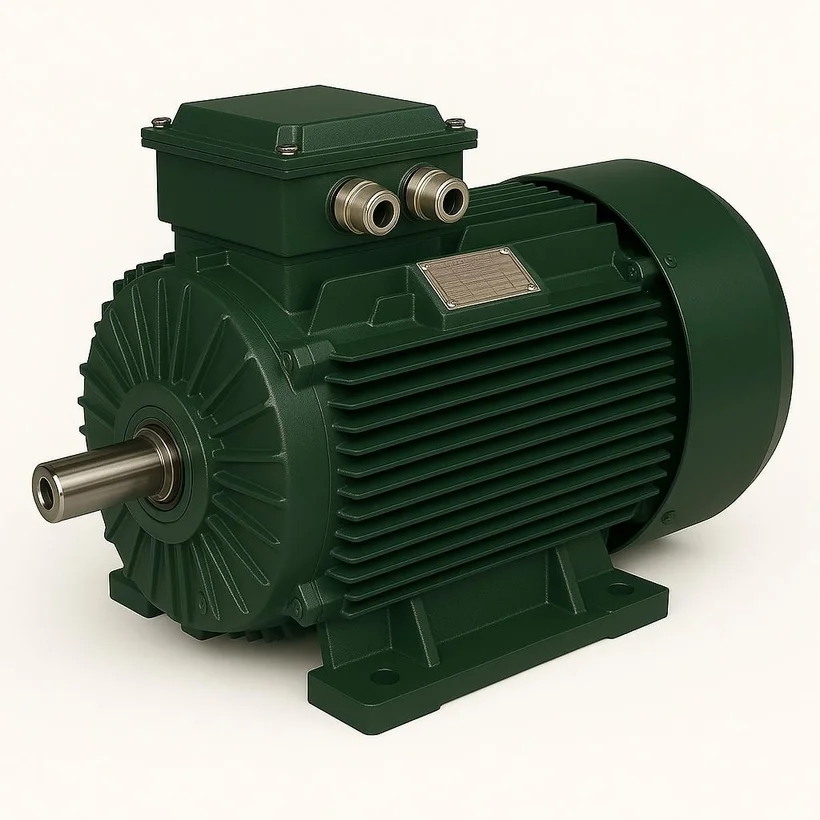
After leaving the mold, the hot glass product is cooled gradually. The fans that provide this cooling blow controlled air both over the product and over the production equipment. When cooling fan motors can adjust their flow according to production speed, both energy savings and a more stable product quality are achieved. Here speed control offers a clear advantage over fixed-speed operation.
The Effect of the High-Temperature Environment on the Motor
A glass factory is a harsh environment for motors. The ambient temperature around the furnace easily exceeds 40-50 °C. A standard motor gives its rated values based on a 40 °C ambient temperature; in hotter surroundings the power the motor can deliver drops. For this reason motors in glass plants are usually selected somewhat oversized or fitted with insulation suited to a higher temperature class. Monitoring and controlling winding temperature directly affects motor life; we addressed this topic in depth in our article on electric motor temperature control.
Dust and Particle Protection
The sand, soda and limestone dusts that form the raw material of glass remain suspended in the air and seep into the motor, wearing down both the insulation and the bearings. For this reason the protection class (IP) of motors used in glass plants must be determined carefully. At least IP55 protection is preferred in dusty areas. We explained which protection class is required in which environment in our article on electric motor IP protection class.
Continuous Operation and Reliability
In glass production, downtime is literally a cost. If a furnace cools, restarting it takes days and the melt inside can solidify and damage the furnace. For this reason the motors used in glass plants must be able to operate safely in a continuous (S1) duty regime. Keeping spare motors in stock, performing planned maintenance and monitoring vibration are the basic measures that increase reliability.
Comparison: Drive Points and Motor Expectations
The main drive points in a glass factory and their demands on the motor are summarized in the table below:
| Drive Point | Load Character | Key Expectation |
|---|---|---|
| Combustion air fan | Variable flow | Speed stability, efficiency |
| Exhaust fan | Continuous high flow | Temperature resistance |
| Melt agitator | High torque, low speed | Torque capacity |
| Lehr conveyor | Constant speed | Vibration-free, stable speed |
| Cooling fan | Adjustable flow | Speed control, savings |
The Decisive Role of Energy Efficiency
A glass factory is a heavy energy consumer. Since fans, pumps and conveying systems run 24 hours a day, even the smallest improvement in motor efficiency turns into a large saving by the end of the year. Motors in the IE3, IE4 and IE5 efficiency classes produce significantly fewer losses than standard motors. These losses are reflected directly both in the electricity bill and in the factory's carbon footprint. We explained in detail what the efficiency classes mean in our article on high-efficiency electric motors.
Flow Control with a Frequency Inverter
The most efficient way to control the flow of fans and pumps in glass plants is to use a frequency inverter. Instead of classic throttling dampers or valves, adjusting the motor speed directly lowers energy consumption with a cubic relationship; that is, halving the speed can theoretically reduce the power down to one-eighth. We explained the benefits of this approach with examples in our article on energy saving with a frequency inverter.
Vector Control and Stable Speed
In applications where torque and speed are sensitive, such as agitators and conveyors, vector control is preferred over simple V/f control. Vector control secures product quality by providing high and stable torque even at low speeds. We compared the differences between the two control methods in our article on the difference between inverter V/f and vector control.
Noise and Vibration Management
In glass production, vibration is not just a comfort issue; a vibration on the annealing line can cause micro-cracks in glass whose stress has not yet been relieved. For this reason it is important that conveyor and fan motors be balanced and low-vibration. We gathered the ways to reduce vibration in our article on reducing electric motor noise and vibration.
Pump Drives and Auxiliary Systems
In a glass factory, cooling water circuits, hydraulic units and lubrication systems are also driven by motors. The continuous and reliable operation of these pumps is necessary to protect the main production equipment. We examined the basic criteria for pump motor selection in our article on water pump electric motor selection. For those who want to recall the basic working principles of the motor, our article on what is an electric motor will be useful.
Maintenance Strategy and Lifetime Cost
Motor selection in a glass plant should not be based on purchase price alone. The largest part of a motor's lifetime cost comes from energy consumption; a cheap, low-efficiency motor soon pays back the difference as a bill. A high-efficiency motor, on the other hand, heats up less, lasts longer and requires less maintenance. Planned maintenance, regular bearing checks and insulation resistance measurement prevent unexpected downtime.
Selecting the Right Power and Speed
Each drive point in a glass factory requires a different power and speed. Fan motors usually run at high speed, while agitator and conveyor drives need high torque at low speed. The rated power of the motor should be selected neither much larger nor much smaller than the actual load; an oversized motor runs inefficiently at low load, while an undersized motor is constantly stressed and overheats. Correct sizing is a fundamental step for both efficiency and reliability.
Different Needs on Float Glass and Container Glass Lines
Glass production is not a single technology. On float lines producing flat glass, the melt is floated over a bath of molten tin to obtain a perfectly smooth surface; here the speed synchronization of the motors driving the transport rollers must be extremely precise. On lines producing container glass such as bottles and jars, the drives of the feeding machines, mold mechanisms and transport systems come to the fore. Both forms of production require different torque and speed profiles, so motor selection must be customized to the production technology. On a float line, a speed mismatch between one roller and another can leave permanent marks in the still-soft glass.
Batch Preparation and Feeding Section
The first step in glass production is the batch preparation section, where sand, soda, limestone and other additives are mixed in the correct proportions. In this section, belt conveyors, bucket elevators, screw feeders and mixers are driven by electric motors. Since a dusty and abrasive environment is involved, the motors here must have both a high protection class and a design resistant to overload conditions. A disruption in batch feeding causes the furnace level to change and therefore the glass quality to deteriorate, so the reliability of the feed drives is decisive at the very start of the production chain.
Cutting, Processing and Packaging Line
At the cold end, that is the final phase of glass production, the product is cut, its edges processed, inspected and packaged. The cutting tables, grinding units and packaging robots on this line also run on electric motors. Speed and position accuracy come to the fore in cold-end drives; especially in automatic cutting and stacking systems, the motor must respond quickly to commands and position precisely during stops. In these applications, the precise speed control performed with a frequency inverter both lowers the scrap rate and increases line efficiency.
Motor Insulation Class and Thermal Reserve
The hot environment of the glass factory directly affects the choice of motor insulation. The insulation class determines the highest temperature the winding can withstand. For motors operating in hot environments, choosing a higher insulation class leaves a thermal reserve and protects the motor against unexpected temperature rises. This thermal reserve is one of the most important factors that extend the life of the motor, because every ten-degree rise in winding temperature roughly halves the life of the insulation. For this reason the insulation class must be chosen deliberately in glass plants.
Grid Fluctuations and Protection
Since glass factories house high-power motors, fluctuations in grid voltage and phase loss are a serious threat to the motors. Phase protection relays, overcurrent protection and correctly set thermal protection ensure that motors are protected from unexpected failures. Especially in large fan and pump motors, the high current at the moment of starting can cause a voltage drop on the grid; to soften this situation, soft starters or frequency inverters are used. A correct protection strategy secures both the motor and production continuity.
The Importance of Inverter-Compatible Motor Design
As the use of frequency inverters becomes widespread in glass factories, it has become important for motors to be designed to suit this form of control. Inverter-fed motors are exposed to additional voltage stresses and higher-frequency components due to switching. Motors with insulation reinforced to withstand these conditions operate trouble-free for many years. In addition, in fan and agitator motors that run for long periods at low speed, the motor's own cooling weakens, so additional cooling solutions are deployed in demanding applications. Treating the motor and inverter as a whole gives the most efficient and reliable result, so the motor and drive should be selected together when designing the drive system.
Spare Planning for Production Continuity
Since the cost of an unplanned stop in a glass factory is very high, spare planning for critical drive points is a wise investment. Keeping motors of commonly used power and speed values in stock allows the line to restart quickly in case of a fault. Motors produced in standard frame sizes and common mounting arrangements make this spare strategy easier, because the same motor type can be used at different points. This standardization both lowers stock cost and eases the work of the maintenance team. A well-planned spare strategy is like an insurance policy for production continuity.
DRG Motor Advantage in the Glass Sector
DRG Motor offers IE3, IE4 and IE5 efficiency-class AC induction motors designed to withstand the uninterrupted and demanding conditions of glass production. Insulation suited to high-temperature environments, a high IP protection class for dusty areas, and full compatibility with frequency inverters make DRG motors a reliable choice for the fan, exhaust, agitator, conveyor and cooling applications of glass factories. To select a solution with the right power, speed and efficiency class for every drive point on your production line, you can contact the DRG Motor engineering team and secure production continuity while lowering your factory's energy cost.