 English
 Le français
 Türkçe

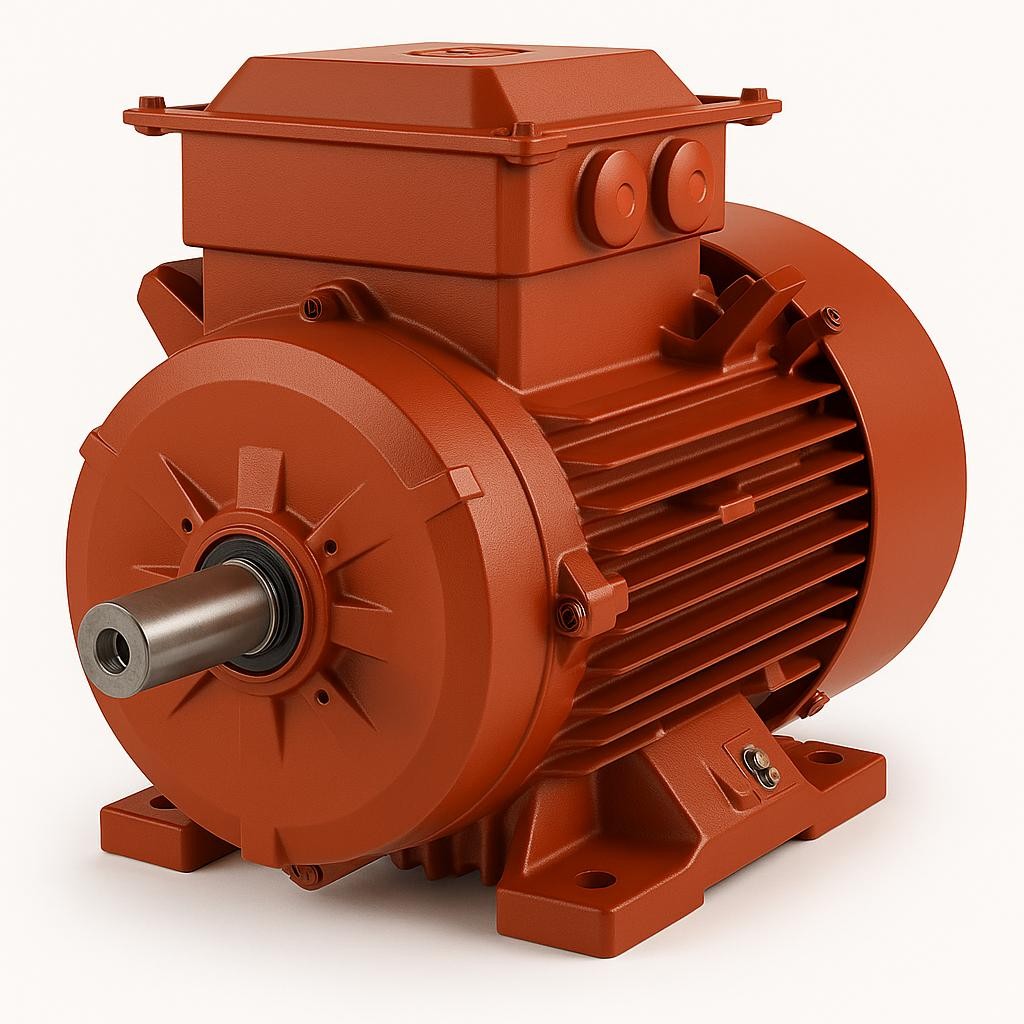
Heavy-duty high-kW electric motors are durable motors designed to run continuously and intensively in demanding industrial conditions. High starting torque, a heavy cast iron frame and a wide thermal margin are what keep these units running where impact and continuous load would age a standard motor early.
Resistance to Heavy-Duty Conditions
Heavy applications such as mining, stone crushing, iron-steel and large pump-fan systems require motors resistant to impact, vibration and continuous load. Our motors, produced with a cast iron body, IP55 protection, F insulation and the S1 continuous duty standard, provide long-lasting performance in these conditions.
Where the Heavy-Duty Range Sits in the Catalogue
Heavy-duty duty points cluster in the upper half of the 0.55 kW to 355 kW range, and crusher and vibration versions are the two families built for them. IE3, IE4 and IE5 classes are available across those sizes; at the hours a crushing line runs, the class difference is repaid faster here than anywhere else in the catalogue. B3, B5 and B35 frames cover the usual base and flange arrangements.
Windings, Frame and the Tests That Matter Here
100% pure copper windings, a cast iron frame, IP55 protection and class F insulation, to IEC 60034 and EU Ecodesign. Under S1 continuous duty the vibration and balance measurement is the test that predicts bearing life, and it is run on every unit together with insulation, efficiency and load checks before shipment.
Downtime Cost and Stock Depth
An hour of stopped crushing costs more than the motor. Stock is held in İzmir and standard powers ship the same day to every province in Türkiye, but for a critical drive the safer plan is a spare on the shelf before the failure. Our team helps size that spare against the existing nameplate.
What to Send Before Sizing a Heavy-Duty Drive
For a heavy-duty drive, power and speed alone are not enough. Send the starting frequency, the load type behind the shaft and the ambient dust and temperature as well. Those four decide whether the standard S1 unit is enough or the duty needs a reinforced version, and the reply names the model, the class and the stock position.
Frequently Asked Questions
Where does the difference show up in service?
It shows up in bearing life and winding temperature. A reinforced frame, larger cooling surface and wider insulation margin let the unit hold rated output under continuous load and repeated shock, where a standard motor would run hot and lose bearings first.
Which sizes are usual for crushing and mining lines?
Crushing, mining and large pump-fan drives normally sit in the upper part of the 0.55 kW to 355 kW range. All standard speed and mounting options are available there; the sizing is done against the load curve, not against the previous motor's label alone.