English
 Le français
 Türkçe




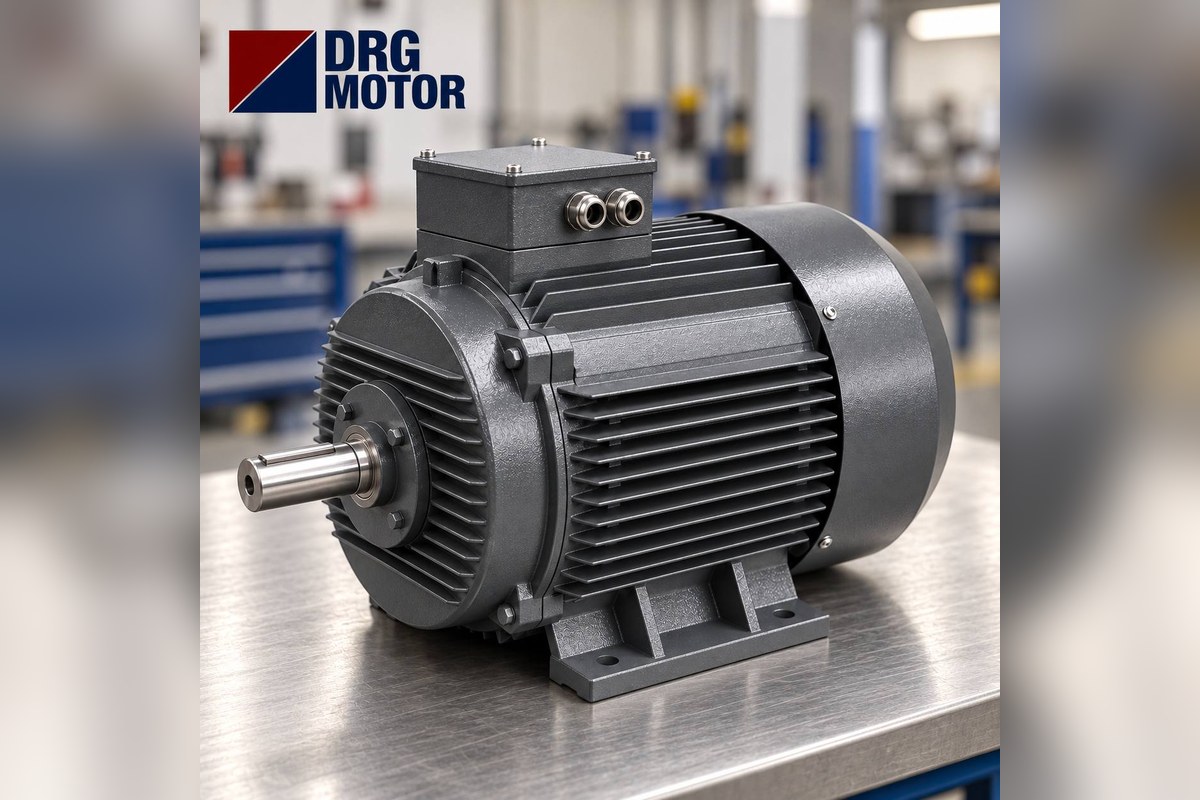

The motor of a pressure car-wash machine is determined by the pump's flow and working pressure: a 15 l/min – 150 bar pump needs roughly 4.4 kW of shaft power and runs comfortably with a 5.5 kW, 1500 rpm three-phase motor (for example DRG-132S-4, 10.7 A at 400 V); at the same flow, raising the pressure to 200 bar lifts the requirement to 5.9 kW and you need to move to 7.5 kW. In short, you choose the motor not by the sign on the wall, the number of cars or the tank size, but by two figures on the pump label — litres per minute and bar.
The second factor is pump speed. Piston high-pressure pumps are built either for 1450 rpm (4-pole motor) or 2900 rpm (2-pole motor), and a motor with the wrong number of poles either leaves the pump at half flow or overloads it. Wiring and panel changes must always be done by a qualified electrician; a wash bay means wet floors, and an earthing fault there is a direct safety hazard. You can see suitable models and current prices among the 120 models on the Buy Electric Motors Online page.
The 3 most common mistakes with car-wash motors
- Raising the pressure but keeping the motor: A smaller nozzle or a tighter pressure regulator asks more power from the motor. A machine set up for 150 bar at 5.5 kW will trip its overload at 200 bar.
- Fitting a 2900 rpm motor to a 1450 rpm pump: In a piston pump, flow is proportional to speed; doubling the speed roughly doubles the flow and the power needed, and the pump's valves and seals are not made for that speed.
- Leaving the terminal box with the gland facing up: In a wash bay the real cause of failure is not water on the motor, but water entering through the cable entry. The gland should face down and the cable should come in with a drip loop.
How many kW do you need? Calculating from flow and pressure
The practical formula for the shaft power of a piston pump is: P (kW) = Q (l/min) × p (bar) / (600 × η). Here η is the pump efficiency; if the pump maker gives no value, 0.85 can be used as a cautious assumption. The examples below use this assumption and round up to the next standard motor rating. For the same logic applied to hydraulic pumps, see our article on hydraulic pump motor power calculation; the flow and system pressure concepts there apply here too.
| Flow | Pressure | Calculated power | Motor to select |
|---|---|---|---|
| 15 l/min | 150 bar | 4.41 kW | DRG-132S-4 · 5.5 kW |
| 15 l/min | 200 bar | 5.88 kW | DRG-132M-4 · 7.5 kW |
| 21 l/min | 200 bar | 8.24 kW | DRG-160M-4 · 11 kW |
| 30 l/min | 150 bar | 8.82 kW | DRG-160M-4 · 11 kW |
Two conclusions follow. First, on the same 15 l/min pump, going from 150 to 200 bar moves the calculated power from 4.41 kW to 5.88 kW, and a 5.5 kW motor is no longer enough. Second, if the calculated value is very close to a standard rating (e.g. 8.24 kW), step up one size, because the absorbed power drifts as the nozzle wears and the pressure setting shifts. To calculate with your own values, use the pump motor power calculator. The real requirement is still the power on the pump maker's plate; the formula is a check for pumps whose plate is unreadable or that have been modified.
1450 rpm or 2900 rpm? Matching the motor to the pump speed
The label on the pump body states its maximum speed. A 1450 rpm pump pairs with a 4-pole motor (1450–1465 rpm in the DRG range), a 2900 rpm pump with a 2-pole motor (2895–2945 rpm). 1450 rpm pumps deliver the same flow with larger pistons at lower speed; for seal and valve life, commercial washers and stations cleaning many cars a day usually prefer this group. 2900 rpm pumps are more compact and common on portable machines.
If the old motor has burned out and the pump is sound, do not change the number of poles. For a 4 kW requirement, for example, the 4-pole DRG-112M-4 runs at 1450 rpm and draws 7.95 A at 400 V, while the 2-pole DRG-112M-2 runs at 2905 rpm and draws 7.45 A. The currents look similar, but from the pump's point of view the two motors are not interchangeable.
Click to see current electric motor prices and order nowSEE PRICES →
How is the pump connected: flange, bell housing or belt?
Wash pumps are connected in three ways, and what you must measure before ordering depends on the type:
- Direct flange (hollow-shaft pump): The pump sits on the motor flange and the motor shaft goes straight into the pump bore. The motor shaft diameter (D) must match the pump bore exactly; even half a millimetre will not work.
- Bell housing + coupling: A bell housing sits between motor flange and pump, and the two shafts are joined by a flexible coupling. The flange size on the motor side and the coupling hub bore must suit the motor.
- Belt and pulley: Mostly on older, larger station-type machines. Changing the pulley ratio changes the pump speed; never exceed the speed on the pump label.
Shaft dimensions of DRG motors by frame are as follows (catalogue data, mm):
| Motor frame | Shaft dia. D | Shaft length E | Example model |
|---|---|---|---|
| 90L | 24 mm | 50 mm | DRG-90L-4 |
| 112M | 28 mm | 60 mm | DRG-112M-4 |
| 132S | 38 mm | 80 mm | DRG-132S-4 |
| 160M | 42 mm | 110 mm | DRG-160M-4 |
For flange dimensions (P, M, N) and all foot dimensions, open the technical drawings page and compare with the values of your old motor.
What protects the motor in a wet environment?
DRG three-phase motors are IP55: protected against dust ingress and water jets from any direction. That is enough to work next to a wash bay, but not to become the target of the wash gun. The ambient temperature limit is −15 … +40 °C; if the pump is protected against frost in winter, the motor needs no extra measure, while in summer a motor inside a closed, hot cabinet needs ventilation.
- Place the motor outside the foam and chemical spray line, ideally under a canopy or inside the machine cabinet.
- Point the cable gland downwards and bring the cable in from below with a drip loop.
- Check that the terminal box gasket is in place and the cover screws are fully tightened.
- Do not push the fan cover inlet against a wall; a motor that cannot draw cooling air overheats.
- Do not wash the motor body with a pressure jet; wipe dirt off with a damp cloth.
- Before the first start, have a qualified electrician test the earth conductor and the residual current device.
Total stop and frequent starts: what should motor and panel handle?
On machines with total stop, closing the gun makes the pressure switch stop the motor, and pulling the trigger restarts it. This means many starts during the day. At each start the motor draws several times its rated current: with a starting current ratio of 7.9, the DRG-132S-4 peaks at 10.7 A × 7.9 ≈ 84.5 A; the 11 kW DRG-160M-4 at 20.4 A × 7.7 ≈ 157.1 A. This peak heats the winding and affects fuse and contactor selection.
On machines without total stop (running on bypass), the motor does not stop, but with the gun closed the water circulates inside the pump and heats up; long bypass periods harm the pump seals more than the motor. Practical advice:
- DRG motors from 4 kW upwards are 400/690 V and run in delta on a 400 V supply; they can be started star-delta. Motors of 3 kW and below are 230/400 V, connected in star at 400 V, and are not suitable for star-delta. See the star-delta starting tool for details.
- If the number of starts is very high, a soft starter or inverter reduces starting current and mechanical shock.
- Set the overload relay to the 400 V current on the motor plate; check contactor and fuse selection with the overload-fuse-contactor selection tool.
Single-phase or three-phase?
Small portable washers commonly use 220 V single-phase motors; but in commercial car washing, with ratings above 4 kW and dozens of starts a day, a three-phase motor runs at lower current and without capacitor trouble. If the site has no three-phase supply, weigh by power whether it makes more sense to install the line or to drive a small 230/400 V three-phase motor in delta from a single-phase-input inverter. Our article single-phase or three-phase motor helps with the general decision.
Which DRG motor should you buy?
The table below shows cast-iron options in the usual power range of wash pumps, 4-pole (for 1450 rpm pumps) and 2-pole (for 2900 rpm pumps). Because of the wet environment and vibration, a cast-iron frame is a robust choice; aluminium versions of the same ratings are also in the shop.
| Model | Power / speed | Frame | Current 400 V |
|---|---|---|---|
| DRG-100L2-4 | 3 kW / 1450 rpm | 100L · cast iron | 6.02 A |
| DRG-112M-4 | 4 kW / 1450 rpm | 112M · cast iron | 7.95 A |
| DRG-132S-4 | 5.5 kW / 1460 rpm | 132S · cast iron | 10.7 A |
| DRG-132M-4 | 7.5 kW / 1460 rpm | 132M · cast iron | 14.3 A |
| DRG-160M-4 | 11 kW / 1465 rpm | 160M · cast iron | 20.4 A |
| DRG-112M-2 | 4 kW / 2905 rpm | 112M · cast iron | 7.45 A |
| DRG-132S1-2 | 5.5 kW / 2930 rpm | 132S · cast iron | 10.1 A |
For a station pump in the 15 l/min – 150 bar class, the most common match is a 5.5 kW 4-pole motor:
- Power: 5.5 kW
- Rated speed: 1460 rpm
- Frame: 132S · cast iron
- Current 400 V: 10.7 A
- cos φ: 0.83
- Rated torque: 36 Nm
- Starting torque: 2 × Tn
- Shaft D × E: 38 × 80 mm
- Bearing: 6208-ZZ-C3
- Voltage: 400/690 V (Δ/Y)
DRG Motor is a manufacturer, supplier and seller of electric motors; DRG MOTOR motors are guaranteed for 2 years from the delivery date against material and manufacturing defects (warranty certificate).
Motors in this power range
- DRG-100L2-4 – 3 kW – 1450 rpm – 100L cast iron
- DRG-112M-4 – 4 kW – 1450 rpm – 112M cast iron
- DRG-132S-4 – 5.5 kW – 1460 rpm – 132S cast iron
- DRG-132M-4 – 7.5 kW – 1460 rpm – 132M cast iron
- DRG-160M-4 – 11 kW – 1465 rpm – 160M cast iron
- DRG-132S1-2 – 5.5 kW – 2930 rpm – 132S cast iron
Click to see current prices and order these motors nowSEE PRICES →
Frequently Asked Questions
How many kW motor does a car-wash machine need?
It depends on the pump's flow and pressure. With P = Q × p / (600 × η) and η = 0.85 assumed, 15 l/min – 150 bar gives about 4.4 kW (5.5 kW motor), and 21 l/min – 200 bar about 8.2 kW (11 kW motor).
Should a wash pump run at 1450 or 2900 rpm?
Choose the motor for the speed on the pump's own label. A 1450 rpm pump runs with a 4-pole motor, a 2900 rpm pump with a 2-pole motor; changing the number of poles changes flow and load.
How many amps does a 5.5 kW car-wash motor draw?
The 4-pole DRG-132S-4 draws 10.7 A at 400 V and 11.2 A at 380 V. The 400 V current of the 2-pole DRG-132S1-2 is 10.1 A.
Can a car-wash motor work in rain or on a wet floor?
An IP55 motor is protected against splashing water, but it is not designed for direct pressure jets or standing water. Put the motor in a closed cabinet or under a canopy and point the cable entry downwards.
Send us your machine's nameplate or dimensions and we will narrow down the right DRG model together: phone +90 (542) 666 11 11, e-mail [email protected], contact page. For all models and current prices, see Buy Electric Motors Online.