 English
 Le français
 Türkçe

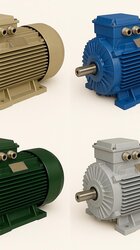
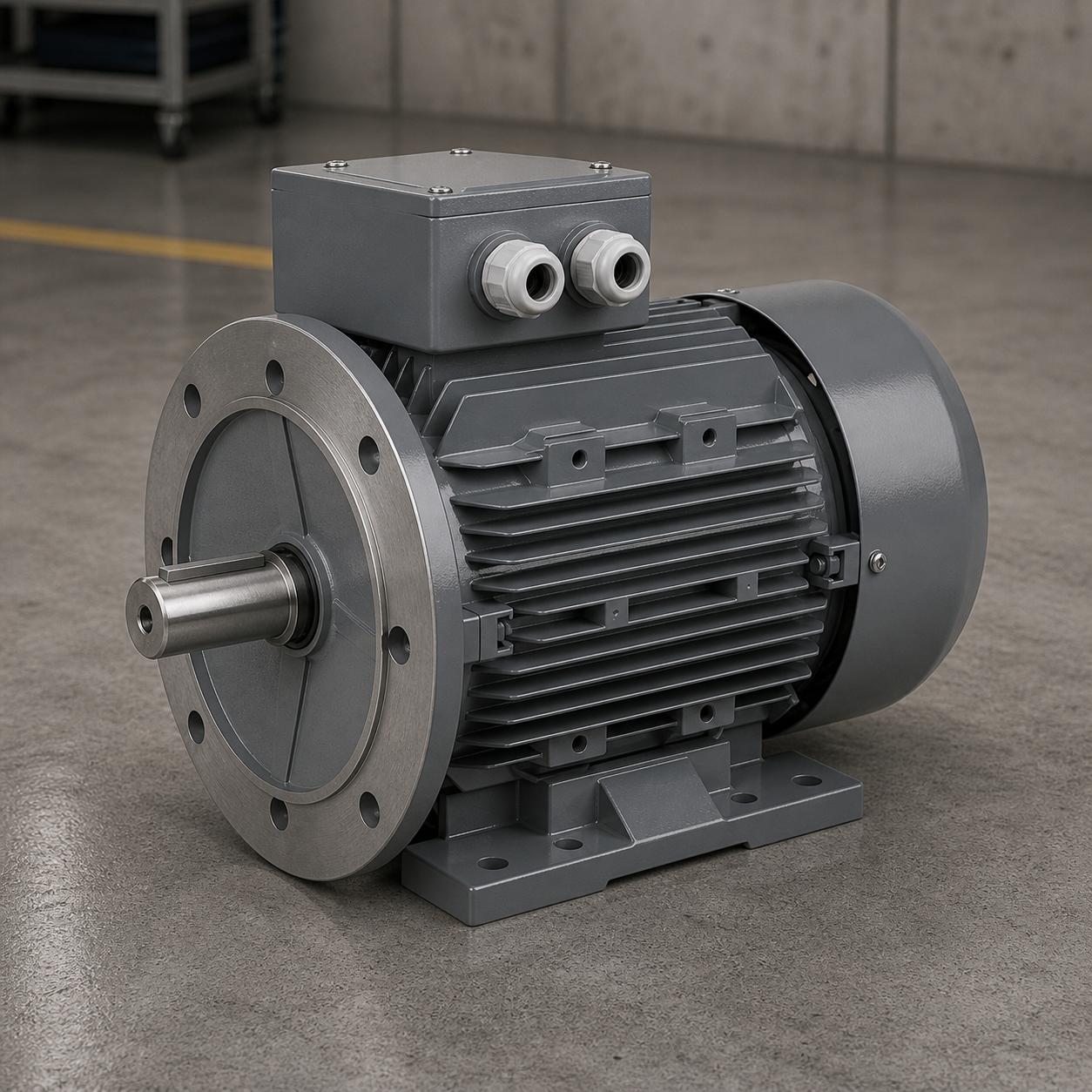

When you source a new motor, the first real decision is almost always the supply type: choosing between a single-phase or three-phase motor shapes everything from purchase cost and maintenance to installation feasibility and your long-term energy bill. At DRG Motor we supply industrial buyers, dealers and end users across Turkey, and our job is to make this choice clear so that the motor you install keeps running reliably for years.
It starts with one question: what power is on site?
In practice the deciding factor is the existing electrical infrastructure at your facility or plot. For a home, small workshop or rural point fed by single phase (230 V), a single-phase motor is usually the only sensible option. In an industrial plant with a three-phase (400 V) line already in place, a three-phase motor is almost always the more efficient and economical answer. Running a new three-phase line to a location that lacks one can cost more than the motor itself, so telling us the real condition of your site lets us quote the right product the first time. Many buyers order the motor first and only then discover that the panel is undersized, which delays the whole project; if details such as the number of phases on the line, the available fuse capacity and a free contactor slot in the board are confirmed up front, the supply is completed in a single round. During the quote stage we go through this checklist with you to prevent surprise costs.
The energy type on site determines not just the motor but every component connected to it. For a single-phase motor at a single-phase point, the soft starter, contactor and protection relays are simpler and more affordable. In a three-phase plant a three-phase motor works directly with the existing automation and panel infrastructure. For that reason we recommend making the supply-type decision with the whole system in mind, rather than focusing on the motor alone.
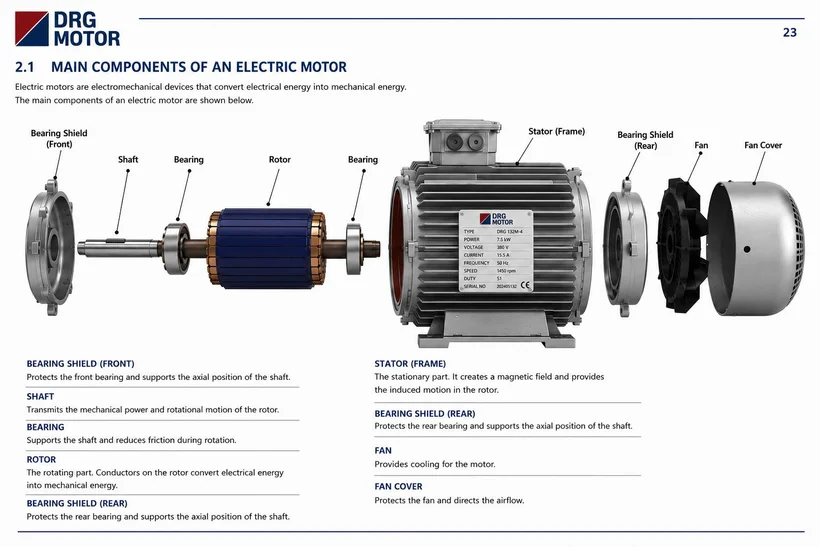
The power threshold: where single-phase ends and three-phase begins
As a general rule, applications up to roughly 2.2 kW (3 HP) run comfortably on a single-phase motor. Above that, the high current drawn from one phase strains the line and lowers efficiency. At larger ratings a three-phase motor delivers the same power in a smaller frame and spreads the high starting current evenly. If your application sits right on this threshold, we assess the duty cycle and load type together to recommend the best fit, so sharing your intended use when you request a quote is decisive here.
This power threshold is a practical reference, not a rigid rule. A 3 kW application that starts briefly and rarely can still be solved with a single-phase motor if your line allows it; conversely, a 1.5 kW machine that starts under load many times a day may be better served by a longer-lasting three-phase motor. The decision depends not only on rated power but on starting frequency, load inertia and daily running hours. We ask about these variables one by one so we can recommend a motor that fits your exact site, not a generic item picked from the middle of a catalogue.
Starting torque and load character
A compressor, a heavy conveyor or a pump that starts under load needs high torque at the first instant. Three-phase motors inherently provide higher and smoother starting torque, while single-phase motors achieve it through auxiliary windings, start capacitors or run capacitors. If the load demands high starting torque, the three-phase side is usually the healthier route. For fans that start unloaded, small pumps or hobby applications, a single-phase motor is more than enough.
Defining the load character correctly prevents half of the failures you might face later. A motor chosen with insufficient starting torque is strained on every start; the winding overheats, capacitor life shortens and the motor needs replacing far sooner than expected. We recommend basing your supply decision on the machine's toughest moment, that is, the first move at full load. Tell us which machine you will drive, and we will compare the single-phase and three-phase motor options against that machine's torque demand for you.
Efficiency and long-term energy cost
Purchase price is only one part of the decision. For a motor that runs continuously, the real cost is the electricity you pay over the years. Three-phase motors typically run at higher efficiency for the same power; in a plant operating long hours a day, that difference can exceed the purchase price of the motor within a few years. By contrast, for a low-power application running only a few hours a day, the practicality and ready infrastructure of a single-phase motor often keep total cost lower. We recommend basing the supply decision not on the nameplate alone but on your operating hours and power draw.
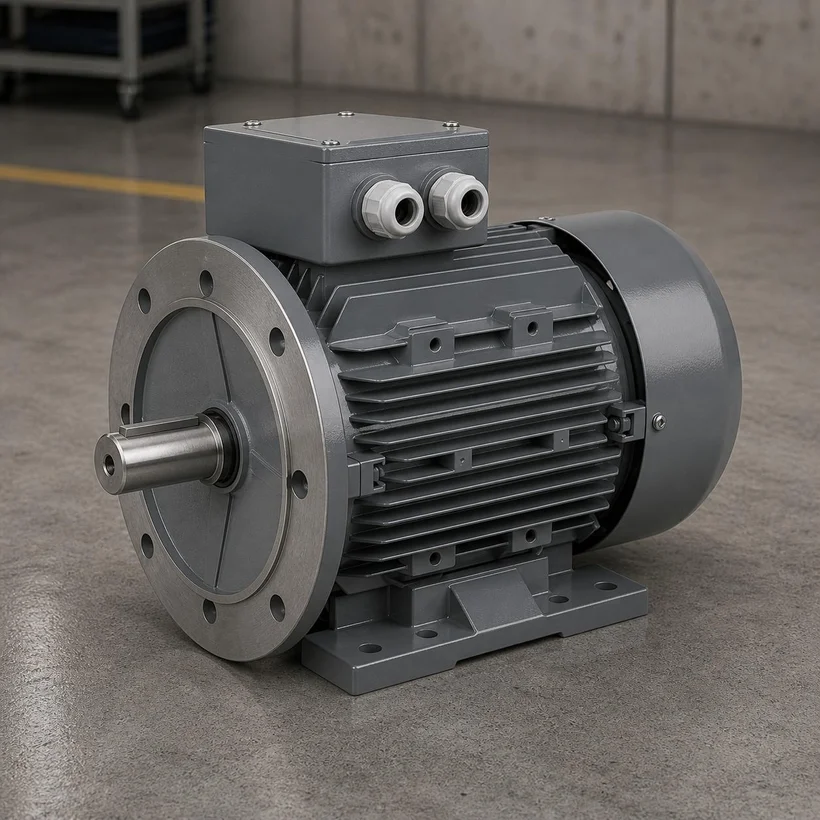
Practical guidance by application
We turned the questions we hear most often into a short guide:
- Home, small workshop, single-phase line: single-phase motor is the first choice.
- Industrial plant, three-phase infrastructure, continuous production: three-phase motor.
- Compressors and large pumps needing high starting torque: three-phase.
- Small water pumps and fans: single-phase is enough and easy to install.
- Agricultural irrigation: depends on the line; for an sulama motoru we give site-specific guidance.
In water transfer and pressurization the pump curve matters as much as the supply type, so on the pompa elektrik motoru side we learn your flow rate and head before recommending the motor.
Common supply mistakes
One of the most frequent errors we see is buying a borderline single-phase motor without allowing for future growth. If the line supports three phase and the application may scale, choosing three-phase from the start avoids the cost of swapping motors later. Another mistake is insisting on a three-phase motor for a location with no three-phase line; that forces either an expensive line investment or a drive solution. Selecting the right supply type also means checking the existing panel, fuse rating and cable cross-section, all of which we review together during the quote process.
Bridging single-phase to three-phase with a drive
Sometimes you have a single-phase line but the load suits a three-phase motor better. In that scenario a variable frequency drive (VFD) that converts single-phase input to three-phase output can act as a bridge. This adds speed control and soft starting, but the power rating and application fit must be calculated correctly. For these hybrid setups we supply the right motor and drive combination and guide you according to the constraints on site.
One important detail: a single-phase-fed drive is usually selected one size larger than a three-phase-fed drive of the same power, because the current drawn from one phase is higher. So when you evaluate a drive solution, the motor and the drive must be sized together; components bought separately often turn out incompatible. If you are planning a drive-based installation, send us the motor power, speed and the current capacity of your line, and we will recommend a package that works together from the start.
Maintenance, spare parts and service convenience
A supply decision is made not just for day one but for the motor's entire life. Single-phase motors have consumable parts such as capacitors that need replacing over time; these parts are common and cheap, but if neglected they keep the motor from starting. Three-phase motors have no capacitor, which simplifies the maintenance line and means fewer interventions over the long run. For busy facilities, spare-part availability and service convenience are often more decisive than a few points of efficiency difference. Whichever side you choose, we treat spare-part and service continuity as part of the supply plan too.
Fast supply from stock and correct product matching
At DRG Motor we deliver a broad range of both single-phase and three-phase products quickly to dealers and end users. For low-power applications our single-phase asynchronous motors cover needs from home to workshop, while for industrial applications we match power, speed and mounting type precisely on the three-phase side. Because the final price is set by factors such as power, speed, frame type, brand and quantity, we share the most accurate budget with a quote tailored to you.
The decision is yours, the right match is our job
There is no single correct answer in the single-phase versus three-phase dilemma; the right answer depends on your site's power, your load and your operating hours. Tell us the line type at your facility, the load the motor will drive and your daily running time, and we will recommend a motor that is both technically correct and budget-friendly with a fast quote. A supply that starts with the right phase type turns into an investment that runs trouble-free for years.