English
 Le français
 Türkçe




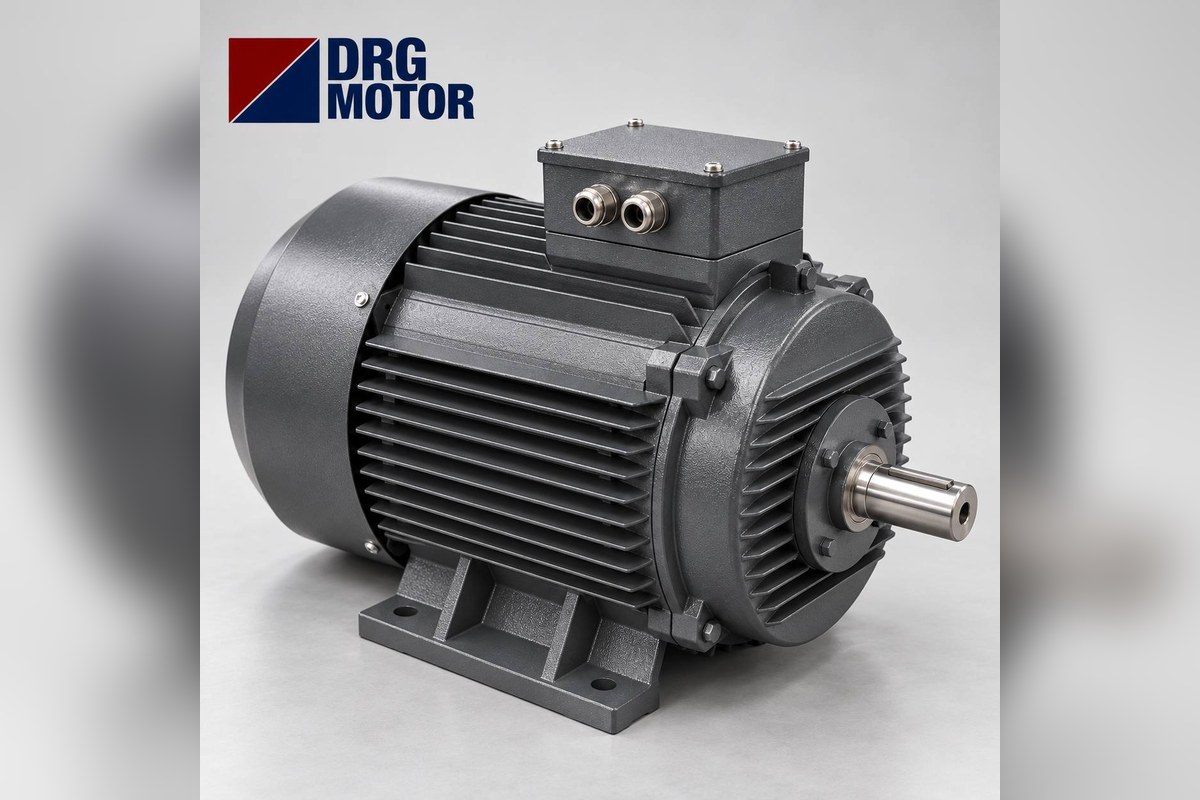

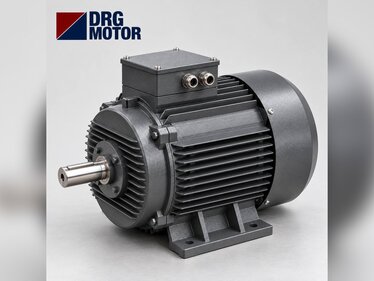
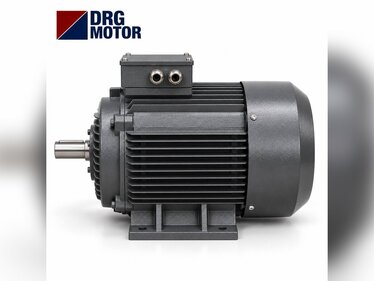
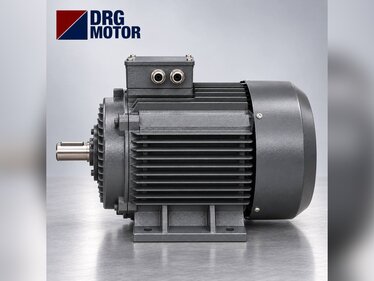
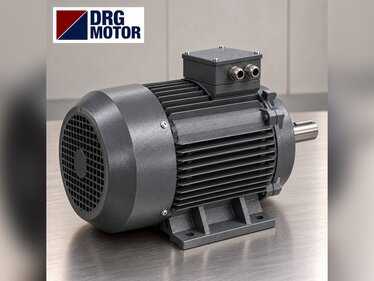
A thermal oil (hot oil) circulation pump motor is a 2-pole (3000 rpm class) three-phase motor, coupled to the pump and sized from the pump's flow and differential pressure: a circuit running at 40 m³/h and 3.5 bar needs about 6.5 kW of shaft power when hot, but because this demand can rise to around 8.4 kW when starting with cold oil, the motor is often chosen one step higher, such as the DRG-160M1-2 (11 kW, 2945 rpm, 19.6 A at 400 V). The motor does not run in the hot oil; the cooling zone between pump and motor (finned bearing housing, heat barrier) cuts off the heat that would otherwise reach the motor flange.
Motor selection on a thermal oil line therefore rests on two questions: how much power does the pump draw in hot operation, and how much does that increase at the first cold start? The second is often overlooked and is the real source of the complaint that “the overload trips every morning”. Removal and connection of the motor must be done by a qualified electrician; since flammable heat transfer oil is present next to the line, cable and terminal work is also a safety matter. You can see all 2-pole models among the 120 models on the Buy Electric Motors Online page.
The 3 most common mistakes with thermal oil pump motors
- Sizing the motor only for hot operation: Heat transfer oil is much thicker when cold; the pump needs more torque at the same speed and the motor draws high current for a long time while starting.
- Fitting a 4-pole motor to a 2-pole pump (or the reverse): In a centrifugal pump, head changes with the square of speed. A 1450 rpm motor on a pump designed for 2900 rpm cannot even move the circuit at half flow; the heater trips on its overheating safety.
- Aligning cold and never checking again: The pump casing expands as it heats up and the shaft centre rises. A coupling that looks perfect when cold loads the motor bearing at operating temperature.
How does hot oil affect the motor? Cooling zone and shaft
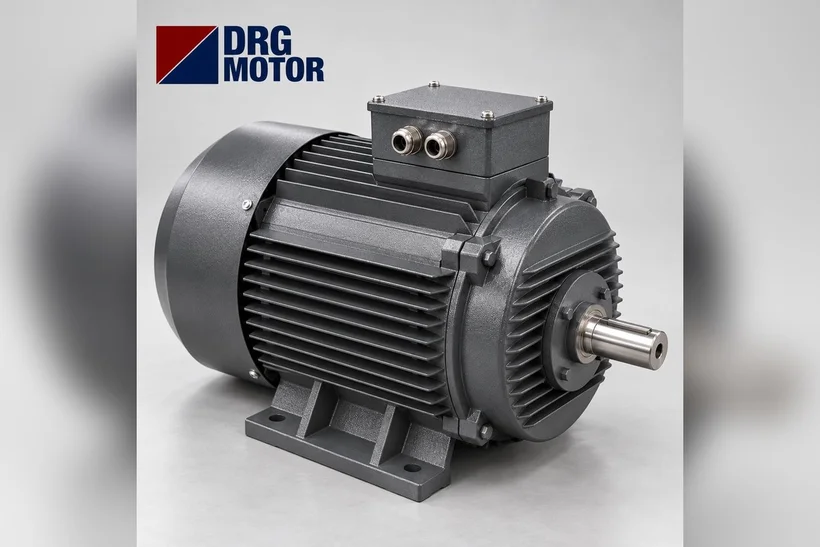
On thermal oil pumps, heat reaches the motor in two ways: by conduction along the pump shaft and by radiation from the pump casing. To cut it off, the pump maker adds cooling fins to the bearing housing or a long air-cooled spacer; the mechanical seal or magnetic coupling sits in this zone. On the motor side, the drive-end bearing and shaft end feel the heat most.
- Do not cover the fins of the cooling zone with thermal insulation. When insulating the line, the pump casing can be insulated, but the bearing housing and coupling area must stay open.
- The motor fan intake must not face a hot pipe or the heater shell; the motor takes its cooling air from the room.
- The coupling guard should be perforated and must not block air flow.
- Oil leaking from the pump must not drip onto the motor housing and fan cover; oily dust clogs the cooling fins.
The motor itself is a standard IP55 three-phase motor; a special “high-temperature motor” is only needed when the air around the motor exceeds the ambient limit on the nameplate. If the boiler room is closed and hot, upsizing the motor without fixing ventilation does not solve the problem for good. Our article on replacing an overheating motor with the right power and IP rating gives the general framework.
How many kW? Flow, pressure and the cold oil margin
The practical formula for the shaft power of a centrifugal circulation pump is P (kW) = Q (m³/h) × Δp (bar) / (36 × η). Q is flow, Δp the pressure difference between pump discharge and suction, η the pump efficiency, read from the pump curve; without a curve, a cautious assumption is made. For cold oil, 1.3 times the hot power is assumed below; the real ratio depends on the oil type and start-up temperature and should be taken from the pump maker's cold-oil curve.
| Flow / differential pressure | Hot operation | Cold oil (×1.3) | Suggested motor |
|---|---|---|---|
| 25 m³/h / 3 bar (η 0.55) | 3.79 kW | 4.92 kW | DRG-132S1-2 · 5.5 kW |
| 40 m³/h / 3.5 bar (η 0.6) | 6.48 kW | 8.43 kW | DRG-160M1-2 · 11 kW |
| 60 m³/h / 4 bar (η 0.65) | 10.26 kW | 13.33 kW | DRG-160M2-2 · 15 kW |
In the middle row, hot operation comes to 6.48 kW; on its own, a 7.5 kW motor (DRG-132S2-2) would seem enough. With the cold oil assumption the demand rises to 8.43 kW and the 7.5 kW motor is overloaded at start. There are two routes: choose an 11 kW motor, or commission at low flow using a throttling valve or bypass and open up as the oil warms. The second route depends on a written start-up procedure from the pump maker and the plant operator; without one, the next size up is the safe choice. For your own values, use the pump motor power calculator.
Click to see current electric motor prices and order nowSEE PRICES →
Why usually a 2-pole (3000 rpm) motor?
Thermal oil circulation pumps are designed to run at around 2900 rpm to produce high head with a small impeller. In the DRG range, rated speeds of 2-pole motors are 2895 rpm at 3 kW, 2930 rpm at 5.5 and 7.5 kW, and 2945 rpm at 11 and 15 kW. Some large-flow plant pumps run at 1450 rpm; which one applies is written on the pump label, and the number of poles is never changed on replacement.
If the old motor's nameplate is unreadable, look at the pump label, or failing that, the shaft and coupling size. For example, a 2-pole motor in frame 132 has a 38 × 80 mm shaft, and frame 160 has 42 × 110 mm; with the wrong frame, the coupling hub and base height will not match.
Starting with cold oil: current, time and overload relay
With direct-on-line starting, the 7.5 kW DRG-132S2-2 draws 7.9 times its 13.7 A rated current at 400 V, i.e. about 108 A; for the 11 kW DRG-160M1-2 the figure is about 159 A. With hot oil the motor leaves this current within a few seconds. With cold, thick oil, acceleration takes longer; if the overload relay's trip class does not suit the start, the motor drops out before reaching rated speed.
- DRG motors from 4 kW upwards are rated 400/690 V and run in delta on a 400 V supply, so they are suitable for star-delta starting. Since torque drops to one third in star, a motor that cannot accelerate cold oil in star causes a current surge at changeover; set the changeover time to when the motor has really accelerated.
- A soft starter or inverter lets you start at low speed with cold oil and raise speed as the oil warms, which removes the starting problem at the root.
- Set the overload to the rated current on the nameplate; do not raise it “so it won't trip”. For the contactor, overload and fuse, see the overload, fuse and contactor selection tool.
For a comparison of starting methods, the star-delta starting page is useful.
Step-by-step checklist for replacing the motor
- Switch off the burner and wait for the oil to cool to a safe temperature; never remove the motor from a hot circuit.
- Isolate the supply at the panel, lock and tag the breaker.
- Note the old motor's nameplate, coupling hub bore, shaft height and foot hole spacing.
- Seat the new motor on the base and align the coupling cold; if the pump maker gives a vertical offset for thermal growth, apply it.
- Check direction of rotation with a short run before the coupling is connected, against the arrow on the pump.
- Measure current during the first heat-up; once the oil reaches operating temperature, check coupling alignment once more.
- If the drive-end bearing area of the housing is clearly hotter than the non-drive end, heat is coming along the shaft; check the cooling zone.
For the effect of alignment on bearing life, see our article on shaft and coupling alignment.
Which DRG motor should you buy?
The most common range for thermal oil pumps is 3–15 kW, 2-pole. A cast iron frame is preferred for the solid base and vibration conditions of a boiler room:
| Model | Power / speed | Frame | Current 400 V |
|---|---|---|---|
| DRG-100L-2 | 3 kW / 2895 rpm | 100L · cast iron | 5.71 A |
| DRG-112M-2 | 4 kW / 2905 rpm | 112M · cast iron | 7.45 A |
| DRG-132S1-2 | 5.5 kW / 2930 rpm | 132S · cast iron | 10.1 A |
| DRG-132S2-2 | 7.5 kW / 2930 rpm | 132S · cast iron | 13.7 A |
| DRG-160M1-2 | 11 kW / 2945 rpm | 160M · cast iron | 19.6 A |
| DRG-160M2-2 | 15 kW / 2945 rpm | 160M · cast iron | 26.5 A |
A model often used on a 40 m³/h class circuit where throttled cold start-up is applied:
- Power: 7.5 kW
- Rated speed: 2930 rpm
- Frame: 132S · cast iron
- Voltage: 400/690 V (Δ/Y)
- Current 400 V: 13.7 A
- cos φ: 0.88
- Rated torque: 24.4 Nm
- Starting torque: 2 × Tn
- Starting current: 7.9 × In
- Shaft D × E: 38 × 80 mm
- Bearing: 6208-ZZ-C3
- Cable entry: 2 × M32×1.5
DRG Motor is a manufacturer, supplier and seller of electric motors; DRG MOTOR motors are guaranteed for 2 years from the delivery date against material and manufacturing defects (warranty certificate). Shipping is by contracted freight or cargo carriers and is paid by the buyer; details are on the sales, delivery and return terms page.
Motors in this power range
- DRG-100L-2 – 3 kW – 2895 rpm – 100L cast iron
- DRG-112M-2 – 4 kW – 2905 rpm – 112M cast iron
- DRG-132S1-2 – 5.5 kW – 2930 rpm – 132S cast iron
- DRG-132S2-2 – 7.5 kW – 2930 rpm – 132S cast iron
- DRG-160M1-2 – 11 kW – 2945 rpm – 160M cast iron
- DRG-160M2-2 – 15 kW – 2945 rpm – 160M cast iron
Click to see current prices and order these motors nowSEE PRICES →
Frequently Asked Questions
What speed should a thermal oil pump motor have?
Whatever speed is on the pump label. Most circulation pumps are built for 2900 rpm and run with a 2-pole motor; some large-flow pumps are 1450 rpm. Changing the number of poles changes flow and head.
Why does the thermal oil pump motor trip at the first start in the morning?
Cold oil is thick, the pump needs more power and the motor stays in starting current for a long time. Commissioning at throttled flow, using a soft starter or inverter, or choosing the next motor size up are the solutions; raising the overload setting is not.
Does a hot oil pump need a special high-temperature motor?
Usually not. The pump's cooling zone stops the heat; the motor is a standard IP55 three-phase motor. What needs checking is the air temperature of the boiler room and whether the motor can draw cooling air.
How many amps does a 7.5 kW 3000 rpm motor draw?
The DRG-132S2-2 draws 13.7 A at 400 V and 14.4 A at 380 V; cos φ is 0.88. With direct-on-line starting, starting current is 7.9 times rated current.
Send us the nameplate of your current motor, the pump or machine label and a few measurements, and we will narrow down the right DRG model together: phone +90 (542) 666 11 11, e-mail [email protected], contact page. For all models and current prices, see Buy Electric Motors Online.