English
 Le français
 Türkçe




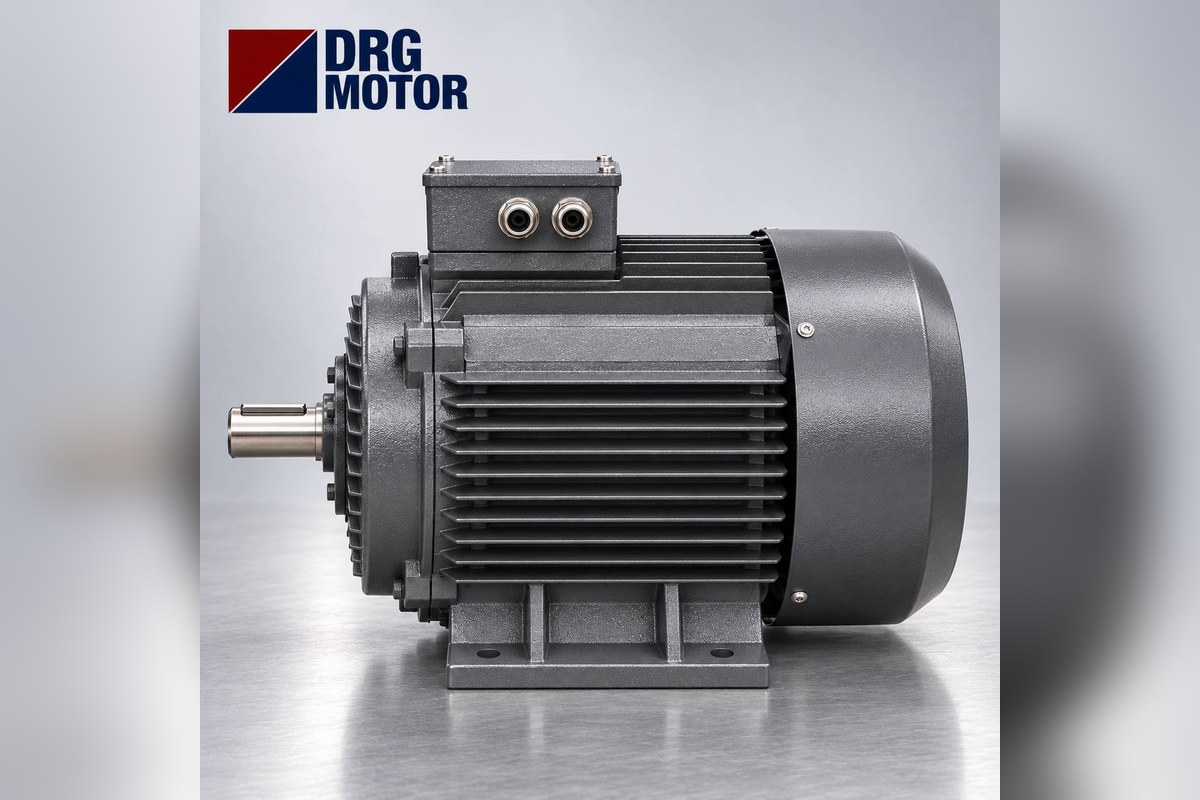

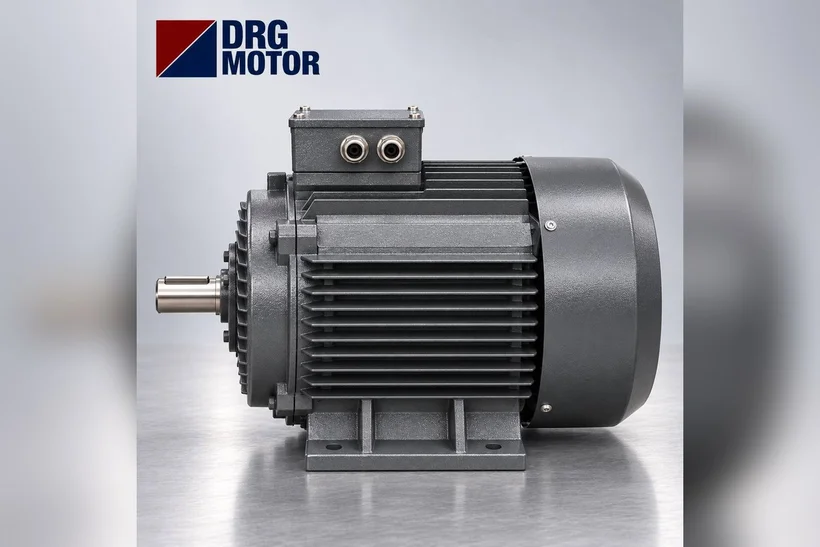
A gear pump motor is chosen by fluid consistency in two steps: first speed — 4-pole motor speed for thin oils and diesel, a 6-pole motor or a gearbox down to a few hundred rpm for thick products — then power, with P = Q × p / (600 × η), using the relief valve opening pressure rather than the working pressure. For example a 40 cm³/rev gear pump delivering thin oil at 1445 rpm with a 12 bar valve setting needs 1.44 kW and runs with the 1.5 kW DRG-90L-4; the same pump handles a thick product at 945 rpm with the 6-pole DRG-90L-6.
A gear pump is a positive displacement pump: it delivers a fixed volume per revolution and the pressure is set by line resistance. So the centrifugal rule "power falls with the cube of speed" does not apply; torque is proportional to pressure and the motor must deliver the same torque even when speed falls. The connection must be made by a qualified electrician. You can see models and current prices among the 120 models on the Buy Electric Motors Online page.
The 3 most common mistakes with gear pump motors
- Sizing power on working pressure: when the line blocks or a valve closes, pressure rises to the relief valve setting. If the motor cannot supply the pump torque at that pressure, it trips or stalls.
- Pumping a thick product at high speed: as viscosity rises the pump cannot fill the spaces between the teeth (suction cavitation), flow drops and noise and wear increase. The fix is lower speed, not a bigger motor.
- Ignoring cold starts: oil, bitumen, glucose and similar fluids are much thicker when cold. Torque demand at the first start of the morning can be several times that at working temperature; the motor starting torque and heating arrangements must be considered.
How does fluid consistency set the speed?
On a gear pump, flow is directly proportional to speed: Q (l/min) = V (cm³/rev) × n (rpm) / 1000. But for the pump to fill the tooth spaces on every revolution, the fluid must flow fast enough on the suction side. The thicker the fluid, the longer this takes, which is why pump makers list a maximum permissible speed by viscosity. The general trend:
| Fluid consistency | Typical pump speed | Drive |
|---|---|---|
| Water-like, thin oil, diesel | 4-pole motor speed | Direct, 4-pole |
| Oil, syrup, liquid soap | 6-pole motor speed | Direct, 6-pole |
| Honey, glucose, molasses, resin | A few hundred rpm | 4-pole + gearbox |
| Bitumen, paste-like | Lower still | Gearbox + inverter |
This table is a guide; the exact speed limit is in the pump’s own catalogue. As consistency rises and speed falls, a larger-displacement pump is needed for the same flow, and the motor must deliver more torque at the same pressure.
How many kW? Flow, pressure and torque calculation
Practical formula for gear pump shaft power:
P (kW) = Q (l/min) × p (bar) / (600 × η) and required torque T (Nm) = 9550 × P / n
Here η is the overall pump efficiency; if the maker gives no value, the example assumes 0.8. Pressure is the relief valve opening pressure. Below, the same 40 cm³/rev pump is calculated with three different fluids (scenario C assumes a gearbox transmission factor of 0.9):
| Scenario | Pump speed / flow | Power / torque | Motor |
|---|---|---|---|
| A · thin oil, 12 bar | 1445 rpm / 57.8 l/min | 1.44 kW / 9.55 Nm | DRG-90L-4 · 1.5 kW |
| B · thick product, 12 bar | 945 rpm / 37.8 l/min | 0.94 kW / 9.55 Nm | DRG-90L-6 · 1.1 kW |
| C · very thick, 16 bar | 284 rpm / 11.4 l/min | 0.38 kW / 12.73 Nm | DRG-802-4 + i=5 |
The key result is the torque in rows A and B: even though speed falls from 1445 to 945 rpm, the required torque stays the same (9.55 Nm), because gear pump torque comes from pressure, not speed. The 6-pole motor must therefore have a higher rated torque even at a lower kW: the 1.1 kW DRG-90L-6 has a rated torque of 11.1 Nm, the 1.5 kW DRG-90L-4 9.91 Nm; both cover the 9.55 Nm demand. Had the same pump in scenario A a valve setting of 8 bar, power would fall to 0.96 kW; the valve setting directly changes the motor choice.
In scenario C the pump turns at 284 rpm through a gearbox with ratio i = 5: the pump shaft needs 0.38 kW, and with gearbox losses about 0.42 kW is needed at the motor. With a margin for cold starts, the 0.75 kW DRG-802-4 is chosen. For gearbox output speed and torque, use the gearbox output speed and torque calculator.
Click to see current electric motor prices and order nowSEE PRICES →
How does the relief valve protect the motor?
If a positive displacement pump runs against a closed valve, pressure rises until something breaks. The relief (bypass) valve limits this pressure and at the same time sets the highest torque the motor will see. When choosing the motor, follow this order:
- Set the valve opening pressure to what the pump and line allow; size the motor for that pressure.
- If the valve is built into the pump and returns fluid to suction, long periods in bypass heat the fluid; limit this with an alarm or timer relay.
- Raising the valve setting later overloads the motor; measure motor current whenever you change it.
- Set overload protection to the new motor’s nameplate current; the overload, fuse and contactor selection tool gives the value.
4-pole, 6-pole or gearbox: which drive?
4-pole direct drive (about 1400–1460 rpm) is the most common solution for thin fluids, fuel and oil transfer and lubrication units. 6-pole direct drive (935–970 rpm at DRG) offers a simple gearbox-free solution for medium-viscosity products; a 6-pole motor has a larger frame and higher torque at the same kW. A geared drive is unavoidable for very thick products such as honey, glucose, molasses and resin. The gearbox both lowers speed and multiplies torque by its ratio.
If flow must be adjusted during production (filling, dosing), an inverter is added. A gear pump is a constant-torque load: reducing speed with an inverter does not reduce the torque demand, but the motor’s own fan slows down and cooling drops. Take this into account for motors that will run at low speed for long periods; for details see the VFD frequency-torque-power calculator. Gear pumps in hydraulic power units work at a different pressure level; for that calculation see our article on motor selection for hydraulic pumps.
Pre-order checklist
- Pump displacement (cm³/rev), or flow and speed from the nameplate.
- Fluid pumped and its consistency at working temperature and at cold start.
- Relief valve opening pressure (not working pressure).
- Maximum permissible pump speed (pump catalogue).
- Drive: direct coupling, coupling + gearbox or inverter; gearbox ratio.
- Mounting: foot motor (B3) + coupling + base, or flange motor (B5) + bell housing? Shaft diameter and key.
- Direction of rotation: gear pumps are mostly unidirectional; the wrong direction spoils suction and strains the seal.
Which DRG motor should you buy?
The most common powers on gear pumps are 4- and 6-pole motors of 0.75–3 kW. The models below have cast iron housings and IP55. Find your torque demand with the formula above and choose a model whose rated torque stays above it.
| Model | Power / speed | Frame | Current 400 V |
|---|---|---|---|
| DRG-802-4 | 0.75 kW / 1420 rpm | 80 · cast iron | 1.75 A |
| DRG-90L-4 | 1.5 kW / 1445 rpm | 90L · cast iron | 3.3 A |
| DRG-100L2-4 | 3 kW / 1450 rpm | 100L · cast iron | 6.02 A |
| DRG-90L-6 | 1.1 kW / 945 rpm | 90L · cast iron | 2.69 A |
| DRG-100L-6 | 1.5 kW / 949 rpm | 100L · cast iron | 3.59 A |
| DRG-112M-6 | 2.2 kW / 955 rpm | 112M · cast iron | 5.09 A |
Example match for pumping a medium-viscosity product without a gearbox (scenario B):
- Power: 1.1 kW
- Rated speed: 945 rpm
- Frame: 90L · cast iron
- Current 400 V: 2.69 A
- cos φ: 0.73
- Rated torque: 11.1 Nm
- Starting torque: 2 × Tn
- Starting current: 6 × In
- Shaft D × E: 24 × 50 mm
- B5 flange P / M / N: 200 / 165 / 130 mm
- Bearing (drive end): 6205-ZZ-C3
- Voltage: 230/400 V (Δ/Y)
DRG Motor is an electric motor manufacturer, supplier and seller; DRG MOTOR motors are guaranteed against material and manufacturing defects for 2 years from the delivery date (warranty certificate).
Motors in this power range
- DRG-802-4 – 0.75 kW – 1420 rpm – 80 cast iron
- DRG-90L-4 – 1.5 kW – 1445 rpm – 90L cast iron
- DRG-100L2-4 – 3 kW – 1450 rpm – 100L cast iron
- DRG-90L-6 – 1.1 kW – 945 rpm – 90L cast iron
- DRG-100L-6 – 1.5 kW – 949 rpm – 100L cast iron
- DRG-112M-6 – 2.2 kW – 955 rpm – 112M cast iron
Click to see current prices and order these motors nowSEE PRICES →
Frequently Asked Questions
What motor speed is used for a gear pump?
For thin fluids a 4-pole (1500 rpm class) motor, for medium viscosity a 6-pole (1000 rpm class) motor; for very thick products a 4-pole motor is reduced to a few hundred rpm with a gearbox. The exact limit is in the pump catalogue.
How is gear pump motor power calculated?
P (kW) = Q (l/min) × p (bar) / (600 × η). Use the relief valve opening pressure. For example 57.8 l/min, 12 bar and η = 0.8 give about 1.44 kW.
Should the gear pump motor be larger when viscosity rises?
Lower the speed first; as consistency rises the permissible pump speed falls. If pressure is unchanged, torque demand stays the same, but it rises at cold start; confirm the motor against starting torque and heating arrangements.
How many amps does a 1.5 kW gear pump motor draw?
The 4-pole DRG-90L-4 draws 3.3 A at 400 V and 3.47 A at 380 V; its rated torque is 9.91 Nm.
Send us your pump displacement, relief valve pressure and fluid consistency, and we will confirm the right DRG model with you. Phone +90 (542) 666 11 11, e-mail [email protected], contact page. For all models and current prices, see Buy Electric Motors Online.