English
 Le français
 Türkçe




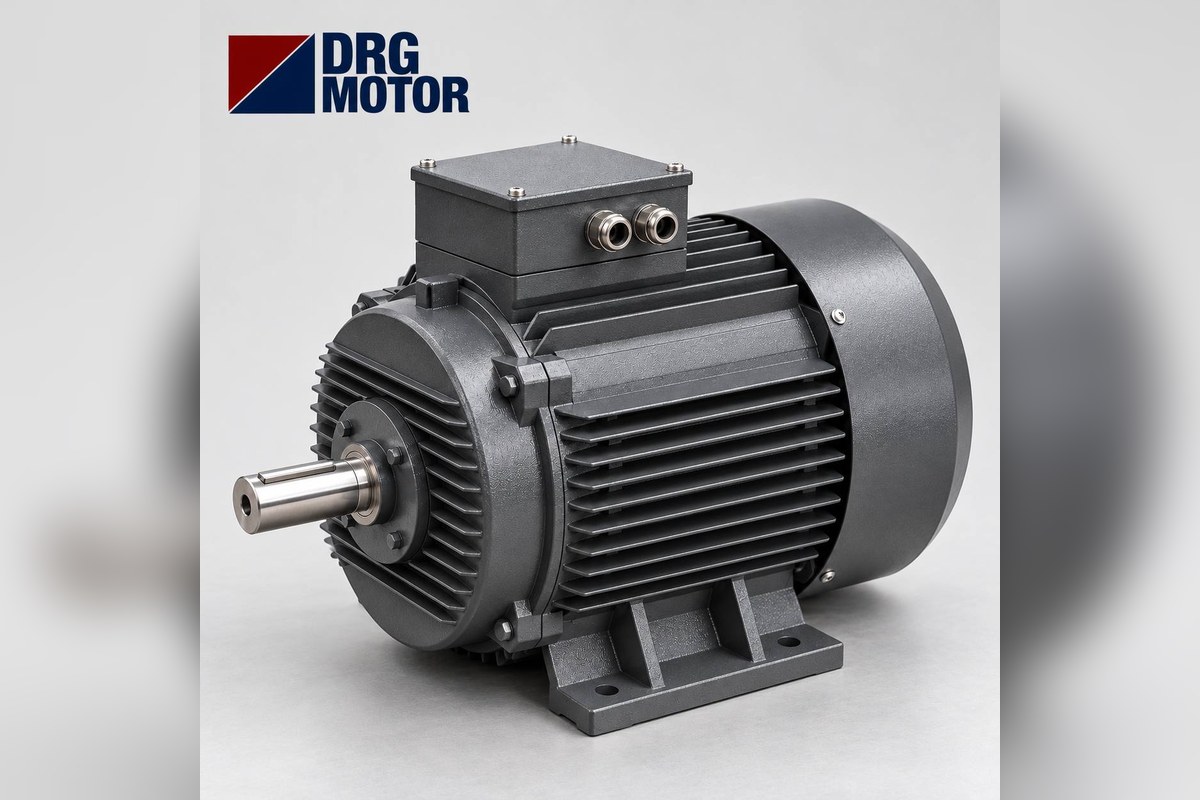

When switching an irrigation pump from diesel to an electric motor, choose motor power not from the kW on the diesel's label but from the shaft power the pump actually draws: for example, a pump delivering 100 m³/h against a 60 m head needs about 23.36 kW with an assumed pump efficiency of 0.70, and is covered by a 30 kW 4-pole three-phase motor (DRG-200L-4, 1475 rpm, 53.8 A at 400 V); this calculation does not change whether the diesel you removed was 40 or 60 kW. The second condition is speed: whatever speed the pump turned at with the diesel, the electric motor must give the same pump speed through a pulley or coupling.
The third leg of the switch is the electrical side: the line to the well head, transformer capacity, starting arrangement and cable size. This is live work; the panel, earthing and connection must be installed by a qualified electrician. You can see models suitable for irrigation pumps, with current prices, among the 120 models on the Buy Electric Motors Online page.
3 mistakes made when switching from diesel to electric
- Buying an electric motor as big as the diesel: diesel engines are often chosen larger than the pump needs, and their rated power is given at a specific speed together with their own cooling and charging loads. Buying the same kW in an electric motor runs it at low load and oversizes the transformer, cable and panel.
- Not checking the speed: if a 1475 rpm motor is fitted to a pump coupled directly to a diesel running at 1800 rpm, a significant part of the pump's flow and head is lost and the water does not reach the end of the field.
- Ignoring the moment of starting: in direct-on-line starting the motor draws several times its rated current. On a weak rural line or a small transformer the voltage collapses, the motor cannot start and other consumers are affected.
How is the pump's real power calculated?
The shaft power of a centrifugal irrigation pump is: P (kW) = ρ × g × Q × H / (ηp × 1000). ρ = 1000 kg/m³ (water), g = 9.81 m/s², Q flow (m³/s), H total head (m; dynamic well level + pipe losses + sprinkler/drip pressure), ηp pump efficiency. Without a pump curve, ηp = 0.70 is a cautious assumption. The motor is the first standard rating at least 1.1 times the calculated power:
| Flow / head | Pump shaft power | Motor | Current 400 V |
|---|---|---|---|
| 60 m³/h / 45 m | 10.51 kW | DRG-160L-4 · 15 kW | 27.3 A |
| 100 m³/h / 60 m | 23.36 kW | DRG-200L-4 · 30 kW | 53.8 A |
| 150 m³/h / 80 m | 46.71 kW | DRG-250M-4 · 55 kW | 97.6 A |
The definitive value is the power at your operating point on the pump manufacturer's curve; the formula is for pumps whose curve has been lost. For your own values use the pump motor power calculator. Noting the hourly fuel consumption and speed while the diesel is running also helps: if the pump is run at low speed, much of the diesel's rated power is not being used anyway.
If the diesel runs at 1500 or 1800 rpm, what speed should the electric motor be?
Diesel engines used for irrigation are usually run at around 1500 or 1800 rpm and connected to the pump by a direct coupling or pulleys. The electric motor's speed depends on supply frequency: 4-pole DRG motors in this power class run at 1465–1485 rpm rated speed, while the 2-pole DRG-200L1-2 runs at 2960 rpm. Pump behaviour changes with speed according to these relations (affinity laws):
| Quantity | Relation to speed | 1800 → 1475 rpm |
|---|---|---|
| Flow | Q ∝ n | × 0.819 |
| Head | H ∝ n² | × 0.671 |
| Pump power | P ∝ n³ | × 0.55 |
A pump directly coupled to a 1500 rpm diesel keeps practically the same operating point with a 1475 rpm motor (ratio 0.983). On a pump directly coupled to an 1800 rpm diesel, the same motor reduces flow to about 0.819 and head to 0.671 times. There are then two options: a 4-pole motor + a speed-up pulley ratio of 1.22, or a 2-pole motor (2960 rpm) + a reducing pulley. Find the pulley diameters with the pulley and belt calculator and do not exceed the pump's maximum permitted speed.
Click to see current electric motor prices and order nowSEE PRICES →
Are the supply, transformer and cable sufficient?
The kVA concept: what load does the transformer see?
Transformer and line capacity are expressed in kVA, not kW: S (kVA) = √3 × U × I / 1000. When the 30 kW DRG-200L-4 draws 53.8 A at 400 V, it requires about 37.3 kVA of apparent power from the supply. The real load is the starting moment: because the motor draws 7.3 times rated current direct-on-line, the instantaneous demand rises to about 272.1 kVA; with star-delta starting it falls to about 90.7 kVA.
- Ask the distribution company for the transformer rating on your land and the other wells fed from the same transformer.
- Voltage drop at start depends on the transformer's short-circuit power and the line length; this calculation needs the approval of the distribution company and the electrical designer.
- At this power star-delta or a soft starter is used instead of direct-on-line; in the DRG range motors of 4 kW and above have a 400/690 V nameplate and are suitable for star-delta. See the star-delta starting tool for the calculation.
If there is no grid supply or you are considering a generator as backup, sizing rules are different when feeding a motor from a generator: our article on what to watch when feeding a motor from a generator or transformer covers this.
Cable to the well: choosing the size on a long run
Irrigation wells are often far from the transformer and the cable size is set as much by voltage drop as by current. Example: 30 kW motor, 53.8 A at 400 V, cos φ 0.86; sizing current 53.8 × 1.25 = 67.2 A, 150 m of copper cable from the transformer panel to the motor. Voltage drop is calculated with ΔU = √3 × I × (L/1000) × R × cos φ (table values, PVC, about 30 °C):
| Size (copper) | Table current | ΔU 150 m | ΔU ratio |
|---|---|---|---|
| 16 mm² | 80 A | 13.8 V | ≈ 3.5 / 100 |
| 25 mm² | 101 A | 8.7 V | ≈ 2.2 / 100 |
Although 16 mm² cable looks sufficient for the current, at 150 m its voltage drop exceeds the 3 per cent limit accepted for the supply; in this example 25 mm² is chosen. Installation method, buried or sun-exposed runs and grouping change the result; use the motor cable size calculator for your own line.
How are operating costs compared?
The hourly cost of a diesel and an electric pump is compared with these formulas using your own season data instead of figures:
- Diesel: Cd = B × t × Fd + Md — B hourly fuel consumption (l/h, tank or meter measurement), t seasonal operating hours, Fd fuel price per litre, Md seasonal oil, filter and maintenance cost.
- Electric: Ce = Pe × t × Fe + Me — Pe power drawn from the supply (kW; measured in operation as Pe = √3 × U × I × cos φ / 1000), Fe the kWh price in the agricultural irrigation tariff, Me seasonal maintenance cost.
- Conversion investment: I = motor + panel + cable + line/transformer connection; payback ≈ I / (Cd − Ce) seasons.
To simplify the kWh calculation on the electric side you can use the electric motor energy consumption calculator. Fuel transport, tank safety and the hassle of starting the diesel at the beginning of the season do not appear in the formula but matter for the decision.
Checklist before the switch
- Read flow, head and maximum speed from the pump label or curve.
- Measure the diesel's operating speed with a tachometer; note pulley diameters and coupling type.
- Compare the motor shaft diameter with the coupling or pulley bore (shaft 55 × 110 mm on the 200L frame).
- If the motor takes the place of the diesel on its base, a new base and alignment are needed; foot dimensions are on the technical drawings page.
- Get the subscription and transformer rating from the distribution company; choose the starting method accordingly.
- Build a canopy that protects the motor from sun and rain; do not block the fan inlet.
- Add level or current protection against dry running, a phase protection relay and a correctly set overload.
Which DRG motor for an irrigation pump?
Example model for a medium-sized agricultural irrigation well:
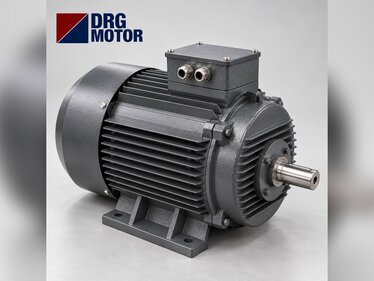
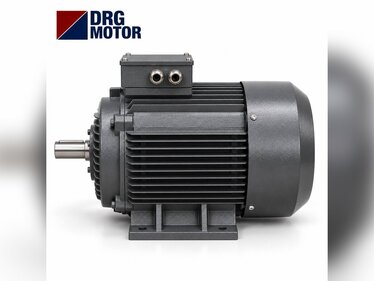
- Model: DRG-200L-4
- Power: 30 kW
- Rated speed: 1475 rpm
- Frame: 200L · cast iron
- Voltage: 400/690 V (Δ/Y)
- Current 400 V: 53.8 A
- cos φ: 0.86
- Rated torque: 194.2 Nm
- Starting torque: 2 × Tn
- Starting current: 7.3 × In
- Shaft D × E: 55 × 110 mm
- Bearing: 6312-C3
DRG Motor is a manufacturer, supplier and seller of electric motors; DRG MOTOR motors are guaranteed against material and manufacturing defects for 2 years from the delivery date (warranty certificate). Periodic instalment campaigns may be available with Halköde; for the current option message us on WhatsApp or see the payment options page. Shipping is by contracted freight and courier companies and is paid by the buyer (sales, delivery and return terms).
Motors in this power range
- DRG-160L-4 – 15 kW – 1465 rpm – 160L cast iron
- DRG-180L-4 – 22 kW – 1470 rpm – 180L cast iron
- DRG-200L-4 – 30 kW – 1475 rpm – 200L cast iron
- DRG-225M-4 – 45 kW – 1485 rpm – 225M cast iron
- DRG-250M-4 – 55 kW – 1485 rpm – 250M cast iron
- DRG-200L1-2 – 30 kW – 2960 rpm – 200L cast iron
Click to see current prices and order these motors nowSEE PRICES →
Frequently Asked Questions
What kW electric motor replaces a 40 HP diesel?
It is chosen by the power the pump draws, not by the diesel's power. Find the shaft power from the pump curve or the formula P = ρ·g·Q·H / η and round up to a standard rating at least 1.1 times that. For example a 100 m³/h – 60 m pump needs about 23.36 kW and runs with a 30 kW motor.
What speed should an irrigation pump motor have?
Look at the speed the pump turned at with the diesel. A pump directly coupled to a 1500 rpm diesel works the same with a 4-pole motor (1475 rpm); at 1800 rpm the speed is corrected with pulleys.
How many amps does a 30 kW irrigation motor draw?
The DRG-200L-4 draws 53.8 A at 400 V and 56.6 A at 380 V. Because direct-on-line starting current rises to 7.3 times rated current, star-delta or a soft starter is recommended.
What cable size does an irrigation motor need?
It depends on current and distance. For a 30 kW motor on a 150 m run, 16 mm² exceeds the voltage drop limit and 25 mm² is suitable. Use the cable size calculator for your own distance.
Send us your pump label and the diesel's operating speed and we will determine the right DRG model together: Phone +90 (542) 666 11 11, e-mail [email protected], contact page. For all models and current prices, see Buy Electric Motors Online.