English
 Le français
 Türkçe




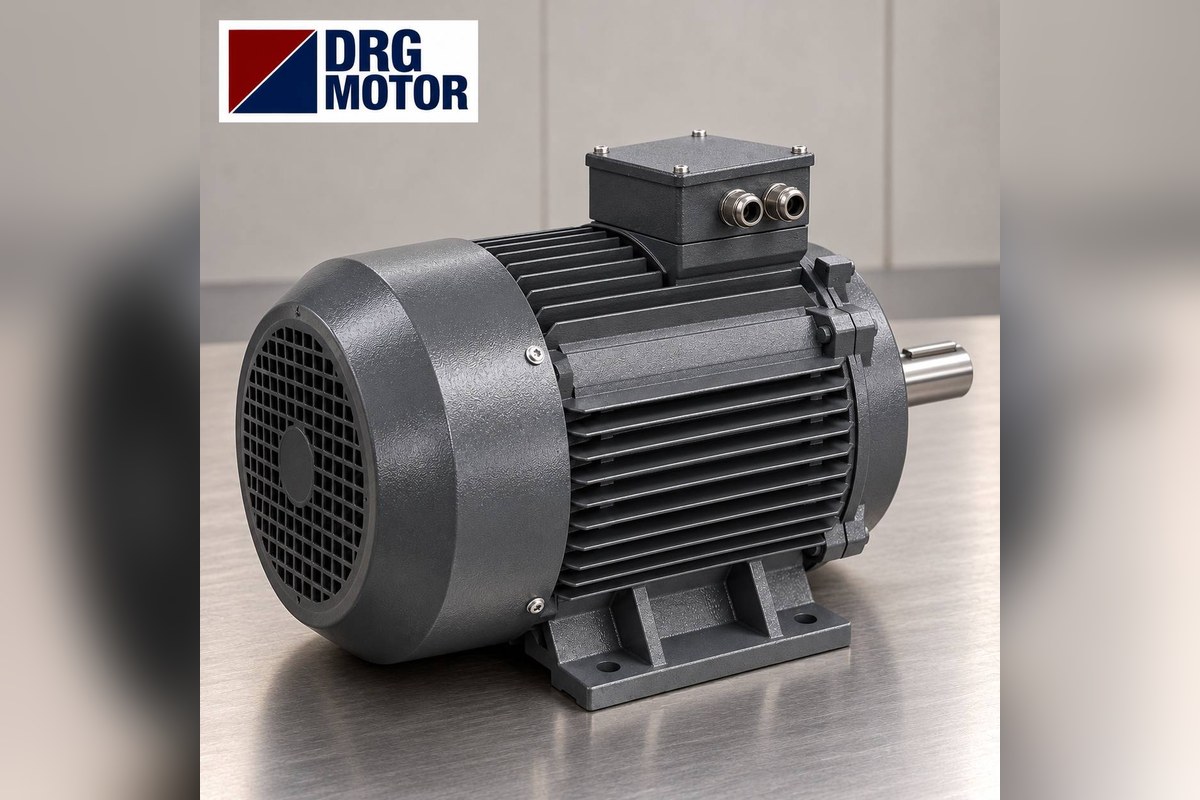

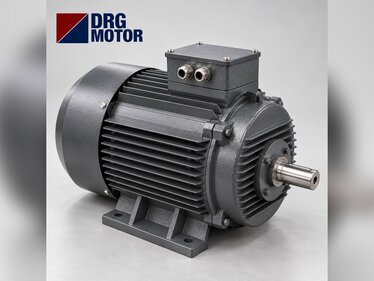
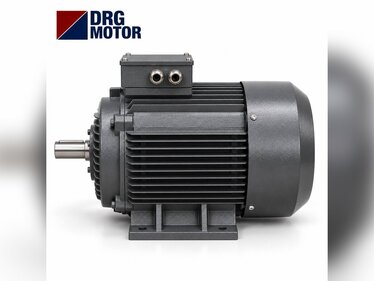
Centrifugal pumps used as milk and food transfer pumps usually run with a 2-pole (3000 rpm class) three-phase motor, and the motor power is found from the pump’s flow and head: for example 20 m³/h of milk at 30 m head needs about 2.8 kW of shaft power; with margin, the 4 kW DRG-112M-2 (2905 rpm, 7.45 A at 400 V) is a suitable match. Size the motor not only for production flow but for the CIP (clean-in-place) cycle, where flow is highest.
The second factor for a food pump motor is the environment: hot cleaning water, caustic and acid solutions, hosed-down floors and condensation in cold rooms. The motor does not touch the food, but to last in this environment its orientation and cable entry must be set up correctly. Because the electrical connection is made on a wet floor, the work must be done by a qualified electrician. You can see suitable models and current prices among the 120 models on the Buy Electric Motors Online page.
The 3 most common mistakes with milk pump motors
- Sizing the motor for production flow: during CIP the pump runs at higher flow and often lower back-pressure; on a centrifugal pump, power drawn rises with flow. A motor that is comfortable in production may trip during CIP.
- Fitting a 4-pole motor to reduce speed: a centrifugal pump’s head falls with the square of speed; with a 4-pole motor on a 2-pole pump, head drops to roughly a quarter and the pump cannot feed the line.
- Washing the motor directly with a hose jet: an IP55 motor is protected against splashing water, not a pressure jet. Keep the cable entry and fan cover out of the wash line.
How many kW? Calculating from flow and head
The hydraulic formula for the shaft power of a centrifugal pump is:
P (kW) = ρ × g × Q × H / (3,600,000 × η)
Here ρ is the fluid density (kg/m³), g = 9.81 m/s², Q the flow (m³/h), H the total head (m) and η the pump efficiency. The example below assumes a milk density of 1030 kg/m³ and pump efficiency η = 0.6, and multiplies the result by a 1.15 margin factor; the calculation is based on assumptions, the real value is read from the pump curve.
| Flow / head | Shaft power | With margin | Motor to choose |
|---|---|---|---|
| 10 m³/h / 25 m | 1.17 kW | 1.34 kW | DRG-90S-2 · 1.5 kW |
| 20 m³/h / 30 m | 2.81 kW | 3.23 kW | DRG-112M-2 · 4 kW |
| 30 m³/h / 35 m | 4.91 kW | 5.65 kW | DRG-132S2-2 · 7.5 kW |
The third row represents a typical CIP cycle: because the flow is higher than in production, power rises clearly. If the same pump both transfers milk and runs the cleaning cycle, size the motor for this row. You can check your own values with the pump and fan motor power calculator.
Head H is not just the tank height: losses in pipe friction, plate coolers, filters, valves and CIP spray heads are added. On short lines such as unloading a tanker H is small; on lines with a plate heat exchanger it is large.
Why a 2-pole motor? Speed and product
Food centrifugal pumps are generally designed for the speed of a 2-pole motor; DRG 2-pole models have rated speeds of 2895–2930 rpm. On a centrifugal pump, flow changes with speed, head with the square of speed and power with the cube of speed. Deviating from the speed on the pump nameplate therefore means changing the pump rather than the motor. For details of the similarity laws see our article on affinity laws in pumps and fans.
If flow must be adjusted (filling, dosing, soft start for transfers between tanks), a frequency inverter is used instead of changing the motor. Reducing speed with an inverter also helps with shear-sensitive products such as milk; however, for thick, high-viscosity products a centrifugal pump is not the right pump type in the first place — those products are moved by positive displacement pumps, and motor selection is a different calculation.
Click to see current electric motor prices and order nowSEE PRICES →
Monobloc or coupled? What changes when replacing the motor?
Most small and medium food centrifugal pumps are monobloc: the impeller is fitted directly on the end of the motor shaft, the pump casing is attached to the motor flange through an adapter, and the shaft often carries a stainless sleeve or extension. In this design the new motor’s shaft diameter, shaft length and flange must match the old one; the adapter and shaft extension are transferred to the new motor. On coupled pumps the pump has its own shaft and bearings, so motor replacement is simpler: matching power, speed, flange/feet and shaft size is enough.
For a dimensional comparison, take shaft and flange values by frame from the technical drawings page. For example the 1.5 kW DRG-90S-2 and the 2.2 kW DRG-90L-2 use the same shaft size (24 × 50 mm); 3 and 4 kW (100L and 112M) move to 28 × 60 mm and 5.5 and 7.5 kW (132S) to 38 × 80 mm.
What protects the motor in CIP, hot water and wash-down?
The motor does not touch the food, but heat passing from the pump casing to the flange, CIP steam and wash water determine its life. DRG three-phase motors are IP55: protected against dust ingress and water splashing from any direction.
| Factor | Effect on motor | Precaution |
|---|---|---|
| CIP hot water / caustic | Heat via flange, steam, splash | Heat shield, orientation, cover |
| Hose-down cleaning | Water at cable entry and fan cover | Gland down, no direct jet |
| Cold room / chilled milk | Condensation, internal moisture | Keep drain holes open |
| Frequent start-stop (filling) | Heat from starting current | VFD or soft starter |
- On a monobloc pump, hot CIP solution heats the pump casing and the heat passes through the adapter to the motor flange and front bearing; do not block the adapter’s ventilation openings.
- Point the cable gland downwards and bring the cable in with a drip loop; reseat the terminal box gasket each time it is opened.
- Do not place the fan cover air inlet against a wall or tank; a motor that cannot draw cooling air runs hot.
- Condensation collects in motors running in cold rooms; make sure the drain holes are at the lowest point of the motor and open.
- Do not wash the motor housing directly with caustic or acid solution; wipe it with a damp cloth.
Checklist before replacing the motor
- Pump nameplate: flow, head, speed, motor power.
- Old motor nameplate: kW, speed, voltage, current; is it 230/400 V or 400/690 V?
- Pump type: monobloc (impeller on the motor shaft) or coupled?
- Shaft diameter and length, key, any shaft extension; flange dimensions (P / M / N).
- Flow and temperature during CIP; does the pump run on an open circuit at that time?
- Starting method: direct, inverter or soft starter; overload set to the new motor’s current (overload and fuse selection tool).
- Direction of rotation: arrow on the pump casing; a centrifugal pump running backwards still delivers flow, but at very low pressure.
Which DRG motor should you buy?
The most common powers on food transfer pumps are 2-pole motors of 1.5–7.5 kW. The models below have aluminium housings (cast iron versions of the same powers are also in the store); match them with the power and speed on your pump nameplate.
| Model | Power / speed | Frame | Current 400 V |
|---|---|---|---|
| DRG-90S-2 | 1.5 kW / 2895 rpm | 90S · aluminium | 3.06 A |
| DRG-90L-2 | 2.2 kW / 2895 rpm | 90L · aluminium | 4.35 A |
| DRG-100L-2 | 3 kW / 2895 rpm | 100L · aluminium | 5.71 A |
| DRG-112M-2 | 4 kW / 2905 rpm | 112M · aluminium | 7.45 A |
| DRG-132S1-2 | 5.5 kW / 2930 rpm | 132S · aluminium | 10.1 A |
| DRG-132S2-2 | 7.5 kW / 2930 rpm | 132S · aluminium | 13.7 A |
The model matching the calculation above for a milk transfer pump of the 20 m³/h – 30 m class:
- Power: 4 kW
- Rated speed: 2905 rpm
- Frame: 112M · aluminium
- Current 400 V: 7.45 A
- cos φ: 0.88
- Rated torque: 13.1 Nm
- Starting torque: 2.2 × Tn
- Starting current: 8.3 × In
- Shaft D × E: 28 × 60 mm
- B5 flange P / M / N: 250 / 215 / 180 mm
- Bearing (drive end): 6206-ZZ-C3
- Voltage: 400/690 V (Δ/Y)
DRG Motor is an electric motor manufacturer, supplier and seller; DRG MOTOR motors are guaranteed against material and manufacturing defects for 2 years from the delivery date (warranty certificate).
Motors in this power range
- DRG-90S-2 – 1.5 kW – 2895 rpm – 90S aluminium
- DRG-90L-2 – 2.2 kW – 2895 rpm – 90L aluminium
- DRG-100L-2 – 3 kW – 2895 rpm – 100L aluminium
- DRG-112M-2 – 4 kW – 2905 rpm – 112M aluminium
- DRG-132S1-2 – 5.5 kW – 2930 rpm – 132S aluminium
- DRG-132S2-2 – 7.5 kW – 2930 rpm – 132S aluminium
Click to see current prices and order these motors nowSEE PRICES →
Frequently Asked Questions
What speed should a milk pump motor run at?
Centrifugal milk pumps mostly run with a 2-pole motor in the 3000 rpm class (DRG rated speed 2895–2930 rpm). Do not change the speed on the pump nameplate; if flow must be adjusted, use an inverter.
How many kW motor does a milk pump need?
It depends on flow and head. With P = ρ × g × Q × H / (3,600,000 × η) and an assumed η = 0.6, 10 m³/h at 25 m needs about 1.2 kW (1.5 kW motor) and 20 m³/h at 30 m about 2.8 kW (4 kW motor).
How many amps does a 4 kW milk pump motor draw?
The 2-pole DRG-112M-2 draws 7.45 A at 400 V and 7.84 A at 380 V.
Can a food pump motor withstand wash-down?
An IP55 motor is protected against splashing water; it should not be washed directly with a pressure jet. Point the cable entry downwards and clean the motor with a damp cloth, not chemical solution.
Send us your pump nameplate, CIP flow and the old motor’s shaft size, and we will confirm the right DRG model with you. Phone +90 (542) 666 11 11, e-mail [email protected], contact page. For all models and current prices, see Buy Electric Motors Online.