English
 Le français
 Türkçe




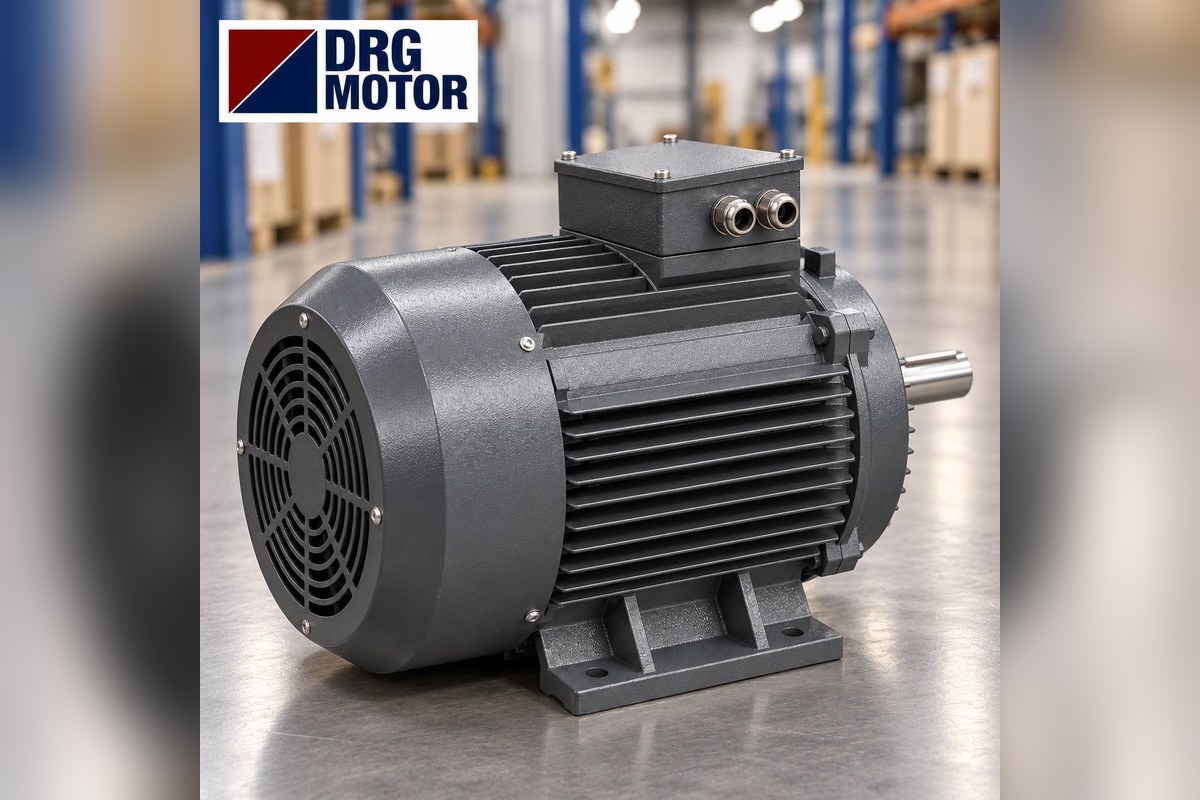

On a spice grinding machine (hammer or pin mill) the motor is usually a 2-pole three-phase motor at 2900–2945 rpm turning the rotor directly through a coupling; 3–5.5 kW is common on small workshop machines and 7.5–15 kW on production-line mills. For example, the 4 kW DRG-112M-2 runs at 2905 rpm and draws 7.45 A at 400 V, while the 7.5 kW DRG-132S2-2 runs at 2930 rpm and draws 13.7 A. The correct power is on the machine nameplate; what really decides the choice is the rotor tip speed needed for the target fineness and how many hours per shift the mill stays under load.
Spice dust is fine, oily and, for some products (chilli flakes, cumin, black pepper), abrasive; it settles on the motor's fan cover, fins and terminal box. So when replacing the motor, housing protection and placement matter as much as power. Electrical connection, earthing and panel settings must be done by a qualified electrician. For all 2-pole models and current prices, see the Buy Electric Motors Online page.
Quick decision table: which grinding, which motor?
| Target product | Mill type | Motor speed | Watch out |
|---|---|---|---|
| Coarse flakes, cracked | Hammer, coarse screen | 2- or 4-pole | Screen opening |
| Powdered spice (medium) | Hammer, fine screen | 2-pole, direct | Screen clogging |
| Very fine powder | Pin (disc) mill | 2-pole or belt step-up | Product heating |
| Oily seeds (sesame, cumin) | Pin / cooled | 2-pole | Sticking, heat |
In hammer mills the grinding is done by impact, and impact energy grows with the square of tip speed. That is why a spice mill aiming for fine powder runs on a 2-pole motor. Large hammer mills for grain and feed are chosen with a different power and screen logic; we covered that in our article on feed grinder motors, and general mill types in motor selection for mills and grinding plants.
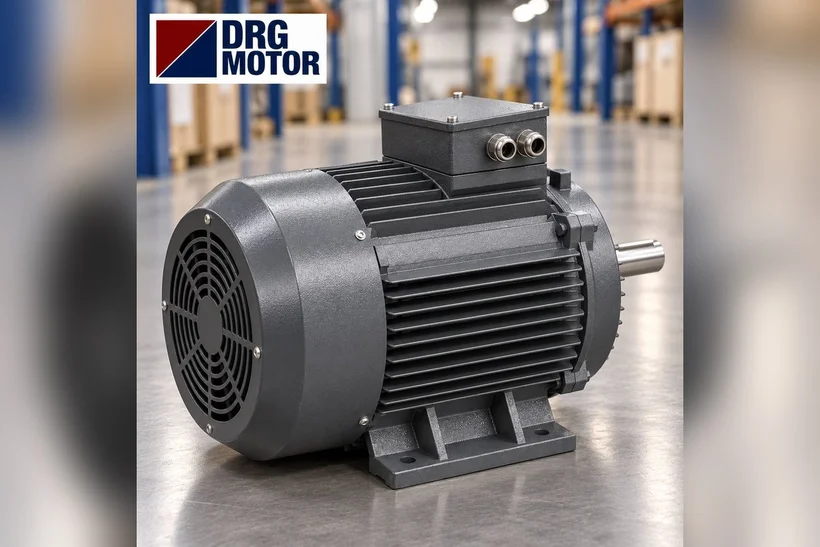
Why 2-pole? Rotor tip speed calculation
Rotor tip speed is v = π × D × n / 60 (D in metres, n in rpm, v in m/s). The rotor diameters below are examples; measure your machine's rotor diameter and calculate your own value.
| Rotor diameter | Motor | Rotor speed | Tip speed |
|---|---|---|---|
| 300 mm | DRG-132S1-2 · 2-pole | 2930 rpm | ≈ 46 m/s |
| 400 mm | DRG-132S2-2 · 2-pole | 2930 rpm | ≈ 61.4 m/s |
| 500 mm | DRG-160M1-2 · 2-pole | 2945 rpm | ≈ 77.1 m/s |
| 400 mm | DRG-132M-4 · 4-pole | 1460 rpm | ≈ 30.6 m/s |
On the same 400 mm rotor, switching to a 4-pole motor drops tip speed from about 61.4 m/s to 30.6 m/s; since impact energy changes with the square of speed, grinding becomes coarser and product that does not pass the screen builds up in the mill and loads the motor. Conversely, fitting a 2-pole motor to a mill designed for 4-pole pushes the rotor, hammer pins and bearings beyond their design limit; do not make this change without confirming the rotor balance and permitted speed with the maker.
Click to see current electric motor prices and order nowSEE PRICES →
Heat in fine grinding: what heats the product and the motor?
Most of the energy spent on grinding ends up as heat. With a fine screen the product stays longer in the mill, takes more impacts and warms up; with oily spices this coats the screen holes with a sticky layer. As the screen closes, motor current rises. Warm product is also unwanted for aroma and colour, which is why air-swept (fan-assisted) or jacket-cooled mills are used for fine grinding.
- If current is normal in the first hour but approaches the nameplate value by afternoon, the screen is clogging; clean it before upsizing the motor.
- Adjust the feed screw or vibratory feeder by motor current; "choking" the mill does not raise output.
- If heat passes from the mill housing to the motor, leave enough air gap on the coupling side.
- If the outlet fan or extractor is not running, the mill heats up and the motor struggles; interlock both from the same panel.
Short batches or long shifts? Choosing by running time
In spice workshops the mill often runs batch by batch: fifteen minutes of chilli flakes, then cleaning, then cumin. The motor restarts for every batch. With direct-on-line starting the motor draws several times its rated current: a short peak of 7.45 A × 8.3 ≈ 61.8 A for the 4 kW DRG-112M-2 and 13.7 A × 7.9 ≈ 108.2 A for the 7.5 kW DRG-132S2-2. Because a heavy hammer rotor lengthens the start, each start leaves extra heat in the winding; in a workshop with many starts per hour, idling the motor between batches or starting with an inverter ramp relieves the winding.
On a production line, by contrast, the mill stays under load for the whole shift. What matters then is not starting but keeping the current under load below the nameplate value. Rule of thumb: if the current measured over a full shift exceeds 85–90% of the rated current, moving one size up leaves headroom for future screen or product changes. DRG motors from 4 kW upwards are 400/690 V, so star-delta starting is possible at these ratings; but on a heavy-rotor mill acceleration in star takes long, so set the changeover time for when the rotor is fully up to speed. Check the choice with the star-delta starting tool and the cable size with the motor cable size calculator.
Motors in dusty rooms: what does IP55 protect, and what not?
DRG three-phase motors are IP55: the first digit "5" means dust ingress is not enough to interfere with operation, the second covers protection against water jets from any direction. That is enough to protect the inside of the motor in a spice workshop; but dust building up on the outside of the housing hampers cooling. The 4 kW DRG-112M-2 has 2 × M32×1,5 cable entries on the terminal box and 6206-ZZ-C3 shielded (ZZ) bearings; an unused cable entry must stay plugged.
- Clean the fan-cover grille and housing fins with a dry brush or vacuum at the end of the shift; compressed air pushes dust into the terminal-box gasket.
- Place the motor beside, not below, the mill's dust outlet and the bagging spout.
- Inspect the terminal-box gasket and cover screws at every screen change.
- Use a dust-tight sheet-metal coupling guard; an open coupling throws dust onto the motor's front end shield.
- If your plant has been zoned for dust explosion risk, that zone needs an Ex-certified motor suited to the zone, not a standard IP55 motor; the zoning is decided by the plant's responsible person.
Which 2-pole DRG motor for a spice mill?
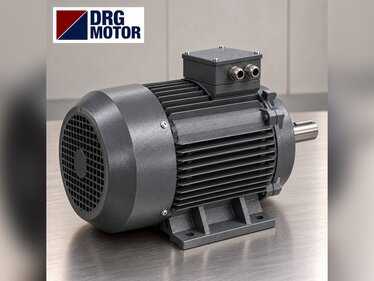
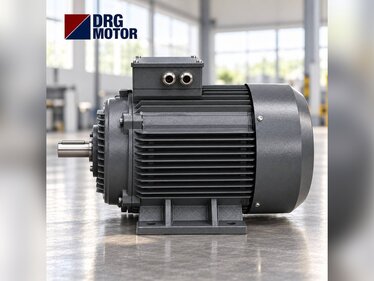
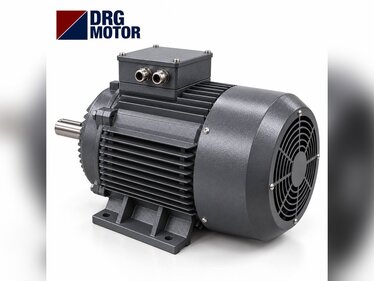
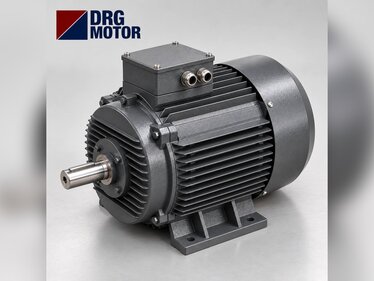
Below are 2-pole cast iron models for the usual spice-mill range. On a direct-coupled mill the old motor's shaft diameter and length (D × E) and flange or foot dimensions must match exactly; dimensions are on the technical drawings page.
| Model | Power / speed | Frame | Current 400 V |
|---|---|---|---|
| DRG-100L-2 | 3 kW / 2895 rpm | 100L · cast iron | 5.71 A |
| DRG-112M-2 | 4 kW / 2905 rpm | 112M · cast iron | 7.45 A |
| DRG-132S1-2 | 5.5 kW / 2930 rpm | 132S · cast iron | 10.1 A |
| DRG-132S2-2 | 7.5 kW / 2930 rpm | 132S · cast iron | 13.7 A |
| DRG-160M1-2 | 11 kW / 2945 rpm | 160M · cast iron | 19.6 A |
Data for the 7.5 kW 2-pole model often found on a medium-sized spice line:
- Power: 7.5 kW
- Rated speed: 2930 rpm
- Frame: 132S · cast iron
- Current 400 V: 13.7 A
- cos φ: 0.88
- Rated torque: 24.4 Nm
- Starting torque: 2 × Tn
- Starting current: 7.9 × In
- Shaft D × E: 38 × 80 mm
- Bearing: 6208-ZZ-C3
- Voltage: 400/690 V (Δ/Y)
DRG Motor is a manufacturer, supplier and seller of electric motors; DRG MOTOR motors are guaranteed against material and manufacturing defects for 2 years from the date of delivery (warranty certificate). Payment options are on the payment page.
Motors in this power range
- DRG-100L-2 – 3 kW – 2895 rpm – 100L cast iron
- DRG-112M-2 – 4 kW – 2905 rpm – 112M cast iron
- DRG-132S1-2 – 5.5 kW – 2930 rpm – 132S cast iron
- DRG-132S2-2 – 7.5 kW – 2930 rpm – 132S cast iron
- DRG-160M1-2 – 11 kW – 2945 rpm – 160M cast iron
Click to see current prices and order these motors nowSEE PRICES →
Frequently Asked Questions
What speed should a spice mill motor be?
Hammer and pin mills that grind fine powder mostly run directly on a 2-pole motor at 2900–2945 rpm. Some machines for coarse cracking use a 4-pole motor; when replacing, keep the old motor's speed.
How many kW does a spice grinding machine need?
3–5.5 kW is common on small workshop machines and 7.5–15 kW on production-line mills. The exact value is on the nameplate; if current over a full shift exceeds 85–90% of rated, consider one size up.
How many amps does a 4 kW spice mill motor draw?
The rated current of the 2-pole 4 kW DRG-112M-2 is 7.45 A at 400 V, rising to 7.84 A on a 380 V network. If the coupled mill starts direct-on-line, expect close to 8.3 times this value for a moment.
Is an IP55 motor enough for spice dust?
It is enough to protect the inside of the motor, but dust on the outside of the housing must be cleaned regularly. Areas zoned for dust explosion risk need an Ex-certified motor suited to the zone.
Send us your mill's rotor diameter, the old motor's nameplate and the drive type (coupling, flange, belt), and we will choose the right 2-pole DRG model together. Phone +90 (542) 666 11 11, e-mail [email protected], contact page. The full 2-pole range and current prices: Buy Electric Motors Online.