English
 Le français
 Türkçe




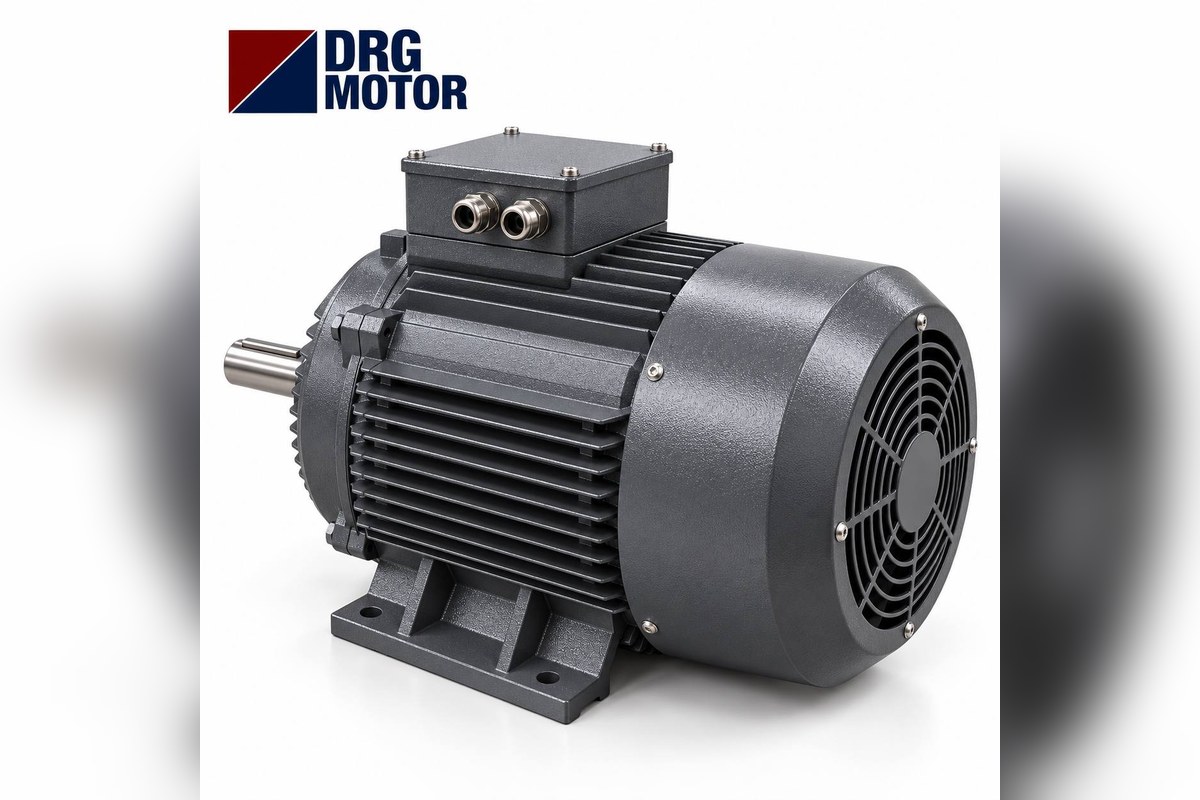

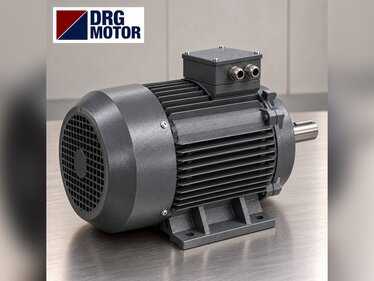
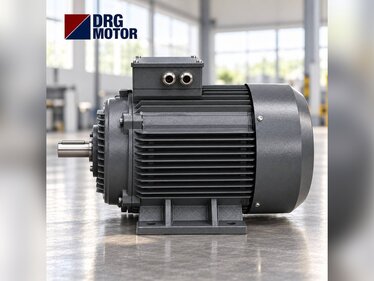
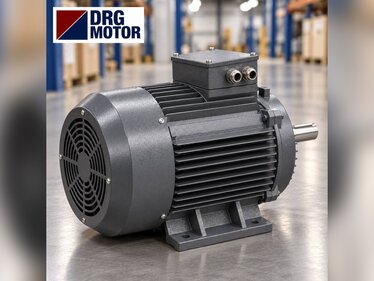
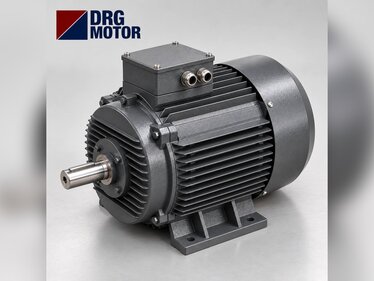
A screw oil press needs high torque at low speed; that is why the motor is almost always a 4-pole (1450–1465 rpm) or 6-pole (970 rpm) three-phase motor turning the screw through a gearbox at roughly 20–60 rpm. Motors of 2.2–4 kW are common on small cold-press machines, 5.5–11 kW on workshop and cooperative presses, and 15 kW and above on large continuously fed presses (the exact value is on the machine nameplate). For example, the 7.5 kW DRG-132M-4 draws 14.3 A at 400 V and delivers 49.1 Nm rated torque at its shaft; the torque reaching the screw after the gearbox is that value multiplied by the ratio.
What strains the motor on an oil press is not the average load but sudden peaks: starting before the head is warm enough, damp seed or seed with foreign matter, a narrowing cake outlet. At those moments motor current rises above the nameplate value within seconds. Because heater bands, motor and protection relays share the same panel, the wiring must be done by a qualified electrician. You can see suitable 4- and 6-pole models and current prices on the Buy Electric Motors Online page.
3 situations that burn out oil press motors
- Starting with a cold head: Cake left from the last run hardens as it cools; starting the motor before the heated head reaches temperature forces the screw to turn against that plug.
- Restarting again and again after a jam: Pressing the start button without letting the motor cool after an overload trip loads the starting current onto a hot winding every time.
- Bypassing the gearbox logic with pulley changes: Raising speed to press faster loads the motor's power, not just its torque; the seed is not pressed enough, the cake comes out oily and current rises.
How many kW for a given capacity?
Oil press catalogues usually state capacity as seed processed per hour (kg/h). Even at the same capacity, seed type (sunflower, rapeseed, sesame, walnut, olive pit), hulled or unhulled, moisture content and target residual oil in the cake noticeably change the power. The ranges below are values often seen on screw presses on the market and are only a cross-check for machines whose plate is unreadable:
| Press class | Typical use | Conservative range | DRG example |
|---|---|---|---|
| Small cold press | Shop, boutique production | 2.2–4 kW | DRG-112M-4 |
| Medium screw press | Workshop, cooperative | 5.5–11 kW | DRG-132M-4 |
| Large pre-press | Continuously fed line | 15 kW and above | DRG-160L-4 |
If the old motor still runs, the most reliable data is the current measured at full capacity with normal seed. If the current is well below the nameplate value, the motor is adequate and the cause of failure is most likely jamming or cold starts; the same power will do. If the current is close to the nameplate even in normal running, check the gearbox ratio and screw wear before moving up a size.
Click to see current electric motor prices and order nowSEE PRICES →
Gearbox ratio: how much torque reaches the screw?
A gearbox reduces speed by the ratio and increases torque by the same ratio: i = nmotor / nscrew and Tscrew ≈ Tmotor × i (gearbox losses ignored; the real value is slightly lower). The table below assumes a screw speed of 40 rpm; your machine's screw speed is in the maker's documents or on the gearbox plate.
| Model | Power / speed | Ratio i | Screw torque |
|---|---|---|---|
| DRG-132S-4 | 5.5 kW / 1460 rpm | ≈ 36.5 | ≈ 1314 Nm |
| DRG-132M-4 | 7.5 kW / 1460 rpm | ≈ 36.5 | ≈ 1792 Nm |
| DRG-160M-4 | 11 kW / 1465 rpm | ≈ 36.6 | ≈ 2626 Nm |
| DRG-160L-4 | 15 kW / 1465 rpm | ≈ 36.6 | ≈ 3582 Nm |
| DRG-160L-6 | 11 kW / 970 rpm | ≈ 24.2 | ≈ 2626 Nm |
Two conclusions follow. First, at 11 kW the 4-pole DRG-160M-4 and the 6-pole DRG-160L-6 give the same screw torque (≈ 2626 Nm); the 6-pole motor can work with a lower-ratio (and therefore smaller or fewer-stage) gearbox, but its frame is larger and it draws 22.0 A at 400 V. Second, if you change motor speed during replacement, you must change the gearbox ratio too, otherwise the screw speed shifts. To calculate with your own values use the gearbox output speed and torque calculator, and for ratio and service factor selection see our article how to select a motor and gearbox.
What happens in a jam? Breakdown torque, overload relay and current relay
When the screw jams at the cake outlet, the load rises within seconds. An induction motor can go above its rated torque up to its breakdown torque: on the DRG-132M-4, Tmax/Tn = 2.3, so 49.1 × 2.3 ≈ 112.9 Nm. Passed through the gearbox at 36.5 times, roughly 4121 Nm reaches the screw. A strong motor may sound like a good thing, but this is where the real risk starts: the gearbox teeth, key and screw may not be designed for that sudden torque. The overload relay, which reacts to heating, is too slow for a jam lasting a few seconds.
- Overload relay: set to the nameplate current (14.3 A at 400 V for 7.5 kW); protects the winding against prolonged overload.
- Electronic current (over-torque) relay: set for example to 110% of rated current (≈ 15.7 A) with a 2–3 second delay, it stops the motor quickly in a jam and protects the mechanical parts.
- Shear pin or slip coupling: a mechanical fuse that saves the gearbox if electrical protection is too slow.
- Short reverse: to clear a jam, the reverse button should run "only while pressed", with interlocked forward-reverse contactors.
- Restart delay: a timer relay that blocks restarting before the motor has cooled after a trip protects the winding.
Check contactor, overload and fuse selection with the overload-fuse-contactor selection tool.
Heated head and start-up sequence
Many screw presses have heater bands around the press head (outlet cone). The aim is to let the first seed flow without solidifying on cold metal and to soften the cake left from the last run. The heaters are a load separate from the motor and must be added separately to both fuse and cable sizing in the panel design. For the motor, what matters is the right sequence:
- Switch on the heater and wait until the head reaches the temperature recommended by the machine maker.
- Start the motor with no feed; watch the current for the first minutes.
- Open the seed feed gradually; current should settle below the nameplate value.
- Adjust the cake outlet (head gap) only after the current has settled.
- When stopping, cut the feed first and stop the motor once the screw is empty; the next start will be easier.
This sequence can be automated in the panel with an interlock between a temperature controller and the motor contactor: the motor cannot start until the head is at temperature.
Placing the motor in an oily environment
DRG motors are IP55; oil drops and seed dust do not easily get inside, but on the housing fins oil and dust form a sticky layer that hinders cooling. Place the motor behind and above the gearbox rather than under the oil tray and cake outlet; keep the fan cover clear, point the cable gland downwards and wipe the housing regularly.
Which DRG motor should you buy for an oil press?
Below are 4-pole cast iron models for the usual range of geared screw presses, plus a 6-pole option that gives the same screw torque with a lower ratio. For motors flange-mounted to a gearbox, compare shaft (D × E) and flange dimensions with the values on the technical drawings page.
| Model | Power / speed | Frame | Current 400 V |
|---|---|---|---|
| DRG-112M-4 | 4 kW / 1450 rpm | 112M · cast iron | 7.95 A |
| DRG-132S-4 | 5.5 kW / 1460 rpm | 132S · cast iron | 10.7 A |
| DRG-132M-4 | 7.5 kW / 1460 rpm | 132M · cast iron | 14.3 A |
| DRG-160M-4 | 11 kW / 1465 rpm | 160M · cast iron | 20.4 A |
| DRG-160L-6 | 11 kW / 970 rpm | 160L · cast iron | 22 A |
Data for the 7.5 kW 4-pole model often found on a medium screw press:
- Power: 7.5 kW
- Rated speed: 1460 rpm
- Frame: 132M · cast iron
- Current 400 V: 14.3 A
- cos φ: 0.84
- Rated torque: 49.1 Nm
- Starting torque: 2 × Tn
- Starting current: 7.5 × In
- Shaft D × E: 38 × 80 mm
- Bearing: 6208-ZZ-C3
- Voltage: 400/690 V (Δ/Y)
DRG Motor is a manufacturer, supplier and seller of electric motors; DRG MOTOR motors are guaranteed against material and manufacturing defects for 2 years from the date of delivery (warranty certificate). Seasonal instalment campaigns with Halköde may apply; ask on WhatsApp for the current option, and see payment details on the payment page.
Motors in this power range
- DRG-112M-4 – 4 kW – 1450 rpm – 112M cast iron
- DRG-132S-4 – 5.5 kW – 1460 rpm – 132S cast iron
- DRG-132M-4 – 7.5 kW – 1460 rpm – 132M cast iron
- DRG-160M-4 – 11 kW – 1465 rpm – 160M cast iron
- DRG-160L-6 – 11 kW – 970 rpm – 160L cast iron
Click to see current prices and order these motors nowSEE PRICES →
Frequently Asked Questions
How many kW should an oil press motor be?
It depends on the press class and the seed: 2.2–4 kW on small cold presses, 5.5–11 kW on workshop and cooperative presses, and 15 kW and above on large continuously fed presses. The exact value is on the machine nameplate.
What speed is an oil expeller motor?
The motor is usually 4-pole (1450–1465 rpm) or 6-pole (970 rpm); the screw speed is reduced by the gearbox to roughly 20–60 rpm. If motor speed changes on replacement, the gearbox ratio must change too.
Why does an oil press trip its overload?
Most often because of starting with a cold head, damp seed or seed with foreign matter, and a narrowing cake outlet. Fix the start-up sequence, use an electronic current relay and a shear pin for jams, and do not set the overload above the nameplate.
How many amps does a 7.5 kW oil press motor draw?
At full load the 7.5 kW 4-pole DRG-132M-4 takes 14.3 A at 400 V (15 A at 380 V). The jam relay is set slightly above this, around 110%; the direct-on-line starting peak is about 7.5 times.
Send us your press nameplate, gearbox ratio and screw speed, and we will choose the right DRG motor together. Phone +90 (542) 666 11 11, e-mail [email protected], contact page. 4- and 6-pole models suited to geared presses: Buy Electric Motors Online.