English
 Le français
 Türkçe




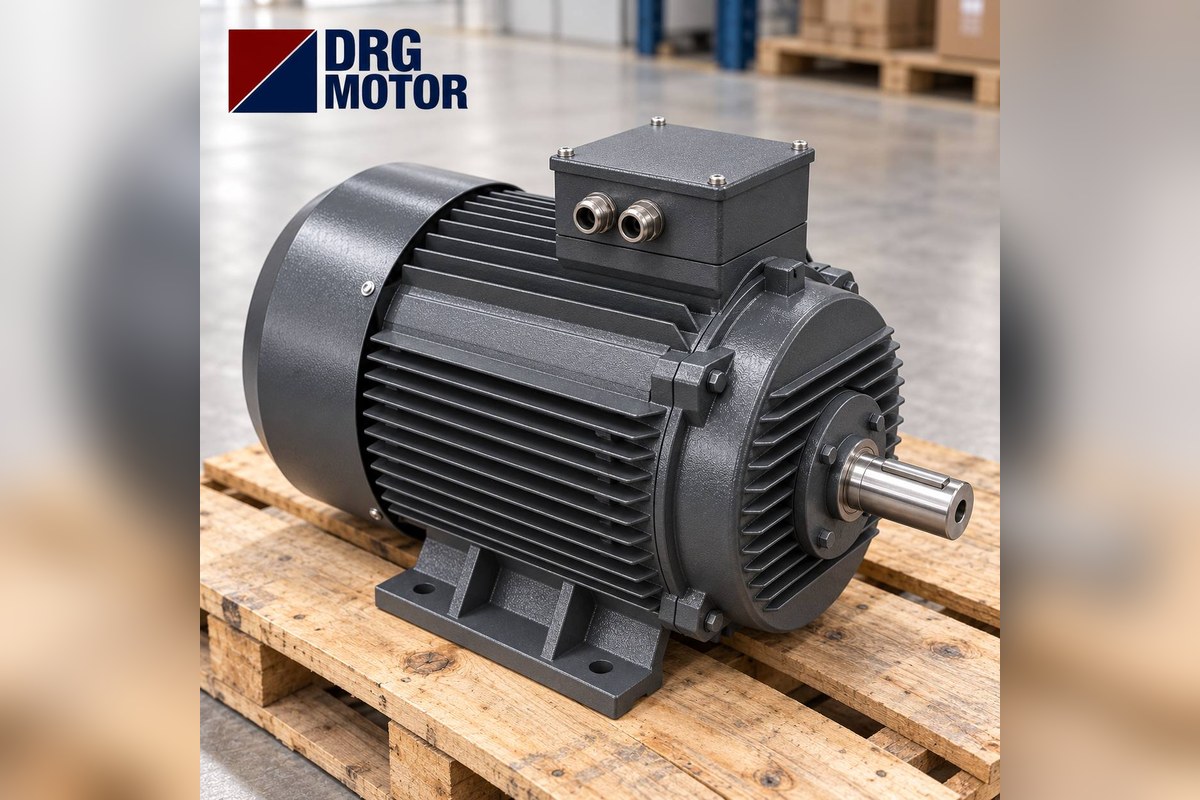

A bigger motor can be fitted to the same machine, but in most cases it does not solve the problem: a motor draws the power the machine demands, not the power on its nameplate. If the overload relay keeps tripping, find the cause first; if the measured current really is above nameplate current because the machine now permanently does more work, one size up is the right decision. Even then, not only the motor but the cable, overload relay, contactor and the machine’s mechanical parts must be checked together.
Current measurement, overload setting and terminal checks are live electrical work; they must be done by a qualified electrician. Once the decision is clear, you can find the right power among the 120 models on our Buy Electric Motors Online page.
Part-load losses of an oversized motor are covered in our article the oversized motor trap. Here the subject is what to do before moving one size up because “the motor is not enough”, and what changes if you do.
Why does the overload keep tripping? Find the cause first
An overload relay watches motor current; it opens if current above its setting lasts a certain time. So a trip does not mean “the motor is too small” but “current is above the setting”. There are at least six separate reasons for this, and only one is a real lack of power.
| Symptom | Likely cause | First check |
|---|---|---|
| Current below nameplate, trips | Overload setting / faulty relay | Setting = nameplate current? |
| Three phase currents differ | Phase imbalance, loose terminal | Phase voltages, terminals |
| Current above nameplate, idle OK | Mechanical friction, overload | Turn by hand, bearing, belt |
| Trips at start, not running | Long start, frequent starts | Start time, starts per hour |
| Trips only in hot hours | Cooling, ambient temperature | Fan cover, dirty frame |
| Current always above nameplate | Machine really needs more power | Has the process changed? |
Measure with a clamp meter while the machine runs at normal load, on each of the three phases, and compare with the nameplate current. A 7.5 kW, 1500 rpm motor has a nameplate current of 14.3 A at 400 V (DRG-132M-4). If the measured current is around 12–13 A, the motor is adequate and the problem is elsewhere. The motor current chart page can also help to roughly convert current to power.
The 3 most common mistakes
- Setting the overload above nameplate current. It stops the trips but leaves the motor unprotected; the winding keeps overheating.
- Moving up a size without measuring. A seized bearing, an over-tight belt or a weak phase also strains a bigger motor; the new motor stops later, but for the same reason.
- Enlarging only the motor. Cable, contactor, overload and fuse were chosen for the old current; the machine’s coupling, gearbox and shaft were designed for the old motor’s torque.
Click to see current electric motor prices and order nowSEE PRICES →
What changes if you fit a bigger motor?
Example: on a machine driven by a 7.5 kW 4-pole motor, measurement shows current permanently above nameplate and the process has grown; the next size, 11 kW, is being considered. Catalogue values of the three options:
| Value | Existing 7.5 kW | 11 kW standard | 11 kW compact |
|---|---|---|---|
| Model | DRG-132M-4 | DRG-160M-4 | DRG-132M-4K |
| Frame / H | 132M / 132 mm | 160M / 160 mm | 132M / 132 mm |
| Shaft D × E | 38 × 80 mm | 42 × 110 mm | 38 × 80 mm |
| Current 400 V | 14.3 A | 20.4 A | 20.4 A |
| Rated torque | 49.1 Nm | 71.7 Nm | 71.7 Nm |
| Breakdown torque | ≈ 112.9 Nm | ≈ 164.9 Nm | ≈ 164.9 Nm |
| Starting current | ≈ 107 A | ≈ 157 A | ≈ 157 A |
| Example cable size | 1.5 mm² | 4 mm² | 4 mm² |
Breakdown torque was calculated as rated torque × Tmax/Tn and starting current as rated current × Is/In. Cable size comes from the sample table in the motor cable size calculator (copper, PVC, about 30 °C, sizing factor 1.25): with 14.3 × 1.25 ≈ 17.9 A, 1.5 mm² (18.5 A) is enough, while 20.4 × 1.25 = 25.5 A exceeds the 2.5 mm² limit (25 A) and needs 4 mm². The actual size depends on installation method and line length.
Risk of mechanical overload
The 11 kW motor has a rated torque of 71.7 Nm against 49.1 Nm for the 7.5 kW motor; the ratio is about 1.46. When the machine jams, the maximum torque the motor can push rises in the same ratio, from about 112.9 Nm to 164.9 Nm. If coupling, key, gearbox and machine shaft were sized for the old motor, the part that breaks at a jam is no longer the motor but the machine itself. So the upgrade decision must be checked with the machine builder or against the permitted input power on the gearbox nameplate.
Electrical side: cable, switchgear, overload
Rated current rises from 14.3 A to 20.4 A, and direct-on-line starting current from about 107 A to 157 A. The overload is set to the new nameplate current; contactor and fuse are chosen for the new current (overload, fuse and contactor selection). In a star-delta panel, check that the new motor is rated 400/690 V; both 11 kW models in the example are 400/690 V.
cos φ at low load
The catalogue cos φ is the full-load value: 0.84 for the 7.5 kW model, 0.85 for the 11 kW model. As the motor runs below full load, cos φ drops, and near no-load it is much lower. If the machine actually needs around 7.5 kW, the 11 kW motor runs at part load and the reactive power demand increases. In a plant with a power-factor correction panel, this means rechecking its settings.
Will the dimensions fit if the frame changes?
In the standard series a 7.5 kW 4-pole motor is in frame 132M and an 11 kW in 160M. Shaft height rises from 132 mm to 160 mm, the shaft from 38 × 80 mm to 42 × 110 mm, and the foot holes change too. This means redoing the base, coupling or pulley and belt alignment.
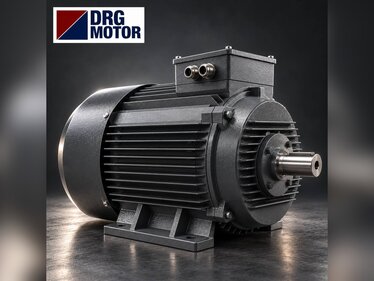
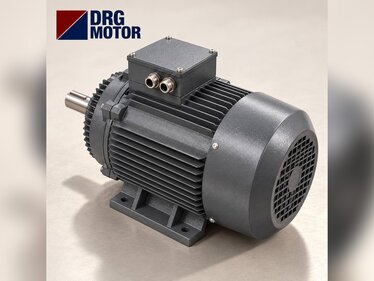
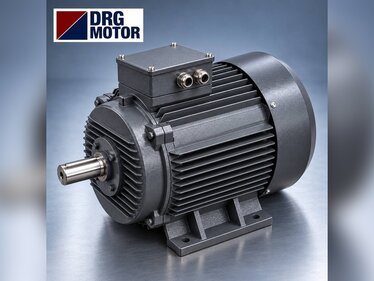
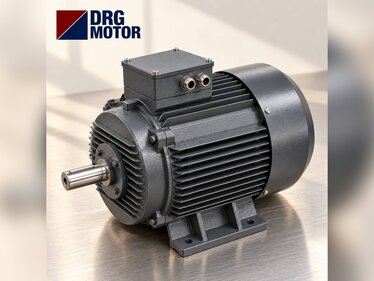
If you must keep the same foot and shaft dimensions, the compact DRG-132M-4K delivers 11 kW in a 132M aluminium frame: shaft 38 × 80 mm and shaft height 132 mm, the same as the 7.5 kW model. Current, cable and mechanical torque are still calculated with the 11 kW values above; the compact frame solves only the mounting-dimension problem. All frame dimensions are on the DRG technical drawings page.
Decision flow: should I go bigger?
- Measure current on all three phases at normal load. If it is below nameplate current, check the overload setting and the relay itself; the motor stays.
- If phases are unbalanced, fix the supply and terminal connections, then measure again.
- If current is high but the machine is hard to turn by hand, fix bearings, belt tension, alignment and the machine’s own friction.
- If it trips only at start, check starting time and starts per hour; the starting method may need to change.
- If current is permanently above nameplate in normal running and the process has grown, move one size up.
- When you do, check cable, overload, contactor, fuse, the permitted torque of coupling/gearbox and frame dimensions together.
Replacement checklist
- Three-phase current measured at normal load and compared with nameplate current.
- Overload setting equals nameplate current.
- Bearings, belt, coupling alignment and machine friction checked.
- Cable size, contactor and fuse confirmed for the new motor’s rated current.
- Coupling, key, gearbox and machine shaft strength for the new torque compared with manufacturer data.
- If the frame changes, base, shaft and pulley/coupling dimensions compared.
- In plants with power-factor correction, steps checked for the new load.
On the purchasing side, a few facts are enough: DRG Motor is an electric motor manufacturer, supplier and seller; product codes follow the DRG-frame-poles pattern (e.g. DRG-160M-4). DRG MOTOR motors are guaranteed against material and manufacturing defects for 2 years from the delivery date (warranty certificate). Shipping is by contracted freight or courier companies and is paid by the buyer; details are on the sales, delivery and return terms page. Periodic instalment campaigns may be available with Halköde; message us on WhatsApp for the current option (payment options).
DRG motors to consider for one size up
- DRG-132S-4 – 5.5 kW – 1460 rpm – 132S cast iron
- DRG-132M-4 – 7.5 kW – 1460 rpm – 132M cast iron
- DRG-132M-4K – 11 kW – 1465 rpm – 132M aluminium
- DRG-160M-4 – 11 kW – 1465 rpm – 160M cast iron
- DRG-160L-4 – 15 kW – 1465 rpm – 160L cast iron
Click to see current prices and order these motors nowSEE PRICES →
Frequently Asked Questions
Does a bigger motor use more electricity?
A motor draws the power the load demands; for the same work, consumption does not change much. But because a bigger motor runs at part load, its losses and reactive power demand increase proportionally.
If the overload keeps tripping, is the motor too small?
Not always. Measure current first: if it is below nameplate current, the problem is the overload setting, phase imbalance or the relay itself.
Can an 11 kW motor replace a 7.5 kW motor?
Yes, but in the standard series the frame grows from 132M to 160M and current rises from 14.3 A to 20.4 A. To keep the same foot and shaft dimensions, the 11 kW compact model in frame 132M can be chosen.
Can a bigger motor damage the machine?
It can at a jam: an 11 kW motor can push about 1.46 times more torque than a 7.5 kW motor. Coupling, gearbox and shaft must be checked for this torque.
To narrow down the model together, send a photo of the old nameplate and your measurements via WhatsApp to +90 (542) 666 11 11 or to [email protected]; other channels are on our contact page. For current prices of all models, visit Buy Electric Motors Online.