English
 Le français
 Türkçe




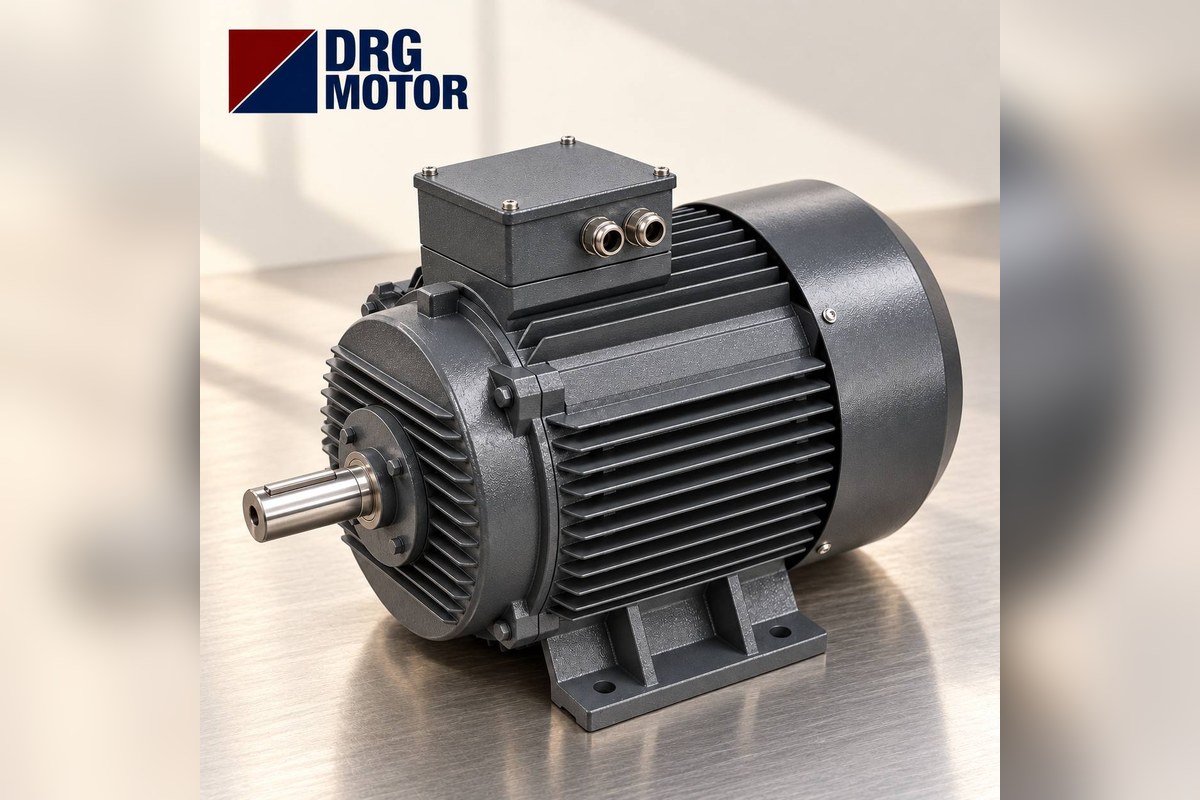

Yes, a wound-rotor (slip-ring) motor can be replaced with a squirrel-cage motor, but swapping the motor alone is not enough: the job the slip-ring motor did with its rotor resistors, “high starting torque at low current”, must now be taken over by a starting device. For most heavy loads the right match is a squirrel-cage motor + VFD; for loads that start light it is a squirrel-cage motor + star-delta or soft starter. The decision depends on the torque your machine needs at standstill and on the starting current the plant can tolerate.
Changing the panel, the rotor resistor bank and the cabling is live electrical work; removal and the new connection must be done by a qualified electrician. The calculations below are meant to make your decision easier. Once you know which frame suits you, you can see the models directly among the 120 motors on our Buy Electric Motors Online page.
Why was a slip-ring motor fitted to this machine?
A slip-ring (wound-rotor) motor is built so that external resistance can be added to the rotor circuit through slip rings and brushes. At start, the added resistance does two things: the starting current drops and a torque close to the breakdown torque is available at zero speed. As the resistance is switched out step by step, the motor reaches its normal speed. That is why slip-ring motors were chosen for mills that start loaded, crushers, large fans, belt conveyors, cranes and plants fed by a weak transformer. We explained the construction difference in our article squirrel-cage vs wound-rotor motor; here the subject is the replacement decision itself.
The reasons for considering a change are usually the same: worn rings and brushes, brush dust, an overheated or failed resistor bank, no spare rotor available, and maintenance hours. A squirrel-cage motor has no rings, brushes or external resistors; maintenance comes down to bearings and cleaning.
Three questions to answer before the change
- How much torque does the machine need at start? Does it start empty (fan damper closed, belt empty) or loaded (mill full, crusher with material)? On a heavy start the required torque can reach 1.2–2 times rated torque; the exact value comes from the machine builder or earlier measurements.
- How much starting current can the plant take? Transformer rating, cable length and other loads on the same line often rule out direct-on-line starting.
- Was speed adjusted with the rotor resistors? If the resistors were used not only at start but also in operation (crane hoisting, conveyors with speed steps), the only way forward is a VFD.
The numbers: a 55 kW, 1500 rpm example
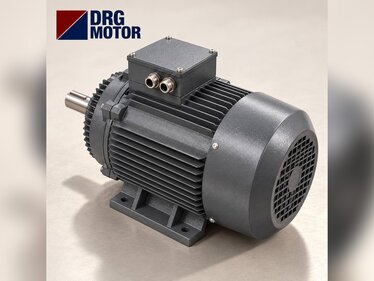
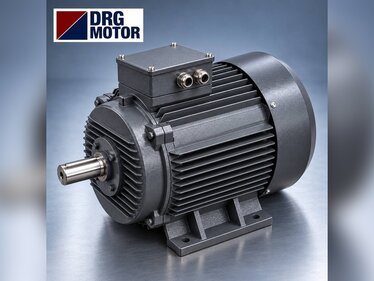
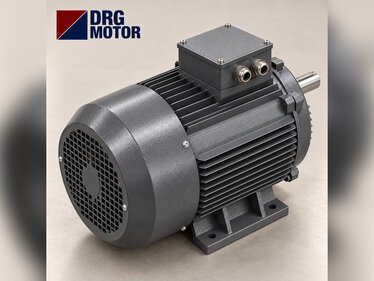
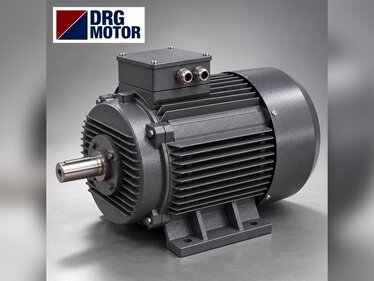
Assume a 55 kW, 4-pole slip-ring motor drives a mill that starts loaded and the machine needs 1.6 times rated torque at start. The squirrel-cage candidate is DRG-250M-4: rated torque 353.7 Nm, current at 400 V 97.6 A, Ts/Tn 2.2, Is/In 7.4. The required starting torque is 1.6 × 353.7 ≈ 566 Nm.
| Starting method | Starting current | Starting torque | Heavy-load result |
|---|---|---|---|
| Direct-on-line | ≈ 722 A | ≈ 778 Nm | Starts, grid is stressed |
| Star-delta | ≈ 241 A | ≈ 259 Nm | Does not start |
| Soft starter (3 × In) | ≈ 293 A | ≈ 128 Nm | Does not start |
| VFD (1.5 × In) | ≈ 146 A | ≈ 531 Nm | Borderline, size up |
How it is calculated: with star-delta, current and torque fall to roughly one third. A soft starter lowers the voltage; since torque falls with the square of voltage, limiting current to 3 × In brings torque down to about (3 / 7.4)² × 2.2 ≈ 0.36 × Tn. A VFD runs the motor at low frequency around rated current and delivers rated torque and above; its short-time overload capacity is the value in the drive’s own catalogue (1.5 × In assumed here).
The result: this machine needing 566 Nm will not start with star-delta or a soft starter. Direct-on-line gives enough torque, but a starting current of ≈ 722 A causes a voltage dip on most plant transformers. With a VFD the 55 kW motor delivers ≈ 531 Nm, slightly below the need. If the next size up, DRG-280S-4 (rated torque 482 Nm), is chosen, the required torque drops to only 1.17 times rated and stays comfortably within the drive’s 1.5 × In limit.
Click to see current electric motor prices and order nowSEE PRICES →
Which load is covered by which starting method?
- Fans starting empty, extractors with a closable damper, empty belts: squirrel-cage motor + star-delta or soft starter is enough. If the run-up gets longer, check the overload relay setting.
- Mills starting full, crushers, loaded conveyors: squirrel-cage motor + VFD. If necessary the motor is chosen one size larger so that the starting torque stays within the drive’s current limit.
- Speed steps made with rotor resistance (cranes, winding, drawing): VFD and, where needed, a braking resistor; the mechanical brake arrangement is reviewed separately.
- Very high inertia + frequent starts: on a direct start, the slip energy released while accelerating the load turns into heat inside the squirrel-cage rotor (on the slip-ring motor this heat stayed in the external resistors). Roughly E ≈ ½ · J · ω² is dumped into the rotor at every start; here too the VFD is the answer.
When is a squirrel-cage motor not the right choice?
In three situations the change should be postponed or the project widened. First, when the plant has no panel space, cooling or harmonic provisions for a VFD and the load starts heavy. Second, when the slip-ring motor’s frame and shaft height differ greatly from the new motor: because of the ring section, the old motor is longer, so the base and coupling distance must be rebuilt. Third, on a critical hoisting system that requires the machine builder’s approval; there the motor is selected together with the brake and controls, not on its own.
On installation, dimensional differences show up mostly in shaft height (H) and shaft end (D × E). The example model’s individual values:
- Power: 55 kW
- Rated speed: 1485 rpm
- Frame: 250M cast iron
- Current at 400 V: 97.6 A
- Rated torque: 353.7 Nm
- Starting / rated torque: 2.2
- Starting / rated current: 7.4
- Shaft height H: 250 mm
- Shaft D × E: 65 × 140 mm
Compare your old motor’s H and D × E with these values; all dimensions are given frame by frame on the DRG technical drawings page.
Starting torque and current ratios: 30–110 kW, 1500 rpm
Below are the starting values of 4-pole DRG models in the power range where slip-ring motors are most common. “Ts/Tn” is starting torque over rated torque, “Is/In” starting current over rated current; for direct-on-line starting you calculate with these ratios, for star-delta with roughly one third of them.
| Model | Rated torque | Ts/Tn | Is/In |
|---|---|---|---|
| DRG-200L-4 | 194.2 Nm | 2.0 | 7.3 |
| DRG-225S-4 | 237.9 Nm | 2.0 | 7.4 |
| DRG-225M-4 | 289.4 Nm | 2.0 | 7.4 |
| DRG-250M-4 | 353.7 Nm | 2.2 | 7.4 |
| DRG-280S-4 | 482 Nm | 2.0 | 6.9 |
| DRG-280M-4 | 578.4 Nm | 2.0 | 6.9 |
| DRG-315S-4 | 706 Nm | 2.0 | 7.0 |
To settle the starting method use the star-delta and other starting methods tool, and for protective devices the overload relay, fuse and contactor selection tool.
Replacement checklist
- Power, speed, stator voltage and rotor voltage/current photographed from the old nameplate.
- The machine’s starting torque need (empty/loaded start) and number of starts per day written down.
- Transformer rating and motor line length obtained; whether direct-on-line starting is allowed has been asked.
- Starting method chosen; for a VFD, the current rating set according to motor current and starting need.
- Rotor resistor bank, ring control and brush monitoring circuit planned to be removed from the panel.
- New motor’s H, D × E and foot-hole dimensions compared with the base; coupling/pulley to be realigned.
- Cable size checked against the new rated current (motor cable size calculator).
- Current and run-up time to be measured and recorded at the first start.
On the purchasing side, the essentials are short: DRG Motor is a manufacturer, supplier and seller of electric motors; product codes follow the DRG-frame-poles format (e.g. DRG-250M-4). DRG MOTOR motors are guaranteed against material and manufacturing defects for 2 years from the delivery date (warranty certificate). Shipping is by contracted freight or courier companies and is paid by the buyer; details are on the sales, delivery and return terms page. Seasonal instalment campaigns may be available with Halköde; message us on WhatsApp for the current option (payment options).
DRG motors to consider instead of a slip-ring motor
- DRG-200L-4 – 30 kW – 1500 rpm – 200L cast iron
- DRG-225S-4 – 37 kW – 1500 rpm – 225S cast iron
- DRG-225M-4 – 45 kW – 1500 rpm – 225M cast iron
- DRG-250M-4 – 55 kW – 1500 rpm – 250M cast iron
- DRG-280S-4 – 75 kW – 1500 rpm – 280S cast iron
- DRG-280M-4 – 90 kW – 1500 rpm – 280M cast iron
- DRG-315S-4 – 110 kW – 1500 rpm – 315S cast iron
Click to see current prices and order these motors nowSEE PRICES →
Frequently Asked Questions
Does starting current increase when a squirrel-cage motor replaces a slip-ring motor?
With direct-on-line starting, yes: on the 55 kW example the starting current is 7.4 times rated, about 722 A. A VFD keeps it around rated current, which is why a VFD is recommended for heavy loads.
Can I keep the slip-ring motor’s rotor resistor bank with a squirrel-cage motor?
No. A squirrel-cage rotor has no external leads; the resistor bank and ring control are taken out of service and removed from the panel.
Can star-delta starting replace a slip-ring motor?
Only on loads that start light. Star-delta cuts starting torque to roughly one third; in the example it falls to 259 Nm, below rated torque.
Do I need a larger motor when replacing?
Yes, if the starting need exceeds the drive’s overload limit. In the example, choosing 75 kW instead of 55 kW lowers the required torque to 1.17 times rated, inside the limit.
To see current models and prices, browse the 120 models in our online shop.
If you would like to confirm the model together, send a photo of the old motor’s nameplate and its dimensions via WhatsApp to +90 (542) 666 11 11 or by e-mail to [email protected]; all other channels are on our contact page.