English
 Le français
 Türkçe




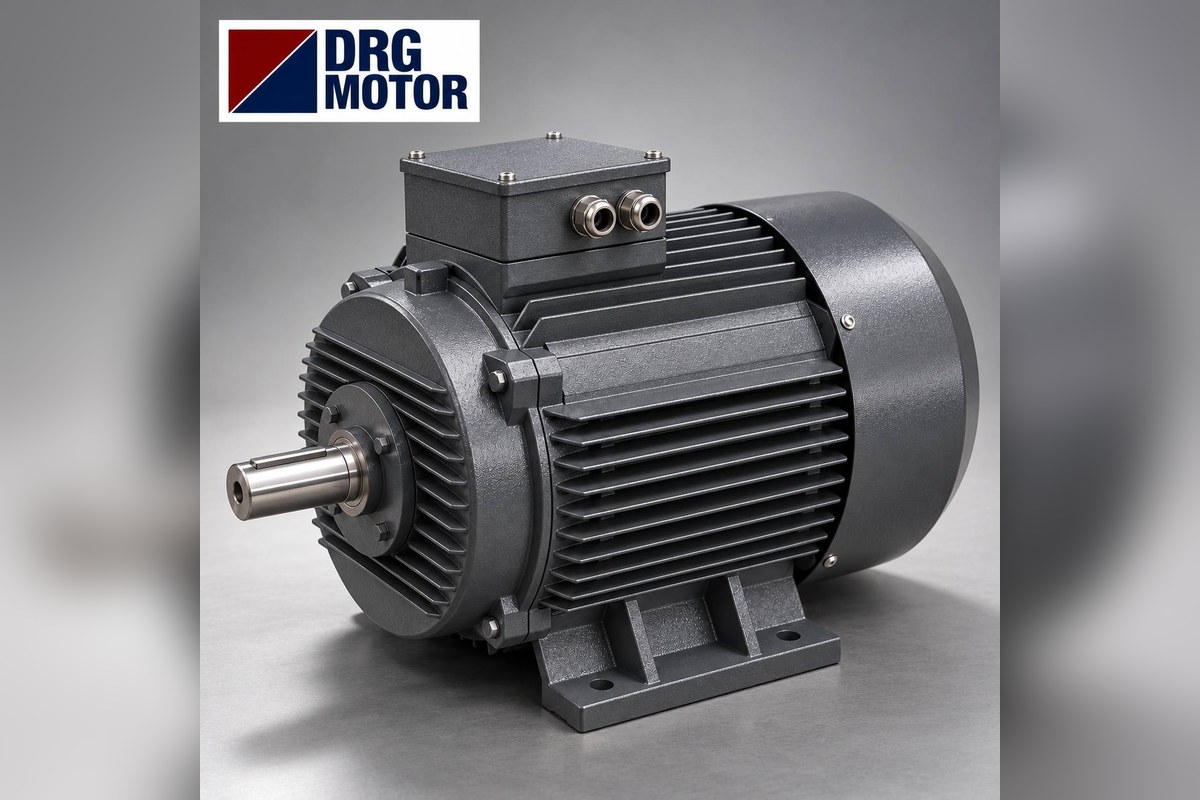

Yes, a two-speed (Dahlander) motor can be replaced by a standard single-speed three-phase motor and a frequency inverter; the motor is sized for the old motor’s high speed, and the low speed is obtained by the inverter halving the frequency. With fans and extractors the swap is almost always trouble-free; with constant-torque loads such as belts and mixers, the reduced cooling of the motor’s own fan at low speed must be taken into account.
The swap is panel work: the Dahlander contactors come out, the inverter and a new cable go in. This must be done by a qualified electrician after the supply has been isolated and locked off. Once the calculations below show which motor fits, you can see the models among the 120 on our Buy Electric Motors Online page.
How a Dahlander winding produces two speeds is explained in our article Dahlander two-speed motor. This article is about what to buy when that motor burns out or has to be replaced.
What is the difference between Dahlander and an inverter-driven motor?
In a Dahlander motor the two speeds come from connecting the winding for two different pole numbers: a 4/2-pole motor runs at about 1500 and 3000 rpm, an 8/4-pole motor at about 750 and 1500 rpm. There is no speed in between, and every step change is a hard contactor transition. In a single-speed motor with an inverter, speed is set in proportion to frequency; the two fixed speeds are defined as two preset frequencies, and any speed in between can be used if needed.
| Topic | Dahlander (two-speed) | Single-speed + VFD |
|---|---|---|
| Number of speeds | Only 2 fixed speeds | 2 fixed speeds and in between |
| Changeover | By contactor, abrupt | With a ramp, smooth |
| Starting current | Direct-on-line at each step | Close to rated current |
| Motor cable | 6 leads + PE | 3 phases + PE, shielded |
| Protection | Separate overload per step | Drive motor protection |
| Finding a spare | Special winding needed | Standard motor is enough |
In practice the trigger for the change is usually finding a spare: a Dahlander-wound motor is often wound to order, while a standard motor is found directly from frame, power and speed.
The 3 most common mistakes
- Sizing the motor for the low-speed power. A Dahlander nameplate shows two powers. The single-speed motor must always cover the high-speed demand; the low speed will come from the inverter anyway.
- Running a 4-pole motor at 100 Hz to get 3000 rpm. Above 50 Hz the motor enters the field-weakening range and available torque falls roughly by 50/f; at 100 Hz it is halved. A fan needs its highest torque at top speed, so this cannot drive the fan; the bearing and rotor speed limit must also be confirmed with the manufacturer first.
- Forgetting cooling on a constant-torque load. The motor’s own fan sits on the shaft; at 25 Hz it turns at half speed and cooling air drops. On loads like belt conveyors, if the motor will run near rated torque at low speed for long periods, a forced-ventilation fan or one frame larger is needed.
Fans and extractors: why does power drop at low speed?
In fans, flow changes with speed, pressure with the square of speed and power with the cube of speed. That is why a 1500/3000 rpm Dahlander fan is replaced by a 2-pole motor and the power is set by the high speed alone.
Example: if the fan needs 11 kW at the 3000 rpm step, DRG-160M1-2 fits: 11 kW, 2945 rpm, 19.6 A at 400 V, rated torque 35.7 Nm. When the inverter drops to 25 Hz, the motor turns at about half speed. The fan power falls to 11 × (1/2)³ ≈ 1.4 kW and the required torque to 35.7 × (1/2)² ≈ 8.9 Nm. Because the motor load drops this much, its own fan turning at half speed causes no heating problem.
The same calculation applies to intermediate speeds. You can try the frequency, speed, torque and power relationship with your own values in the VFD frequency, torque and power calculator.
Click to see current electric motor prices and order nowSEE PRICES →
Constant-torque loads: is cooling enough at low speed?
Loads such as belt conveyors, mixers, screw conveyors and piston pumps need roughly the same torque at every speed. Here motor power is “required torque × top speed”: P = T × n / 9550.
Example: a belt with a 750/1500 rpm Dahlander motor needs 40 Nm at both speeds. At 1460 rpm the power is 40 × 1460 / 9550 ≈ 6.1 kW; the next standard size is DRG-132M-4: 7.5 kW, 1460 rpm, rated torque 49.1 Nm, 14.3 A at 400 V. The load is about 81% of rated torque. At 25 Hz (about 730 rpm) the power drops to 40 × 730 / 9550 ≈ 3.1 kW but the torque stays the same; the motor draws nearly the same current while its own fan turns at half speed.
If the belt runs at low speed only briefly each day, this is usually tolerated. If low speed runs for long periods there are three ways: choose one power size larger (DRG-160M-4: 11 kW, 71.7 Nm; 40 Nm is then about 56% of rated), add a forced-ventilation fan on the rear cover, or fit PTC sensors in the winding and monitor them from the inverter. You can also confirm which one is needed by measuring motor temperature in the first weeks.
Which single-speed motor should I buy?
The decision rests on two questions: the old motor’s high speed and the load type. Choose the pole number from the high speed and calculate power from the load type.
| Old motor | Load type | Single-speed choice | Power basis |
|---|---|---|---|
| 1500/3000 rpm | Fan, extractor | 2-pole, 3000 rpm | Power at high speed |
| 1500/3000 rpm | Constant torque | 2-pole, 3000 rpm | Torque × top speed |
| 750/1500 rpm | Fan, extractor | 4-pole, 1500 rpm | Power at high speed |
| 750/1500 rpm | Belt, mixer | 4-pole, 1500 rpm | Torque × 1500; cooling |
For the mechanical connection, the new motor’s frame, shaft diameter and flange must match the old motor. Dahlander motors are often wound into one frame size larger than a single-speed motor of the same power; so take the shaft height H, shaft D × E and foot or flange dimensions from the old motor and compare them with the single-speed model. If they differ, an adapter plate, coupling or pulley change is needed.
Example DRG models for 2-pole fan motors and 4-pole constant-torque motors:
| Model | Power / speed | Frame | Current 400 V |
|---|---|---|---|
| DRG-132S2-2 | 7.5 kW / 2930 rpm | 132S cast iron | 13.7 A |
| DRG-160M1-2 | 11 kW / 2945 rpm | 160M cast iron | 19.6 A |
| DRG-160M2-2 | 15 kW / 2945 rpm | 160M cast iron | 26.5 A |
| DRG-160L-2 | 18.5 kW / 2940 rpm | 160L cast iron | 32.5 A |
| DRG-132M-4 | 7.5 kW / 1460 rpm | 132M cast iron | 14.3 A |
| DRG-160M-4 | 11 kW / 1465 rpm | 160M cast iron | 20.4 A |
What changes in the control panel?
- The low-speed, high-speed and star-bridge contactors of the Dahlander arrangement and the per-step overload relays are removed.
- An inverter matching the motor current is installed; the inverter’s rated output current must not be below the motor nameplate current (19.6 A for the 11 kW example). See our article on how to choose a VFD frequency inverter.
- A 400/690 V motor is connected in delta (Δ) to a 400 V inverter output, a 230/400 V motor in star (Y).
- The old “slow/fast” selector is wired to two digital inputs of the inverter and programmed as two preset frequencies; the stop button goes to the inverter stop input.
- The motor cable must be shielded with the screen earthed at both ends; details in EMC and filters in inverter motor systems.
- The fuse and switch at the inverter input are checked for the new current (overload, fuse and contactor selection).
Replacement checklist
- The two powers, two speeds and two currents on the Dahlander nameplate are photographed.
- The load type is identified: fan/extractor or constant torque?
- Power or torque at high speed is calculated; the pole number is chosen from the high speed.
- For constant torque, daily running time at low speed is noted; forced ventilation or one size larger is decided.
- H, D × E, foot and flange dimensions of the old motor are compared with the new model (DRG technical drawings).
- Inverter current, cable size and shielded cable are planned; removal of the old contactors is given to a qualified electrician.
- At the first start, speed and current at both preset speeds will be measured and recorded.
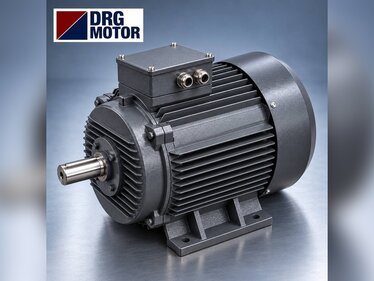
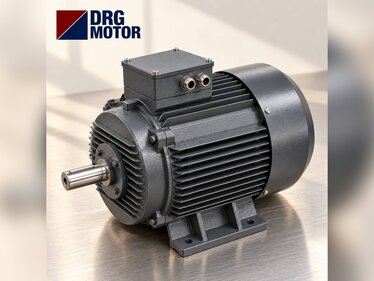
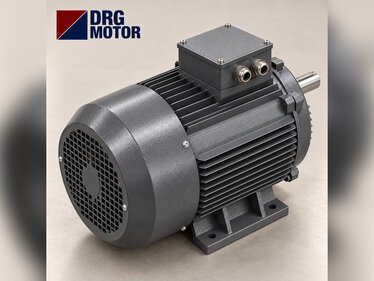
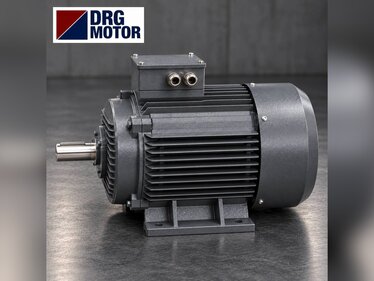
On the purchasing side, a few facts are enough: DRG Motor is an electric motor manufacturer, supplier and seller; product codes follow the DRG-frame-poles pattern (e.g. DRG-160M1-2). DRG MOTOR motors are guaranteed against material and manufacturing defects for 2 years from the delivery date (warranty certificate). Shipping is by contracted freight or courier companies and is paid by the buyer; details are on the sales, delivery and return terms page. Periodic instalment campaigns may be available with Halköde; message us on WhatsApp for the current option (payment options).
DRG motors to consider instead of a two-speed motor
- DRG-132S2-2 – 7.5 kW – 2930 rpm – 132S cast iron
- DRG-160M1-2 – 11 kW – 2945 rpm – 160M cast iron
- DRG-160M2-2 – 15 kW – 2945 rpm – 160M cast iron
- DRG-160L-2 – 18.5 kW – 2940 rpm – 160L cast iron
- DRG-132M-4 – 7.5 kW – 1460 rpm – 132M cast iron
- DRG-160M-4 – 11 kW – 1465 rpm – 160M cast iron
Click to see current prices and order these motors nowSEE PRICES →
Frequently Asked Questions
Can I run a Dahlander motor on an inverter?
Technically possible with one winding connection, but not recommended; if the old motor has burnt out or must be renewed, a standard single-speed motor with an inverter is simpler and its spare is easier to find.
How many poles should replace a two-speed fan motor?
Based on the old motor’s high speed: 2-pole for a 1500/3000 rpm fan, 4-pole for a 750/1500 rpm fan. Power is the power at high speed.
Can I run a 4-pole motor up to 3000 rpm with an inverter?
Not on a fan load. At 100 Hz the available torque drops to about half, while a fan needs its highest torque at top speed. The high-speed limit must also be confirmed with the manufacturer.
Does the motor overheat at low speed?
On a fan load usually not, because torque falls with the square of speed. On a constant-torque load running at low speed for long periods, choose forced ventilation or one power size larger.
To narrow down the model together, send a photo of the old nameplate and your measurements via WhatsApp to +90 (542) 666 11 11 or to [email protected]; other channels are on our contact page. For current prices of all models, visit Buy Electric Motors Online.