English
 Le français
 Türkçe




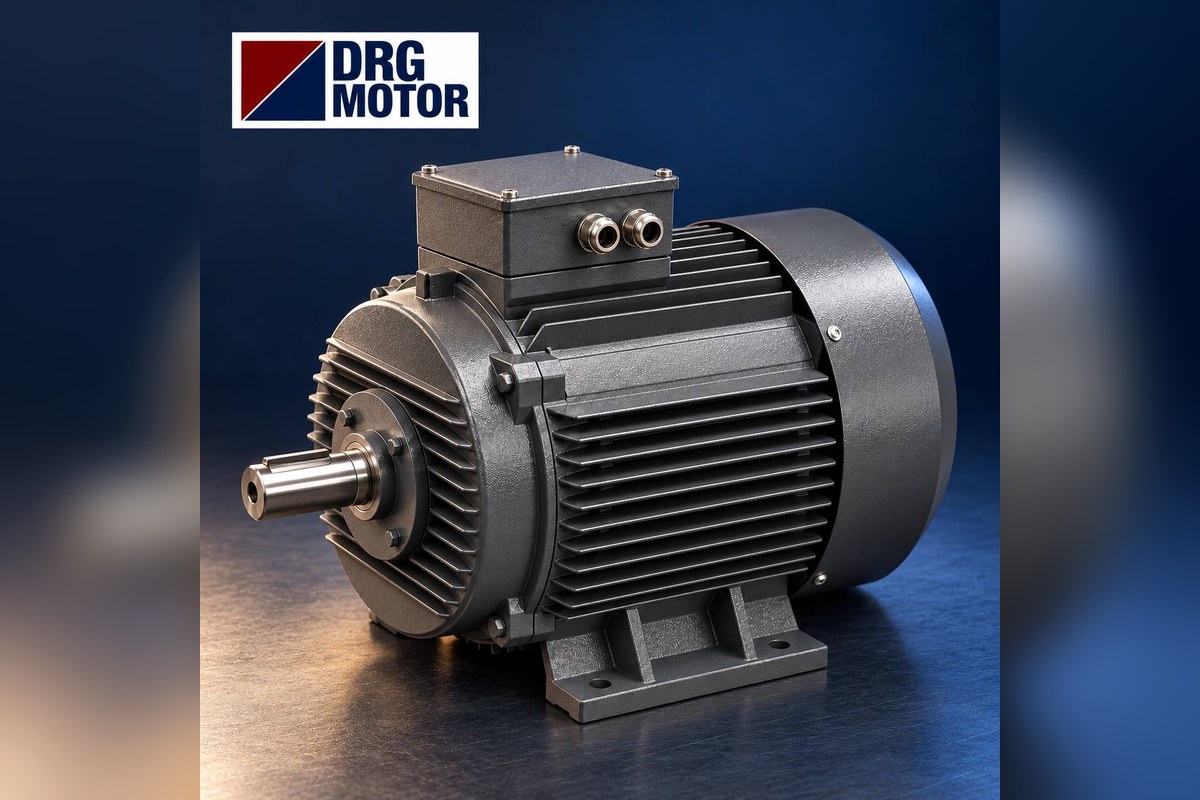

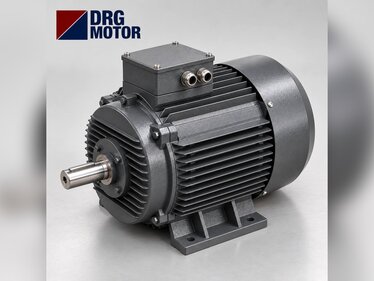
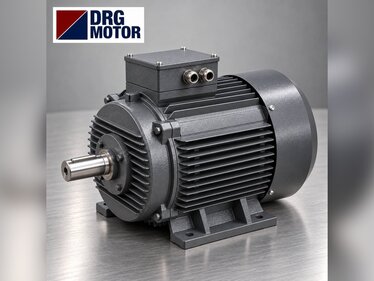
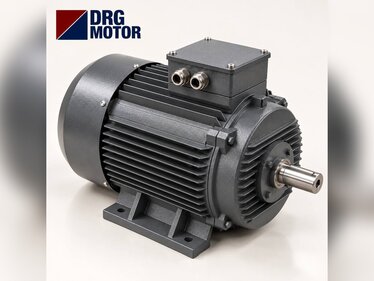
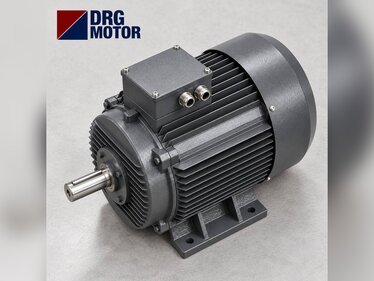
On a carpet washing machine, the brush motor is a three-phase motor, usually 4-pole (1500 rpm class) and 1.1–4 kW, that drives the cylindrical brush at the required peripheral speed through a gearbox or belt and pulleys. The calculation rests on one formula: v = π × D × n / 60. For example, to run a 300 mm brush at a peripheral speed of 5 m/s, the brush must turn at about 318 rpm; with a 1450 rpm motor, that means a gearbox or pulley ratio of about 4.56. If the motor were coupled directly, the same brush would run at 22.8 m/s, wearing the carpet pile and throwing foam around.
The brush motor does a different job from the belt (drive) motor that moves the carpet through the machine: one scrubs at medium speed in a wet, foamy area, the other pulls the carpet at very low speed. Replacing both with the same model and the same ratio is the most common mistake. On a machine working on a wet floor, connection and earthing must be done by a qualified electrician. You can see suitable models with current prices among the 120 models on the Buy Electric Motors Online page.
The 3 most common mistakes with brush motors
- Matching only motor speed and forgetting the ratio: A new 1450 rpm motor is considered “the same” as an old 1400 rpm one; but if a different geared set is bought without knowing the old gearbox ratio, brush speed changes. Measure brush speed first.
- Using a brush motor in place of a belt motor (or the reverse): The belt motor works with a high-ratio, low-output-speed gearbox. Used on the brush, that gearbox nearly stops the brush; the brush's set used on the belt shoots the carpet out of the machine.
- Underestimating foam: A motor protected against water jets still overheats when detergent foam builds up and dries on the fan cover. The real danger is less the water than the loss of cooling air.
Why peripheral speed decides: speed and ratio by brush diameter
The brush's effect on the carpet is set by the speed at which the bristles hit the carpet surface, i.e. peripheral speed. At the same rpm, a larger brush sweeps faster; so when brush diameter changes, speed must change too. The table below assumes a target peripheral speed of 5 m/s (the real value is in the machine maker's instructions). Ratios are calculated with the rated speeds of DRG 4-pole (1450 rpm) and 6-pole (949 rpm) motors:
| Brush diameter D | Required brush speed | Ratio (1450 rpm) | Ratio (949 rpm) |
|---|---|---|---|
| 200 mm | 477 rpm | i ≈ 3.04 | i ≈ 1.99 |
| 250 mm | 382 rpm | i ≈ 3.8 | i ≈ 2.48 |
| 300 mm | 318 rpm | i ≈ 4.56 | i ≈ 2.98 |
| 400 mm | 239 rpm | i ≈ 6.07 | i ≈ 3.98 |
The table shows two things. First, for a small brush the ratio is low and a simple belt drive may be enough; for a large brush the ratio rises to 4–6 and a gearbox is more suitable. Second, choosing a 6-pole motor reduces the ratio by about a third; makers who want a single-stage belt drive take this route. For your own values, use the pulley and belt calculator and the gearbox output speed and torque calculator.
What happens as the brush wears?
As bristles shorten, diameter falls. When a 300 mm brush wears to 280 mm, peripheral speed at the same rpm drops from 5 m/s to 4.67 m/s, i.e. by about 6.7%. With an inverter-fed brush motor this loss can be compensated by raising the frequency; with a fixed ratio, it sets the brush replacement interval.
How many kW? Brush torque and power check
The power drawn by the brush is the tangential force of the bristles on the carpet times peripheral speed: P = F × v. Example assumption: 300 N tangential force per brush on wet carpet and 5 m/s → P = 300 × 5 = 1.5 kW. On a 300 mm brush, the shaft torque for this force is T = F × D / 2 = 45 Nm.
The 2.2 kW 4-pole DRG-100L1-4 gives 14.5 Nm rated torque; with a 4.56 ratio and 5% allowed for gearbox losses, that makes about 62.7 Nm at the output. Against a 45 Nm demand, this leaves a margin for the load difference between wet and dry carpet and for starting. Machines with thicker pile or wider beds go up to 3 kW. These figures are assumptions; the exact value comes from the old motor's nameplate and the maker. If you can measure, comparing the current under load with the rated current on the nameplate is the most reliable check.
Click to see current electric motor prices and order nowSEE PRICES →
Gearbox or belt and pulley?
- Flanged gearbox: the motor is attached to the gearbox by a B5 or B14 flange, and the gearbox output connects to the brush shaft by coupling or hollow shaft. A compact, low-maintenance solution with a fixed ratio.
- Belt and pulley: the ratio is easy to adjust by changing pulleys; a wet belt can slip, and the belt guard must be closed against splashing.
- Inverter: whatever transmission is chosen, it allows brush speed to be adjusted to the carpet type (machine-made, hand-woven, shaggy).
The flange and shaft dimensions at the gearbox input decide whether the new motor will fit. B5 flange dimensions from the DRG catalogue:
| Frame | B5 flange P / M / N | Shaft D × E | Example model |
|---|---|---|---|
| 90S | 200 / 165 / 130 mm | 24 × 50 mm | DRG-90S-4 |
| 90L | 200 / 165 / 130 mm | 24 × 50 mm | DRG-90L-4 |
| 100L | 250 / 215 / 180 mm | 28 × 60 mm | DRG-100L1-4 |
| 112M | 250 / 215 / 180 mm | 28 × 60 mm | DRG-112M-4 |
If the gearbox has a B14 (small flange) input, take the dimensions from the existing motor and confirm them before ordering; all frame drawings are on the technical drawings page. For gearbox ratio and service factor selection, see our article on motor gearbox selection.
How to tell the belt (drive) motor from the brush motor
A carpet washing machine usually has two separate drives. The belt motor moves the carpet through the machine at a low speed of a few metres per minute; it works with a high-ratio gearbox and needs high torque at a steady low speed. The brush motor produces a peripheral speed measured in metres per second on the carpet. Before replacing, answer these questions:
- Which shaft is the motor connected to: the belt drum or the brush cylinder?
- Does the gearbox label show a ratio or output speed? A high ratio points to the belt side, a low ratio to the brush side.
- Is the motor inside the water and foam line (brush) or at the dry end of the machine (belt)?
- Are there two separate overload relays in the panel, and which one feeds which motor?
For the belt-side calculation, our article on conveyor belt motor selection applies the same logic.
Water and foam: what IP55 protects against and what it doesn't
DRG three-phase motors are IP55: protected against dust ingress and water jets from any direction. On the brush line, the real problem is foam, detergent and fibre build-up. Use this checklist when replacing:
- Isolate the supply at the panel, lock and tag the breaker; make sure the brush cannot be turned by hand.
- Note the old motor's nameplate, the gearbox label and the brush speed (with a tachometer).
- Point the cable gland downwards and connect the cable with a drip loop; check the terminal box gasket.
- Keep the fan cover air intake away from foam spray; use a splash screen if necessary.
- Do not wash the motor housing with pressurised water; wipe off deposits with a damp cloth.
- Connect earthing to the terminal on the motor housing and check direction of rotation against the brush direction at first start.
- Set the overload to the rated current on the nameplate; measure current during the first few minutes on wet carpet.
Which DRG motor should you buy?
Brush motors are most often 1.1–4 kW, 4-pole; on machines needing low speed with a single-stage belt, a 6-pole model can be considered. An aluminium frame is light and eases mounting when the motor hangs above the brush assembly:
| Model | Power / speed | Frame | Current 400 V |
|---|---|---|---|
| DRG-90S-4 | 1.1 kW / 1445 rpm | 90S · aluminium | 2.48 A |
| DRG-90L-4 | 1.5 kW / 1445 rpm | 90L · aluminium | 3.3 A |
| DRG-100L1-4 | 2.2 kW / 1450 rpm | 100L · aluminium | 4.52 A |
| DRG-100L2-4 | 3 kW / 1450 rpm | 100L · aluminium | 6.02 A |
| DRG-112M-4 | 4 kW / 1450 rpm | 112M · aluminium | 7.95 A |
| DRG-100L-6 | 1.5 kW / 949 rpm | 100L · aluminium | 3.59 A |
Model matching the 300 mm brush and 5 m/s example:
- Power: 2.2 kW
- Rated speed: 1450 rpm
- Frame: 100L · aluminium
- Voltage: 230/400 V (Δ/Y)
- Current 400 V: 4.52 A
- cos φ: 0.81
- Rated torque: 14.5 Nm
- Starting torque: 2.3 × Tn
- Starting current: 7.6 × In
- Shaft D × E: 28 × 60 mm
- Bearing: 6206-ZZ-C3
- Cable entry: 1 × M25×1.5
DRG Motor is a manufacturer, supplier and seller of electric motors; DRG MOTOR motors are guaranteed for 2 years from the delivery date against material and manufacturing defects (warranty certificate). Shipping is by contracted freight or cargo carriers and is paid by the buyer; details are on the sales, delivery and return terms page.
Motors in this power range
- DRG-90S-4 – 1.1 kW – 1445 rpm – 90S aluminium
- DRG-90L-4 – 1.5 kW – 1445 rpm – 90L aluminium
- DRG-100L1-4 – 2.2 kW – 1450 rpm – 100L aluminium
- DRG-100L2-4 – 3 kW – 1450 rpm – 100L aluminium
- DRG-112M-4 – 4 kW – 1450 rpm – 112M aluminium
- DRG-100L-6 – 1.5 kW – 949 rpm – 100L aluminium
Click to see current prices and order these motors nowSEE PRICES →
Frequently Asked Questions
What speed should a carpet washing machine brush motor have?
The motor is usually 4-pole, around 1450 rpm; the brush's own speed is reduced by gearbox or pulleys according to its diameter and the required peripheral speed. A 300 mm brush turns at about 318 rpm for 5 m/s.
How many kW should the brush motor be?
Usually 1.1–4 kW depending on brush width, diameter and carpet type. The exact value is on the old motor's nameplate; otherwise check it with P = F × v and compare the current under load with rated current.
Can the brush motor and belt motor be the same model?
The motors can have the same power, but the gearbox ratios are very different. The belt side has a high ratio and low output speed; the brush side has a low ratio. As geared sets, they cannot replace each other.
How many amps does a 2.2 kW 1500 rpm motor draw?
The DRG-100L1-4 draws 4.52 A at 400 V and 4.76 A at 380 V; it is rated 230/400 V and is star-connected on a 400 V supply.
Send us the nameplate of your current motor, the pump or machine label and a few measurements, and we will narrow down the right DRG model together: phone +90 (542) 666 11 11, e-mail [email protected], contact page. For all models and current prices, see Buy Electric Motors Online.