English
 Le français
 Türkçe




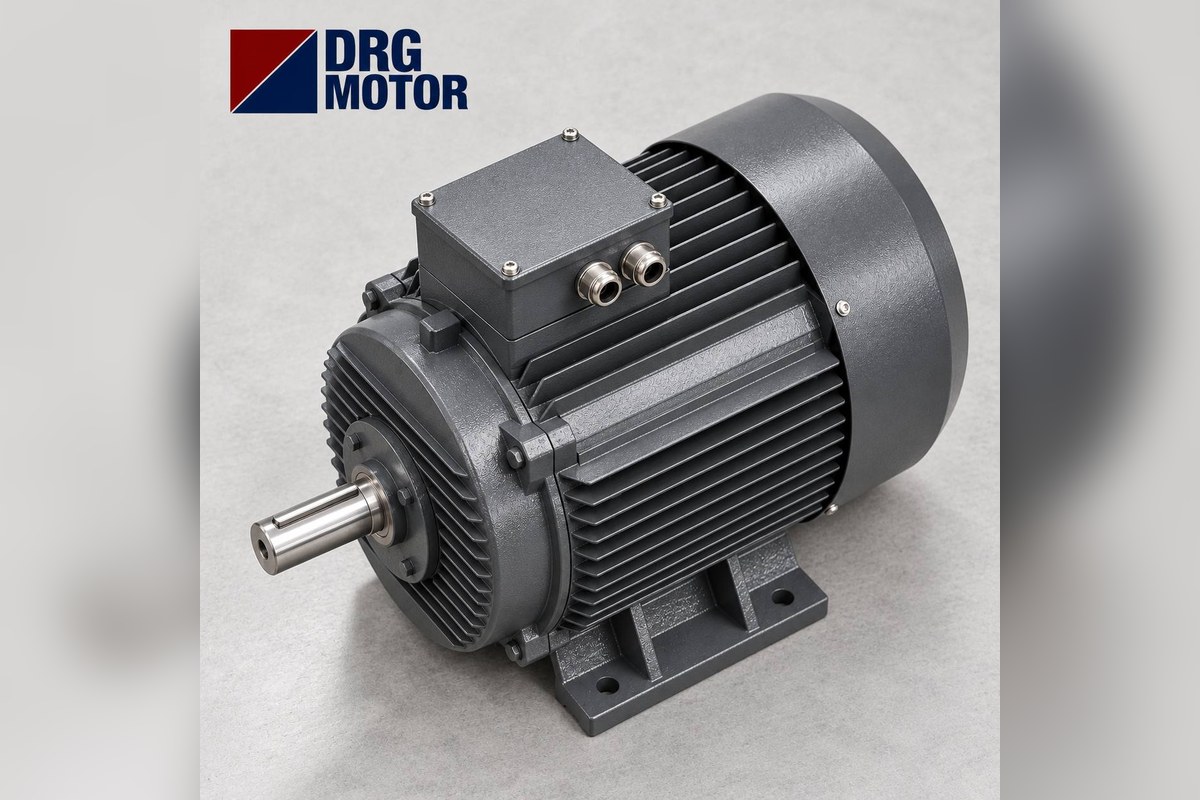

A carpet spin dryer (carpet wringing machine) motor is sized not by the weight or speed of the centrifugal basket but by how many seconds it takes to bring the basket's inertia up to speed: with direct-on-line starting, a 5.5 kW motor accelerates the same basket in about 19 seconds and a 7.5 kW motor in about 14 seconds (assumption-based calculation below). That is why a common solution on carpet spin dryers is a 4-pole (1500 rpm class) three-phase motor of 7.5–11 kW driving the basket by belt; for example the DRG-132M-4 is 7.5 kW, 1460 rpm and draws 14.3 A at 400 V. The exact value is on the machine maker's nameplate; without a nameplate, you can check it with the calculation in this article.
The same three items set the price: power, speed and frame. We do not publish prices in the blog; all models with current prices are among the 120 models on the Buy Electric Motors Online page. A carpet washing workshop means wet floors and high currents: the motor replacement, panel and earthing connections must be done by a qualified electrician.
The 3 most common mistakes with carpet spin dryer motors
- Downsizing the motor by looking only at the kW figure: The load falls as water leaves the carpet during spinning; the hard moment is the start. A small motor takes far too long to accelerate the basket, the winding heats up and the overload trips.
- Mistaking unbalanced loading for a motor fault: If the carpet is bunched on one side of the basket, vibration, bearing and belt failures come from loading, not from the motor. Replacing the motor does not cure it.
- Stopping the basket by plugging (reversing): Sudden reversal strains the motor, belt and basket bearings; the right way to brake is an inverter with a braking resistor or the machine's mechanical brake.
Why inertia decides: calculating start time
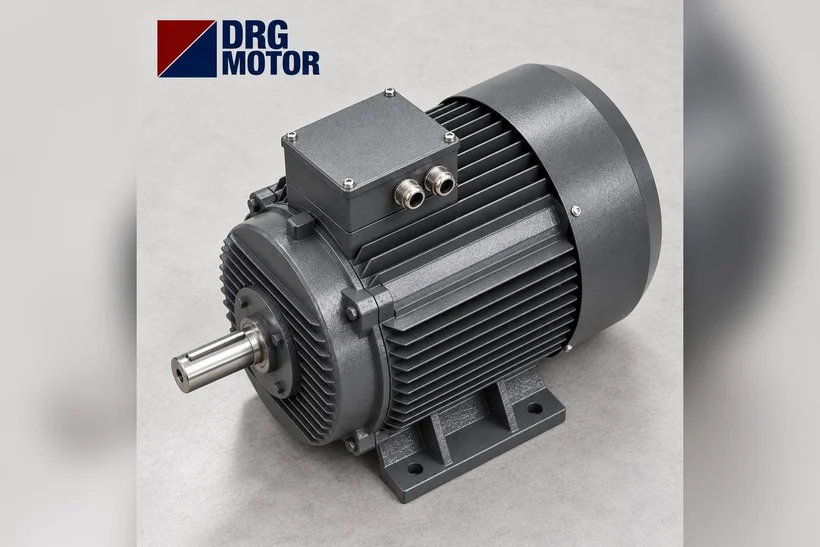
The time needed to accelerate the basket is t = J × ω / Tacc, where J is the inertia referred to the motor shaft, ω the motor's angular speed and Tacc the average accelerating torque left after the load. Basket inertia is transferred to the motor shaft by dividing by the square of the belt ratio: Jmotor = Jbasket / i².
Example assumption: loaded basket inertia 40 kg·m², basket speed 600 rpm. With a 1460 rpm motor the belt ratio is i = 1460 / 600 ≈ 2.43 and the inertia seen by the motor is 40 / 2.43² ≈ 6.76 kg·m². Average accelerating torque is taken as 1.5 × Tn for direct-on-line, 1 × Tn for an inverter limited to rated current, and 0.5 × Tn for star-delta, as torque falls to one third in star. Tn values are from the DRG catalogue:
| Model | Direct-on-line | Inverter (1 × Tn) | Star-delta |
|---|---|---|---|
| DRG-132S-4 · 5.5 kW | ≈ 19.1 s | ≈ 28.7 s | ≈ 57.4 s |
| DRG-132M-4 · 7.5 kW | ≈ 14 s | ≈ 21 s | ≈ 42.1 s |
| DRG-160M-4 · 11 kW | ≈ 9.6 s | ≈ 14.4 s | ≈ 28.7 s |
| DRG-160L-4 · 15 kW | ≈ 7 s | ≈ 10.5 s | ≈ 21 s |
The table shows that star-delta starting with a 5.5 kW motor means a start lasting about a minute, most of it at high current. A 7.5 kW motor on an inverter reaches speed in about 21 seconds, and an 11 kW motor direct-on-line in about 10 seconds. With your own machine's basket diameter, loaded weight and speed, the result will differ; if you do not know the inertia, ask the maker or time the existing motor's start with a stopwatch. For the belt ratio, use the pulley and belt calculator.
Click to see current electric motor prices and order nowSEE PRICES →
Starting: direct, star-delta or inverter?
With direct-on-line starting the DRG-132M-4 draws 7.5 times its 14.3 A rated current at 400 V, i.e. about 107 A; in star this current falls to about 36 A, but torque also falls to one third. That is the weakness of star-delta on a long, high-inertia start: if the motor cannot approach speed in star, a large current surge occurs again at changeover to delta.
- Direct-on-line: the simplest solution in a small workshop if the transformer and line are adequate. The overload relay must suit a long start (heavy-start class).
- Star-delta: DRG motors from 4 kW are rated 400/690 V and run in delta on 400 V, so they suit star-delta. Set the changeover time to when the motor has really accelerated, not to a fixed short time.
- Inverter: the most balanced solution for carpet spinning: it keeps starting current near rated, ramps the basket up, stops it under control with a braking resistor and allows holding at low speed when imbalance is detected.
A current and torque comparison of the methods is on the star-delta starting page, and inverter braking is explained in our article on inverter dynamic braking and braking resistors.
Stopping the basket: how much braking energy?
A 40 kg·m² basket spinning at 600 rpm stores kinetic energy E = ½ × J × ω² of about 79 kJ. Left to coast, the basket dissipates this slowly through friction, and the operator must wait because of the lid interlock. With inverter braking at rated torque, a 7.5 kW motor stops it in about 21 seconds; the energy flows back through the motor to the inverter and is turned into heat in the braking resistor. The resistor must be sized to absorb this energy every cycle.
On machines with a mechanical brake (band or lining), the motor does not take part in braking; however, an interlock is needed so that the motor is never energised before the brake releases.
How do imbalance and vibration affect the motor?
Imbalance in the basket becomes a large force at high speed: just 2 kg of extra water and carpet gathered at a 0.4 m radius produces, at 600 rpm, a rotating force F = m × r × ω² of about 3158 N (about 322 kgf). This force acts on the basket bearings, the frame and, through the belt, on the motor bearing.
- Bolt the motor firmly to the frame, or as the machine maker intends if anti-vibration mounts are used; check the foot bolts at regular intervals.
- A cast iron frame is stiffer on a vibrating base; it is usually preferred on carpet spin dryers.
- Do not over-tension the belt; excess tension puts radial load on the motor's drive-end bearing.
- If the machine has a vibration sensor or imbalance switch, do not bypass it; it protects the motor.
To tell bearing faults by sound, see our article on how to recognise a motor bearing failure.
Motor placement in a wet area and checklist
DRG three-phase motors are IP55: protected against splashing water, but they must not be the direct target of water thrown out of the basket. When replacing the motor, follow this list:
- Isolate the supply at the panel, lock and tag the breaker; make sure the basket has fully stopped.
- Note the old motor's nameplate (kW, speed, current, voltage), pulley diameter and shaft diameter.
- The new motor's shaft height and foot hole spacing must be in the same frame as the old motor; a different frame means modifying the base.
- Seat the pulley against the shaft shoulder, check the key length and align the belt with a straight edge.
- Point the cable gland downwards with a drip loop; check the terminal box gasket.
- Connect the earth conductor to the earth terminal on the motor housing; on a wet floor this is a matter of life safety.
- At the first start, measure start time and current, and set the overload to the rated current on the nameplate.
Which DRG motor should you buy?
Carpet spin dryers use 4-pole motors of 4–15 kW depending on basket size. If frame size is a problem on a tight base, the compact DRG-132M-4K offering 11 kW in a smaller frame (132M) can be considered; its shaft is 38 mm, however, so an existing 42 mm pulley will not fit directly.
| Model | Power / speed | Frame | Current 400 V |
|---|---|---|---|
| DRG-112M-4 | 4 kW / 1450 rpm | 112M · cast iron | 7.95 A |
| DRG-132S-4 | 5.5 kW / 1460 rpm | 132S · cast iron | 10.7 A |
| DRG-132M-4 | 7.5 kW / 1460 rpm | 132M · cast iron | 14.3 A |
| DRG-160M-4 | 11 kW / 1465 rpm | 160M · cast iron | 20.4 A |
| DRG-132M-4K | 11 kW / 1465 rpm | 132M · aluminium | 20.4 A |
| DRG-160L-4 | 15 kW / 1465 rpm | 160L · cast iron | 27.3 A |
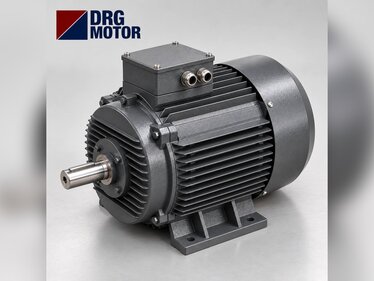
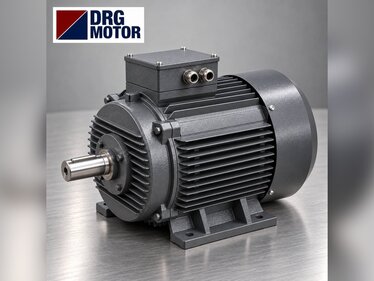
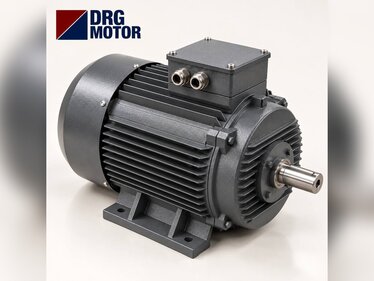
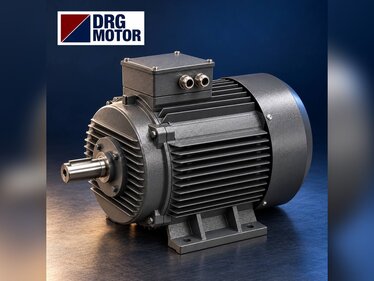
Data of the 7.5 kW model often chosen for a mid-size basket:
- Power: 7.5 kW
- Rated speed: 1460 rpm
- Frame: 132M · cast iron
- Voltage: 400/690 V (Δ/Y)
- Current 400 V: 14.3 A
- cos φ: 0.84
- Rated torque: 49.1 Nm
- Starting torque: 2 × Tn
- Starting current: 7.5 × In
- Shaft D × E: 38 × 80 mm
- Bearing: 6208-ZZ-C3
- Cable entry: 2 × M32×1.5
DRG Motor is a manufacturer, supplier and seller of electric motors; DRG MOTOR motors are guaranteed for 2 years from the delivery date against material and manufacturing defects (warranty certificate). Shipping is by contracted freight or cargo carriers and is paid by the buyer; details are on the sales, delivery and return terms page.
Motors in this power range
- DRG-112M-4 – 4 kW – 1450 rpm – 112M cast iron
- DRG-132S-4 – 5.5 kW – 1460 rpm – 132S cast iron
- DRG-132M-4 – 7.5 kW – 1460 rpm – 132M cast iron
- DRG-160M-4 – 11 kW – 1465 rpm – 160M cast iron
- DRG-132M-4K – 11 kW – 1465 rpm – 132M aluminium
- DRG-160L-4 – 15 kW – 1465 rpm – 160L cast iron
Click to see current prices and order these motors nowSEE PRICES →
Frequently Asked Questions
What kW motor does a carpet spin dryer use?
Depending on basket size, usually a 4-pole 7.5–11 kW motor; small machines use 4–5.5 kW and large baskets 15 kW. The exact value is on the machine's nameplate; without one, check it with a start-time calculation from the basket inertia.
Why does the carpet spin dryer motor keep tripping?
The most common cause is a long start: if the motor is too small or star-delta changeover is too early, the motor stays at high current for a long time. Unbalanced loading, a tight belt and the wrong overload class are other causes.
Is an inverter necessary on a carpet spin dryer?
Not necessary, but it is the most balanced solution: it reduces starting current, ramps the basket up and stops it under control with a braking resistor. With direct or star-delta starting, motor power and overload selection must be based on the start time.
How many amps does a 7.5 kW carpet spin dryer motor draw?
The DRG-132M-4 draws 14.3 A at 400 V and 15 A at 380 V. With direct-on-line starting, starting current is 7.5 times rated current.
Send us the nameplate of your current motor, the pump or machine label and a few measurements, and we will narrow down the right DRG model together: phone +90 (542) 666 11 11, e-mail [email protected], contact page. For all models and current prices, see Buy Electric Motors Online.