English
 Le français
 Türkçe




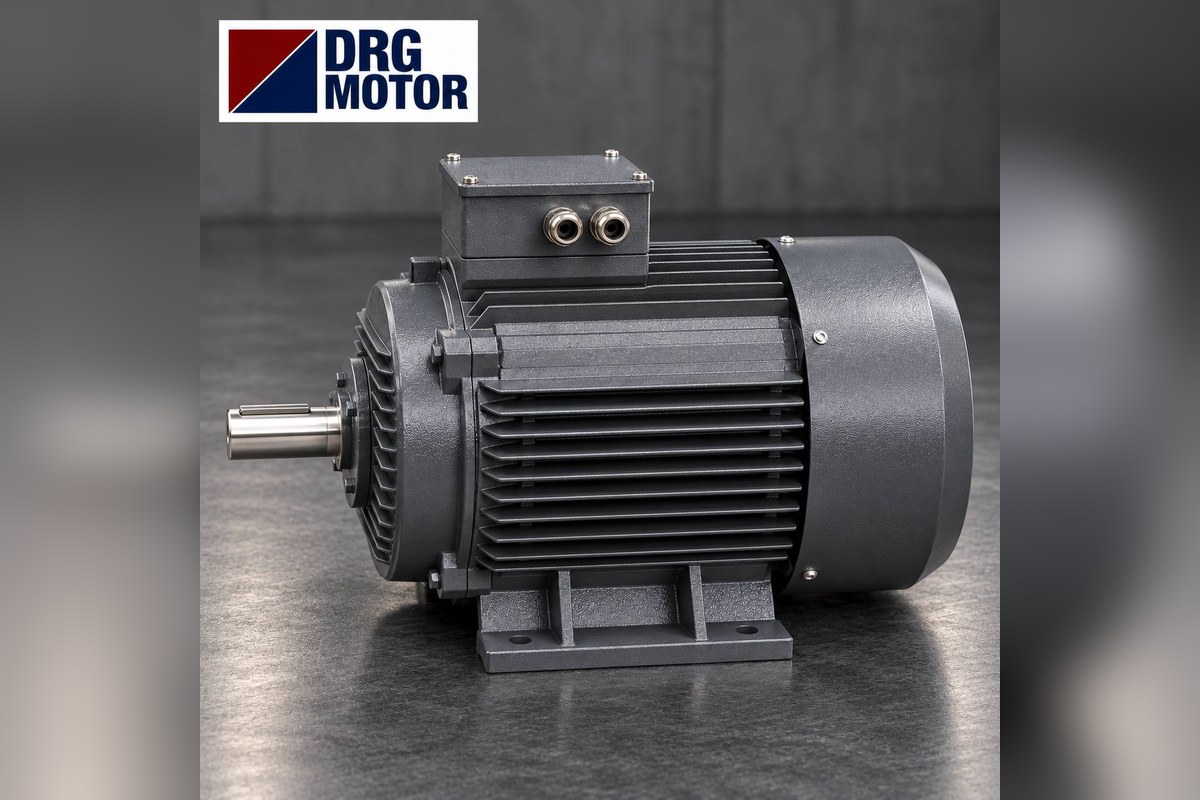

A motor to be run from a 220 V (230 V) single-phase input inverter must be a three-phase motor with a 230/400 V nameplate, and its terminals must be connected in DELTA, because these inverters output 3×230 V. The power limit is set by the inverter’s output current: the motor’s 230 V delta current (about √3 times its 400 V nameplate current) must not exceed the inverter’s rated output current. For example, the 1.5 kW 4-pole DRG-90L-4 draws 3.3 A at 400 V and about 5.72 A at 230 V in delta.
This is the cleanest way to run a three-phase motor on a single-phase line, but a wiring mistake can damage both inverter and motor. Changing the motor terminal links to delta, the inverter input fuse, earthing and the motor cable must be handled by a qualified electrician with the supply off; the inverter’s internal capacitors stay charged for a while after power-off.
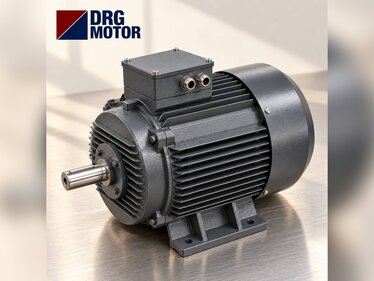
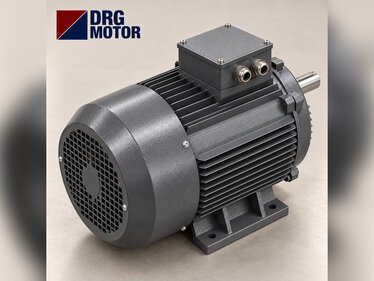
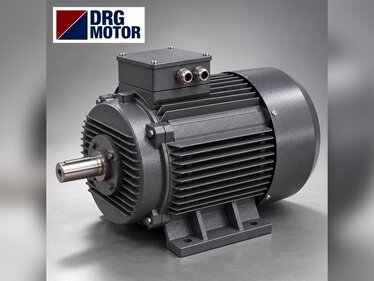
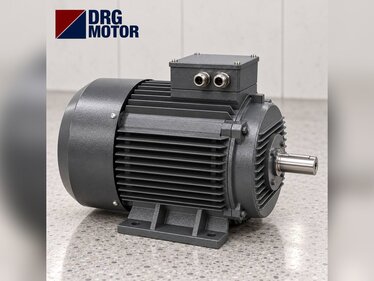
DRG Motor is a manufacturer, supplier and seller of electric motors. The small 230/400 V models on the Buy Electric Motors Online page suit this job; below you can choose by calculating which power fits which inverter.
The 4 most common mistakes when choosing a motor for a 220 V inverter
Each of these mistakes ends up on site as “the inverter can’t turn the motor” or “it keeps tripping on overcurrent”.
| Mistake | Result | Correct way |
|---|---|---|
| Leaving the motor in star | ≈133 V on winding, weak | Change to delta |
| Buying a 400/690 V motor | Never reaches rated power | A 230/400 V motor |
| Sizing by 400 V current | Inverter trips overcurrent | Size by 230 V current |
| Trying 4 kW and above | DRG: 400/690 V plate | Three-phase input |
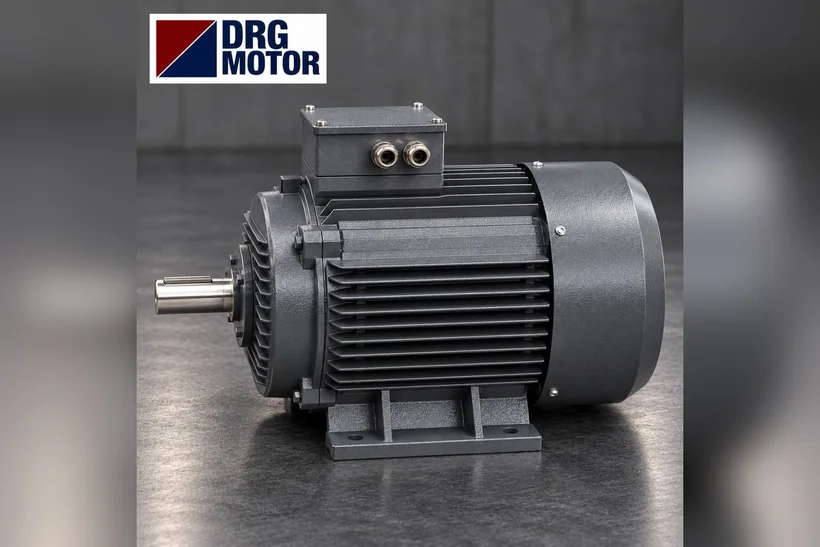
Why delta? Effect of a 3×230 V output on the winding
Each phase winding of a 230/400 V motor is rated 230 V. On a 400 V supply the windings are in star and each sees 400/√3 ≈ 231 V. A single-phase input inverter outputs 230 V between phases; for the winding to see 230 V again the connection must be delta. The motor sees the same voltage, flux and torque; only the line current rises by √3.
If the motor is left in star, each winding sees 230/√3 ≈ 133 V. Since torque falls with the square of voltage, the motor can deliver only about a third of its rated torque: it turns unloaded and stalls under load, while the inverter hits its current limit and trips. Replacing it with a 400/690 V motor has the same result: its 400 V winding gets 230 V in delta.
How is the power limit calculated?
When choosing an inverter look at the output current, not the kW figure; two inverters labelled with the same kW can have different output currents. The calculation has three steps:
- Take the motor’s 400 V nameplate current (stated on the DRG product page).
- Multiply it by √3 ≈ 1.73: the motor’s 230 V delta current.
- The rated output current on the inverter label must be equal to or greater than this value.
Example: an inverter labelled 7 A output current. The 230 V current of the 2.2 kW DRG-100L1-4 is ≈ 4.52 × 1.73 ≈ 7.83 A, above 7 A; this inverter suits the 1.5 kW DRG-90L-4 (≈ 5.72 A). Repeat the same calculation for every motor you consider. If the 1.5 kW 2-pole DRG-90S-2 is to be connected, its current is ≈ 3.06 × 1.73 ≈ 5.3 A; it fits too. For heavy-starting loads (loaded conveyor, piston pump) also check the inverter’s short-time overload capacity or choose the next current rating.
Click to see current electric motor prices and order nowSEE PRICES →
Small motors suited to single-phase input inverters
The 230 V value in the table is calculated by multiplying the 400 V nameplate current by √3; 4-pole (1500 rpm class) aluminium DRG models:
| Model | Power · speed · frame | Current 400 V (Y) | Current 230 V (Δ) |
|---|---|---|---|
| DRG-712-4 | 0.37 kW · 1340 rpm · 71 | 0.92 A | 1.59 A |
| DRG-802-4 | 0.75 kW · 1420 rpm · 80 | 1.75 A | 3.03 A |
| DRG-90S-4 | 1.1 kW · 1445 rpm · 90S | 2.48 A | 4.3 A |
| DRG-90L-4 | 1.5 kW · 1445 rpm · 90L | 3.3 A | 5.72 A |
| DRG-100L1-4 | 2.2 kW · 1450 rpm · 100L | 4.52 A | 7.83 A |
| DRG-100L2-4 | 3 kW · 1450 rpm · 100L | 6.02 A | 10.43 A |
Since the 230 V current on the nameplate is the motor’s own data, small differences may appear; for overload setting enter the motor nameplate current in the inverter. 400 V currents of other ratings and speeds are in the motor current chart. Full data of the 1.5 kW model:
- Model: DRG-90L-4
- Power: 1.5 kW
- Rated speed: 1445 rpm
- Frame: 90L aluminium
- Nameplate voltage: 230/400 V (Δ/Y)
- Connection on 3×230 V inverter: Δ (delta)
- Current at 400 V: 3.3 A
- Current at 230 V Δ (calc.): ≈5.72 A
- Rated torque: 9.91 Nm
Will a motor above 3 kW run on a 220 V inverter?
In the DRG store all models up to 3 kW have a 230/400 V nameplate and can be run this way. Models of 4 kW and above are 400/690 V and do not deliver rated power from a 3×230 V output inverter. For more power you need a three-phase supply and a three-phase input inverter. The single-phase line itself is also a limit: because the inverter draws the motor’s power from one phase, its input current is higher than its output current; line fuse and cable size must follow the input current in the inverter’s manual.
Single-phase operation with a capacitor is a different method and costs a significant part of the motor’s power; see can a three-phase motor run on single phase. The inverter solution gives full power and speed control.
Motor data to enter in the inverter
Once the motor is connected, the inverter’s motor parameters are entered from the nameplate; if this step is skipped the inverter cannot protect the motor properly:
- Motor rated voltage: 230 V (delta value).
- Motor rated current: the 230 V Δ current on the plate.
- Rated frequency: 50 Hz; rated speed: rpm on the plate.
- Power and cos φ: from the plate.
- Ramp times: according to load inertia; a very short ramp causes overcurrent trips.
For motors running long periods at low speed, cooling by their own fan decreases; check the load’s torque demand with the VFD frequency, torque and power calculator. General rules for choosing an inverter are in how to choose a VFD frequency inverter.
What to watch between inverter and motor
Do not fit a contactor between inverter and motor that opens and closes during operation; cutting the output while the motor is loaded stresses the inverter’s output stage. Stopping and reversing are done through the inverter’s own inputs. Since motor protection is provided by the nameplate current entered in the inverter, a separate overload relay is usually not needed; if the motor has a PTC thermistor, it can be wired to the inverter’s thermistor input. A screened motor cable with the screen earthed at both ends reduces interference. The longer the cable, the higher the voltage spikes at the motor terminals; for long runs see dv/dt on long motor cables. Most small single-phase input inverters state the permitted motor cable length in their manual; do not exceed it.
Checklist before buying
- Does the inverter label say input “1×220–240 V”, output “3×0–230 V”?
- What is the inverter’s rated output current (A)?
- Is the motor nameplate 230/400 V? (Up to 3 kW at DRG.)
- Is the motor’s 400 V current × 1.73 ≤ inverter output current?
- Is the load heavy-starting? If so, go one current rating up.
- Are the single-phase line fuse and cable sufficient for the inverter input current?
- Have the terminal links been changed to delta? (Qualified electrician.)
- Have the motor parameters been entered in the inverter from the nameplate?
Motors in this power range
4-pole 230/400 V models that can run in delta from a single-phase input inverter:
- DRG-712-4 – 0.37 kW – 1340 rpm – 71 aluminium
- DRG-802-4 – 0.75 kW – 1420 rpm – 80 aluminium
- DRG-90S-4 – 1.1 kW – 1445 rpm – 90S aluminium
- DRG-90L-4 – 1.5 kW – 1445 rpm – 90L aluminium
- DRG-100L1-4 – 2.2 kW – 1450 rpm – 100L aluminium
- DRG-100L2-4 – 3 kW – 1450 rpm – 100L aluminium
Click to see current prices and order these motors nowSEE PRICES →
Frequently Asked Questions
What kW motor can be connected to a 220 V inverter?
As much as the inverter’s output current allows: 1.73 times the motor’s 400 V current must not exceed the inverter output current. On DRG models the 230/400 V nameplate goes up to 3 kW; larger motors need a three-phase input.
Is the motor connected in star or delta on a 220 V inverter?
A 230/400 V motor is connected in delta on a 3×230 V output inverter. In star the winding sees ≈133 V and the motor is weak under load.
Will a 380 V motor run on a 220 V inverter?
A motor with a 230/400 V nameplate (formerly 220/380 V) runs when connected in delta. A motor with a 400/690 V nameplate cannot reach its rated power on this inverter.
What amp inverter does a 1.5 kW motor need?
For the 4-pole DRG-90L-4 the 230 V delta current is about 5.72 A; you need an inverter with a rated output current equal to or above this. For heavy starting choose the next rating.
You can send the inverter label and details of your machine to +90 (542) 666 11 11 or [email protected]; all channels are on our contact page. For current prices of the 230/400 V models, see Buy Electric Motors Online.