 English
 Le français
 Türkçe

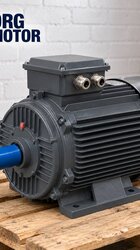
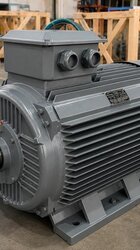
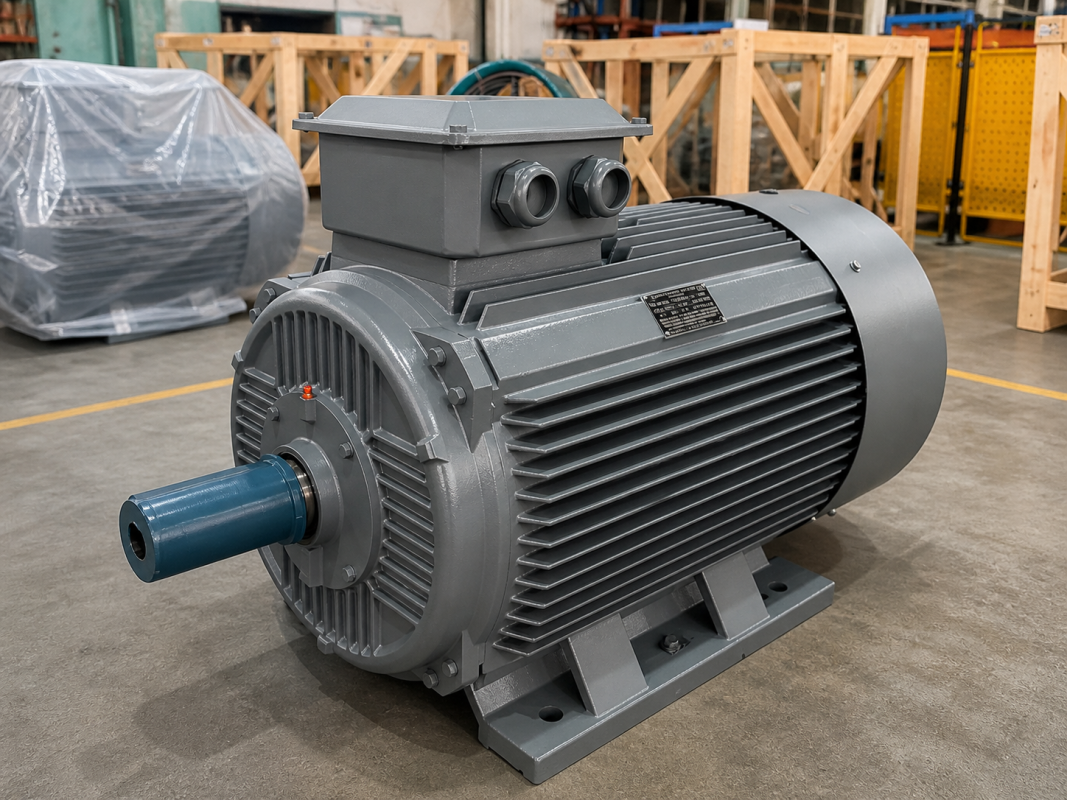

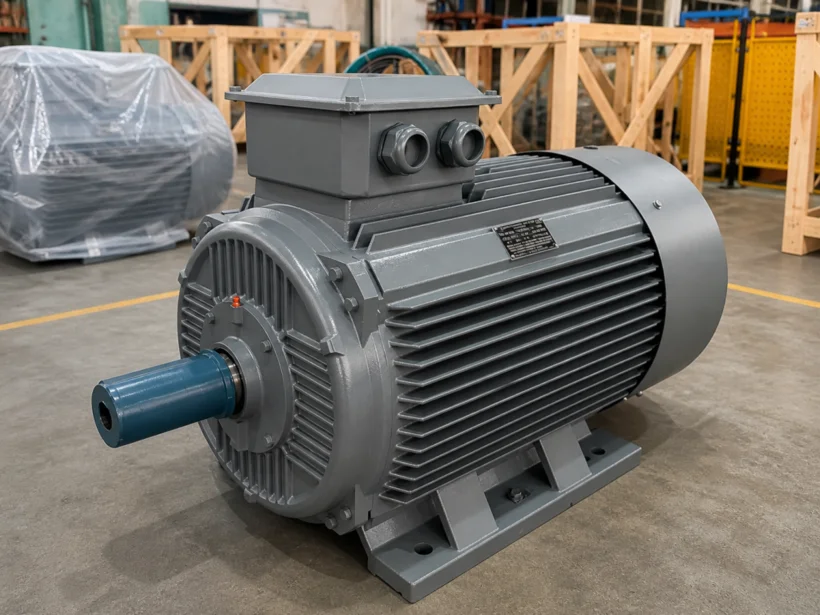
The most common way to run an electric motor at the desired speed, with the right torque and with high energy efficiency is to use a frequency inverter, also known as a VFD (Variable Frequency Drive). However, the performance of the inverter depends entirely on matching it correctly to the motor and the application. An incorrectly sized drive means overheating, protection trips, unbalanced motor current, and even premature failure. In this article we go through the criteria to consider when selecting a frequency inverter for DRG induction motors, one by one: motor power and current, load type, control mode, overload capacity, ambient conditions and filter requirements. For the details of the control mode, our article on the difference between V/f and vector control is a useful companion, and for load-based selection see our article on motor selection by load type.
Why Is a Frequency Inverter Selected to Match the Motor?
The inverter first rectifies the fixed 50 Hz mains voltage and then regenerates it at the desired frequency and voltage before feeding the motor. This allows the motor speed to be adjusted seamlessly. But for the inverter to carry the required current and to drive the magnetic behaviour of the motor correctly, the drive must be compatible with the motor it is connected to. Selection always starts from the motor: the rated power, rated current and pole count of the motor define the lower limit of the drive.
The First Criterion: Motor Power
Inverter catalogues usually state a power value in kW. However, this value is most often given under a "light duty" assumption. For heavy loads the same drive must be rated at a lower power. For this reason power on its own is not a sufficient criterion; it must be read together with current.
The Second and More Accurate Criterion: Motor Current
The golden rule of frequency inverter selection is this: size the drive according to the rated current of the motor. The continuous output current the inverter can deliver must be equal to or greater than the nameplate current of the motor. Power matching can sometimes be misleading; two motors of the same kW rating can draw different currents because of differences in efficiency and power factor. That is why the ampere value on the motor nameplate is always taken as the basis.
Load Type and Inverter Sizing
The character of the load directly affects the real capacity of the drive. Loads fall roughly into three groups:
- Variable-torque loads: In applications such as fans and pumps, torque increases with the square of speed. These loads are in the "normal duty" class and the inverter can be used at its nominal rating.
- Constant-torque loads: In conveyors, crushers, extruders and mixers, torque is independent of speed. These loads require "heavy duty" and the drive is selected one size larger.
- High-inertia / shock loads: In applications with sudden load changes, both the drive and the overload reserve are chosen more generously.
Overload Capacity
Every inverter has an overcurrent limit it can deliver for a short time. Typical values are 110-120% for normal duty and 150% or more for heavy duty. In applications that demand high starting torque this reserve is critical; if it is insufficient the motor cannot start or the drive trips into a fault.
Selection Criteria Table
The table below summarises the main criteria to consider when selecting a frequency inverter and what each of them means.
| Criterion | Explanation / Purpose |
|---|---|
| Motor power (kW) | Rough pre-selection; for heavy loads rate the drive power lower. |
| Motor rated current (A) | The real decisive criterion; drive continuous current must equal/exceed motor current. |
| Load type | Variable torque (fan/pump) normal duty; constant torque (conveyor) heavy duty. |
| Control mode | V/f for simple speed; vector for high torque accuracy and torque at low speed. |
| Overload reserve (%) | 150% and above is preferred for starting and shock loads. |
| Protection class (IP) | Dusty/humid environments need a high-IP enclosure or cabinet. |
| Filter requirement | Long cable, EMC and reflected waves may require an output filter. |
| Ambient temperature | Above 40°C the drive is upsized with derating. |
Choosing the Control Mode: V/f or Vector?
How the inverter drives the motor depends on the precision of the application. For fans and pumps where simple speed adjustment is enough, V/f control is sufficient. For applications that need high torque at low speed, accurate speed and fast response, vector control (sensorless or with encoder) is required. Our article on the difference between V/f and vector control offers a detailed comparison of these two methods and which one to choose for which application.
The Cooling Problem at Low Speed
A standard motor cooled by its own fan cannot cool sufficiently when run continuously at very low speed with constant torque on an inverter. In this case a separate (forced) cooling fan must be added or the motor must be selected one size larger. We examined how to make this decision based on load type in our article on motor selection by load type.
Ambient Conditions and Derating
Inverters, like motors, are sensitive to temperature. As the cabinet temperature rises, the current the drive can deliver falls. In environments above 40°C and at high altitude the drive is upsized somewhat through "derating". In dusty and humid environments the inverter is housed in a suitably protected cabinet.
Dust, Humidity and Protection Class
In field-type applications, the protection class of the cabinet housing the inverter must be selected to match the conditions the motor is exposed to. Humid and corrosive environments require additional measures on both the motor and the drive side; for measures on the motor side our article on humidity and corrosion protection is a useful guide.
Cable Length and Output Filter
As the cable between motor and inverter gets longer, the fast switching pulses produced by the drive reflect along the cable and cause voltage spikes at the motor terminals. On long cables this stresses the motor insulation. In this case a dV/dt or sine filter is required. For the physics and the solutions of this topic we recommend our article on long motor cables and reflected waves.
EMC and Electromagnetic Compatibility
Inverters by nature generate electromagnetic interference. In environments with sensitive electronic equipment, using an EMC filter is necessary both for legal compliance and for reliability. We detailed this topic in our article on EMC filters for inverter-fed motors.
The Energy-Saving Dimension
In variable-torque applications such as fans and pumps, speed control with an inverter provides significant energy savings compared to throttling methods. As speed drops, power consumption falls cubically. This saving often pays back the inverter investment in a short time. We covered the calculation in our article on energy saving with a frequency inverter.
The Soft-Start Advantage
The inverter also accelerates the motor gradually, reducing the starting current and the mechanical shock. This protects both the grid and the mechanical transmission. For applications that only need a soft start, we compared alternative methods in our article on the advantages of soft starting.
Pole Count and Speed Relationship
With an inverter a motor's speed can be pulled below its rated value and, to a limited extent, above it. However, the base speed is determined by the pole count of the motor. Choosing the correct base speed also affects the inverter operating range. We explained this relationship in our article on pole count and speed.
The Power, Torque and Speed Triangle
Understanding the power-torque-speed relationship of the motor is essential in inverter selection. When the rated speed is exceeded, the motor enters the constant-power region and torque falls. How much torque the application expects in this region directly affects drive and motor selection. For details see our article on the power, torque and speed relationship.
Using Inverters with Brake Motors
In applications that require load holding or fast stopping, the operation of the motor brake together with the inverter must be planned. The supply of the brake coil and the stopping strategy must be configured correctly on the drive side. We examined the need for a brake motor in our article on the brake electric motor.
Regenerative Energy and the Brake Resistor
On high-inertia or frequently stopped loads, the motor behaves like a generator while decelerating and sends energy back to the drive. To manage this energy a brake resistor or a regenerative unit may be required. When planned incorrectly, the drive trips into an overvoltage fault.
Frequency Limits and Overspeed
The inverter can run the motor faster by going above the rated frequency; however, this has a mechanical limit. Bearings, balancing and rotor strength set this limit. Overspeed is a separate engineering assessment and must always be checked before the application.
Inverter Programming Parameters
Once the correct drive is selected, the nameplate values of the motor (voltage, current, frequency, speed, power factor) must be entered into the drive. Acceleration and deceleration ramps, current limit and protection thresholds are set according to the application. A missing or incorrect parameter can make even a correctly selected drive inefficient.
Motor Thermal Protection
Although the inverter provides electronic overcurrent protection, in motors running at variable speed a protection that measures temperature directly, such as a thermistor (PTC), is recommended. This safeguards the motor against overheating when its cooling weakens at low speed.
Grounding and Safety
In inverter systems, grounding is critical both for safety and for EMC. If shielded cable use, shield termination and drive grounding are not done correctly, both interference increases and a safety risk arises.
Cabinet Design and Ventilation
The inverter generates heat; this heat must be removed from inside the cabinet. Insufficient ventilation causes the drive to derate due to overtemperature or to fault. Cabinet size and ventilation are planned according to the heat the drive generates.
Voltage Compatibility and the Grid
The inverter input voltage must match the grid and its output voltage must match the motor. The choice between 230 V, 400 V or higher voltage classes depends both on the connection of the motor and on the grid structure. The wrong voltage class causes the motor either to be under-magnetised or over-stressed.
Star-Delta Connection and the Inverter
In inverter-fed motors the terminal connection is made according to the output voltage of the drive. The correct connection matches the rated voltage of the motor to the rated output of the drive. If this detail is missed, the motor either cannot deliver the desired torque or draws excessive current.
Driving Multiple Motors from a Single Inverter
In some applications a single inverter feeds several motors. In this case the drive is selected according to the total current of all motors and a separate thermal protection is fitted to each motor. Vector control cannot be used in this scenario; only V/f logic is valid for multi-motor drive. For this reason multi-motor drive is preferred only on similarly loaded fans and pumps.
Switching Frequency Selection
The switching frequency of the inverter sets a balance between noise, heating and cable effects. A high switching frequency makes the motor quieter but produces more heat in the drive and more voltage overshoot on long cables. The correct value is chosen according to the noise sensitivity of the application and the cable length.
Commissioning and Testing
After the drive is installed, a no-load trial, current observation under load and a vibration check must be performed. Particularly in vector control, automatic identification of motor parameters (auto-tune) markedly improves low-speed performance. During commissioning it is verified that the current is balanced, that the ramp times suit the load and that the protection thresholds are set correctly. When this step is skipped, even a correctly selected system can produce unexpected faults in the field.
Economic Life and Spare Parts
In inverter selection, put the up-front investment next to the economic life before deciding. Common voltage and power classes provide an advantage in terms of spare parts and ease of service. A drive running smoothly with the motor for many years directly lowers the total cost of ownership.
Drive and Motor Warranty
A correctly sized motor run with the right parameters is used safely under its warranty. In motors that are overloaded or driven incorrectly, early failures may fall outside the warranty. For this reason inverter selection is a decision that directly concerns the long life of the motor.
Inverters in Industrial Applications
In heavy industry, inverters are used across a very wide range, from crushers to conveyors, from fans to pumps. Each application has a different load profile and the drive is sized accordingly. For a general overview of DRG's broad motor range and the compatibility of these motors with inverters, our article on industrial electric motors provides a good starting point.
Maintenance and Monitoring
Inverters are largely maintenance-free, but the DC bus capacitors, cooling fans and dust accumulation require periodic checks. The drive's fault logs and operating data provide early warning about the health of the system.
Common Sizing Mistakes
The most common mistake is selecting the drive based on kW value alone. The second is using the normal duty value for heavy loads. The third is ignoring the long cable and the filter requirement. These three mistakes are the headings that cause the most faults in the field.
Application Example: Pump Station
In a pump station with variable flow, the inverter consumes only as much energy as needed by adjusting the motor speed instead of throttling the valve. Here the drive is selected as normal duty, V/f control is often sufficient, and the energy saving shows itself in a short time. The inertia and backflow behaviour of the pump are taken into account when setting the deceleration ramp.
Application Example: Conveyor Line
On a constant-torque conveyor, by contrast, the drive is selected as heavy duty, vector control is preferred for the torque needed at low speed, and the starting ramp is set so as not to strain the load. These two examples show how the same inverter logic is sized differently according to the application.
Correct Matching with a DRG Motor
Because the nameplate values of DRG induction motors are clear and standards-compliant, inverter sizing can be done with confidence. The right drive-motor match means long life, high efficiency and trouble-free operation. When you share the power, load type and ambient conditions of your application, we provide guidance for the right motor and a suitable inverter match.
The Right Inverter Starts with the Right Motor
Frequency inverter selection is not a checklist task but an engineering decision: motor current, load type, control mode, overload reserve, environment and cable must be evaluated together. A system that gets these criteria right runs efficiently for years. As DRG Motor, we support you in selecting the motor that suits your project and matching it with the right inverter; share your needs and let us determine the most suitable solution together.