English
 Le français
 Türkçe




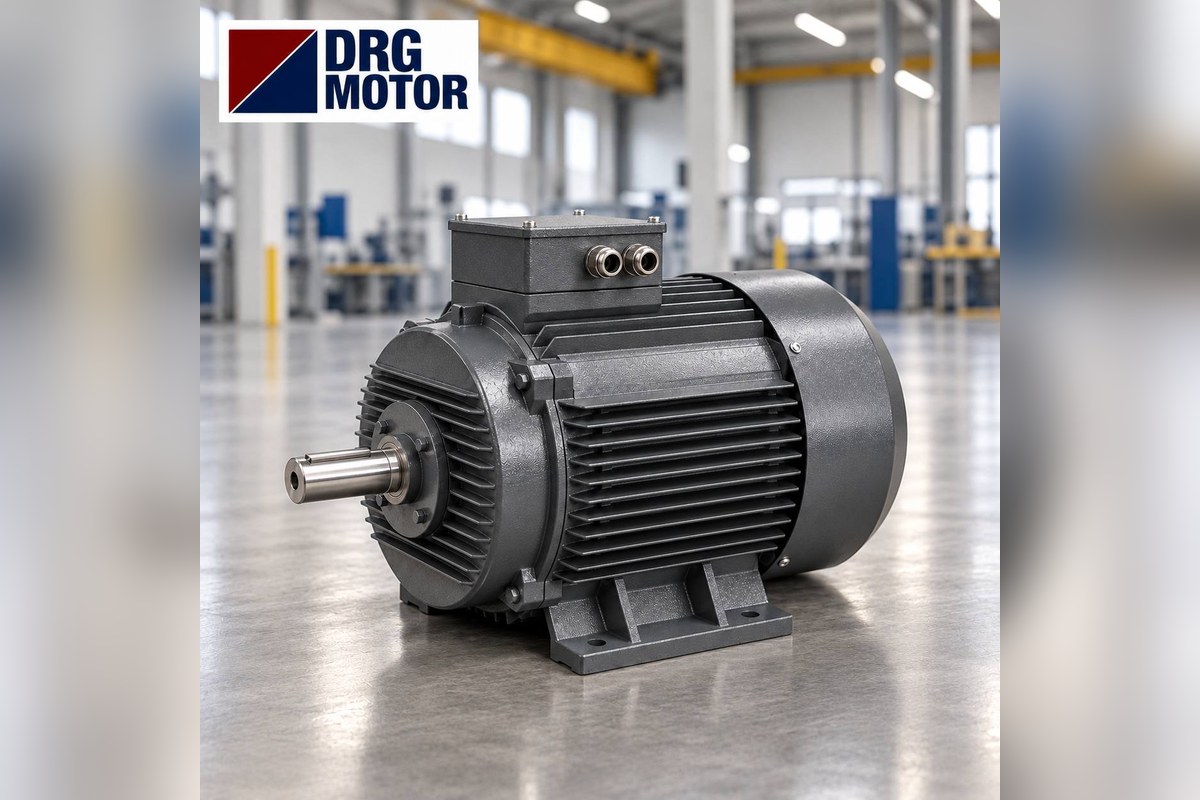

To find out whether a new motor is compatible with the existing panel and drive, compare the motor’s 400 V nameplate current with four items in the panel: the overload relay’s setting range must include this current, the contactor’s AC-3 rating and the drive’s rated output current must not be lower than it, and the fuse and cable must be sized for this current and the starting current. For example, the 11 kW 4-pole DRG-160M-4 draws 20.4 A at 400 V; if the panel’s overload can be set to 20.4 A and the other items carry this current, the motor can be connected to the same panel.
This check is for cases where “the old motor was 11 kW too” is not enough: even at the same power, current and connection change when the number of poles, frame or nameplate voltage changes. Measurements, settings and wiring in the panel must be done by a qualified electrician after the supply is isolated and locked off; the list below shows what information to collect before ordering.
DRG Motor is a manufacturer, supplier and seller of electric motors. Each of the 120 models on the Buy Electric Motors Online page shows its 400 V current, cos φ and nameplate voltage; compare these values with the panel labels to verify the motor before ordering.
The 4 things most often overlooked in the panel when replacing a motor
- Leaving the overload set for the old motor: if the new motor’s current is lower, protection is late; if higher, the overload trips needlessly.
- Buying a 230/400 V motor for a star-delta panel: this panel requires a 400/690 V motor.
- Matching the drive by its kW label: what counts is the drive’s output current.
- Not checking the cable: if power was increased, the old cable may not carry the new current.
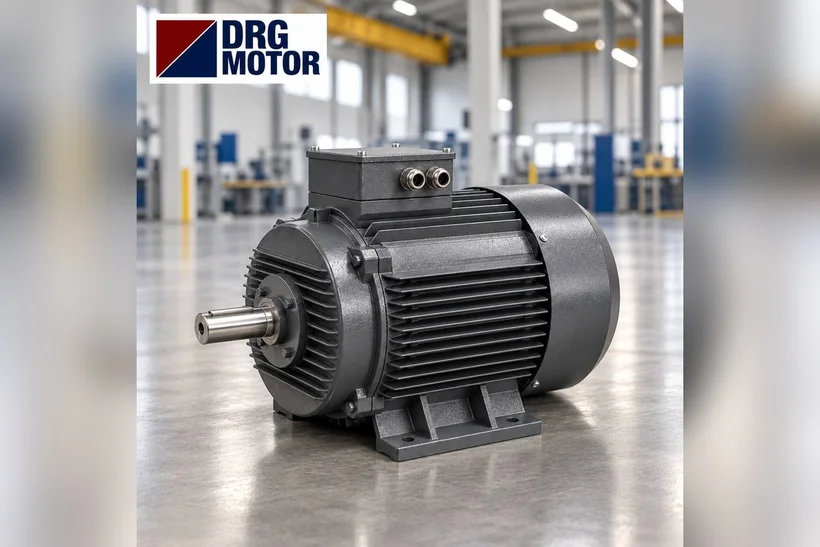
How do I check each panel item?
The table summarises the values to check in the panel for the 11 kW DRG-160M-4 (20.4 A, Is/In 7.7). The same method applies to every rating; just take the motor current from the product page.
| Panel item | Check rule | For DRG-160M-4 |
|---|---|---|
| Overload relay (direct) | Range must include In | Set to 20.4 A |
| Overload relay (Y-Δ) | Set to phase current: In/√3 | Set to ≈11.78 A |
| Main contactor | AC-3 current ≥ In | ≥ 20.4 A |
| Fuse / breaker | Must not trip at start | Start ≈157.1 A |
| Cable | Must carry 1.25 × In | ≥ 25.5 A → 4 mm² |
| Drive | Output current ≥ In | ≥ 20.4 A |
Starting current lasts a few seconds; the fuse or motor protection breaker must not open during that time. You can calculate overload, fuse and contactor values by power with the overload, fuse and contactor selection tool; for contactor categories see how to select a contactor in a motor panel.
Same kW, different speed: why does the current change?
The case that most often surprises the panel is buying a motor with the same kW as the old one but a different speed. As the number of poles rises, cos φ falls and current rises for the same power. DRG’s 11 kW models:
| Model | Speed | Current 400 V | Power factor |
|---|---|---|---|
| DRG-160M1-2 | 2945 rpm | 19.6 A | cos φ 0.89 |
| DRG-160M-4 | 1465 rpm | 20.4 A | cos φ 0.85 |
| DRG-160L-6 | 970 rpm | 22 A | cos φ 0.8 |
The 6-pole model draws 2.4 A more than the 2-pole one. If the old motor was 2-pole and the overload set around 19–20 A, it must be raised when a 6-pole motor is connected to the same panel, and replaced if its range is not enough.
Click to see current electric motor prices and order nowSEE PRICES →
What motor is needed for a star-delta panel?
In a star-delta panel the motor runs in delta at 400 V, so its nameplate voltage must be 400/690 V. In the DRG store all models of 4 kW and above are 400/690 V, those of 3 kW and below are 230/400 V. In these panels two separate three-core cables go to the motor and the overload is usually in the winding branch; in that case it is set to the phase current (In/√3), not the nameplate current. For the DRG-160M-4 this is ≈11.78 A. Have the panel diagram checked to see whether the overload is on the line side or in the winding branch. To compare starting options use the starting methods and star-delta calculator.
Is the cable size enough for the new motor?
When a motor replacement comes with a power increase, the cable is the most often skipped item. The sizes below are taken from the drgmotor.com cable size tool table (copper, PVC, about 30 °C ambient) as the smallest size carrying 1.25 times the motor current; installation method, grouping and ambient temperature change the result.
| Model | Power · speed · frame | Current 400 V | Sample size |
|---|---|---|---|
| DRG-160M-4 | 11 kW · 1465 rpm · 160M | 20.4 A | 4 mm² |
| DRG-160L-4 | 15 kW · 1465 rpm · 160L | 27.3 A | 6 mm² |
| DRG-180M-4 | 18.5 kW · 1470 rpm · 180M | 33.5 A | 6 mm² |
| DRG-180L-4 | 22 kW · 1470 rpm · 180L | 39.7 A | 10 mm² |
On long runs also calculate the voltage drop. For the DRG-160M-4 on 4 mm² cable the drop is about 1.73% at 50 m and 3.46% at 100 m; at 100 m, to stay within the tool’s 3% supply limit, go up to 6 mm² (about 2.31%). For your own length use the motor cable size calculator.
Is the existing drive (inverter) enough for the new motor?
The first value to check on the drive is the rated output current on its label; the kW value is only a guide. The drive’s output current must be equal to or higher than the new motor’s 400 V nameplate current. In the example above, if an 11 kW drive’s output current is lower than the 22 A of the 6-pole DRG-160L-6, the drive cannot carry the motor at full load even though the kW looks equal. On a motor running from a drive, the new nameplate values (voltage, current, speed, frequency, cos φ) must also be entered in the drive parameters, and motor autotuning repeated if available. General rules for drive selection are in how to choose a VFD frequency inverter.
PTC thermistor connection
If the old motor has a PTC thermistor embedded in the winding and the panel wires this signal to a thermistor relay or the drive’s thermistor input, confirm before ordering whether the new motor also has PTC. If a motor without PTC is connected to this panel, the input sees an open circuit and the panel will not allow operation, or the protection has to be bypassed; that second route is not recommended.
If there is a soft starter
A soft starter, like a drive, is selected by current: its rated current must not be lower than the new motor’s nameplate current. With in-line soft starters the motor runs in its normal connection at 400 V: star for a 230/400 V nameplate, delta for 400/690 V. The motor current setting in the soft starter must be updated to the new nameplate.
What to check at the first start?
After connection, first check the direction of rotation unloaded, then load the machine and measure the current of all three phases with a clamp meter. The currents should be close to each other and below the nameplate current. If there is a marked difference between phases, do not continue operating until the connection or supply has been checked.
Information to collect from the panel before ordering
- Supply voltage and starting method (direct, star-delta, soft starter, drive).
- Overload relay setting range (e.g. “17–25 A”) and current setting.
- Main contactor AC-3 current or power (contactor side label).
- Fuse / motor protection breaker rating and type.
- Motor cable size, number of cores and approximate length.
- If there is a drive: input/output voltage and rated output current.
- Does the old motor have a PTC or thermostat lead?
- Old motor nameplate: power, speed, voltage, current, connection.
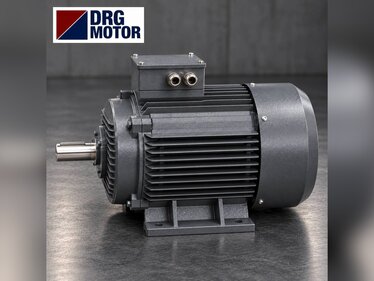
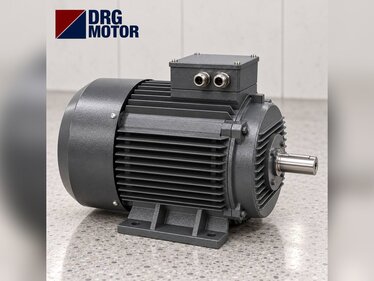
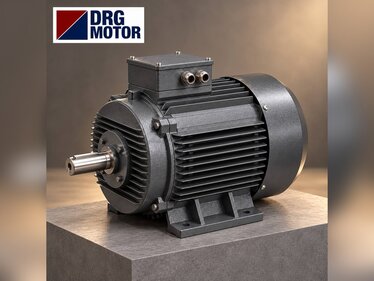
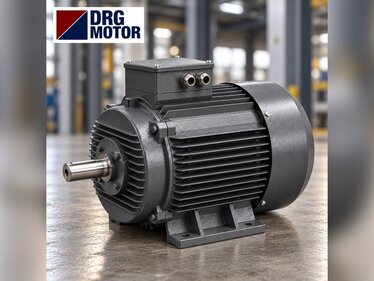
- Sample model: DRG-160M-4
- Power: 11 kW
- Rated speed: 1465 rpm
- Frame: 160M cast iron
- Nameplate voltage: 400/690 V (Δ/Y)
- Connection at 400 V: Δ (delta)
- Current at 400 V: 20.4 A
- Is/In: 7.7
- cos φ: 0.85
- Cable entry: 2 × M40×1.5
Motors in this power range
Cast iron models from 11 to 22 kW that can be selected to match the panel:
- DRG-160M1-2 – 11 kW – 2945 rpm – 160M cast iron
- DRG-160M-4 – 11 kW – 1465 rpm – 160M cast iron
- DRG-160L-6 – 11 kW – 970 rpm – 160L cast iron
- DRG-160L-4 – 15 kW – 1465 rpm – 160L cast iron
- DRG-180M-4 – 18.5 kW – 1470 rpm – 180M cast iron
- DRG-180L-4 – 22 kW – 1470 rpm – 180L cast iron
Click to see current prices and order these motors nowSEE PRICES →
Frequently Asked Questions
What should the overload be set to for an 11 kW motor?
With direct-on-line starting the overload is set to the motor nameplate current: 20.4 A for the 4-pole DRG-160M-4. In star-delta, if the overload is in the winding branch, set it to In/√3 ≈ 11.78 A.
Can a larger motor be connected to an old panel?
Yes, if the overload range, contactor, fuse, cable and any drive carry the new motor’s current. If one of them does not, the motor must not be connected until that item is replaced.
Does an 11 kW motor always suit an 11 kW drive?
No. The drive’s rated output current must not be lower than the motor’s nameplate current; DRG’s 11 kW models draw between 19.6 A and 22 A at 400 V depending on speed.
Does the contactor change when the motor changes?
Not if the new motor’s current does not exceed the contactor’s AC-3 rating. If power increased or the starting method changed, check the contactor label.
You can send photos of the panel labels and the old motor nameplate to +90 (542) 666 11 11 or [email protected]; all channels are on our contact page. For all models with their currents and current prices, see Buy Electric Motors Online.