 English
 Le français
 Türkçe


The foundation of running an electric motor safely and efficiently lies in a properly built motor panel. At the heart of this panel is the contactor, which switches the motor in and out of the circuit and carries the load passing through it. When the contactor is chosen incorrectly, the motor fails prematurely, the panel overheats, and safety is compromised. For this reason, contactor selection is one of the most critical decisions in a motor installation.
In this article, we will examine in detail how to choose a contactor for an electric motor panel, which values must be considered, and the importance of compatibility with the thermal relay. For the basic working principle of motors, you can also review our article on what is an electric motor.
What is a contactor and what does it do?
A contactor is an electromechanical switch used to bring an electric motor into and out of the circuit remotely or automatically. When voltage is applied to its coil, the contacts inside close and energy flows to the motor; when the voltage is removed, the contacts open and stop the motor.
This structure allows a high-current motor to be safely controlled with a small command signal. In this way, the operator can start and stop the motor without touching the high-voltage main circuit. The contactor also forms the basis for remote control of the motor with automation systems.
Why is the rated current Ie important?
The most critical parameter in contactor selection is the Ie value, the rated current the contact can carry continuously. This value must be above the full-load current of the motor; otherwise, the contacts overheat and burn out over time.
As a practical rule, the contactor is selected so that its rated current is about 1.25 times the full-load current of the motor. This margin safely accommodates the high current during starting and possible load fluctuations. Choosing an insufficient current value is the most common mistake that shortens the life of the contactor.
For example, in a motor with a full-load current of 20 amps, it is appropriate to choose a contactor with a rated current of at least 25 amps. The current value written on the motor nameplate is the starting point of this calculation, so the motor nameplate must always be taken into account. Reading the nameplate values correctly is the basis for both contactor and cable selection. Leaving a current margin also safely handles the motor's occasional short-term overloads.
The AC-3 utilization category
Contactors are divided into utilization categories according to the type of load they will operate. For the normal operation of squirrel-cage asynchronous motors, the AC-3 category is standard.
The AC-3 category takes into account the high current the motor draws during starting and its disconnection under normal conditions. Choosing a contactor based on AC-1 values, which are used for resistive loads, is a serious mistake in a motor application and causes the contactor to burn out early.
An asynchronous motor draws a current roughly six to eight times its rated current at the moment of starting. Contactors in the AC-3 category are designed to withstand this high starting current and frequent switching. If the motor stops frequently under load, the heavier AC-4 category values should also be considered. Choosing the utilization category correctly ensures that the contactor is suitable for the actual operating conditions.
Coil voltage selection
The coil of the contactor must match the voltage of the control circuit. The coil voltage can be different values such as 24 V, 110 V, or 230 V.
Whatever voltage the control circuit operates at, the contactor coil must be selected at that value. A wrong coil voltage causes the contactor either not to pull in at all or the coil to burn out. For this reason, the control voltage must be clarified at the project stage.
Phase count and pole structure
Three-pole contactors are used for three-phase motors; each pole carries one phase. For small single-phase motors, two-pole contactors may be sufficient.
The phase count of the motor directly determines the pole count of the contactor. In a three-phase system, safely switching each phase is essential for the balanced operation of the motor. In three-phase motor in industry applications, this balance is of great importance.
Since single-phase motors have an auxiliary winding and capacitor, the control connection must be made to suit this structure. Our article on single-phase motor capacitor offers detail on the capacitor structure of single-phase motors. In three-phase systems, switching each phase equally ensures that the motor turns smoothly and in a balanced way.
Contactor selection by motor power
Contactor suppliers provide in their catalogs the values corresponding to specific motor powers for each contactor. These tables make it easy to select the appropriate contactor based on the motor power in kW.
However, the values in these tables are usually for standard voltage and normal conditions. In situations such as high temperature, high altitude, or frequent switching, it is safer to choose a model one size up. The correct power match ensures that the panel operates trouble-free for many years.
Click to see current electric motor prices and order nowSEE PRICES →
Auxiliary contacts: NO and NC
In addition to the main power contacts of contactors, there are also auxiliary contacts used in the control circuit. These contacts can be normally open (NO) or normally closed (NC).
The normally open contact closes when the contactor pulls in, forming the latching (self-holding) circuit. The normally closed contact, on the other hand, is used in interlock and signaling circuits. The correct auxiliary contact selection ensures the safe operation of the control logic.
In motors that run forward and reverse, mechanical and electrical interlocking is done with normally closed auxiliary contacts to prevent two contactors from pulling in at the same time. This interlock prevents a short circuit between phases, protecting both the motor and the panel. If the contactor does not have enough auxiliary contacts, add-on auxiliary contact blocks mounted on top of it are used. In this way, complex control circuits can be built safely.
Compatibility with the thermal relay
A contactor alone does not protect the motor against overload; a thermal overload relay is needed for this. The thermal relay is mounted under the contactor and continuously monitors the current drawn by the motor.
The current setting range of the thermal relay must cover the full-load current of the motor. When the relay is set to the motor's rated current, it cuts the circuit under overload, protecting the windings. On this subject, our article on overload protection provides detailed information.
When the motor draws current above its rating for a long time, the thermal relay opens the circuit as the bimetal strips inside heat up. In this way, the windings are protected from burning out in the event of a mechanical jam, bearing fault, or overload. The relay's setting value must be set carefully according to the current on the motor nameplate; too high a setting provides no protection, while too low a setting leads to unnecessary stops. The correct setting balances both protecting the motor and uninterrupted operation.
Selecting the contactor and thermal relay together
The contactor and thermal relay must be selected from the same series and be compatible with each other. Suppliers offer this pair as sets that can be mechanically attached to one another.
An incompatible contactor-relay match creates both installation difficulty and a protection weakness. The right set provides the motor with both safe switching and effective overload protection.
Phase loss and protection
If one of the phases is lost in a three-phase motor, the motor can quickly burn out by drawing excessive current from the remaining two phases. Standard thermal relays cannot always detect this situation quickly enough.
For this reason, it is recommended to add a separate phase protection relay to the panels. This relay detects phase loss or a phase sequence error and opens the contactor. Our article on phase loss covers this danger in depth.
The phase protection relay can also detect voltage imbalance and incorrect phase sequence connection. A wrong phase sequence can cause the motor to turn in the reverse direction and damage the connected mechanism. In applications such as pumps and fans where the direction of rotation is critical, this protection is especially valuable. In this way, both the motor and the machine it drives stay safe.
Contactor in star-delta starting
In high-power motors, star-delta starting is used to reduce the starting current. In this method, three separate contactors work together: the line, star, and delta contactors.
The current values of these contactors must be calculated as the method requires. Incorrect sizing leads to arcing and wear during transition. Soft starting or a frequency inverter offers an alternative to this complex arrangement.
Contactor in frequency inverter use
If the motor is driven by a frequency inverter, the contactor is mostly placed on the input side of the inverter. In this case, the contactor switches the inverter, not the motor.
In inverter systems, the starting and stopping of the motor are done through the inverter. Our article on frequency inverter energy saving explains this driving method.
Panel temperature and ventilation
Contactors and other equipment generate heat while operating. The heat accumulating inside the panel reduces the contactor's rated current and shortens its life.
For this reason, the panel must be adequately ventilated and, if necessary, cooled with a fan or air conditioner. In hot environments, the derating effect is compensated by selecting the contactor at one size higher current.
Suppliers usually give the contactor current value for a 40-degree ambient temperature. When the temperature inside the panel rises above this value, the current the contactor can carry decreases. For this reason, the current margin must be increased in hot factory environments or densely populated panels. Proper ventilation preserves the expected life of both the contactor and the other equipment.
Switching frequency and lifespan
If a motor switches in and out very frequently during the day, the mechanical and electrical life of the contactor is consumed faster. Each on-off creates a small amount of wear on the contacts.
In applications that require frequent switching, contactors with high switching life must be selected. In motors that switch very frequently, a soft starter or inverter extends the contactor's life.
The electrical life of contactors is usually expressed in terms of the number of switching operations, and the mechanical life by the durability of the moving parts. In a motor that switches dozens of times per hour, these numbers can be consumed quickly. In such applications, the life curves in the catalogs must be taken into account when selecting a contactor. The right choice extends the panel's maintenance interval and reduces downtime.
Coordination with short-circuit protection
The contactor and thermal relay protect against overload; however, a fuse or motor protection circuit breaker is needed against short circuits. These components must be selected in coordination with the contactor.
Correct coordination ensures that the contactor is protected without damage during a short circuit. The suppliers' coordination tables serve as a guide in this selection.
Coordination is defined at two levels, Type 1 and Type 2. In Type 2 coordination, the contactor is protected enough to be reused without repair after a short circuit. In critical facilities, Type 2 coordination is preferred to enable quick re-energization after a fault. Motor protection circuit breakers, on the other hand, combine both short-circuit and overload protection in a single device, simplifying panel design.
Grounding and panel safety
The metal body of the motor panel and the motor must be grounded. The leakage current that occurs when insulation weakens can only be safely discharged with proper grounding.
Solid grounding protects both the equipment and the personnel. Our article on grounding completes this subject.
In addition to grounding, installing a residual current relay in the panels significantly increases touch safety. This relay detects even small currents leaking to the body and quickly cuts the circuit. This protection is vitally important especially in motor panels in humid or wet environments. Grounding and residual current protection together equip the panel with a comprehensive safety layer.
Cable cross-section and connection tightness
The cross-section of the cables connected to the contactor must be chosen to suit the current it will carry. A thin cable heats up, while a loose connection creates a risk of arcing and fire.
Tightening the connection screws with the appropriate torque guarantees long-term safety. The tightness of the connections must always be checked during periodic inspections.
A loose connection can heat up over time, melt the insulation, and cause a fire inside the panel. Periodic checks with thermal cameras detect heating connection points before they are visible to the eye. This simple measure prevents major failures and downtime. The correct cable cross-section and a tight connection are the complement of contactor selection.
Contactor tracking with energy monitoring
In modern panels, current and voltage are continuously monitored so that contactor and motor health can be tracked. Abnormalities in the current are a sign of both motor and contactor problems.
This monitoring makes it possible to catch faults before they grow. Our article on energy monitoring explains this approach.
Contactor expectations in industrial panels
In industrial facilities, panels control continuously running motors under harsh conditions. For this reason, contactors must be durable and long-lasting.
Quality contactors are suitable for this intensive use. Industrial electric motors operate safely together with these panels.
Periodic maintenance and inspection
Contactor contacts wear and carbonize over time, which increases contact resistance. Regular inspection makes it possible to notice worn contacts in time.
A change in the coil sound, overheating, or delayed pull-in is a sign that the contactor has reached the end of its life. Our article on maintenance steps summarizes this routine.
Working with the right supplier
Procuring contactor and panel materials from a reliable supplier is the guarantee of quality and compatibility. A good seller recommends the right product suitable for the motor power and application.
Equipment purchased from the right source ensures that the panel operates safely for years. Our article on electric motor dealers offers selection tips.
Safe motor solutions with DRG Motor
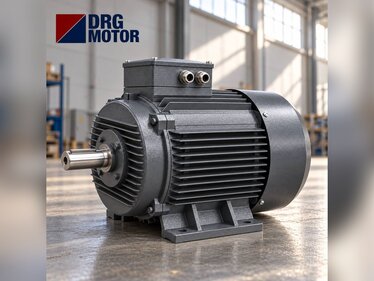
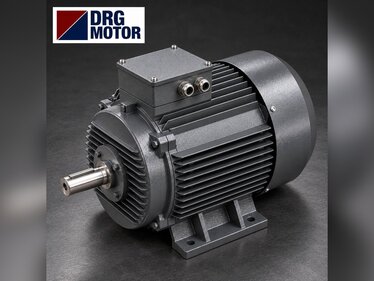
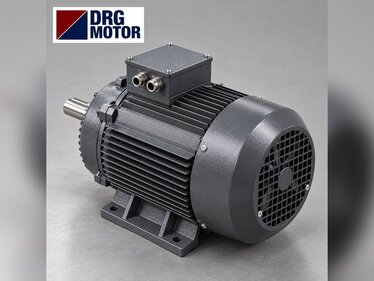
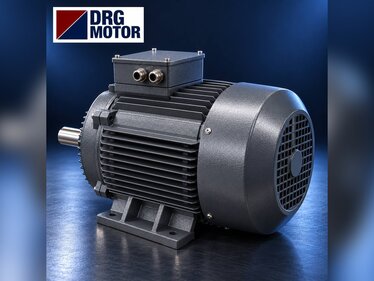
DRG Motor offers quality electric motors with the correct full-load current and starting characteristics compatible with the contactor you will install in your panel. Thanks to clear nameplate values, contactor and thermal relay selection becomes easier, and panel safety is secured.
If you are looking for a safe and efficient motor-panel solution for your facility, you can review DRG Motor products and contact our expert team for the right choice. For more information, you can read our article on overload protection or visit our homepage.
DRG Electric Motors Suited to This Topic
The models below are available in the DRG Motor online shop. Click a model code to see its technical data, dimensions and current price, and order right away.
- DRG-90L-6 – 1.1 kW – 945 rpm – aluminium frame
- DRG-132S-6 – 3 kW – 968 rpm – aluminium frame
- DRG-132M2-6 – 5.5 kW – 968 rpm – cast iron frame
- DRG-160L-6 – 11 kW – 970 rpm – cast iron frame
Click to see current prices of all electric motors and order nowSEE PRICES →