English
 Le français
 Türkçe

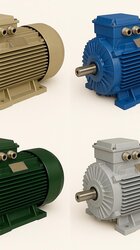
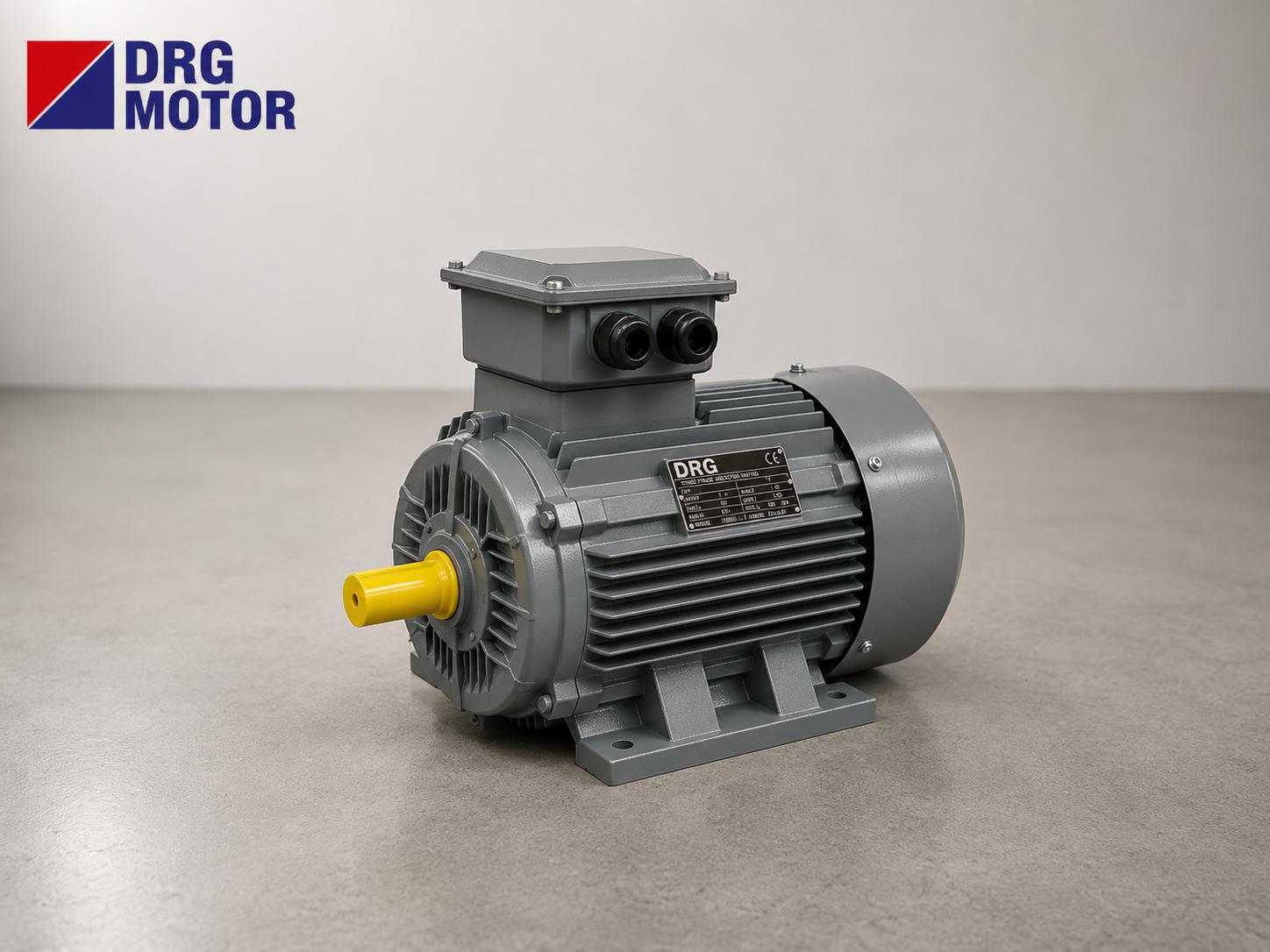

In grain and flour production, milling lines run around the clock. Roller mills, sifters, aspirators and screw conveyors turn for hours under continuous load. The driving power at the heart of these lines is not just a motor; it is a supply decision that directly shapes throughput, product quality and waste ratios. As DRG Motor, we supply milling operations with drive solutions that deliver high torque on the first start, run stably in dusty and vibrating environments, and are selected with the correct power and speed combination. A properly chosen flour mill motor protects line capacity while noticeably lowering the energy bill.
Why a Milling Line Demands High Torque
Roller and crushing units carry a large inertial mass when stationary. A loaded mill, on the first morning start, needs a starting torque several times its normal running moment. An undersized motor struggles at this instant, the windings heat up, and insulation life shortens over time. That is why, in milling drives, the starting torque characteristic is as critical a supply criterion as the rated power.
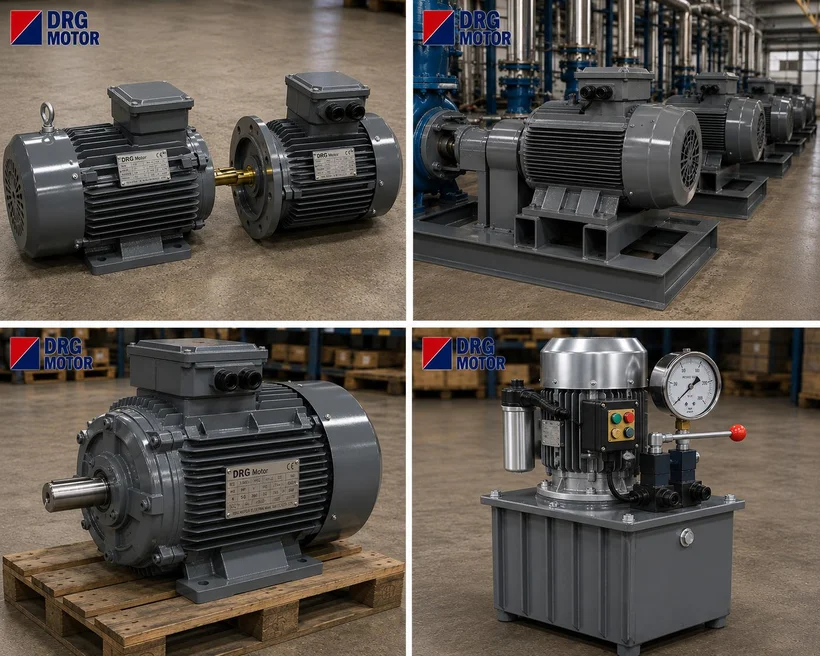
High-torque motors handle this start-up load safely. The drive selected for loaded-start screw conveyors, hammer mills and elevators keeps its efficiency at the operating point while setting the line in motion without strain at the moment of engagement. This extends the life of the mechanical components and reduces the electrical fluctuations that occur during starting.
Another point to watch in milling drives is start frequency. A line may stop and start several times during the day for product changeovers, cleaning or maintenance. At every start, the windings are exposed to a brief surge of current; frequent restarts cause serious heat buildup in a motor that is selected on the edge. That is why, in milling supply, we account for the power and for the expected number of starts. A motor with the right torque reserve keeps the winding temperature within a safe range even under frequent starts, letting you sustain production without breaking the rhythm of the line.
Dust, Flour and Continuous Duty Conditions
The milling environment is a demanding one for a motor. Fine flour dust stays suspended in the air, clings to fan channels and cooling fins, and impedes cooling. For this reason, the motors we supply feature a high protection class, a totally enclosed body design and dust-resistant sealing. In areas where fine dust is heavy, an IP55 or higher protection class directly affects motor life.
- High protection class housing for sealing against flour dust
- Thermal design suited to continuous (S1) duty
- Windings that operate without derating at high ambient temperatures
- Vibration-resistant bearings and a balanced rotor
Mills are usually shift-based facilities, often running 24 hours a day. This uninterrupted duty cycle requires a motor that is comfortably rated on the thermal side. A motor selected on the edge will overheat in summer; a sound supply decision delivers stable capacity throughout the year.
Dust has another effect, this time on the bearings. When fine flour particles leak past the seals and felts, they mix into the bearing grease and accelerate wear. For this reason, the motors we supply for the milling environment feature reinforced sealing systems and an appropriate grease choice. Easy-maintenance bearing solutions that allow periodic regreasing reduce line stoppages. The complaint we hear most often from millers who have run the field for years is that motors without the right protection quickly fail at the bearings and windings; our aim at the supply stage is to remove that risk from the outset.
The Right Power and Speed Combination
Milling units have different speed requirements. Roller mills usually demand high torque at low speed, while aspirators and fans run at high speed. Rather than building the entire line with a single motor type, selecting power and pole count according to each unit's load profile is the key to energy efficiency. At DRG Motor, we map out your line's unit list and recommend the most suitable drive for every point.
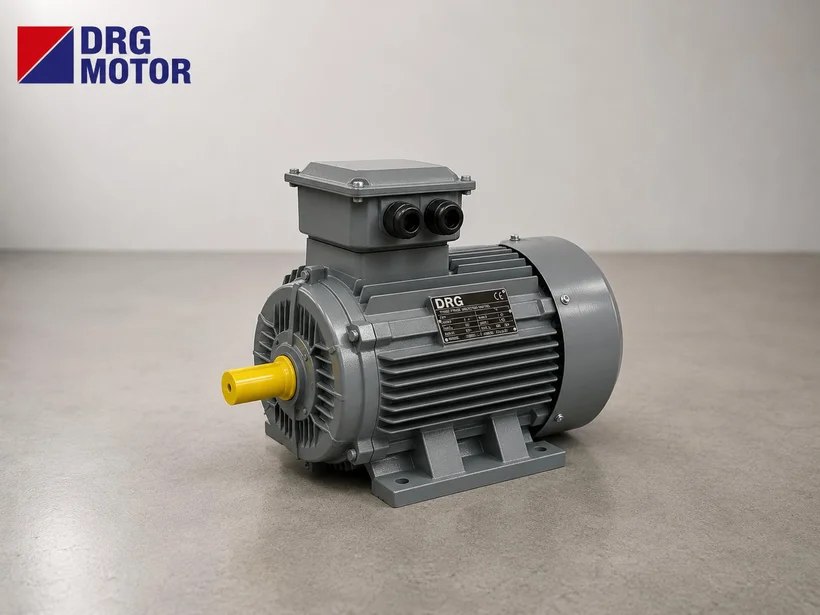
Many milling units are served by standard industrial drives. Here, wide-range general-purpose industrial motors offer fast availability, easy maintenance and a favorable cost advantage. For critical points that need special speeds or higher protection, we move toward more specialized drive solutions.
A common mistake in power selection is choosing the motor as large as possible to stay on the safe side. Yet an oversized motor, running continuously at light load, loses efficiency, its power factor deteriorates, and the bill comes in higher than expected. The opposite, a motor sized on the edge, strains under load. The right supply matches the power and pole count to the unit's actual load profile. At DRG Motor, we assess together the number of passages on your roller mills, the load on your sifters and the airflow of your aspiration line, then recommend a drive that is exactly the right size for each point, neither too large nor too small. This approach optimizes both the initial investment and the annual operating cost.
Flexible Capacity with a Variable Frequency Drive
In modern mills, the use of a variable frequency drive (VFD) provides both a soft start and the ability to adjust capacity according to the product type. The insulation class and cooling design of motors that will run with a drive must be selected differently from fixed-speed operation. Planning this compatibility from the start of the supply process prevents winding and bearing issues in the field.
A motor that runs continuously at low speed may receive insufficient fan cooling; in that case, external cooling or a suitable insulation class is preferred. A drive-compatible drive supply also secures the mill's forward-looking capacity flexibility.
Energy Cost and Payback
In a milling facility, electricity is one of the largest operating expenses. Premium-efficiency motors may look slightly more expensive at the initial investment, but the difference in annual energy consumption usually pays back the price gap within a few years. On a line running 24 hours a day, even a few percentage points of efficiency gain turn into meaningful savings by year-end.
The net price varies with the motor's power, protection class, speed requirement and quantity. For this reason, in milling supply we prefer to map your line's load profile and present a project-based quote rather than a fixed list price. This way, we guarantee both the right product and the right cost.
Getting the Timing Right on Motor Replacement
Many mills still run with motors installed years ago in a low-efficiency class. These motors may still be turning, but they quietly burn extra energy every year. Replacing a low-efficiency motor with a high-efficiency equivalent is often one of the most overlooked yet fastest-returning investments available. On critical units running 24 hours a day in particular, the difference pays for itself within a year or two.
When planning a motor replacement, we recommend measuring the real load on the existing line rather than simply copying the old power one for one. In most cases the old motor was oversized; with the right sizing you can move to a smaller and more efficient drive. If you share the nameplate data and running hours of your current motors with us, we will prepare a concrete savings table and a quote for the replacement.
Lessons Drawn from Other Sensitive Sectors
The milling environment is dusty and carries a combustible-dust risk; in this respect it calls for the same engineering approach as other sectors that require careful supply. For example, the experience we gained in facilities with explosive-atmosphere risk guides us in selecting the right protection class and certified drives. The cleanliness and hygiene-focused approach we apply in ilaç sektörü motor supply is equally valuable in mills, which are food production lines.
Likewise, the Ex-proof and high-protection experience we earned on boya sektörü motor projects involving chemicals and combustible dust offers an applicable engineering background for milling points where flour dust can pose an explosion risk. We carry the lessons learned from each sector's load into your milling supply.
Stock, Fast Availability and Service Support
In a mill, a motor failure means a stopped line, and every minute means loss. That is why we keep a wide stock and have the most commonly used power and speed combinations ready for supply. Planning a spare drive for critical units minimizes unplanned downtime.
Our technical support continues through the installation, coupling fit and commissioning of the motors we supply. Let us determine together which torque and speed each unit of your mill needs, and let us offer you a drive package tailored to your line, at the right power and an appropriate cost. Contact us today to receive a fast and clear quote for your milling line.