English
 Le français
 Türkçe




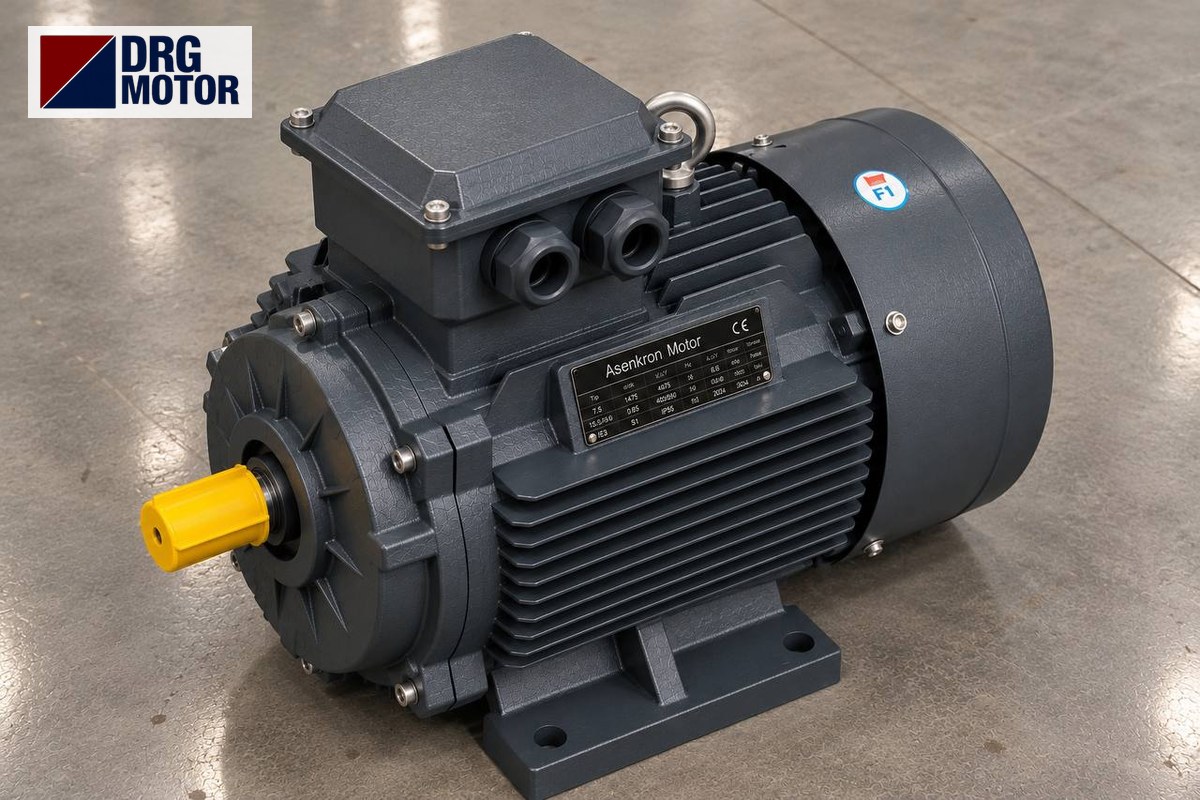

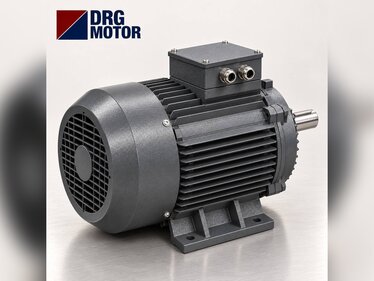
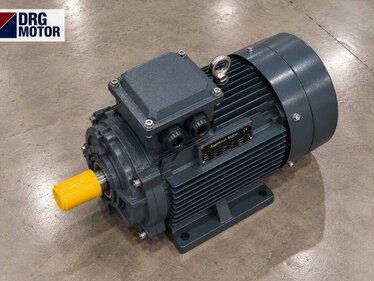
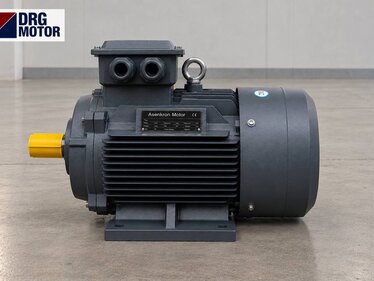
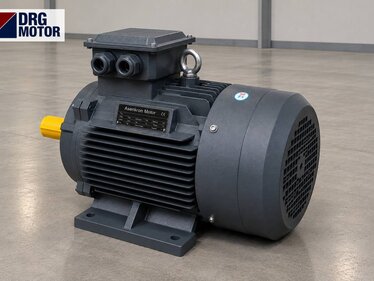
The main motor of a feed pellet mill is sized from the mill's hourly capacity multiplied by the energy it uses per tonne, and almost always a 4-pole (1500 rpm) three-phase motor + belt drive or gearbox is used. For example, with an assumed capacity of 3 t/h and a specific energy of 12 kWh/t, 3 × 12 = 36 kW; for the next standard rating of 37 kW, the DRG-225S-4 (1485 rpm, 66.1 A at 400 V, rated torque 237.9 Nm) is a suitable candidate. At this power the motor's connection, starter and overload setting must be handled by a qualified electrician.
The 12 kWh/t used here is only an assumption chosen to illustrate the calculation: specific energy varies considerably with the feed formula, fat and fibre content, die compression ratio and steam conditioning; the definitive value is the pellet mill manufacturer's data and the machine nameplate. We covered feed grinder and mixer motors in our article on feed grinder and feed mixer motors; this article deals only with the main motor of the pellet press and its replacement. You can compare suitable models among the 120 on our Buy Electric Motors Online page.
What determines motor power in a pellet mill: die, rollers and specific energy
In a ring die press, conditioned feed is squeezed between the inner face of the rotating die and the rollers and forced through the die holes. Most of the energy the motor consumes goes into this compression and the friction inside the holes. The main factors that increase power:
- Die compression ratio (hole length / hole diameter): a long-hole die gives harder pellets but needs more power.
- Raw material: fibrous, low-fat formulas are harder to press; high-fat formulas pass more easily but the pellet becomes softer.
- Conditioning: feed that has not received enough steam and temperature resists more in the die.
- Roller–die gap: worn rollers or an opened gap raise the current for the same capacity.
- Uneven feeding: fluctuation in the feeder appears directly as fluctuation in motor current.
Calculating motor power from capacity
The calculation is simple: P (kW) = capacity (t/h) × specific energy (kWh/t). The result is rounded up to the next standard motor rating. The table below shows the calculation and the DRG match for four capacities with the same 12 kWh/t assumption:
| Capacity (assumed) | Specific energy (assumed) | Calculated power | Motor to choose |
|---|---|---|---|
| 1 t/h | 12 kWh/t | 12 kW | 15 kW – DRG-160L-4 |
| 2 t/h | 12 kWh/t | 24 kW | 30 kW – DRG-200L-4 |
| 3 t/h | 12 kWh/t | 36 kW | 37 kW – DRG-225S-4 |
| 4 t/h | 12 kWh/t | 48 kW | 55 kW – DRG-250M-4 |
Two notes: first, for 4 t/h × 12 = 48 kW, 45 kW is not enough so 55 kW is chosen; when a value falls between standard steps, always take the higher rating. Second, if your specific energy is different, do not use the table directly; insert the value measured with your own formula. If you already have a press, the most reliable data is the motor current you measure at full capacity.
Why 4 poles and a belt or gear drive?
Die speed is set by the required linear speed at the die circumference: v = π · D · n / 60. Assumption: die inner diameter 420 mm, die speed 280 rpm. v = π × 0.42 × 280 / 60 ≈ 6.2 m/s. Since the 4-pole DRG-225S-4 runs at 1485 rpm, the required ratio is 1485 / 280 ≈ 5.3, easily achieved with a single belt stage or a single gear stage. With a 2-pole motor the ratio doubles and the pulleys grow; with a 6-pole motor the frame gets heavier for the same power. You can check pulley diameters with our pulley and belt calculator.
On belt-driven presses the motor sits on slide rails and belt tension is adjusted by moving the motor; on gearbox presses the motor is connected with a flexible coupling. In both cases a shear pin or slip coupling protects the motor and gears when the die chokes.
Heavy starting and die choking: choosing the starting method
A pellet mill normally starts with the feeder stopped and the die empty. This rule determines the starting method. For the DRG-225S-4, with catalogue values:
- Direct-on-line starting current: Is/In = 7.4 → 7.4 × 66.1 ≈ 489 A (400 V).
- Starting current drawn from the supply with star-delta: about one third, ≈ 163 A.
- Starting torque in star: Ts/Tn = 2.0 → 2.0 × 237.9 / 3 ≈ 159 Nm, i.e. about two thirds of rated torque.
Conclusion: star-delta only works with the die empty and the feeder off. If there is cooled, hardened feed in the die, the motor cannot turn the die in star, draws high current for a long time and trips the overload. A choked die must be cleared first, then started. Interlocking the sequence so that the feeder opens only after the main motor has switched to delta and reached speed prevents the most common fault. Compare the methods with our motor starting methods and star-delta tool.
Overload protection, current monitoring and cable size
On a pellet mill the ammeter is not just a gauge but an operating tool: the operator sets the feeder speed by watching the main motor current. As the current approaches its rated value the feed is held steady; a current that continuously exceeds rated is the first sign of die choking. The rated current of the 37 kW motor is 69.6 A at 380 V and 66.1 A at 400 V; the overload relay must be set to this nameplate value and its class chosen according to the starting time so that it does not trip during start-up. For the overload relay and contactor use our overload relay, fuse and contactor selection tool.
Cable size example: 66.1 A × 1.25 sizing factor ≈ 82.6 A. In our cable table 16 mm² at 80 A is not enough, so 25 mm² (101 A) is selected. On a 50 m run the voltage drop is ΔU = √3 × 66.1 × 0.05 × 0.727 × 0.86 ≈ 3.6 V, about 0.9% of 400 V, below the accepted limit for the supply. Values change with installation method and ambient temperature; for your own line use our motor cable size calculator.
DRG motor options for pellet mills
Because the press works in a vibrating, dusty environment, cast iron frames are used at these ratings. The values in the table are DRG catalogue data:
| Model | Power / speed | Frame | Current 400 V |
|---|---|---|---|
| DRG-160L-4 | 15 kW · 1465 rpm | Cast iron 160L | 27.3 A |
| DRG-180M-4 | 18.5 kW · 1470 rpm | Cast iron 180M | 33.5 A |
| DRG-180L-4 | 22 kW · 1470 rpm | Cast iron 180L | 39.7 A |
| DRG-200L-4 | 30 kW · 1475 rpm | Cast iron 200L | 53.8 A |
| DRG-225S-4 | 37 kW · 1485 rpm | Cast iron 225S | 66.1 A |
| DRG-225M-4 | 45 kW · 1485 rpm | Cast iron 225M | 80.2 A |
| DRG-250M-4 | 55 kW · 1485 rpm | Cast iron 250M | 97.6 A |
Example: technical summary of a 37 kW press motor
- Power: 37 kW (50 HP)
- Synchronous / rated speed: 1500 / 1485 rpm
- Current 380 V / 400 V: 69.6 A / 66.1 A
- cos φ: 0.86
- Rated torque: 237.9 Nm
- Ts/Tn · Tmax/Tn: 2 · 2.3
- Is/In: 7.4
- Shaft D × E: 60 × 140 mm
- Frame: Cast iron IEC 225S
- Voltage: 400/690 V (Δ/Y)
- Cable entry: 2 × M50×1.5
- Bearing: 6313-C3
Shaft, coupling and base compatibility when replacing the motor
Replacing a 30 kW motor with a 37 kW one to raise press capacity is common, but the two motors are not in the same frame. The dimensions below are DRG catalogue data:
| Dimension | DRG-200L-4 (30 kW) | DRG-225S-4 (37 kW) | Effect on replacement |
|---|---|---|---|
| Shaft height H | 200 mm | 225 mm | Base must be raised/changed |
| Foot holes A × B | 318 × 305 mm | 356 × 286 mm | New foot holes |
| Shaft diameter D | 55 mm | 60 mm | New pulley/coupling hub |
| Shaft length E | 110 mm | 140 mm | Check key and hub length |
| Shoulder to foot C | 133 mm | 149 mm | Re-align the belts |
So a power upgrade is not just buying and fitting a motor: the base, the pulley or coupling hub and the belt alignment must be addressed together. For a like-for-like replacement at the same power, comparing the old motor's frame code and shaft size with the new motor is enough. For dimensioned drawings see our DRG motor technical drawings page.
Replacement checklist
- Note kW, speed, voltage, connection (Δ/Y) and rated current from the old motor's nameplate.
- Measure shaft diameter (D), shaft length (E) and key width; check that the pulley or coupling hub fits the new shaft.
- If shaft height (H) and foot holes (A × B) differ, prepare the base in advance.
- On belt-driven presses align the pulleys with a straightedge and set the tension to the manufacturer's value.
- On coupled presses check angular and axial alignment with a dial gauge.
- Verify the direction of rotation with a short run before connecting belts/coupling.
- Set the overload relay to the new motor's nameplate current; recheck the star-delta timer.
- On first start record the current with the die empty, then the current rise as the feed opens.
Motors in this power range
The 4-pole cast iron models most often asked about as main motors for feed pellet mills:
- DRG-160L-4 – 15 kW – 1465 rpm – Cast iron 160L
- DRG-180M-4 – 18.5 kW – 1470 rpm – Cast iron 180M
- DRG-180L-4 – 22 kW – 1470 rpm – Cast iron 180L
- DRG-200L-4 – 30 kW – 1475 rpm – Cast iron 200L
- DRG-225S-4 – 37 kW – 1485 rpm – Cast iron 225S
- DRG-225M-4 – 45 kW – 1485 rpm – Cast iron 225M
Click to see current prices and order these motors nowSEE PRICES →
Frequently Asked Questions
What kW motor does a pellet mill need?
It is calculated as capacity (t/h) × specific energy (kWh/t) and rounded up to the next standard rating. For example, with 3 t/h and an assumed 12 kWh/t you get 36 kW and choose a 37 kW motor. Since specific energy depends on the feed formula and the die, the definitive value is the press manufacturer's data.
How many amps does a 37 kW motor draw?
The DRG-225S-4 (37 kW, 1485 rpm) draws 69.6 A at 380 V and 66.1 A at 400 V at full load. With direct-on-line starting the starting current rises to 7.4 times rated, about 489 A (400 V).
Can a pellet mill start in star-delta?
Yes, with the die empty and the feeder off. Since starting torque drops to about one third in star, the motor cannot turn the die if cooled feed is inside. An interlock should open the feeder only after the main motor has switched to delta.
Why does the pellet mill motor trip its overload?
The most common causes: feeder opened too far, starting with a choked or cold die, worn rollers and an opened roller–die gap, poor conditioning and slack belts. Check that the overload is set to nameplate current and watch the current as the feed opens.
Send us your machine's nameplate or dimensions and we will match the right DRG model with you: +90 (542) 666 11 11 · [email protected] · Contact page. All models: Buy Electric Motors Online.