English
 Le français
 Türkçe




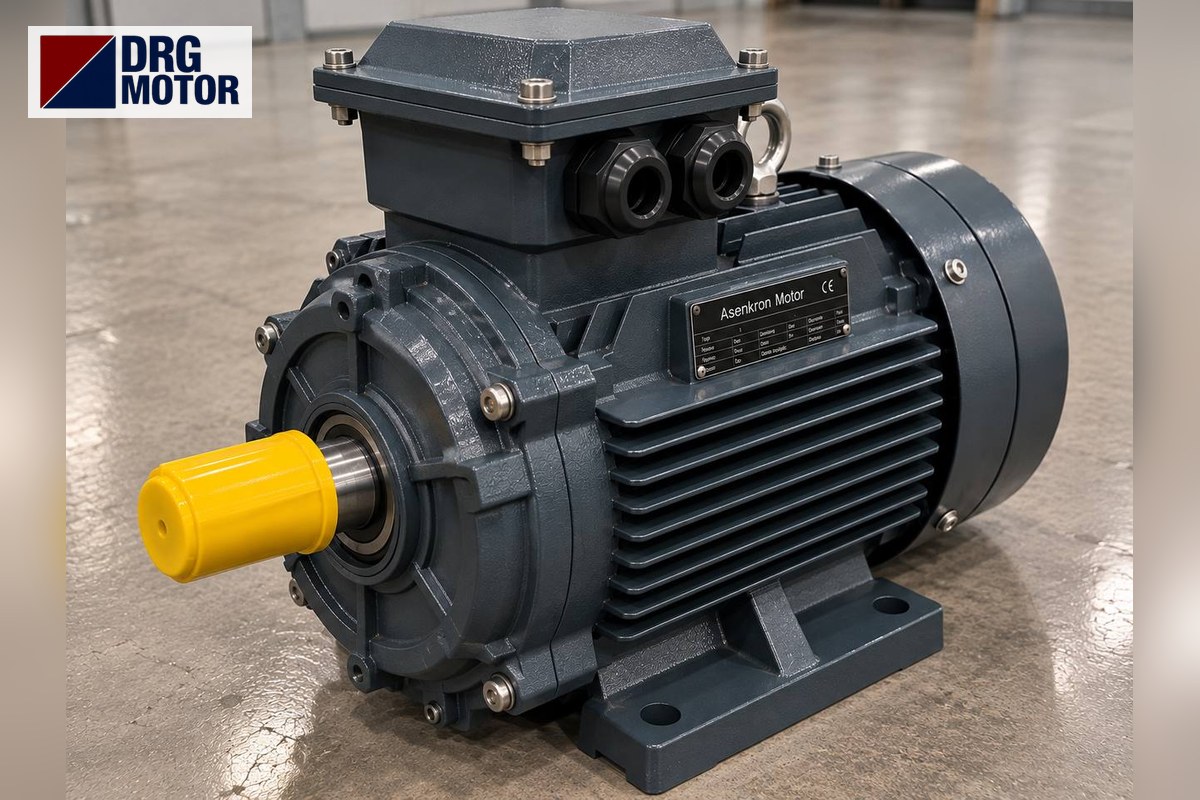

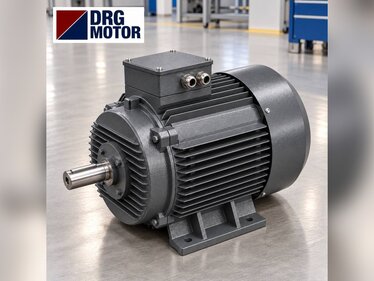
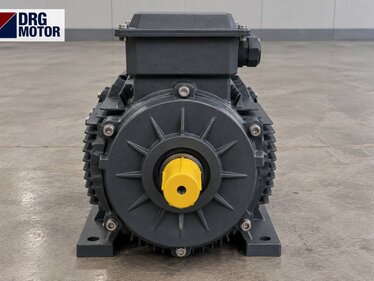
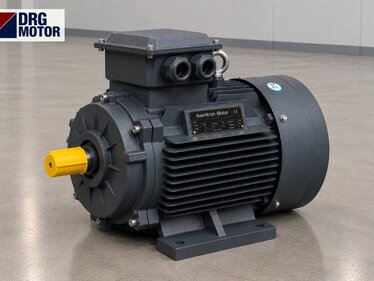
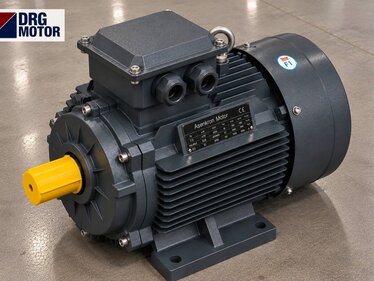
A Roots blower motor is sized from the air flow the blower delivers and the pressure rise it works against: for a blower moving 8 m³/min at 400 mbar, the shaft power comes out at about 8.9 kW with an assumed loss factor, and an 11 kW 4-pole motor fits the job. For example, the DRG-160M-4 runs at 1465 rpm, draws 20.4 A at 400 V and delivers 71.7 Nm rated torque. If the blower nameplate or catalogue states a motor power, that value comes first; the calculation below is for machines with an unreadable plate or a changed operating pressure.
A Roots blower is not a fan but a positive-displacement machine: it moves the same volume every revolution, and the higher the pressure it faces, the more torque it demands from the motor. That is why the setting that really defines motor power is the opening pressure of the relief valve. When replacing or connecting the motor, terminal, overload and rotation work must be done by a qualified electrician. You can compare the technical data of 120 models in the Buy Electric Motors Online section.
How to Calculate Roots Blower Motor Power
The power on the air side is simply flow × pressure rise: P = Q · Δp. With flow in m³/s and pressure in Pa, the result is in watts. This value is divided by a factor η to cover internal leakage, friction and belt losses. The example assumes η = 0.60; the real value depends on blower type and speed and is shown on the manufacturer's curve.
- Q = 8 m³/min = 0.133 m³/s; Δp = 400 mbar = 40,000 Pa
- Air power: 0.133 × 40,000 ≈ 5.33 kW
- Shaft power: 5.33 / 0.60 ≈ 8.9 kW
- With a 10% margin: ≈ 9.8 kW → next standard rating 11 kW
On an 11 kW 4-pole motor this load means a shaft torque of about 9550 × 8.9 / 1465 ≈ 57.9 Nm, below the motor's 71.7 Nm rated torque. To try the calculation with other values, use the pump and fan motor power calculator.
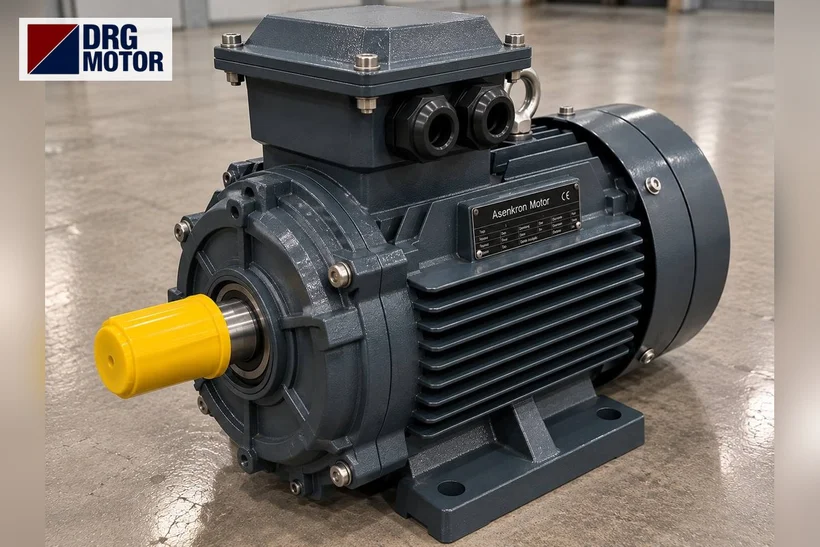
How Motor Power Changes as Pressure Rise Increases
At constant speed, the power drawn by a Roots blower rises almost linearly with the pressure rise. At the same 8 m³/min, with the same η = 0.60 assumption and a 10% margin, the table looks like this:
| Pressure rise Δp | Air power Q·Δp | Shaft power (η = 0.60) | Motor (4-pole) |
|---|---|---|---|
| 300 mbar | 4.00 kW | 6.7 kW | 7.5 kW – DRG-132M-4 |
| 400 mbar | 5.33 kW | 8.9 kW | 11 kW – DRG-160M-4 |
| 500 mbar | 6.67 kW | 11.1 kW | 15 kW – DRG-160L-4 |
| 600 mbar | 8.00 kW | 13.3 kW | 15 kW – DRG-160L-4 |
| 700 mbar | 9.33 kW | 15.6 kW | 18.5 kW – DRG-180M-4 |
The lesson from the table: if the relief valve is raised from 400 mbar to 600 mbar, the 11 kW motor is no longer enough and 15 kW is needed. Whoever raises the valve setting should re-check the motor too. Conversely, if line pressure is low there is no point in a larger motor; a lightly loaded motor also runs at a lower cos φ.
2-Pole or 4-Pole? Pulley and Belt Calculation
Most Roots blowers are belt driven and the blower speed is set by the pulley ratio: dmotor = dblower × nblower / nmotor. Example: the blower must run at 2200 rpm with a 200 mm blower pulley (assumption).
| Motor | Rated speed | Motor pulley | Belt speed |
|---|---|---|---|
| DRG-160M-4 | 1465 rpm | ≈ 300 mm | ≈ 23.0 m/s |
| DRG-160M1-2 | 2945 rpm | ≈ 149 mm | ≈ 23.0 m/s |
Belt speed is the same in both solutions because the blower pulley and speed are the same. The tangential force on the belt is also almost equal: 2 × 71.7 / 0.300 ≈ 477 N with 4 poles and 2 × 35.7 / 0.149 ≈ 478 N with 2 poles. The difference lies elsewhere: with a 2-pole motor the motor pulley gets smaller and the belt wrap angle drops; never go below the minimum pulley diameter allowed for the belt profile. When the blower runs faster than the motor (as in the example), a 4-pole motor with a large motor pulley gives a more comfortable drive; when the blower runs around or above 3000 rpm, a 2-pole motor keeps the ratio reasonable. Check pulley sizes with the pulley and belt calculator; for a general view of belt drives see our article on motor selection for belt and pulley drives.
Starting: Star-Delta and the Blow-Off Valve
A Roots blower is a constant-torque load, independent of speed. If the blower starts directly against the pressurised line, the motor has to cover full-load torque from the very first moment.
| Model | Rated torque | Ts/Tn | Is/In |
|---|---|---|---|
| DRG-132M-4 | 49.1 Nm | 2 | 7.5 |
| DRG-160M-4 | 71.7 Nm | 2.2 | 7.7 |
| DRG-160M1-2 | 35.7 Nm | 2 | 8.1 |
| DRG-160L-4 | 97.8 Nm | 2.2 | 7.8 |
| DRG-180M-4 | 120.2 Nm | 2 | 7.8 |
For the DRG-160M-4 the starting torque is 2.2 × 71.7 ≈ 157.7 Nm; on direct-on-line starting this easily lifts the 57.9 Nm load, but the supply sees about 7.7 × 20.4 ≈ 157 A. Because the motor is wound 400/690 V (Δ/Y), it runs in delta on a 400 V supply and is suitable for star-delta starting. In star the torque falls to one third: ≈ 52.6 Nm. That is below the 57.9 Nm load, so the blower cannot start in star against pressure. The solution is a blow-off valve that vents the discharge line during start-up: the blower accelerates unloaded and the valve closes after the change-over to delta. See the star-delta starting page for details.
Wastewater Aeration vs. Pneumatic Conveying
Wastewater aeration: the pressure the blower sees starts with the water depth in the basin. A 4 m water column is about 1000 × 9.81 × 4 ≈ 39,200 Pa, i.e. ≈ 392 mbar; diffuser and pipe losses come on top. If the basin level rises or diffusers clog, pressure and motor current rise together. In these plants the blower is on line most of the day, so thermal reserve and a clean fan cowl matter when choosing the motor.
Pneumatic conveying: pressure fluctuates with the amount of material in the line; during a blockage it climbs to the relief valve setting. The motor is therefore sized for the valve setting, not the normal operating pressure. The 600 mbar row in the table shows this case: 15 kW for 8 m³/min (DRG-160L-4, 27.3 A at 400 V).
Flow Control with a VFD: a Roots Blower Is Not a Fan
On fans, power falls with the cube of speed; a Roots blower does not behave that way. At constant pressure rise, flow changes with speed and power changes roughly in proportion to speed. A blower running at 35 Hz instead of 50 Hz delivers about 70% of the flow and draws about 70% of the power, while the torque on the motor shaft stays practically the same. Consequences:
- Set the drive to constant-torque (heavy duty) mode, not variable-torque (fan/pump) mode.
- The motor is cooled by its own fan; at low speed cooling air drops while torque stays the same. For long periods at low speed, consider a forced-ventilation fan.
- The minimum speed allowed for the blower is in the manufacturer's catalogue; below it internal leakage rises and the blower heats up.
To see torque and power versus frequency, use the VFD frequency-torque-power calculator.
Motor Replacement: Pulley Alignment and Checklist
If the old motor is replaced with one of the same IEC frame, the foot holes and shaft height match and the pulley fits the same shaft. Mounting dimensions of the 11 kW 4-pole DRG-160M-4:
- Power: 11 kW (15 HP)
- Rated speed: 1465 rpm
- Current 380 V / 400 V: 21.5 A / 20.4 A
- Rated torque: 71.7 Nm
- Voltage: 400/690 V (Δ/Y)
- IEC frame / shaft height: 160M / 160 mm
- Shaft D×E: 42 × 110 mm
- Foot holes A×B: 254 × 210 mm
- Bearing: 6309-C3
Follow this sequence during replacement:
- Note kW, speed, voltage/connection and IEC frame from the old motor's nameplate; measure shaft D × E with a caliper.
- Remove the pulley with a puller; check the key and keyway (key width F = 12 mm on frame 160).
- Fit the pulley on the new shaft close to the shaft shoulder; the further it sits toward the shaft end, the higher the bearing load.
- Align motor and blower pulleys with a straight edge or laser: both parallel and angular misalignment should be close to zero.
- Tension the belt to the belt maker's value; re-check new belts after the first hours of running.
- On a Roots blower, direction of rotation decides which side is suction and which is discharge. Jog the motor without belts and compare with the arrow on the blower; if reversed, swap two phases (qualified electrician).
- Set the overload relay to the nameplate rated current (DRG-160M-4: 20.4 A at 400 V, 21.5 A at 380 V); the overload, fuse and contactor selection tool helps.
- Confirm that the relief and blow-off valves work and the belt guard is in place.
- Measure current with a clamp meter on first start; if it is above rated, check pressure and valve setting.
To compare foot and flange dimensions before ordering, use the DRG motor technical drawings.
Motors in This Power Range: DRG Models for Roots Blowers
DRG Motor is a manufacturer, supplier and seller of electric motors; the cast iron models below cover the power range most often needed for Roots blower drives. Currents are catalogue values.
| Model | Power / speed | Frame | Current 400 V |
|---|---|---|---|
| DRG-132S-4 | 5.5 kW / 1460 rpm | IEC 132S cast iron | 10.7 A |
| DRG-132M-4 | 7.5 kW / 1460 rpm | IEC 132M cast iron | 14.3 A |
| DRG-160M-4 | 11 kW / 1465 rpm | IEC 160M cast iron | 20.4 A |
| DRG-160L-4 | 15 kW / 1465 rpm | IEC 160L cast iron | 27.3 A |
| DRG-180M-4 | 18.5 kW / 1470 rpm | IEC 180M cast iron | 33.5 A |
| DRG-180L-4 | 22 kW / 1470 rpm | IEC 180L cast iron | 39.7 A |
| DRG-132S2-2 | 7.5 kW / 2930 rpm | IEC 132S cast iron | 13.7 A |
| DRG-160M1-2 | 11 kW / 2945 rpm | IEC 160M cast iron | 19.6 A |
| DRG-160M2-2 | 15 kW / 2945 rpm | IEC 160M cast iron | 26.5 A |
- DRG-132M-4 – 7.5 kW – 1500 rpm – IEC 132M cast iron
- DRG-160M-4 – 11 kW – 1500 rpm – IEC 160M cast iron
- DRG-160L-4 – 15 kW – 1500 rpm – IEC 160L cast iron
- DRG-180M-4 – 18.5 kW – 1500 rpm – IEC 180M cast iron
- DRG-160M1-2 – 11 kW – 3000 rpm – IEC 160M cast iron
- DRG-160M2-2 – 15 kW – 3000 rpm – IEC 160M cast iron
Click to see current prices and order these motors nowSEE PRICES →
Frequently Asked Questions
What size motor does a Roots blower need?
It depends on flow and pressure rise: P ≈ Q · Δp / η. For 8 m³/min and 400 mbar, with η = 0.60 assumed, the shaft power is ≈ 8.9 kW and an 11 kW motor is chosen. The definitive value is the blower nameplate and manufacturer curve.
Does a Roots blower run with a 2-pole or 4-pole motor?
Both are used; the choice follows blower speed and pulley ratio. For a blower at about 2200 rpm, a 4-pole motor needs a motor pulley of ≈ 300 mm, a 2-pole motor ≈ 149 mm.
Can a Roots blower start with star-delta?
Yes, but the blow-off valve must be open during start-up. In star the torque drops to one third; on the DRG-160M-4 ≈ 52.6 Nm remains, which cannot lift the ≈ 57.9 Nm load under pressure.
How many amps does an 11 kW Roots blower motor draw?
The 4-pole DRG-160M-4 draws 20.4 A at 400 V and 21.5 A at 380 V at full load. For other ratings see the motor current chart.
Send us the power, speed and shaft size from your machine's nameplate and we will help you pick the matching DRG model: phone +90 (542) 666 11 11, e-mail [email protected], contact page drgmotor.com/en/contact. To browse the models directly, go to Buy Electric Motors Online.