English
 Le français
 Türkçe




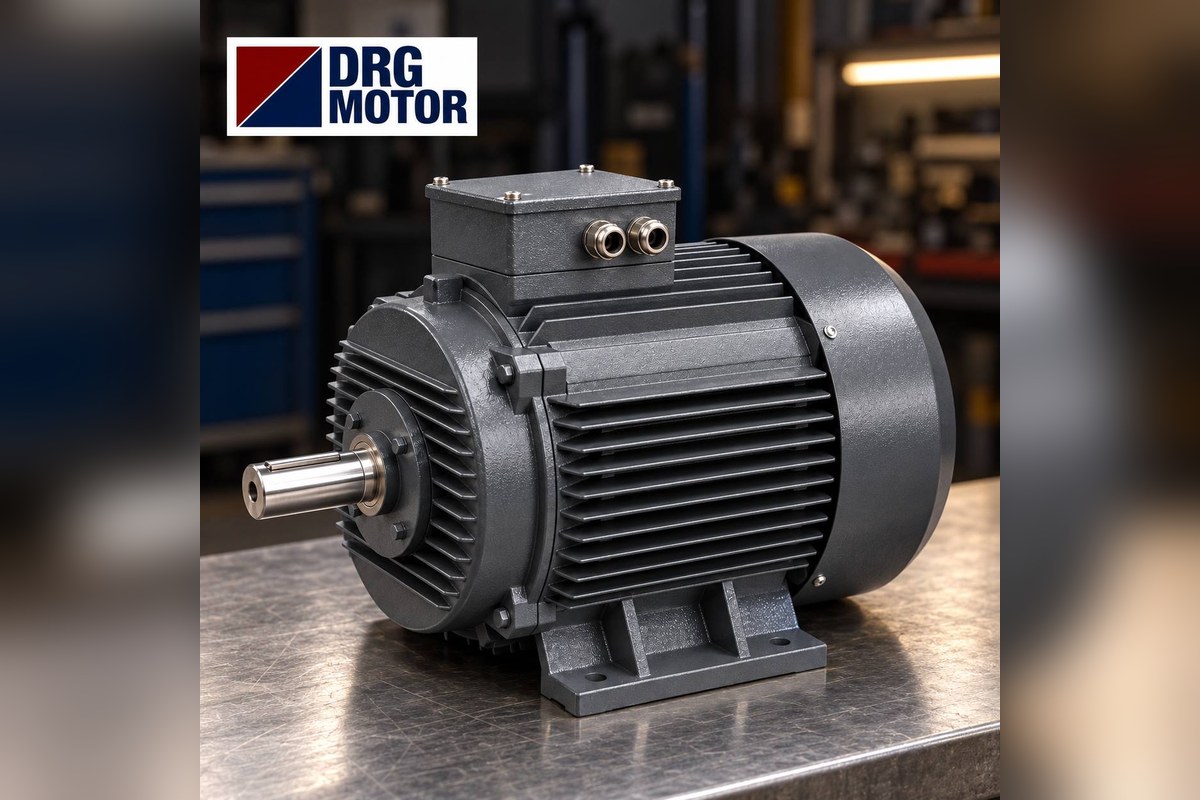

When buying a new electric motor for a used machine, choose the motor not from the machine plate or the seller’s word but from the traces the previous motor left on the machine: the foot hole spacing on the base (A×B) shows the frame, the bore of the pulley or coupling hub shows the shaft diameter, and the supply cable size and the overload setting in the panel show the motor current and hence its power. If these four traces agree, the right motor is clear; if they conflict, the previous motor was most likely chosen wrongly or replaced. You can match the frame and power you find with the models on Buy Electric Motors Online.
If there is a motor on the machine, first assess its condition; if there is none or it has burnt out, determine what the machine really needs. Measurements on the panel, overload relay and motor connection are live work; they must be done by a qualified electrician, with the supply isolated and locked off before measuring. This article lists, in order, the checks the workshop owner or maintenance technician buying a used machine should make before and after purchase.
How can you judge the motor on a machine you are buying?
If the machine has a motor, make or have made these short checks before buying. They can be done at the machine without removing the motor:
- Is the motor nameplate legible? Are power, speed, voltage, frequency and connection written on it?
- Are there burn marks, melting or spliced cables in the terminal box?
- Does the shaft turn by hand, without sticking or play?
- When the machine runs unloaded, are the three phase currents balanced?
- After a few minutes, is there excessive heat, a metallic noise or vibration at the bearing end?
- Are there cracks or weld marks on the housing, end shields or feet?
If any item on this list is doubtful, do not count the motor in the machine’s value; negotiate on the machine without the motor and plan the motor budget separately.
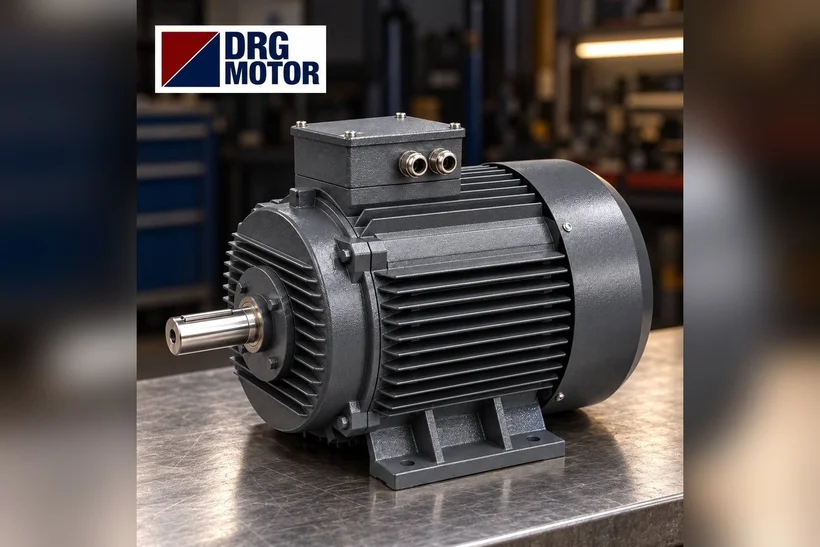
If there is no motor, which traces reveal what the machine needs?
On a machine whose motor has been removed or has burnt out, you read the need from four traces. Each can mislead on its own; taken together they give a reliable result.
1. Foot holes and shaft height
Measure the centre-to-centre spacing of the motor fixing holes on the base in two directions: A across the shaft axis, B along the shaft axis. On a coupled machine also measure the height from the base surface to the centre of the driven shaft; this corresponds to the motor’s shaft height H. A×B and H point directly to the IEC frame.
2. Pulley or coupling hub
If the motor-side pulley or coupling half has stayed on the machine, its bore gives the motor shaft diameter D, the keyway width gives the key size and the hub length gives the shaft length E. If the bore and the foot spacing point to the same frame, the traces are consistent.
3. Supply cable size
The cable size gives an upper limit for the motor current. The cable table on our site (copper, PVC, example values) lists 25 A for 2.5 mm², 34 A for 4 mm² and 43 A for 6 mm²; with the tool’s sizing factor of 1.25, these sizes correspond to a motor current of at most about 20 A, 27.2 A and 34.4 A respectively. Because cable is often oversized, this is only an upper limit; for details see our motor cable size calculator.
4. Panel: contactor, overload relay and starting
The overload relay setting should have been kept close to the previous motor’s rated current. Compare the setting with the 400 V current column: for example, if the setting is around 20.4 A, a motor in the 11 kW, 1500 rpm class may have run on the machine. If the panel has a star-delta starter, the motor must be connected in delta at 400 V, i.e. rated 400/690 V. You can compare overload and contactor values with our overload relay, fuse and contactor selection tool.
Click to see current electric motor prices and order nowSEE PRICES →
How do you turn the traces into a motor model?
Find the foot spacing and shaft diameter you measured in the table below. The values are catalogue dimensions of DRG cast iron 1500 rpm models; 1000 and 3000 rpm models in the same frame have the same foot dimensions but different power.
| Feet A×B (mm) | Shaft D×E (mm) | Model · power · frame | Current 400 V |
|---|---|---|---|
| 160 × 140 | 28 × 60 | DRG-100L2-4 · 3 kW · 100L | 6.02 A |
| 190 × 140 | 28 × 60 | DRG-112M-4 · 4 kW · 112M | 7.95 A |
| 216 × 140 | 38 × 80 | DRG-132S-4 · 5.5 kW · 132S | 10.7 A |
| 216 × 178 | 38 × 80 | DRG-132M-4 · 7.5 kW · 132M | 14.3 A |
| 254 × 210 | 42 × 110 | DRG-160M-4 · 11 kW · 160M | 20.4 A |
Once the frame is known, confirm the power with the overload setting and cable size. One exception to watch for is the compact frame: a compact motor delivers higher power in a smaller frame than a standard one. For example, DRG-132M-4K is 11 kW but has a 132M frame, a 38 × 80 mm shaft and 216 × 178 mm feet, whereas the standard 11 kW DRG-160M-4 comes in a 160M frame with a 42 × 110 mm shaft and 254 × 210 mm feet. If the foot traces show 132M while the overload setting points to an 11 kW current, the previous motor may have been compact. For the difference between compact and standard frames, see What Is a Compact Electric Motor?
If the machine is imported, how do you check grid compatibility?
On used machines that came from abroad, check two things. The first is frequency: a motor whose plate says 60 Hz turns roughly in the ratio 50/60, i.e. one sixth slower, on a 50 Hz grid; the machine speed drops in the same ratio and the pulley ratio may need to be recalculated. Since you will buy the new motor for 50 Hz, achieve the machine’s required speed with the new motor speed and the pulley ratio; use the pulley and belt calculator for the calculation.
The second is voltage: the industrial grid in Türkiye is 400 V three-phase. If the machine’s panel was built for a different voltage (e.g. 220 V three-phase or 460 V), contactor coils, the control transformer and overload settings must also be reviewed. When choosing the motor, select the voltage rating (230/400 V or 400/690 V) that gives the correct connection at 400 V.
The 3 most common mistakes when choosing a motor for a used machine
- Taking the power the seller states: the information that comes with the machine describes the motor the last user fitted, and that motor may have been wrong too. Power must be confirmed from the traces.
- Looking only at the foot holes: the same frame carries motors of different speeds and powers. Foot spacing gives the frame; overload and cable give the power; use them together.
- Not checking the speed: machine speed is the product of motor speed and pulley ratio. Fitting a 3000 rpm motor instead of 1500 rpm runs the machine twice as fast; the reverse halves its capacity.
Checklist before and after purchase
- Have foot spacing A×B and shaft height H been measured?
- Have the pulley/coupling bore and key size been noted?
- Are the supply cable size and length known?
- Have the overload setting, contactor and starting method (direct, star-delta, drive) been identified?
- Are the machine’s required operating speed and pulley ratio known?
- If the machine is imported, were the frequency and voltage of the previous motor noted?
- Will the new motor’s direction of rotation be checked with a short test at first start?
All dimensions of the model you choose with this information are published frame by frame on the technical drawings page. DRG Motor is a manufacturer, supplier and seller of electric motors; DRG MOTOR motors are guaranteed against material and manufacturing defects for 2 years from the delivery date (warranty certificate). Freight is handled by contracted freight and cargo companies and is paid by the buyer; the terms are on the sales, delivery and return terms page.
Motors in this power range
The 1500 rpm cast iron models in the 3–11 kW range often met on used machines; for other speeds and powers, the 120 models in our online store are listed.
- DRG-100L2-4 – 3 kW – 1450 rpm – 100L · cast iron
- DRG-112M-4 – 4 kW – 1450 rpm – 112M · cast iron
- DRG-132S-4 – 5.5 kW – 1460 rpm – 132S · cast iron
- DRG-132M-4 – 7.5 kW – 1460 rpm – 132M · cast iron
- DRG-160M-4 – 11 kW – 1465 rpm – 160M · cast iron
Click to see current prices and order these motors nowSEE PRICES →
Frequently Asked Questions
What kW motor fits a machine without a motor?
The frame is found from the foot hole spacing and pulley bore, the current from the overload setting and cable size; together they give the power. If the traces conflict, refer to the machine builder’s data or a load measurement.
How do you find the motor frame from the foot holes?
Measure A (across the shaft axis) and B (along the shaft axis) between hole centres and match them with the IEC frame table. For example, 216 × 140 mm corresponds to frame 132S and 216 × 178 mm to frame 132M.
Will a 60 Hz machine motor run on 50 Hz?
It will, but its speed drops roughly in the ratio 50/60 and the machine slows down. It is better to buy the new motor for 50 Hz and set the speed with the pulley ratio.
How many amps does an 11 kW 1500 rpm motor draw?
According to the DRG-160M-4 data, it draws 20.4 A at 400 V and 21.5 A at 380 V; its rated speed is 1465 rpm.
To send us the traces you measured and choose the right motor together, call +90 (542) 666 11 11, write to [email protected] or use our contact page. All models and current prices are listed on Buy Electric Motors Online.