English
 Le français
 Türkçe




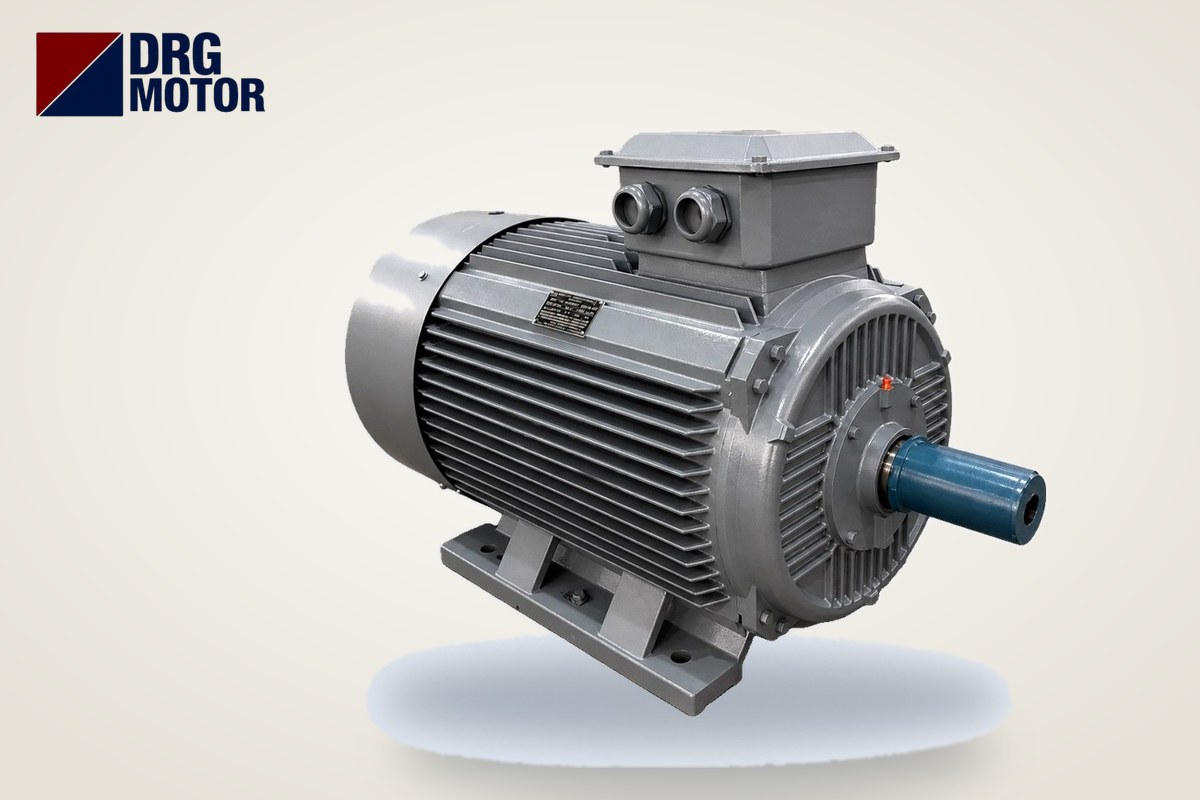

If an electric motor keeps tripping its thermal overload relay, there are only two possibilities: either the motor really draws more current than the relay setting (overload, phase loss, low voltage, long or frequent starts), or the relay is set to the wrong value. Example: a 22 kW, 1500 rpm motor draws 41.8 A at full load on 380 V. With direct-on-line starting the overload is set to 41.8 A; with star-delta starting, where the relay sits in the delta branch, it is set to 41.8 / √3 ≈ 24.1 A. Mixing up these two values is the most common cause of "unexplained" overload trips in the field.
The job of the overload relay is to open the circuit before the motor winding overheats, so when it trips it is usually doing its job. The real question is not "why does the overload trip?" but "why does the motor draw too much current, or why is the relay watching the wrong value?" The sequence below helps you find the cause by measurement. Measurements and connections in the panel must be carried out by a qualified electrician; resetting the relay and restarting again and again damages the winding. You can check motor nameplate values on the product pages of Buy Electric Motors Online.
We explained the construction and basic setting logic of the relay in What Does a Thermal Overload Relay Do? How to Set Motor Protection; for fuses or breakers that open instantly, see Why Does an Electric Motor Trip the Fuse?. This article focuses only on why the overload trips and how to diagnose it.
When does the overload trip? A timing-based diagnostic flow
When the relay trips narrows down the cause considerably. Before resetting, note the answers to these questions, then follow the flow:
- Does it trip during starting? If the motor trips before reaching speed or right after: the load is too heavy, the start is long, the star-delta changeover is late or the trip class is too low for the load.
- Does it trip after running for a while? The current is slightly above the setting: real overload, low voltage, phase imbalance, hot panel.
- Is it random, sometimes immediate, sometimes hours later? Loose terminal, oxidised contactor contact, intermittent phase loss, mechanical binding.
- Check the relay setting: Does it match the nameplate current and the starting method?
- Measure the current in all three phases: Read L1, L2 and L3 with a clamp meter while running; compare with the nameplate current and with each other.
- Measure voltage at the motor terminals: At the motor end, not at the panel incomer, and under load.
- Uncouple the motor and run it unloaded: If the problem persists without load it is electrical; if it disappears it is mechanical or load-related.
Wrong overload setting: In vs In/√3 in star-delta
With direct-on-line starting the relay sees the line current, i.e. the nameplate In. With star-delta starting the relay is usually fitted below the main contactor, on the line feeding the motor's delta branches, and sees the winding (phase) current, which is 1/√3 of the line current. If it is set to In in this position it does not protect the motor; if a direct-on-line relay is mistakenly set to In/√3, it trips as the motor approaches full load. If the relay in a star-delta panel is installed on the supply line, before the main contactor, the setting is In again. Always check where the relay sits on the diagram before setting it.
| Model | Power / speed | In (380 V) | Direct-on-line overload setting | Star-delta (delta branch) overload setting |
|---|---|---|---|---|
| DRG-132M-4 | 7.5 kW / 1460 rpm | 15.0 A | 15.0 A | ≈ 8.7 A |
| DRG-160M-4 | 11 kW / 1465 rpm | 21.5 A | 21.5 A | ≈ 12.4 A |
| DRG-160L-4 | 15 kW / 1465 rpm | 28.8 A | 28.8 A | ≈ 16.6 A |
| DRG-180L-4 | 22 kW / 1470 rpm | 41.8 A | 41.8 A | ≈ 24.1 A |
| DRG-200L-4 | 30 kW / 1475 rpm | 56.6 A | 56.6 A | ≈ 32.7 A |
If your supply is closer to 400 V, use the nameplate current at 400 V (39.7 A for the same 22 kW motor). The second common mistake is a voltage–connection mismatch: motors of 3 kW and below with a 230/400 V nameplate are connected in star on a 380 V supply, while motors of 4 kW and above with a 400/690 V nameplate are connected in delta. Connecting a 230/400 V motor in delta on 380 V overvoltages the winding, the current rises and the overload trips quickly. To check the setting for your own motor use the overload, fuse and contactor selection tool, and to compare starting methods use the star-delta starting tool.
Is the motor really overloaded? Current measurement and phase imbalance
If the setting is right, the next question is whether the motor draws more than the setting. Read each phase separately with a clamp meter under normal load. If all three phases are close to each other and all above In, the motor is mechanically overloaded: pump flow above design, fan blade angle too large, conveyor overfilled, wrong pulley ratio or a motor that is simply too small for the job. Raising the relay setting is not a solution; reduce the load or move up one power size. You can check the required power via torque: a 7.5 kW, 1460 rpm motor has a rated torque of 49.1 Nm; if the machine demands more torque than this while running, the current also rises above In.
If the currents differ, the problem is phase imbalance. Simple calculation: take the average of the three currents, then divide the largest deviation from the average by the average.
Example measurement: 7.5 kW motor
Take a motor with a nameplate current of 15.0 A and measured values of 14.2 A, 15.0 A and 16.4 A. Average (14.2 + 15.0 + 16.4) / 3 ≈ 15.2 A; largest deviation 16.4 − 15.2 = 1.2 A; imbalance 1.2 / 15.2 ≈ 7.9%. Although the average looks close to the nameplate value, the phase carrying 16.4 A heats its bimetal the most and the relay trips because of it. First measure the phase-to-phase voltages at the motor terminals. If the voltages are balanced, roll the cable ends by one position: if the high current moves with the phase, the source is the supply or cable; if it stays on the same motor winding, a winding fault becomes more likely.
With complete phase loss a running motor may keep turning but draws very high current from the remaining two phases; an overload relay with phase-loss sensitivity (differential mechanism) opens quickly in this case. If a stationary motor tries to start with a missing phase, no rotating field is created, the motor hums and the overload trips. A blown fuse, a single burnt contactor contact and a loose terminal screw are the most frequent sources of phase loss.
How do long cables and low voltage make the overload trip?
To deliver the same mechanical power, a motor draws more current as voltage falls. A long, thin cable lowers the voltage at the motor end under load, and the relay sees the increased current. Voltage drop is calculated with ΔU = √3 × I × (L/1000) × R × cosφ (R: cable resistance in Ω/km, from the table of the site's cable tool). For a 7.5 kW, 4-pole motor (I = 15.0 A, cosφ = 0.84, 380 V):
| Distance | 2.5 mm² (7.41 Ω/km) | 4 mm² (4.61 Ω/km) | 6 mm² (3.08 Ω/km) |
|---|---|---|---|
| 50 m | 8.1 V – 2.13% | 5.0 V – 1.32% | 3.4 V – 0.88% |
| 100 m | 16.2 V – 4.26% | 10.1 V – 2.65% | 6.7 V – 1.77% |
| 150 m | 24.3 V – 6.38% | 15.1 V – 3.97% | 10.1 V – 2.65% |
The general acceptance used in the tool is 3% for the supply line. A 2.5 mm² cable is enough for this motor in terms of current-carrying capacity (25 A), but gives a 4.26% drop at 100 m; the motor can then rise above its nameplate current and the overload trips, especially when the load increases. In this calculation 4 mm² stays below the limit at 100 m and 6 mm² at 150 m. The values are an example calculation for copper PVC cable at about 30°C; the cross-section must be verified by an electrical engineer according to installation method, grouping and ambient temperature. You can try your own distance in the motor cable size calculator. If the grid voltage itself drops at peak hours, the same symptom appears; measure at different times of day.
If the overload trips during starting: long and frequent starts
During starting the motor draws several times In. Calculation with the starting current ratio Is/In from the data sheet: an 11 kW, 1500 rpm motor has Is/In = 7.7, so about 21.5 × 7.7 ≈ 165.6 A on a direct start; a 22 kW motor about 7.8 × 41.8 ≈ 326 A. The relay's bimetal heats quickly at this current. If the start finishes within a few seconds there is no problem, but the relay trips in two cases:
- Long start: With high-inertia loads such as a heavy fan, a loaded crusher or a full conveyor, the motor draws starting current for a long time.
- Frequent starts: On a stop-start machine the bimetal cannot cool down; each start accumulates heat and after a few cycles the relay trips.
We defined trip classes (class 10, 20, 30) in the thermal overload relay article; what matters here is diagnosis. Time the start with a stopwatch and compare it with the relay class: with a long-starting load a class 10 relay can trip during starting even if the motor is healthy. Before raising the class, make sure the motor itself can withstand that long start; otherwise the problem moves from the relay to the winding. For frequent starts, the solution is to reduce cycling, use a drive or soft starter, or choose a larger motor for the job. Setting the relay high to cope with frequent starts leaves the motor unprotected.
Panel temperature, bearings and mechanical binding
Because a thermal overload relay works with a bimetal, it responds not only to current but also to the temperature around it. In a panel exposed to sun, without ventilation or packed with heat sources such as drives or transformers, the relay can trip even when the current is below the setting. Measure the temperature inside the panel; add fans, filters and spacing.
The mechanical side also raises current directly. Dry or damaged bearings, an over-tensioned belt, a misaligned coupling, rubbing in a pump impeller, or a cooling fan and finned housing clogged with dust all increase current and winding temperature. Uncouple the motor and turn the shaft by hand: if it is stiff, noisy or has play, see motor bearing failure symptoms.
Cause – measurement – solution table
| Symptom | Possible cause | Measurement | Solution |
|---|---|---|---|
| New installation trips near full load | Star-delta setting confusion | Relay position on diagram, setting value | Line current → In, delta branch → In/√3 |
| Trips after running a while, all three currents high | Real overload | Clamp meter, load flow/torque | Reduce load or move up a size |
| One phase clearly higher | Phase imbalance, loose connection | Phase-to-phase voltage, terminal and contact check | Renew connection, find the source |
| Remote motor trips as load rises | Voltage drop | Voltage at motor end under load | Calculate and increase cable size |
| Trips during starting | Long/frequent starts, low trip class | Start time, starts per hour | Starting method, suitable class |
| Trips on summer afternoons | Panel overheating | Panel internal temperature | Ventilation, compensated relay |
| Random trips, shaft turns stiffly | Bearing, coupling, belt | Hand turning, no-load current | Mechanical repair, alignment |
Checklist before restarting the motor
- Overload setting matches the nameplate current and the relay's position on the diagram.
- Nameplate voltage and terminal links (star/delta) suit the supply.
- All three phase currents measured, imbalance calculated.
- Phase-to-phase voltage measured at the motor terminals under load.
- Terminal, contactor and fuse connections tightened; no burn marks.
- Shaft turns freely by hand, belt/coupling correct, fan and fins clean.
- Start time and starts per hour recorded.
- Panel internal temperature normal, ventilation working.
Motors in this power range
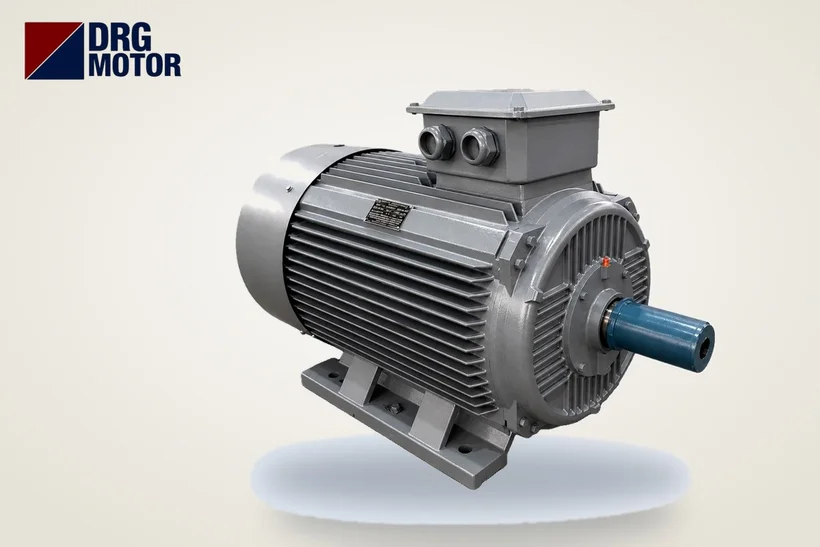
If the motor is too small for the job, move up one power size. Models mentioned in this article:
- DRG-112M-4 – 4 kW – 1500 rpm – aluminium frame
- DRG-132M-4 – 7.5 kW – 1500 rpm – cast iron frame
- DRG-160M-4 – 11 kW – 1500 rpm – cast iron frame
- DRG-160L-4 – 15 kW – 1500 rpm – cast iron frame
- DRG-180L-4 – 22 kW – 1500 rpm – cast iron frame
- DRG-200L-4 – 30 kW – 1500 rpm – cast iron frame
Click to see current prices and order these motors nowSEE PRICES →
Frequently Asked Questions
Why does the overload trip a few minutes after the motor starts running?
The current is slightly above the setting and the bimetal heats up and opens over time. The most common causes are real overload, low voltage, phase imbalance and a hot panel. Measure the current in all three phases and the voltage at the motor end under load; if the currents are balanced and above In, reduce the load or review the power selection.
Can the overload be set higher than the nameplate current?
Setting it above the nameplate current leaves the motor unprotected; the winding overheats. The setting is the nameplate current (In or In/√3 depending on the relay's position). If the relay trips at the correct setting, the problem is not the setting but the current the motor draws.
Why does a pump motor trip the overload?
In a centrifugal pump, current is largely determined by flow: if the discharge valve is fully open, line pressure is below design or a pipe has burst, the pump delivers too much flow and the motor rises above In. Impeller rubbing, overtight gland packing and voltage drop on a long supply cable also increase current. Throttling the valve and checking whether the current falls quickly shows whether the cause is the load or electrical.
Can the motor be restarted immediately after the overload trips?
The relay cannot be reset until the bimetal cools; even if it resets, running without removing the cause heats the winding once more. First go through the checks in the diagnostic flow. If it trips repeatedly, stop the motor and have a qualified electrician take measurements.
If you think the overload problem comes from motor selection, send us the nameplate values, the load and the starting method and we will determine the right power together. Phone: +90 (542) 666 11 11 · E-mail: [email protected] · Contact page. You can review all models and current information among the 120 models in our online store.