English
 Le français
 Türkçe




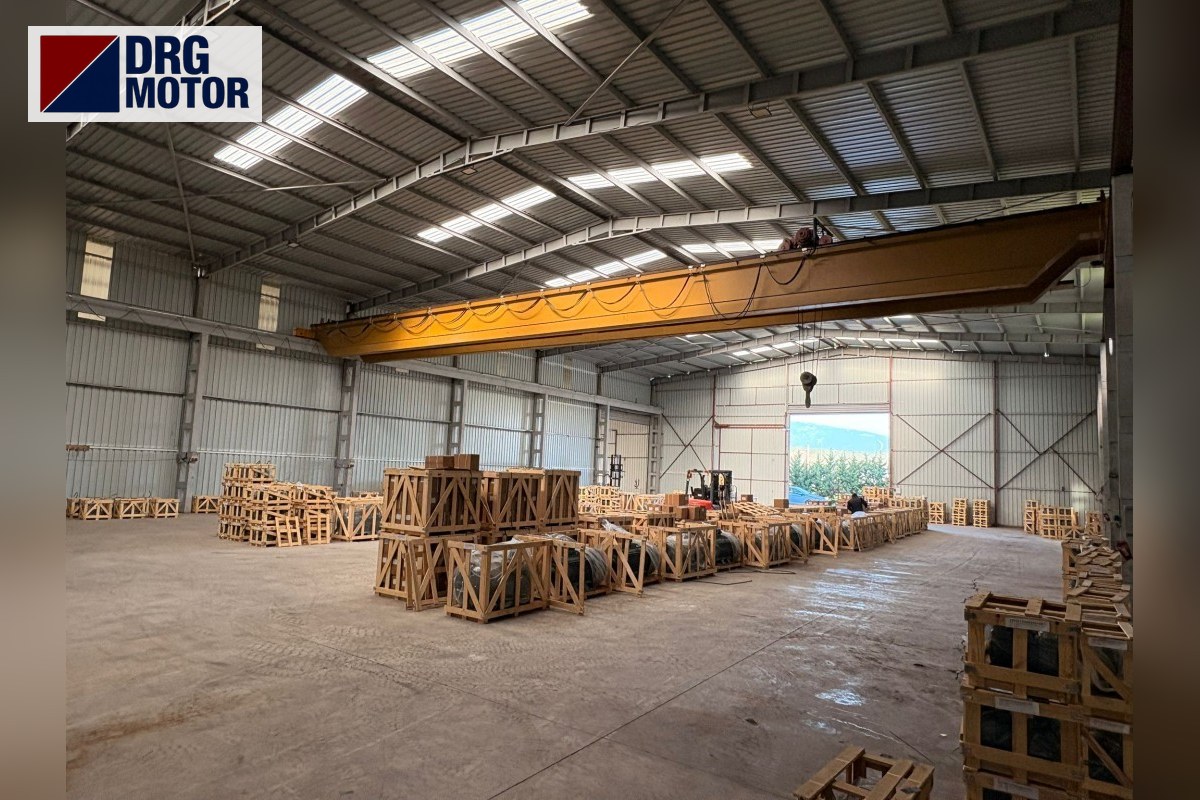

Buying an electric motor directly from the manufacturer pays off in high-volume orders of a single model, in projects that need a special shaft end, a special flange or a non-standard winding voltage, and when the delivery schedule is planned well in advance. For small, mixed and often unplanned needs across different powers, speeds and frames, buying from a supplier is more practical: one contact, one order, ready catalogue models. Four factors decide: quantity, variety, the need for a special design and access to technical documents.
To be clear: DRG Motor is not a manufacturer, it is a supplier and seller. It offers cast iron and aluminium three-phase induction motors from 0.25 to 355 kW as 120 models with their technical data on the Buy Electric Motors Online page. This article compares both routes impartially; choose the one that fits your situation.
Below you will find the strengths and limits of each route, a decision table, a real seven-motor mixed order and the documents to request when buying. The last section shows a simple calculation you can use to verify the technical data a seller gives you.
When does buying direct from the manufacturer really help?
The real strength of working directly with a manufacturer is that the product can be shaped around your specification. In return, the manufacturer expects an order size and timeline that fit its production plan. Direct purchase makes sense in these cases:
- Series machine building: a machine builder fitting hundreds of motors of the same power and frame each year gets a fixed model and a fixed technical file under a framework agreement.
- Special design: a non-standard shaft diameter or length, a second shaft end, a special flange, a voltage not in the catalogue or a special terminal box position all require the manufacturer.
- Project specification: when large plant projects require motors to be delivered with specific test and document packages, that package is defined with the manufacturer at contract stage.
- Witnessing acceptance tests: a buyer who wants to witness measurements before delivery can only arrange this with the party that builds the motor.
This route also needs care. Manufacturers often apply a minimum order quantity, put the order into their production sequence and do not go beyond their own range. A custom-designed motor also has a custom spare: when it fails, an identical replacement may not be available on the market.
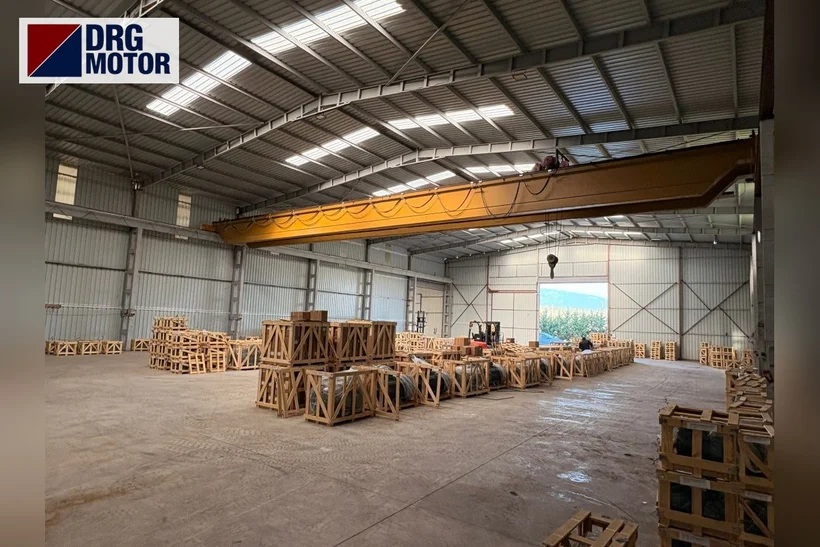
When buying from a supplier is the stronger option
A supplier brings different powers, speeds and frame types together in one catalogue and also handles small orders. This is the daily reality for maintenance and purchasing departments: a fan motor, a pump motor and a conveyor motor may all need replacing in the same month.
- Mixed needs: buying a small 0.25 kW aluminium motor and a 30 kW cast iron motor in the same order, on one invoice.
- Unplanned replacement: finding the model with the same IEC frame and the same shaft size as the failed motor in a catalogue and ordering it.
- Choosing by comparison: seeing 1000, 1500 and 3000 rpm options, aluminium and cast iron frames side by side for the same power.
- The idea of fast supply: a standard IEC motor can be supplied through the supply chain without waiting for a production slot. Lead times vary per order; see the Delivery and Shipping page for conditions.
The limit of the supplier route is equally clear: a supplier cannot change a special design outside the standard catalogue on its own. If you need a custom motor, go to the manufacturer; if you need a standard IEC motor, a supplier shortens the process.
Decision table: which criterion points to which route?
| Criterion | Direct from manufacturer | From a supplier |
|---|---|---|
| Order quantity | High volume, repeat orders | Orders starting from a single unit |
| Model variety | Limited to the manufacturer's own range | Different powers, speeds and frames in one order |
| Special design | Possible; defined by contract | Limited to standard catalogue models |
| Type of need | Planned project, series production | Breakdown replacement, maintenance, mixed needs |
| Technical contact | Manufacturer's engineering department | Seller's technical team and catalogue data |
| Document package | Scope defined in the contract | Product page, catalogue, nameplate and sales documents |
| Purchasing process | Quotation, contract, production plan | Selection from catalogue, order, dispatch |
| Spare motor | A custom design means a custom spare | A standard-size equivalent is easy to find |
If four or more rows in one column describe your situation, the route is largely decided. If the result is mixed, both routes can be combined: series motors from the manufacturer, spare and maintenance motors from a supplier.
Mixed order example: seven motors, 6 different bearings, 5 different cable entries
Consider the annual maintenance list of a food plant: a small fan, two conveyors, a mixer, two pumps and a compressor motor. The seven models below are real models in our online store, and the values are taken from the technical data on their product pages.
| Model | kW | Rated speed (rpm) | Frame | Voltage | Bearing | Cable entry | Shaft D × E (mm) |
|---|---|---|---|---|---|---|---|
| DRG-711-4 | 0.25 | 1340 | aluminium | 230/400 V (Δ/Y) | 6202-ZZ-C3 | 1 × M20×1.5 | 14 × 30 |
| DRG-90L-4 | 1.5 | 1445 | aluminium | 230/400 V (Δ/Y) | 6205-ZZ-C3 | 1 × M25×1.5 | 24 × 50 |
| DRG-112M-4 | 4 | 1450 | cast iron | 400/690 V (Δ/Y) | 6206-ZZ-C3 | 2 × M32×1.5 | 28 × 60 |
| DRG-112M-4K | 5.5 | 1460 | aluminium (compact) | 400/690 V (Δ/Y) | 6206-ZZ-C3 | 2 × M32×1.5 | 28 × 60 |
| DRG-132M-4 | 7.5 | 1460 | aluminium | 400/690 V (Δ/Y) | 6208-ZZ-C3 | 2 × M32×1.5 | 38 × 80 |
| DRG-160L-4 | 15 | 1465 | cast iron | 400/690 V (Δ/Y) | 6309-C3 | 2 × M40×1.5 | 42 × 110 |
| DRG-200L-4 | 30 | 1475 | cast iron | 400/690 V (Δ/Y) | 6312-C3 | 2 × M50×1.5 | 55 × 110 |
These seven rows alone contain 5 different cable entries, 6 different bearings, 2 different winding voltages and shaft diameters from 14 mm to 55 mm. All three frame types are on the list: aluminium, cast iron and compact aluminium (DRG-112M-4K delivers 5.5 kW in a 112M frame). Buying this variety from one manufacturer in one go requires that manufacturer's range to cover all of it and you to accept separate order conditions for each model. With a supplier, the list becomes a single order.
The voltage column also shows an important detail: in our store, motors of 3 kW and below are wound for 230/400 V and are connected in star (Y) on a 380 V network; motors of 4 kW and above are wound for 400/690 V and are connected in delta (Δ) at 380 V. Fitting the new motor without noting how the old one was connected is the most common cause of wrong connection.
Documents to request when buying: checklist
Whether you buy from a manufacturer or a supplier, you are entitled to request the following documents before ordering and at delivery. For a detailed explanation, see our article Documents to Request When Buying an Electric Motor.
- Technical data sheet: rated power, rated speed, currents at 380/400/415 V, cos φ, rated torque, Is/In, Ts/Tn and Tmax/Tn ratios.
- Nameplate data: are the power, voltage/connection, current and speed on the nameplate identical to the data sheet?
- Dimension drawing: for a B3 foot-mounted motor the A × B foot hole spacing, H shaft height and D × E shaft size; for a flange motor the flange dimensions. For our models: the DRG Motor Technical and Product Catalogue and technical drawings.
- Declaration of conformity: the document showing under which regulations and standards the motor is declared. Ask the seller in writing for its scope and the models it covers; do not rely on a verbal statement.
- Sales documents: invoice and, for online orders, the Distance Sales Agreement and the Return and Exchange Policy.
- Model code match: the model code on the invoice, on the nameplate and in your order must be the same.
Verify the seller's technical data yourself
The easiest way to tell whether a data sheet is consistent is to calculate rated torque from power and speed: T (Nm) = 9550 × P (kW) / n (rpm). If your result does not match the catalogue, either the speed or the power has been written incorrectly.
| Model | kW | Rated speed (rpm) | Calculation (Nm) | Catalogue rated torque (Nm) |
|---|---|---|---|---|
| DRG-112M-4 | 4 | 1450 | 9550 × 4 / 1450 = 26.3 | 26.3 |
| DRG-160L-4 | 15 | 1465 | 9550 × 15 / 1465 = 97.8 | 97.8 |
| DRG-200L-4 | 30 | 1475 | 9550 × 30 / 1475 = 194.2 | 194.2 |
The second check is the ratio between currents. For DRG-112M-4 the current is 8.37 A at 380 V and 7.95 A at 400 V; the ratio is 1.053, the same as the 400/380 voltage ratio. For the same power, current is expected to rise in this proportion as voltage drops. Currents for other powers are available in the Motor Current Chart tool.
Common mistakes in direct purchasing and supplier selection
- Looking only at quantity: buying series motors from the manufacturer may be right, but if nobody plans who will supply the spare of that model, the machine waits when it fails.
- Not checking the frame size: the same power may come in different frames. For example, DRG-112M-4K delivers 5.5 kW in a 112M frame while the standard model uses a 132S frame; the shaft diameter changes between 28 mm and 38 mm.
- Asking for documents after delivery: the declaration of conformity and the dimension drawing should be seen before ordering; a mismatch found later turns into a return process.
- Confusing speed with number of poles: a 4-pole motor with a synchronous speed of 1500 rpm runs slower at full load; for DRG-112M-4 the rated speed is 1450 rpm. Pulley and gearbox calculations use the rated speed.
- Not asking whether the seller is the manufacturer: both routes are legitimate; what matters is knowing who you are dealing with and requesting documents accordingly.
Motors used in this article
The product pages of the models used in the examples list rated current, cos φ, torque ratios, bearing, cable entry and B3 mounting dimensions. To narrow down your choice you can also use the Electric Motor Selection Guide.
- DRG-711-4 – 0.25 kW – 1500 rpm – aluminium
- DRG-90L-4 – 1.5 kW – 1500 rpm – aluminium
- DRG-112M-4 – 4 kW – 1500 rpm – cast iron
- DRG-112M-4K – 5.5 kW – 1500 rpm – aluminium, compact
- DRG-132M-4 – 7.5 kW – 1500 rpm – aluminium
- DRG-160L-4 – 15 kW – 1500 rpm – cast iron
- DRG-200L-4 – 30 kW – 1500 rpm – cast iron
Click to see current prices and order these motors nowSEE PRICES →
Frequently Asked Questions
Should an electric motor be bought from the manufacturer or from a supplier?
If you need high volumes of one model or a special design, working directly with the manufacturer makes sense. For small, mixed or breakdown-driven needs across different powers and frames, buying from a supplier is more practical. Both routes can also be used together in the same company.
Is DRG Motor an electric motor manufacturer?
No. DRG Motor is a supplier and seller. It offers cast iron and aluminium three-phase induction motors from 0.25 to 355 kW, with their technical data, in its online store and catalogue.
Which documents should you request when buying an electric motor?
Technical data sheet, nameplate data, dimension drawing, declaration of conformity, invoice and, for online orders, the distance sales agreement and return conditions. The model code on the invoice, the nameplate and the order must match.
How do you check the torque value on a motor nameplate?
With the formula T = 9550 × P / n. For DRG-112M-4, rated 4 kW at 1450 rpm, the result is 26.3 Nm; the catalogue value is 26.3 Nm.
If you have a mixed motor list, send us the model codes or a photo of the old motor's nameplate and we will identify the equivalent model with the same IEC frame and shaft size together. Phone: +90 (542) 666 11 11 · E-mail: [email protected] · Contact. All models and current ordering options are on the Buy Electric Motors Online page.