English
 Le français
 Türkçe




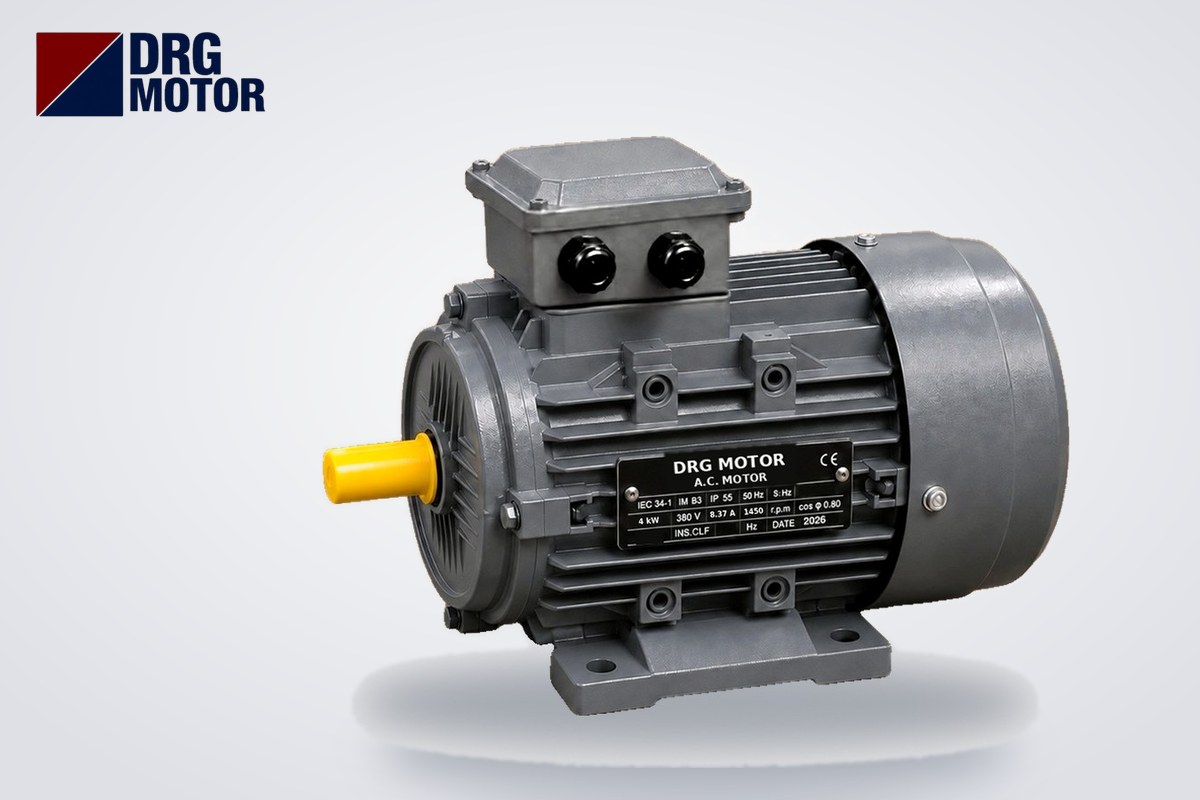

If an electric motor trips its fuse, the cause is either a genuine short circuit in the circuit or a fuse that cannot carry the motor's starting current. For example, a 4 kW, 1500 rpm three-phase motor draws 8.37 A at full load on 380 V, but on direct-on-line starting this rises to 7.8 times that value, about 65 A; a fuse whose magnetic trip threshold is below this value will trip on every start even if the motor is healthy. If the trip happens after the motor has been running for a while, it is usually the overload relay rather than the fuse, and it indicates overload.
So when someone says "the fuse blew", you first need to establish which protective device opened, when it opened (at start, while running, or the moment power was applied) and whether the motor itself or the cable is faulty. This article helps you make that distinction step by step. If the faulty motor has to be replaced, you can find models with the same power and frame on the Buy Electric Motors Online page.
Safety warning: Measurements inside the panel, winding insulation tests and changes to terminal connections are a job for a qualified electrician. Repeatedly resetting a tripped fuse or breaker without finding the cause endangers the cable, the motor and the panel in a circuit with a short.
Did the Fuse, the Overload Relay or the RCD Trip?
These three devices respond to different faults; knowing which one opened is half the diagnosis. The lever, indicator window or test button of the tripped device in the panel usually shows which one opened; note this before resetting.
| Protective device | Protects against | Typical tripping moment | First suspect |
|---|---|---|---|
| Fuse / circuit breaker (magnetic) | Short circuit, very high inrush current | The moment power is applied or the first seconds of starting | Phase-to-phase short circuit, fuse undersized for the starting current |
| Overload relay / motor protection breaker (thermal) | Overload, phase loss | After the motor has run for a while or during a long start | Excess load, jammed machine, lost phase, wrong setting |
| Residual current device (RCD) | Current flowing to earth (insulation) | The moment power is applied, in humid weather or after washdown | Winding-to-frame leakage, wet terminal box, damaged cable |
RCD tripping and insulation monitoring are covered separately in the article Motor Leakage Current and Insulation Monitoring (IMD); here we only cover the cases that are confused with fuse tripping.
How Does Starting Current Trip a Fuse? Worked Examples
At start an induction motor draws several times its rated current because the rotor is stationary. This ratio (Is/In) is stated in the motor catalogue. If the magnetic trip threshold of the fuse or breaker is below this starting current, the motor will trip at start even if it is healthy. The values below are calculated from DRG catalogue data for 380 V (Is = In × Is/In; with star-delta starting, the current drawn from the supply is about one third of Is):
| Model | Power / speed | 380 V connection | In (A) | Is/In | DOL starting Is (A) | Star-delta ≈ (A) |
|---|---|---|---|---|---|---|
| DRG-90L-2 | 2.2 kW / 2895 rpm | Star | 4.58 | 7.6 | 34.8 | — |
| DRG-112M-4 | 4 kW / 1450 rpm | Delta | 8.37 | 7.8 | 65.3 | 21.8 |
| DRG-132S-4 | 5.5 kW / 1460 rpm | Delta | 11.2 | 7.9 | 88.5 | 29.5 |
| DRG-160M-4 | 11 kW / 1465 rpm | Delta | 21.5 | 7.7 | 165.6 | 55.2 |
Because the DRG-90L-2 has a 230/400 V winding, it is connected in star on a 380 V supply and is not suitable for star-delta starting; hence the empty last column. Motors with 400/690 V windings run in delta at 380 V and are suitable for star-delta starting.
In practice, check this: confirm from the manufacturer's tripping curve that the motor protective device (fuse type, breaker curve, magnetic setting of the motor protection breaker) can carry the starting current for the duration of the start without tripping. A fast-acting breaker chosen for domestic lighting circuits is a common cause of "trips on every start" in motor circuits. You can use the overload, fuse and contactor selection tool for selection and the star-delta starting tool for the starting method.
Causes and the Diagnostic Step for Each
1. Phase-to-phase short circuit (in the winding or cable)
Symptom: The fuse trips the moment power is applied and the motor never starts turning; sometimes there are burn marks or a smell in the terminal box. Diagnosis: Switch off and lock out, disconnect the motor cable at the terminals. The electrician first tests the cable, then the motor separately with an insulation tester (megger). On the motor, the U-V, V-W and W-U winding resistances are measured with a multimeter; the three values should be close to each other. One clearly lower reading indicates an inter-turn short.
2. Winding-to-frame leakage
Symptom: Usually the RCD trips; if the leakage reaches the frame through a direct, solid path and the earthing is good, the fuse can trip as well. It is common at the first start after humidity, washdown or a long standstill. Diagnosis: The insulation resistance between each phase and the frame (earth) is measured. If the value is below the limit of the motor manufacturer or the relevant standard, the motor must not be run. A wet terminal box is dried and re-measured; if the value does not improve, the winding is damaged.
3. Locked rotor or jammed load
Symptom: The motor hums but does not turn, or turns very slowly; the overload relay or fuse opens within seconds. With a locked rotor the current stays at starting-current level; according to the table above, for the 4 kW DRG-112M-4 this means about 65 A. Diagnosis: Switch off, disconnect the coupling or belt and turn the shaft by hand. If the shaft is free, the problem is in the machine (jammed pump impeller, overloaded conveyor, seized gearbox); if the shaft does not turn, the bearing may have broken up or the rotor may be rubbing the stator. For bearing symptoms see Motor Bearing Failure Symptoms and Causes.
4. Phase loss
Symptom: The motor does not start, or its sound changes while running, it heats up and the overload relay trips. A fuse blowing on a single phase also leaves the motor on two phases, so a "only one fuse blew" situation should not be underestimated. Diagnosis: The three phase currents are measured with a clamp meter; if one phase carries no current, check the fuse, contactor contact or cable connection. For current values see the motor current chart tool.
5. Overload
Symptom: The motor runs, the overload relay opens after a while, and it runs again after cooling down. Diagnosis: The current is measured while running and compared with the nameplate current. If the measured current exceeds the nameplate current, either the machine is overloaded or the motor power is too small for the application.
Wrong Star/Delta Connection Also Trips the Fuse
If the nameplate voltage and the terminal connection do not match, the motor either draws excessive current or cannot start:
- Connecting a 230/400 V motor in delta at 380 V: Each winding receives more than its design voltage; the iron saturates and the current rises sharply. The result is a fuse or overload trip and, if it lasts, a burnt winding. Motors like the DRG-90L-2 must be connected in star at 380 V.
- Connecting a 400/690 V motor in star at 380 V: The windings stay at low voltage and the torque drops considerably. The motor cannot start under load, stays at starting current for a long time and trips the overload relay or fuse. The DRG-112M-4, DRG-132S-4 and DRG-160M-4 run in delta at 380 V.
- Changeover error in a star-delta panel: If the changeover from star to delta is made too early, the motor switches to delta before it has accelerated and a second high current surge occurs; check the timer relay setting.
Comparing the terminal connection with the nameplate is one of the quickest checks when a fuse trips; always do it with the power off.
Checklist for a Motor That Trips Its Fuse
- Which device tripped: fuse, overload relay, motor protection breaker, RCD?
- When did it trip: the moment power was applied, the first seconds of starting, after running for a while?
- Does the nameplate voltage (230/400 V or 400/690 V) match the terminal connection (Y/Δ)?
- Does the tripping characteristic of the fuse/breaker carry the motor's starting current (In × Is/In)?
- Are all three phase voltages present in the panel, has one fuse blown on its own?
- Does the problem persist with the cable disconnected from the motor (cable fault)?
- Are the U-V-W winding resistances close to each other?
- Is the phase-to-frame insulation resistance sufficient?
- Does the shaft turn freely by hand, does the motor start with the load disconnected?
- Is the current measured while running below the nameplate current?
When Should Motor Replacement Be Considered?
If the cable, connection and protective device are correct but the winding resistances are unbalanced, the phase-to-frame insulation does not recover after drying, or burn marks are visible on the stator, the problem is in the motor itself. In that case, replacement with a motor of the same power, speed, frame and mounting arrangement can be done without changing the coupling or base frame. If a new motor is fitted without removing the cause of the fault (overload, wrong connection, humidity), the same outcome will repeat. For general fault types see Induction Motor Faults and Their Symptoms.
Motors in This Power Range
- DRG-90L-2 – 2.2 kW – 2895 rpm – 90L aluminium
- DRG-112M-4 – 4 kW – 1450 rpm – 112M aluminium
- DRG-112M-4K – 5.5 kW – 1460 rpm – 112M aluminium (compact)
- DRG-132S-4 – 5.5 kW – 1460 rpm – 132S cast iron
- DRG-160M-4 – 11 kW – 1465 rpm – 160M cast iron
Click to see current prices and order these motors nowSEE PRICES →
Frequently Asked Questions
Why does the fuse blow when the motor starts?
If it trips at the moment of starting, the fuse's trip threshold is usually below the starting current or there is a wrong Y/Δ connection. If it trips after running for a while, the overload relay has opened due to overload or phase loss. If it trips the instant power is applied, a short circuit is the first suspect.
Why does a motor trip the RCD?
The insulation between the winding and the frame has weakened, water has entered the terminal box or the cable is damaged. An electrician needs to perform a phase-to-frame measurement with an insulation tester.
What happens if a three-phase motor blows one fuse?
The motor is left on two phases. If stationary it cannot start; if running it draws more current and heats up, and a correctly set overload relay should protect it. Find the cause before replacing the blown fuse.
Is a motor that trips the fuse burnt out?
Not always. An undersized fuse, a wrong connection or a jammed load also trips the fuse. If the winding resistances are balanced and the insulation resistance is sufficient, the motor is most likely healthy.
When a replacement is needed, you can choose the motor matching your nameplate values from the 120 models in our online store, or contact us by phone on +90 (542) 666 11 11, by e-mail at [email protected] or via our contact page.