English
 Le français
 Türkçe




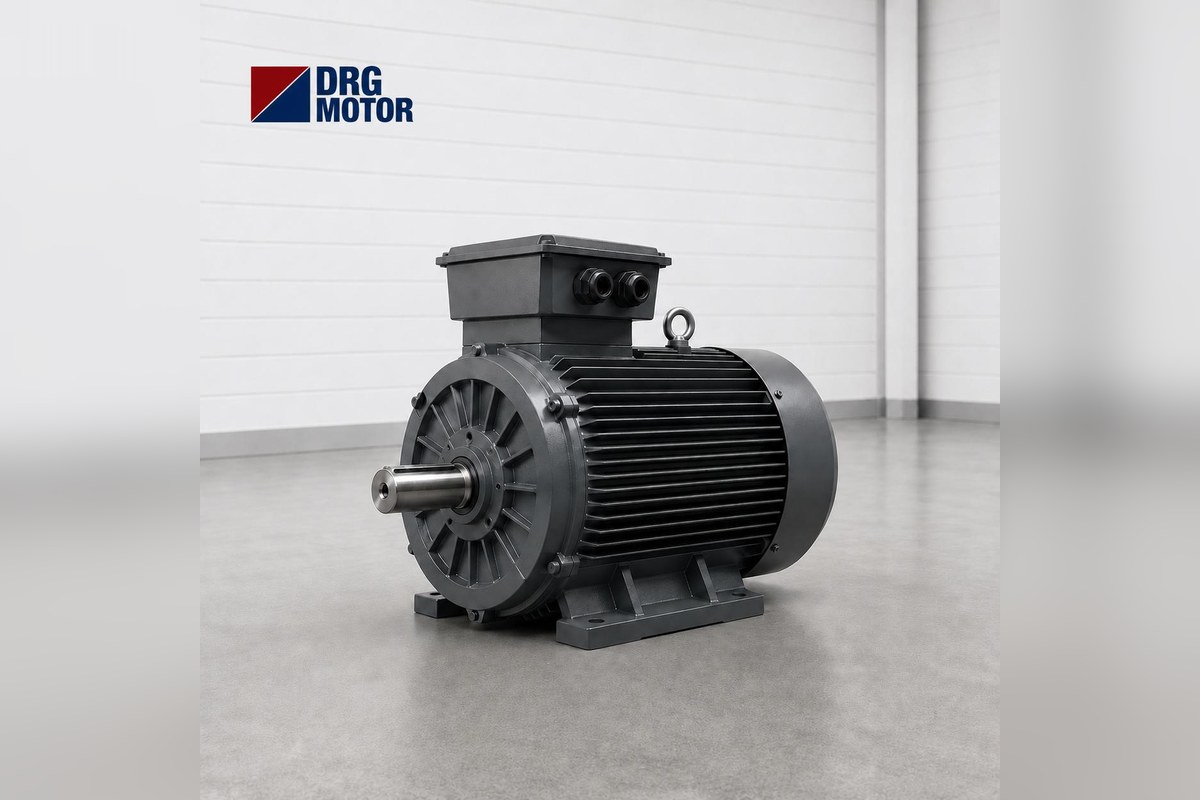

The nameplate of a 100 HP (75 kW) motor reads 400/690 V (Δ/Y): the motor is connected in delta (Δ) on a 400 V network and in star (Y) on a 690 V network. Because most factories in Turkey are supplied at 400 V (formerly called 380 V), the motor runs in delta and can therefore be started star-delta. On a 690 V network the motor already runs in star, so star-delta is not possible. The 4-pole DRG-280S-4 draws 129 A at 400 V and about 74.8 A at 690 V. For the models in this rating and current prices, see our Buy Electric Motors Online page.
At this rating a connection error has serious consequences: a motor left in star on a 400 V network delivers only part of its power under load, its current rises and the winding heats up; a motor connected in delta on a 690 V network sees overvoltage on its winding. Terminal links must be set for the network by a qualified electrician, and the nameplate must be compared with the network voltage before first energisation.
How to Read a 400/690 V Nameplate: Connection by Network
| Network voltage | Winding connection | Line current (DRG-280S-4) | Star-delta possible? |
|---|---|---|---|
| 380 V | Δ (delta) | 136 A | Yes |
| 400 V | Δ (delta) | 129 A | Yes |
| 415 V | Δ (delta) | 125 A | Yes |
| 690 V | Y (star) | ≈ 74.8 A | No |
The 690 V current is an approximate value obtained by multiplying the 400 V value by the voltage ratio (400/690); nameplate currents are given for 380, 400 and 415 V. The rule is simple: the lower voltage on the nameplate is the delta voltage, the higher one the star voltage. For star-delta starting, the motor must run in delta at the network voltage.
How are the links placed in the terminal box?
On a six-terminal board, the top row carries U1, V1, W1 and the bottom row W2, U2, V2. In a delta connection the three links are fitted vertically (U1–W2, V1–U2, W1–V2) and the network phases go to the top row. In a star connection W2, U2 and V2 on the bottom row are joined by a single horizontal link, with the phases again on the top row. On a motor that will run with a star-delta panel, no links are fitted at all: all six ends are taken to the panel by two separate cables and the contactors make the connection. Connecting a motor with links fitted to a star-delta panel causes a short circuit at the first changeover to delta. So when you receive the motor, open the box and check the link position against the starting method you will use.
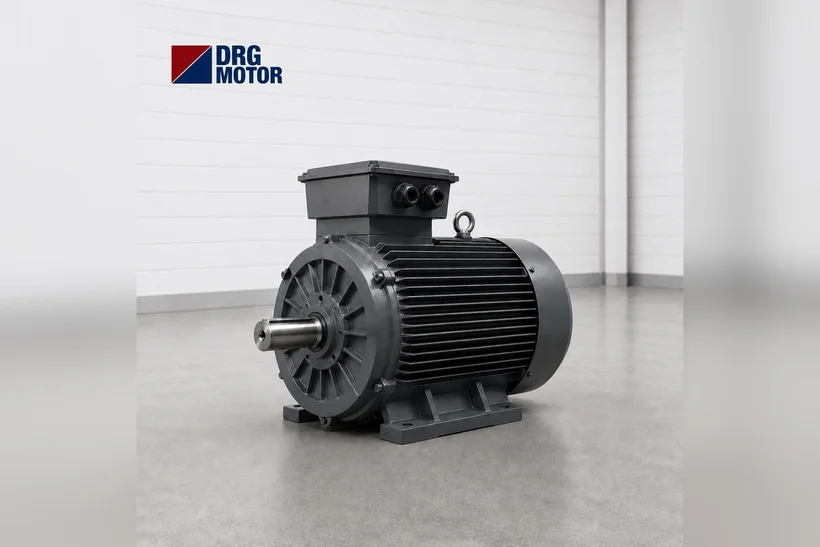
Current and Starting Values of the 75 kW Models
| Model | Rated speed | Current 400 V | Current 690 V (calc.) | Is/In | Ts/Tn | Starting torque | Store |
|---|---|---|---|---|---|---|---|
| DRG-280S-2 | 2975 rpm | 127 A | ≈ 73.6 A | 7.1 | 1.8 | 433.4 Nm | See Prices |
| DRG-280S-4 | 1486 rpm | 129 A | ≈ 74.8 A | 6.9 | 2.0 | 964.0 Nm | See Prices |
| DRG-315S-6 | 985 rpm | 136 A | ≈ 78.8 A | 6.6 | 2.0 | 1454.4 Nm | See Prices |
On all three models the starting current at 400 V is about 890–902 A, i.e. around 6.9 times rated current. The 2-pole model's starting torque ratio (1.8) is lower than the others; the difference is noticeable on high-inertia loads. For comparison with other ratings, see our 55, 75 and 90 kW motor current article.
Starting kVA: Three Starting Methods Side by Side
On large crushers and mills, the real constraint is the apparent power the motor draws from the network at start. The DRG-280S-4 draws about 89 kVA while running; on a direct start this rises to 617 kVA. The table below compares three methods for the same motor (S = √3 × U × I, approximate values):
| Starting method | Starting line current | Starting apparent power | Starting torque | Ratio to rated torque |
|---|---|---|---|---|
| Direct-on-line, 400 V (Δ) | ≈ 890 A | ≈ 617 kVA | 964.0 Nm | 2.0 |
| Star-delta, 400 V (Y step) | ≈ 297 A | ≈ 206 kVA | ≈ 321.3 Nm | 0.67 |
| Direct-on-line, 690 V (Y) | ≈ 516 A | ≈ 617 kVA | 964.0 Nm | 2.0 |
Note: at 690 V the direct-start current is smaller, but the starting kVA and its effect on the network are the same as a 400 V direct start; raising the voltage does not reduce starting power, it only lowers cable and switchgear current. Star-delta, on the other hand, cuts starting power and torque to one third together. Calculate your plant's values with the star-delta starting tool.
When Does a 690 V Network Make Sense?
690 V is used mainly in mines, large crushing and screening plants, and sites with their own medium-voltage transformer and many large motors. The gain is on the current side: the same 75 kW motor draws about 74.8 A at 690 V. According to the example cable table (copper, PVC, ~30°C, 1.25 factor), 70 mm² is sufficient in capacity for 161.2 A at 400 V, and 25 mm² for 93.5 A at 690 V. On long runs, voltage drop also shrinks proportionally. The cost is 690 V-rated switchgear, a separate transformer winding and giving up star-delta; on this network starting current is usually limited by a soft starter or a drive. Check cable size for your own distance with the motor cable size calculator. Our 22 kW star-delta article, which explains contactor selection on a smaller rating, shows the same logic step by step.
75 kW Motors on Large Crushers and Mills
Cone and impact crushers
Crushers start empty, but rotor and flywheel inertia is high; the longer the run-up, the more the winding heats while the motor waits with insufficient torque in the star step. On the 4-pole model, torque in the star step is about 321.3 Nm, i.e. 0.67 times rated. The timer should switch to delta as the motor approaches rated speed; an early changeover creates a second current surge.
Ball mill
A ball mill starts loaded and needs high torque at start. In star-delta, starting torque below rated torque is often insufficient, so mills prefer direct starting (if the transformer allows) or a torque-controlled starting method. The 6-pole DRG-315S-6, with 727.2 Nm rated and 1454.4 Nm starting torque, reduces the gearbox ratio on low-speed drives; however it moves up to the 315S frame (85×170 mm shaft, 6319-C3 bearing). See also our stone crushing plant motors page.
Checklist Before Connecting a 75 kW Motor
- Measure the network voltage and compare it with the nameplate: Δ for 400 V, Y for 690 V.
- If you plan star-delta, confirm the motor runs in delta at the network voltage (400 V network + 400/690 V nameplate).
- In star-delta two separate cables run to the motor, each carrying the phase current: 129 / √3 ≈ 74.5 A.
- Taking the transformer rating and other loads into account, check that the starting kVA (≈ 617 kVA) is acceptable.
- Determine whether the load starts empty or loaded; on a loaded start, star-delta torque may be insufficient.
- Prepare glands that fit the 2 × M63×1.5 entry on the terminal box.
- At first start, measure the run-up time and the current surge at the changeover to delta.
What Determines the Price of a 100 HP Motor?
At 75 kW, the main technical price factors are the frame (280S for 2 and 4 poles, 315S for 6 poles), bearings (6314-C3, 6317-C3, 6319-C3), mounting type (B3, B35) and protection class. All models in this rating have cast iron frames. Current prices are on the product pages and in our online store.
Motors in This Rating (100 HP / 75 kW)
- DRG-280S-2 – 75 kW – 2975 rpm – 280S cast iron
- DRG-280S-4 – 75 kW – 1486 rpm – 280S cast iron
- DRG-315S-6 – 75 kW – 985 rpm – 315S cast iron
Click to see current prices and order these motors nowSEE PRICES →
Frequently Asked Questions
Is a 75 kW motor connected in star or delta?
A motor with a 400/690 V nameplate is connected in delta on a 400 V network and in star on a 690 V network. On Turkey's standard 400 V network, the running connection is delta.
How many amps does a 100 HP motor draw?
127–136 A at 400 V and 134–143 A at 380 V. On a 690 V network the value drops to about 74–79 A.
How many kVA does a 75 kW motor need?
About 88–94 kVA while running; briefly about 617–625 kVA on a direct start. In star-delta, starting power drops to about one third.
Will a 690 V motor run on a 400 V network?
A motor with a 400/690 V nameplate will; it is connected in delta at 400 V. A motor rated only 690/1200 V, however, cannot deliver full power on a 400 V network; confirm the voltage before ordering.
For help selecting a model for your crusher, mill or 690 V plant, contact us at +90 (542) 666 11 11 or [email protected], or use our contact page. For all ratings, visit Buy Electric Motors Online.