 English
 Le français
 Türkçe

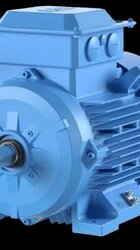
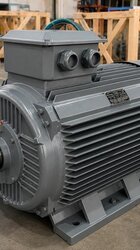
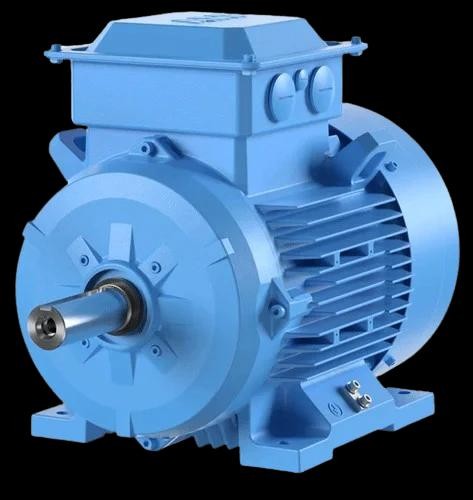

The majority of failures that take an electric motor out of service start not in the windings or the control board, but in its mechanical heart: the bearings. A bearing is the part that lets the shaft turn quietly and without vibration, yet it also wears out over time. That is why, when a bearing begins to fail, the motor usually warns you in advance: a faint hum, a temperature climbing above the nameplate value, a darkening of the grease, or a subtle vibration felt in the frame. In this article we cover the causes of bearing failure in electric motors, the early warning signs, diagnosis through vibration and temperature, and how most of these failures can be prevented, using real field examples. Our goal is to help maintenance teams classify a motor as "still running but about to stop" using their ears and a few simple measurements.
Why the bearing is a motor's most critical wear part
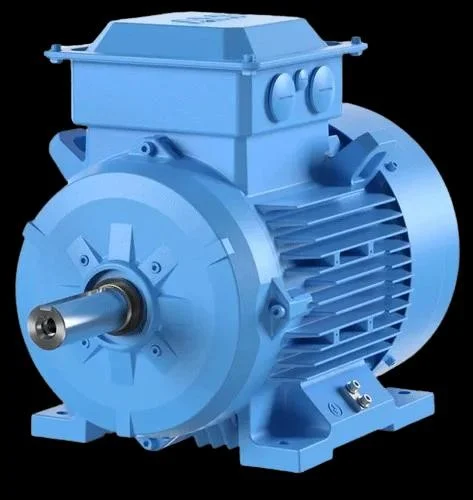
In an induction motor the rotor is supported at both ends by bearings. These bearings carry both the weight of the rotor and the radial and axial forces coming from drive elements such as belt-pulley arrangements, couplings or fans. While the stator has no moving parts, the bearings operate under rolling contact through millions of revolutions every day. Naturally, the life of a motor is most often determined not by the winding but by the bearing. For this reason, the subject of extending electric motor bearing life sits at the center of maintenance planning.
The anatomy of a bearing: where damage occurs
A ball bearing consists of four basic parts: the outer race, the inner race, the rolling elements (balls or rollers) and the cage that holds them at equal spacing. Damage begins in one of these four regions and usually leaves a vibration signature specific to that location. Because the inner race turns with the shaft, it takes load at changing points; the outer race, being stationary, always takes load in the same zone. This difference is precisely what makes it possible to distinguish which part is damaged from the vibration spectrum.
The root causes of bearing failure
Almost no bearing failure is truly "spontaneous." Behind every failed bearing there is a root cause, and unless that cause is removed, the new bearing soon shares the same fate. Below we list the root causes most frequently encountered in field practice.
Insufficient or incorrect lubrication
According to field data, the single largest cause of bearing failure is lubrication error. Too little grease, too much grease, the wrong type of grease, or grease that has reached the end of its life all lead to metal-to-metal contact. Too little grease causes the rolling elements to run dry, while too much grease causes friction heating and stresses the seals. To apply the right interval and the right amount, the rules in the motor bearing greasing and lubrication intervals guide are essential.
Contamination and moisture ingress
When dust, chips, water droplets and chemical vapors seep in through the seal or the grease path, they form an abrasive paste on the rolling surfaces. This opens micro-scratches and early fatigue pits on the surface. In dusty and wet environments, bearing sealing becomes as critical as the protection class of the motor itself.
Overload and incorrect belt tension
A motor pulling a heavier load than it can handle also continuously stresses its bearings beyond the limit. In belt-pulley applications, an over-tensioned belt places a disproportionate radial load on one side of the bearing and rapidly fatigues the race on that side. To select the load correctly, the real torque and speed requirement of the application must be properly calculated during the motor selection stage.
Faulty mounting and misalignment
Driving the bearing onto the shaft with a hammer, forcing it onto the inner race with impact, or failing to center the coupling are leading causes of mounting-related failure. A misaligned coupling applies a constantly changing bending force to the rotating shaft; over time this force leaves "star"-patterned wear marks on the bearing.
Electrically induced bearing damage
Particularly in motors fed by a frequency inverter (drive), the common-mode voltage accumulating on the shaft discharges through the bearing. These small electrical discharges create microscopic weld pits and groove-shaped "fluting" marks on the rolling surface. Unless proper grounding, an insulated bearing or a shaft grounding brush is used, even a mechanically flawless bearing can fail quickly for electrical reasons.
Vibration and resonance
Vibration transmitted from neighboring machines, an unbalanced fan or coupling stresses the motor even when it is at rest. In a motor that runs little but sits under vibration, the rolling elements remain at the same point and develop false brinelling.
Early signs: the signals the motor gives
The good news is this: a bearing rarely locks up all at once. The degradation process usually takes weeks or even months, and throughout this time it gives signals through four main channels: sound, temperature, vibration and grease condition. The table below pairs these signs with their likely causes.
| Symptom | How to notice it | Likely cause |
|---|---|---|
| Noise / hum | Regular ticking, buzzing or metallic friction sound; varies with speed | Pitting on rolling surface, insufficient grease, foreign particle |
| Excessive heating | Bearing area noticeably above nameplate temperature, too hot to touch | Too much/little grease, overload, preload error, friction |
| Increased vibration | Shaking felt in the frame; a peak at specific frequencies in measurement | Race/element damage, misalignment, loose housing |
| Grease darkening | Darkening of grease, metallic glint, burnt smell | Metal wear, excessive heat, contamination |
| Axial play | Noticeable clearance when the shaft is pushed by hand | Advanced wear, increased clearance, element loss |
Reading symptoms in combination
Deciding based on a single symptom can be misleading. For example, slight heating on its own may simply result from a normal load increase. But if heating, grease darkening and increased vibration appear together, the picture is clear: the bearing has begun to fail. An experienced technician reads the symptoms not one by one but in relation to each other, and so distinguishes a false alarm from a real fault.
The language of sound: what each noise means
An experienced maintenance technician learns a great deal just by listening to a motor. A regular tick synchronized with the speed usually points to a localized fault on the race path. A continuous, high-pitched whine comes from dry grease, while a coarse, irregular rasp comes from a foreign particle that has entered. This intuitive diagnosis becomes more reliable with a listening rod or a simple stethoscope.
What temperature tells you
Bearing temperature is the most easily measured indicator of bearing health. In a healthy motor, the bearing area stabilizes at a certain margin above ambient temperature and stays constant. A continuously climbing temperature warns of either a lubrication problem or increasing friction. Taking a weekly reading with a non-contact infrared thermometer and tracking the trend prevents sudden failures.
Diagnosis through vibration: the strongest early warning
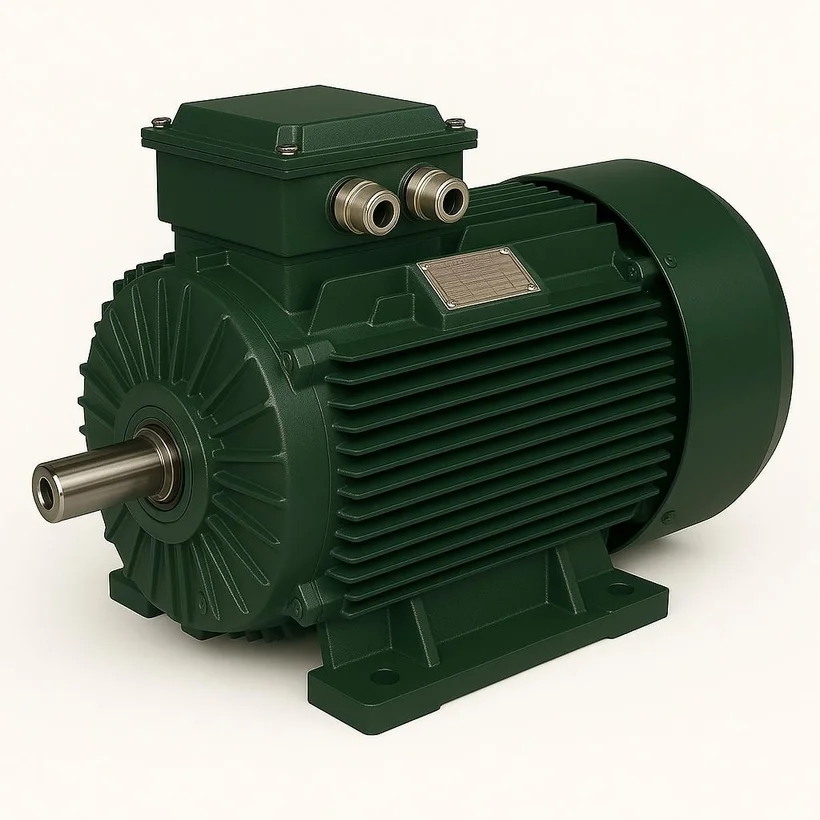
The method that catches bearing failure earliest is vibration measurement. When a bearing begins to fail, it produces vibration at certain characteristic frequencies depending on the peripheral speed and geometry. These frequencies must be seen not by eye but in the frequency spectrum. The article on motor vibration analysis and the FFT spectrum explains in detail how to read this spectrum.
Characteristic bearing frequencies
A bearing has four fundamental fault frequencies: outer race, inner race, rolling element and cage frequency. Each is calculated from the geometry of the bearing and the shaft speed. Peaks that appear at these frequencies and their harmonics in the spectrum directly show which part is damaged. For example, a growing peak at the outer race frequency points to pitting on the stationary outer race.
Envelope analysis
Early-stage bearing damage produces very high-frequency, low-amplitude impacts; these are lost in the noise of the raw spectrum. A technique called envelope analysis reveals the repetition pattern of these impacts, catching the damage weeks before any visible symptom appears. This is why continuously tracking the vibration trend on critical motors is far more valuable than a single annual measurement.
Continuous monitoring: wireless sensors
Although manual measurement is valuable, on critical production motors tracking the trend around the clock is much safer. A wireless vibration sensor for condition monitoring attached to the motor continuously records vibration and temperature and raises an alert when a threshold is exceeded. This approach forms the foundation of electric motor predictive maintenance.
Oil analysis and magnetic plugs
Metal particles in the grease and oil are physical evidence of bearing wear. Taking periodic grease samples, or placing a magnetic plug in the oil circuit to monitor the accumulated debris, shows directly what is happening inside. Increasing iron particles and color darkening in the grease can give warning even before vibration starts to climb.
What happens as the fault progresses
Bearing damage usually progresses in four stages. In the first stage there are only micro-impacts visible in envelope analysis; the motor runs quietly. In the second stage the characteristic frequencies become prominent in the spectrum. In the third stage audible noise and measurable temperature rise begin. In the final stage, even if the amplitude drops, the clearance grows, the shaft plays and the risk of sudden lockup arises. This stage map allows maintenance planning to be built around the question "when should I intervene."
Which symptom calls for an immediate stop
Not all symptoms carry the same urgency. While grease darkening and slight temperature rise can be deferred to a planned maintenance, a bearing area too hot to touch, a stomach-churning metallic noise and noticeable shaft play require an immediate stop. Continuing to run at this point can cause the bearing to disintegrate, the rotor to rub against the stator, and turn the repair into far more expensive winding damage.
Repair or replace
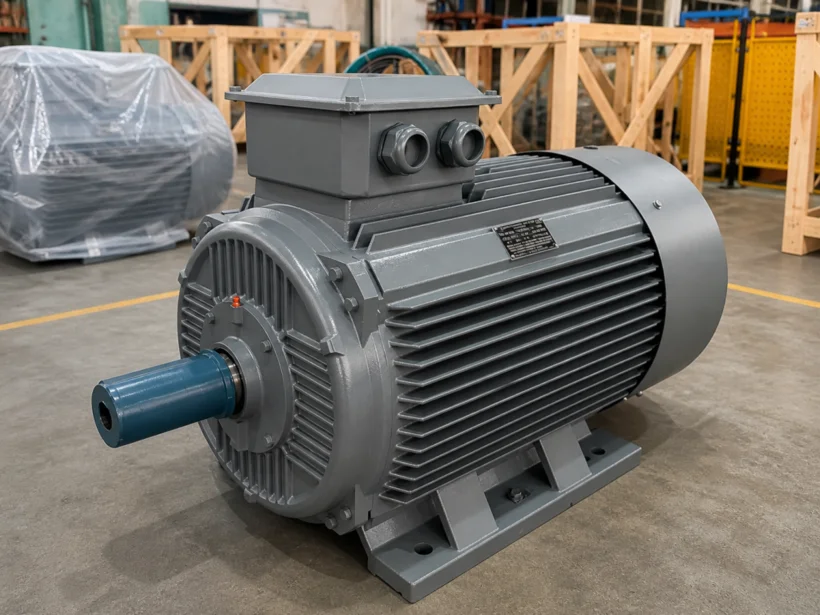
When a bearing fault is detected, the decision is clear: a bearing is not repaired, it is replaced. However, the most common mistake during replacement is to swap only the bearing and skip the root cause. When fitting a new bearing, the dimensions of the shaft and housing seat should be checked, a worn seat corrected, the seals renewed, and a heated or press-fit method used during mounting. The same bearing failing every six months is almost always the sign of an unchanged root cause.
Storage and shelf life
Interestingly, even spare bearings that have never been used can deteriorate. Bearings that rust in a damp store, develop false brinelling on a vibrating shelf, or whose grease life has expired are already damaged from the first day they are fitted. Storing spare bearings dry, vibration-free and in their original packaging, and tracking their shelf life, eliminates this silent source of failure.
Correct bearing selection reduces failure from the start
Some failures begin with the wrong bearing type. Conditions such as high axial load, high speed or impact operation require different bearing types. The article on electric motor bearing types and selection guides the choice suited to the application.
Prevention: ways to stop failure at the source
A very large proportion of bearing failures is preventable. Applying the right type and amount of grease at the right interval, mounting with the proper tool (press or heating), aligning the coupling correctly, setting belt tension by measurement, and never neglecting grounding in inverter-fed systems all extend life dramatically.
A culture of regular measurement
The most effective prevention tool is regular, recorded measurement. Recording weekly temperature, monthly vibration and periodic grease checks in a simple chart makes the trend visible. When the trend starts to turn upward, intervention turns a sudden failure into a planned maintenance.
Special precautions in inverter-fed systems
Electrical bearing damage is a serious reality in motors fed by a frequency inverter. Here prevention is not mechanical but electrical: the motor must be well grounded, shielded cable used, and where necessary an insulated bearing or shaft grounding brush fitted. Without these measures, a mechanically flawless motor fails early purely because of how it is supplied. As inverter use becomes more widespread, the rate of such damage also rises.
Linking symptom tracking to instruments
Moving from guessing bearing health to measuring it is the maturing of maintenance. Even a simple vibration pen, an infrared thermometer and regular grease checks make a big difference. On more critical motors, to monitor the electrical side as well, combining mechanical and electrical data with motor power and efficiency measurement narrows down the source of a fault much faster.
Grease incompatibility caution
On the prevention side, a frequently overlooked point is the mixing of different grease types. When two greases with different consistency and base oil come together, they may chemically separate, lose their lubricating property and leave the bearing running dry. Knowing the type of the previous grease at the time of replacement and continuing with a compatible product eliminates a very common but hard-to-spot source of failure.
Controlling environmental conditions
The environment in which the motor operates is the hidden determinant of bearing life. Preventing dust, water and excessive heat from reaching the motor, selecting the right protection class and using additional sealing when needed protects the bearing from external factors. High-efficiency motors with a low operating temperature keep the bearing area cool too, extending grease life; in this respect high-efficiency electric motors provide an indirect maintenance advantage.
The value of maintenance records
When every grease change, every bearing renewal and every failure cause is recorded, a failure map specific to that facility is formed over time. A recurring bearing failure on the same motor is most often the herald of an unresolved root cause (misalignment, overload, electrical discharge), and it is hard to notice without these records.
DRG Motor at your side for bearing reliability
At DRG Motor, correct bearing selection, quality lubrication and suitable seat design are at the center of the design of the AC induction motors we manufacture, because the real life of a motor is most often determined by its bearing. If you are dealing with recurring bearing failures, unexpected stoppages, or the difficulty of judging which symptom is serious in your facility, contact us for a motor and maintenance approach suited to your application. The DRG Motor expert team is at your side to keep the mechanical heart of your motor sound. On this subject you may also review our industrial electric motors and predictive maintenance content.