 English
 Le français
 Türkçe

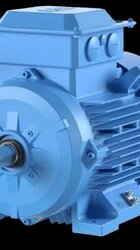
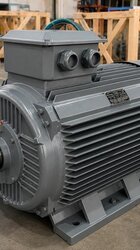
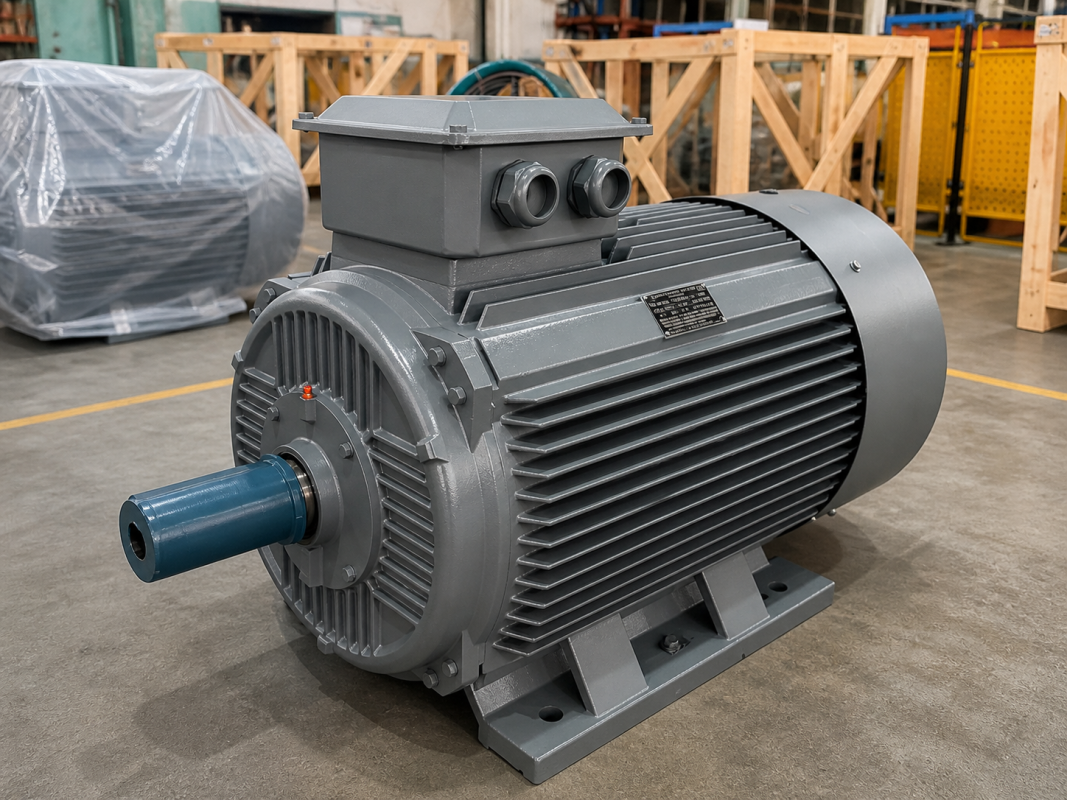

When an electric motor runs, the job of the winding insulation is not only to carry energy; it is also to separate the live conductors from the frame, and the frame from the people who touch it. As this insulation layer weakens over time due to moisture, heat, vibration and chemical attack, it becomes inevitable that current finds a path we never intended. This unwanted current is called leakage current, and the systems that continuously watch over the integrity of the insulation are called insulation monitoring devices (IMD). In this article we examine in detail how leakage current arises, why earth leakage is a vital risk, the difference between a residual current device (RCD) and an insulation monitoring device, and how this safety layer is handled in DRG's IE3/IE4/IE5 class asynchronous motors.
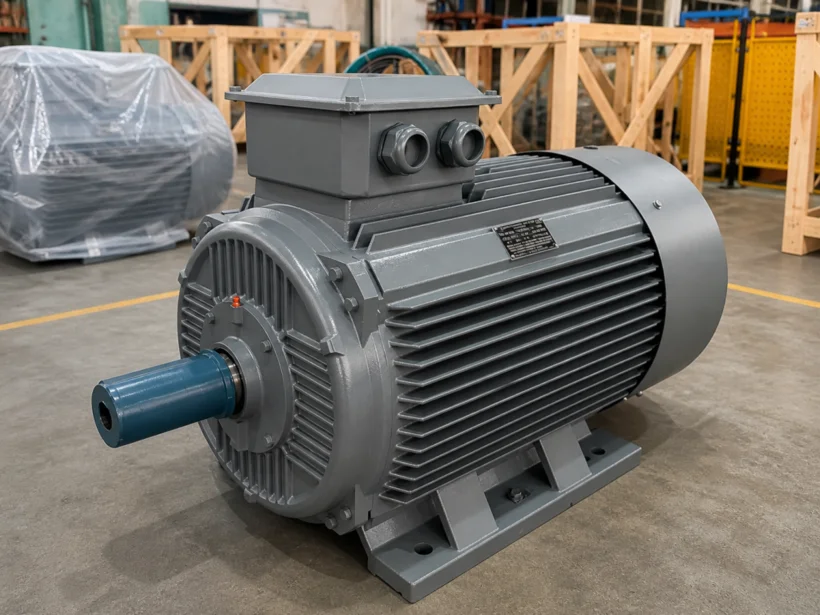
What is leakage current and how does it appear?
Leakage current is the current that seeps from a live conductor toward the frame or earth because the insulation between the winding and the motor body is not perfect. In an ideal motor the insulation resistance is in the hundreds of megohms, and in practice the leakage is close to zero. But under real conditions insulation is never perfect; every winding has a small leakage component to the frame. The problem begins when this component rises to dangerous levels as the insulation deteriorates.
Why does insulation deteriorate over time?
The life of insulation material is limited. Continuous operation at high temperature makes the winding insulation brittle. Moisture and condensation form a conductive film on the insulation surface. Vibration causes winding wires to rub against each other and the frame. Oil, dust and chemical vapours contaminate the insulation surface. When all these effects combine, the insulation resistance that started in the gigohm range can drop first to megohms and then to kilohm levels.
Why is earth leakage a vital danger?
When the insulation fails, voltage passes directly to the motor frame. If the frame is not properly grounded, a person touching the motor is exposed to the current flowing through their body to earth. Even a current of a few tens of milliamperes can disrupt the heart's rhythm. For this reason earth leakage is far more than an equipment fault; it is a direct life-safety issue.
Leakage current and fire risk
Earth leakage carries a shock risk and a fire risk at once. The leakage current that forms at the point where the insulation has weakened continuously produces heat in a small region. This local heating can over time lead to carbonisation, arcing and ignition. Especially in dusty environments or where flammable vapours are present, this situation creates a serious hazard.
What is a residual current device (RCD)?
A residual current device monitors the vector sum of the currents passing through the phase and neutral conductors. Under normal conditions the incoming current equals the outgoing current and the sum is zero. If there is a leakage, part of the current returns through earth and the balance is broken. The RCD detects this difference and disconnects the circuit. Typical protection thresholds are at the 30 mA (life safety) and 300 mA (fire protection) levels.
The limits of the RCD
The RCD is protective but not preventive; that is, it only acts after the leakage has actually occurred and reached a dangerous level. Moreover, at the moment of tripping it stops the motor and the process. In critical plants that must run continuously, this unexpected stop is a problem in itself. In addition, in motors fed by a variable frequency drive, high-frequency leakage current components can cause standard RCDs to trip falsely or to trip late.
What is an insulation monitoring device (IMD)?
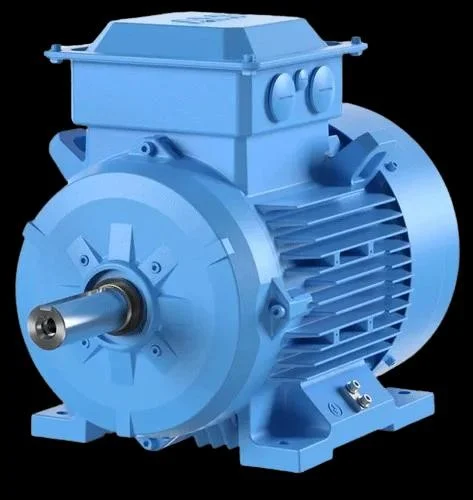
An insulation monitoring device works on a different philosophy from the RCD. Instead of waiting for leakage current to occur, the IMD continuously measures the insulation resistance of the system. The device applies a very low-level measurement signal between the live circuit and earth and monitors the resistance in real time. When the insulation resistance begins to fall below a set threshold, it gives a warning before a dangerous leakage even forms.
The value of early warning with IMD
The fundamental advantage of the IMD is that it predicts the fault before it occurs. When the insulation resistance falls slowly, the operator sees it as a trend and carries out maintenance during a planned shutdown. In this way both unexpected breakdown stops are prevented and a small insulation weakness is corrected before it turns into a large earth leakage.
IT networks and the logic of continuous monitoring
The IMD is of critical importance especially in IT-type networks. In an IT network the system is not directly connected to earth; when a first insulation fault occurs, a large leakage current does not flow and the system can keep running. This is preferred in places where continuity is vital, such as hospitals, ships and critical processes. However, if the first fault is not noticed, a second fault turns into a real short circuit. Here the IMD catches that first fault and allows the team to clear it at a safe time.
TN networks and the RCD approach
In TN-type networks the neutral point is directly earthed. Here, when an insulation fault occurs, a large leakage current flows and the protection device (RCD or fuse) quickly disconnects the circuit. This approach is suitable for most industrial plants where continuity is not critical, and together with overload protection it provides layered safety.
Are IMD and RCD used together?
The two devices are not alternatives to each other; most of the time they are complementary. In a TN network the RCD protects against sudden leakages, while the IMD gives early warning by monitoring the slow deterioration of the insulation. Which one takes the lead is determined by the network type and the importance of continuity.
Insulation resistance threshold values
In insulation monitoring the critical question is which resistance value should be considered "dangerous". The table below summarises typical evaluation ranges.
| Insulation resistance | Condition | Recommended action |
|---|---|---|
| > 100 MΩ | Excellent | Continue monitoring |
| 10 - 100 MΩ | Good | Periodic check |
| 1 - 10 MΩ | Caution | Watch the trend closely |
| 0.5 - 1 MΩ | Weak | Plan maintenance |
| < 0.5 MΩ | Critical | Restrict the circuit, intervene |
The relationship between the megger test and the IMD
Insulation resistance is traditionally measured with a megger (insulation resistance) test. However, the megger test is a periodic measurement made when the motor is stopped. The IMD does this continuously and while the motor is running. The two complement each other: the megger gives a deep diagnosis, while the IMD keeps watch continuously in the period between two diagnoses.
Variable frequency drives and leakage current
In modern plants motors are often driven by a variable frequency drive. The drive's high-frequency switching creates additional leakage current components through the cable and motor capacitances. This both causes standard RCDs to trip falsely and combines with separate problems such as shaft voltage and bearing currents. For this reason, leakage current management requires special attention in drive-fed systems.
The role of moisture and condensation
The most common trigger of leakage current is moisture. When a cold motor warms up and then stops, condensation can form on the internal surfaces. This condensation temporarily lowers the insulation resistance significantly. Therefore, using a body heater (anti-condensation heater) in motors that will not run for a long time is an effective way to keep the insulation dry.
Insulation class and leakage current resistance
The motor's insulation class determines the temperature the winding can withstand. A higher class of insulation is more resistant to thermal ageing and therefore preserves the insulation resistance for a longer time. The high-class insulation systems used in DRG motors aim to keep the leakage current risk low throughout a long service life.
Phase loss and its indirect effect on insulation
When a phase loss occurs, overcurrent and overheating appear in the remaining phases. This sudden thermal stress ages the insulation rapidly and lays the ground for later leakage current. Hence phase protection and insulation monitoring are links in the same safety chain.
IP protection class and leakage current
The motor's IP protection class protects the insulation by preventing dust and water from reaching the winding. A motor with an inadequate IP class rapidly loses insulation in a wet or dusty environment. Therefore, selecting an IP class suited to the ambient conditions is, indirectly, the first step of leakage current protection.
Integrating monitoring into panel design
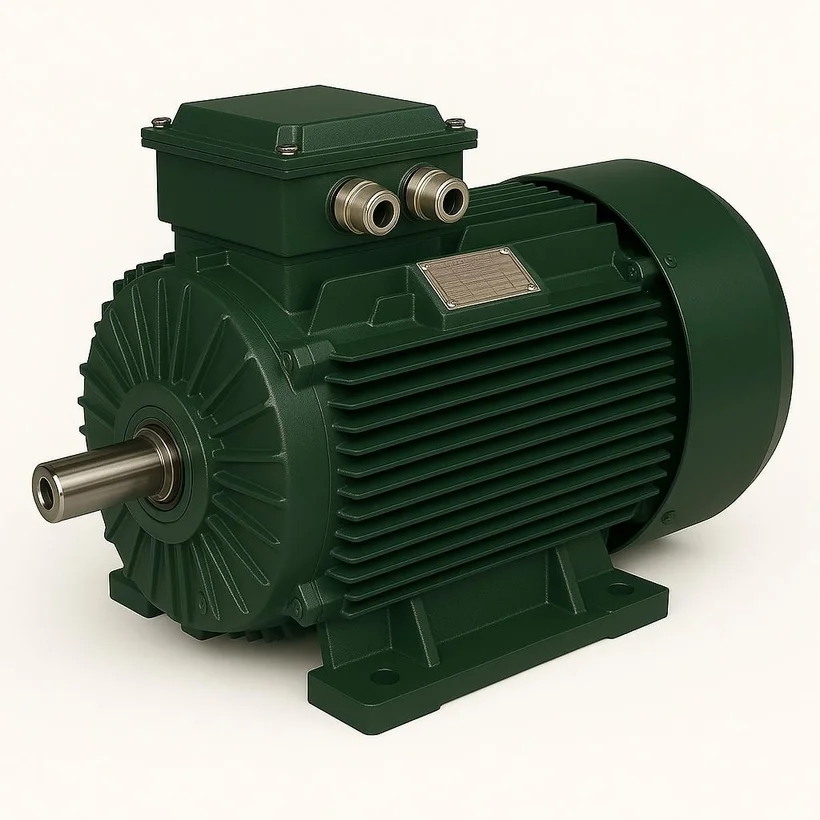
Insulation monitoring devices are usually integrated into the motor control panel. During panel and contactor selection, space and a signal line for the IMD or RCD must be planned. A well-designed panel carries the monitoring device's warning both to a local indicator and to a remote monitoring system.
Warning levels and alarm management
IMDs usually offer a two-stage alarm: a pre-warning level and a critical level. The pre-warning reports that the insulation resistance has begun to fall but is not yet dangerous. The critical level indicates that immediate action is required. This two-stage structure gives the maintenance team the opportunity to act in a planned manner.
Predictive maintenance with continuous monitoring
Recording how the insulation resistance changes over time is the basis of predictive maintenance. A slow but steady decline in resistance shows that the winding is ageing. A plant that monitors this data can determine in advance the most suitable time to renew the motor or overhaul its winding.
The effect of ambient temperature on measurement
Insulation resistance depends on temperature; as the temperature rises, the resistance falls. For this reason, temperature must be taken into account when evaluating measurements. The insulation values of the same motor measured cold and hot will differ; this difference must be considered in trend tracking.
Distinguishing the sources of leakage current
If there are several motors in a plant, it is necessary to determine which motor the measured total leakage current comes from. Modern monitoring systems can point to the faulty line with a localisation feature. This significantly shortens fault-finding time in a large plant.
Connection and grounding integrity
For insulation monitoring to work correctly, the grounding connections must be flawless. A loose or corroded earth connection provides no protection and also causes the monitoring device to give false readings. For this reason, grounding integrity must be inspected regularly.
Monitoring strategy in an industrial environment
There is no single correct approach for every plant. Where continuity is critical, the IMD and IT network come to the fore; in classic factories, the RCD with a TN network is sufficient. What matters is to build a layered protection strategy suited to the requirements of the industrial motor application.
The first measurement during commissioning
When a motor is commissioned for the first time, the insulation resistance must be measured. This first value is the reference for the comparisons that will be made throughout the motor's life. Without a commissioning record, it becomes difficult to evaluate later measurements as a trend.
The effect of leakage current on human safety
The ultimate purpose of leakage current protection is the human being. Every time an operator touches the motor, they must trust that the safety chain in between protects them. Grounding, RCD and IMD together provide this confidence. When any link of this chain is missing, the integrity of the safety is broken.
Check after storage and long downtime
In motors that have stood in storage for a long time or have not been run, the insulation can weaken due to moisture. These motors must have their insulation resistance measured before being put back into service and, if necessary, a drying process applied. Otherwise, an unexpected leakage current may appear at the first start.
The relationship with the basic logic of the electric motor
Understanding leakage current actually begins with understanding how the electric motor works. The difference between the winding current that produces the magnetic field and the leakage current that seeps to the frame is the health of the insulation. Monitoring this difference continuously is the key to preserving both the performance and the safety of the motor.
Leakage current and its reflection on power quality
Weakening insulation creates a safety problem and a power-quality problem. The current that seeps to earth increases the total current drawn from the supply and causes the system to be unnecessarily loaded. This lost current produces no useful work; it returns only as heat and risk. Therefore keeping leakage current low also contributes to energy efficiency. Considering that every watt is valuable in high-efficiency motors, the economic dimension of insulation health should not be overlooked.
Grounding resistance and monitoring sensitivity
For an insulation monitoring system to make correct decisions, the plant's grounding resistance must be low and stable. A high grounding resistance prevents the leakage current from flowing fully through earth and misleads both protection and monitoring. For this reason, periodic measurement of the grounding installation is an inseparable part of the insulation monitoring strategy. A solid earth is a precondition for the reliable operation of both the RCD and the IMD.
Reporting the monitoring data
The insulation resistance data obtained from continuous monitoring becomes a valuable asset for plant management when turned into regular reports. Which motor's insulation is weakening, which section runs more humid, where maintenance priority should be given, can all be read from these reports. This data-driven approach makes the entire motor fleet more predictable and safer.
DRG's approach to safe motors
As DRG Motor, the IE3, IE4 and IE5 class asynchronous motors we supply aim to keep leakage current risk low for a lifetime with their high-class insulation systems and sturdy mechanical construction. The correct insulation class, suitable IP protection and solid grounding connection points form the basis of the safe operation of our motors. To evaluate together which motor and which monitoring strategy is suitable for insulation monitoring and leakage current protection in your plant, you can contact the DRG Motor expert team.