 English
 Le français
 Türkçe

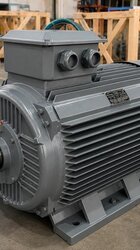
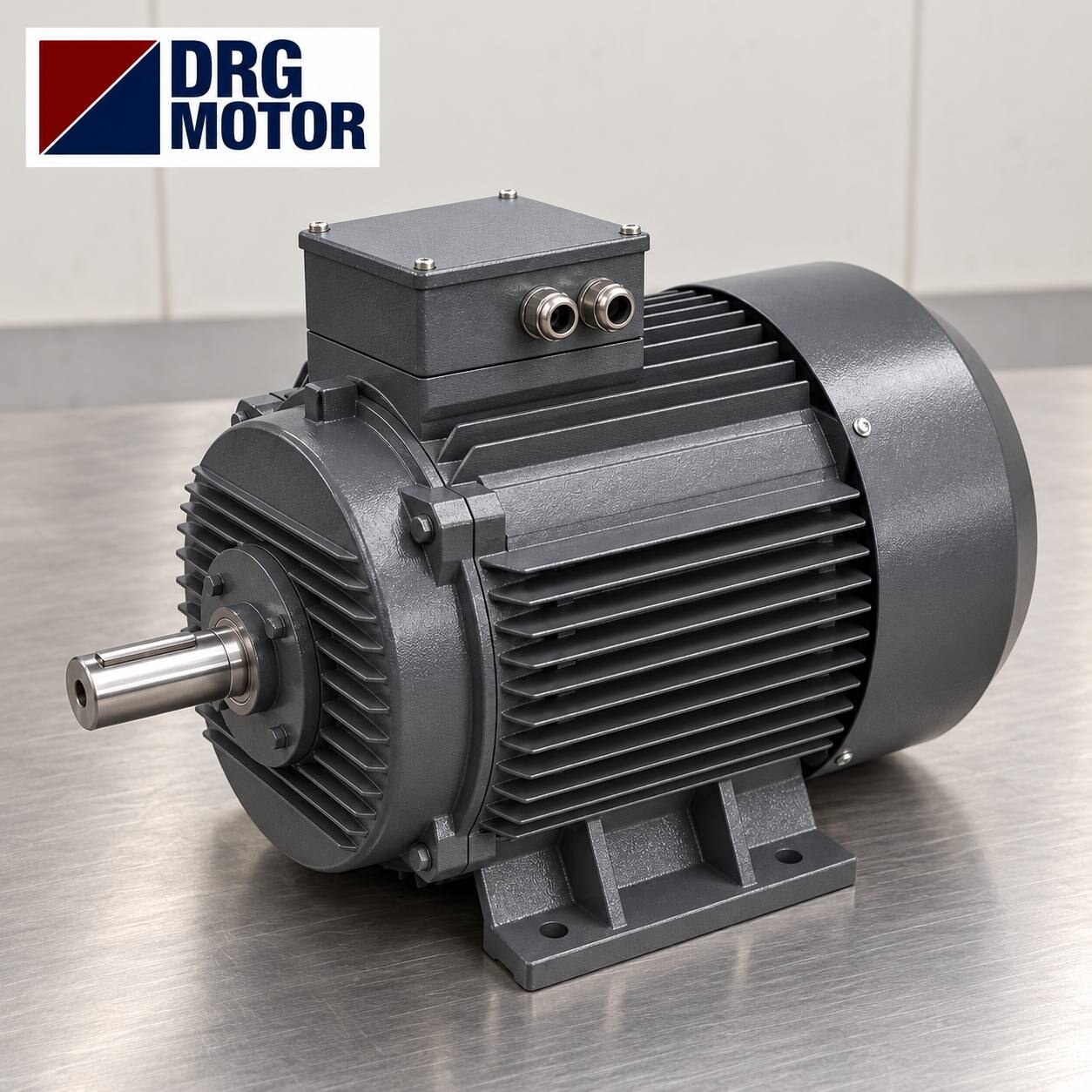

When you look at industrial plants, workshops and large production lines, you will see that almost all of the electric motors in operation are three-phase. The single-phase motors common in homes largely give way to three-phase motors in industry. Behind this lies not merely a habit, but serious technical and economic reasons. So why are three-phase electric motors preferred in industry?
At DRG Motor, this article looks at the reasons three-phase motors are preferred in industry, in terms of power, efficiency, durability and cost. To refresh the basic operating logic of the motor, you can take a look at our article on what an electric motor is.
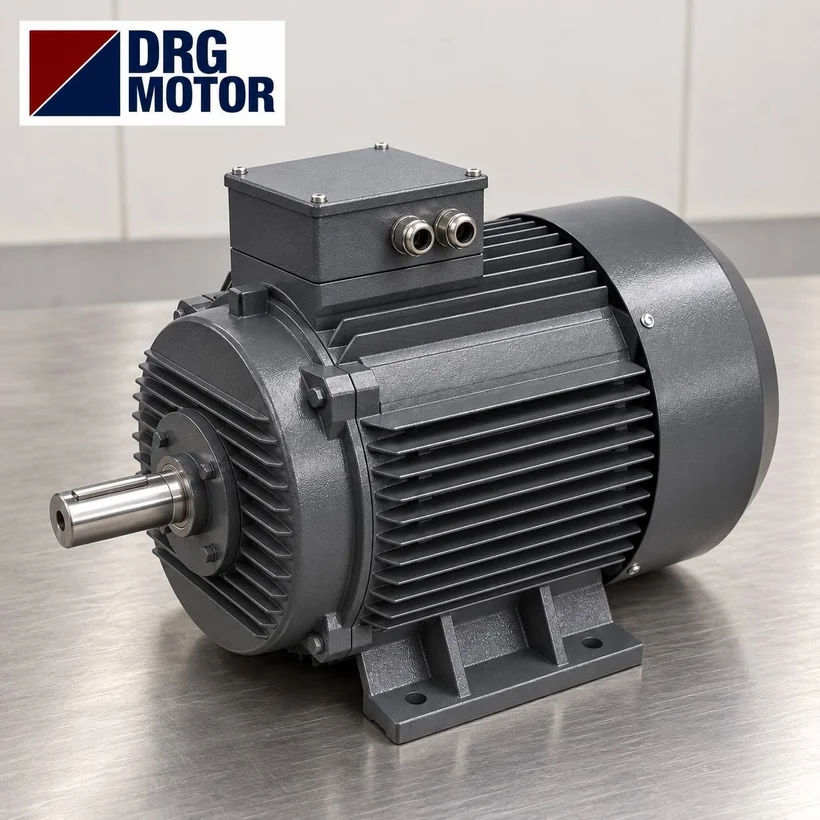
What Are Three-Phase and Single-Phase?
Single-phase is the domestic electrical system, usually 220V, that works with one phase and a neutral. Three-phase, on the other hand, is the industrial electrical system, usually 380V, in which three separate phases are present together. These two systems directly affect the way motors operate and their capacity.
The three-phase system provides important advantages to motors thanks to the balanced energy of the three phases. For that reason, it has become the standard in industry.
High Power Capacity
One of the most important needs in industry is high power. Three-phase motors can produce far higher power by combining the energy of the three phases. Single-phase motors, on the other hand, cannot exceed a certain power limit; for that reason, they fall short for large machines.
This is why a three-phase motor is preferred in every industrial application that requires high power. High power is the basic need of industry.
Higher Efficiency
Three-phase motors run noticeably more efficiently than single-phase motors. The balanced energy of the three phases lets the motor run with fewer losses. In continuously running industrial applications, this efficiency difference means significant energy savings.
We discuss the contribution of efficiency to your operation in our article on high-efficiency electric motors. A three-phase motor stands out in terms of efficiency.
Balanced, Vibration-Free Operation
The three phases cutting in one after another creates a balanced rotating magnetic field inside the motor. This lets the motor run smoothly and without jolts. Single-phase motors, on the other hand, produce more vibration due to their single-phase structure.
Vibration-free operation extends the life of both the motor and the connected equipment. This in turn means stable production in industry.
High Starting Torque
Three-phase motors produce high torque at the moment of starting. This is critical for setting heavy loads in motion without struggling. Single-phase motors, on the other hand, need additional mechanisms at startup and usually offer lower starting torque.
High starting torque is necessary in heavy applications such as crushers, compressors and conveyors. A three-phase motor meets this need naturally.
Simple, Durable Structure
Three-phase asynchronous motors have a simple, solid structure. They can run directly, without complex starting mechanisms. This simplicity means both durability and low maintenance.
Fewer parts mean fewer failures. For that reason, three-phase motors run safely for a long time under the demanding conditions of industry.
Low Maintenance Requirement
Three-phase asynchronous motors require little maintenance thanks to their simple structure. They have no frequently worn parts such as brushes or a commutator. This reduces maintenance cost and downtime.
Low maintenance is a great advantage for continuously running industrial plants. We discuss the basic upkeep in our article on electric motor maintenance steps. Less maintenance means more production.
Balanced Load Distribution
In a three-phase system, the load is distributed evenly across the three phases. This balances the load on the supply network and reduces energy losses. In a single-phase system, the entire load falls on a single phase, which creates imbalance.
Balanced load distribution ensures both the plant and the network operate efficiently. This in turn lowers the energy cost.
Thinner Cables, Fewer Losses
To carry the same power, a three-phase system can make do with thinner cables than a single-phase system. This reduces both the installation cost and the transmission losses. At high powers, this difference delivers a significant saving.
Fewer transmission losses mean a more efficient use of energy. This in turn is one of the economic advantages of the three-phase system.
Wide Power Range
Three-phase motors can be produced across a wide range, from small powers to very high powers. This makes it easier to find a motor suited to every need in industry. Single-phase motors, on the other hand, only make sense at low powers.
You can find the power options in our power (kW) and speed table. The wide power range shows the flexibility of the three-phase motor.
Ease of Spare Parts and Service
Because three-phase motors are standard in industry, finding spare parts and service is easy. A motor of the same size and specification can be obtained quickly in case of failure. This in turn safeguards production continuity.
Standard, widespread motors provide great ease in terms of stocking spares. This too is a reason for preference in industry.
Compatibility With the Frequency Inverter
Three-phase motors work in perfect harmony with frequency inverters. Speed control with an inverter delivers significant energy savings in industry. This compatibility makes three-phase motors even more efficient.
We explain the saving logic of the inverter in our article on the frequency inverter and energy saving. A three-phase motor and an inverter are an ideal pairing.
Winding and Rotor Quality
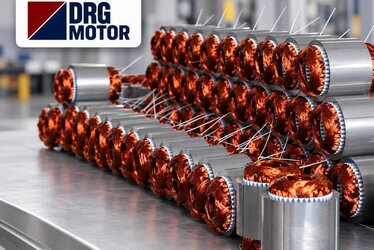
The efficiency and durability of three-phase motors depend on the quality of their rotor and copper winding. A quality copper winding increases efficiency and reduces heating, while a solid rotor carries high torque safely.
We explain the importance of winding quality in our article on rotor copper-wound electric motors. A quality winding is the foundation of a powerful three-phase motor.
Three-Phase in Heavy Industry
Heavy industrial applications such as stone crushing, concrete batching plants, compressors and large pump systems demand high power and torque. Three-phase motors are used almost always in these applications. Three-phase is the only practical solution that meets the energy need of heavy industry.
For heavy industrial applications, you can look at our article on industrial electric motors. Three-phase is the standard of heavy industry.
In Which Cases Is Single-Phase Sufficient?
Single-phase motors are sufficient in small-power and domestic applications; for example, small pumps, fans and household appliances. Single-phase is also preferred in places where there is no three-phase infrastructure. However, it cannot meet the power and efficiency needs of an industrial scale.
For that reason, single-phase is suited to limited applications. In industry, three-phase is almost always the right choice.
The Energy Cost Advantage
The high efficiency and low losses of three-phase motors directly lower the energy cost in industry. In a continuously running plant, this efficiency difference delivers significant savings over the year. Three-phase is a more economical solution in the long run.
Energy cost is among the largest expense items in industry. The three-phase motor is one of the basic ways to reduce this cost.
Production Continuity
The reliability and low failure rate of three-phase motors support production continuity. In a continuously running industrial plant, a stopped motor stops production. Durable three-phase motors minimise these interruptions.
Production continuity is the foundation of profit for most operations. The three-phase motor safeguards this continuity.
A Three-Phase Motor From the Right Supplier
Buying your three-phase motor from the right supplier is as important as the quality of the product itself. A reliable supplier recommends a motor of the correct power and specification, provides a warranty and offers technical support. This makes it easier to find the most suitable motor for your operation.
We explain the criteria for choosing a reliable supplier in our article on choosing an electric motor dealer. The right source means the right three-phase motor.
Next-Generation Three-Phase Motors
Next-generation three-phase motors are more efficient and longer-lasting thanks to their advanced design. Replacing old motors with new high-efficiency motors lowers energy cost and improves performance. In continuously running industrial plants, this transition pays for itself in a short time.
We discuss the advantages of modern motors in our article on next-generation electric motors. A new-generation three-phase motor is the most efficient solution in industry.
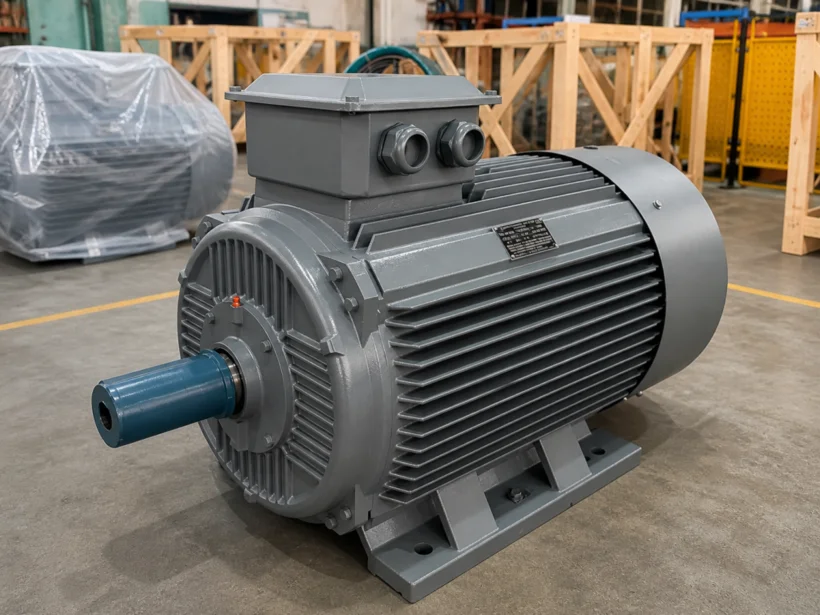
The Power of the Rotating Magnetic Field
The most important feature of the three-phase motor is the rotating magnetic field that forms on its own inside it. The three phases cutting in one after another creates a continuously rotating magnetic field inside the stator, and this turns the rotor by itself. In single-phase motors, this field does not form naturally; additional mechanisms are needed.
This rotating field lets the three-phase motor start trouble-free and turn in balance. This in turn is the foundation of reliable operation in industry.
The 380V Industrial Infrastructure
Industrial plants are usually set up with a 380V three-phase electrical infrastructure. This infrastructure is designed to feed high-power machines. Three-phase motors operate directly and efficiently with this infrastructure.
Because the existing industrial infrastructure is three-phase, using a three-phase motor is the most compatible and practical choice. Infrastructure compatibility also makes installation easier.
More Power in the Same Size
Three-phase motors can produce more power than single-phase motors in the same physical size. This provides an advantage in terms of space and weight. In plants with limited space, a compact, powerful three-phase motor is an important choice.
More power from a smaller motor means both cost and installation ease. This too is another advantage of the three-phase motor.
Suitability for Continuous Operation
Industrial motors often run for long hours, or even without interruption. Three-phase motors have a structure suited to continuous duty and are durable. Thanks to their balanced energy, they can run for long periods without overheating.
Continuous operating capacity is an indispensable feature for industry. The three-phase motor meets this need safely.
Less Heating
Three-phase motors heat up less thanks to their balanced load distribution and high efficiency. Low heating extends the motor's life and reduces the risk of failure. Single-phase motors, on the other hand, tend to heat up more due to their single-phase structure.
We discuss the importance of heat control in our article on electric motor temperature control. Low heating supports the long life of the three-phase motor.
Starting Options
Three-phase motors can be run with different starting methods. Direct-on-line starting, star-delta or a soft starter is chosen according to the application. This flexibility makes it possible to control the starting current and protect the motor.
In high-power motors, star-delta or soft starting reduces the strain of starting. This in turn extends the motor's life.
The Power Factor Advantage
Three-phase motors generally have a better power factor than single-phase motors. A high power factor reduces the unnecessary reactive power drawn from the supply. This is advantageous in terms of energy efficiency and the supply network.
A good power factor reduces energy cost and grid load in industry. This too is an economic advantage of the three-phase motor.
Pump and Fan Applications
In industry, pump and fan systems often run with three-phase motors. The need for high power, efficiency and continuous operation makes the three-phase motor stand out in these applications. Together with a frequency inverter, the saving increases even further.
We discuss pump motor selection in our article on water pump electric motor selection. Three-phase is the standard of these applications.
Imbalance and Phase Protection
In a three-phase system, imbalance between the phases can adversely affect the motor. For that reason, phase protection relays are used; they stop the motor when a phase is missing or weak. This protection ensures the safe operation of the three-phase motor.
Phase protection is important especially in high-power motors. The correct protection protects the motor from unexpected failures.
Cost and Investment Value
Three-phase motors are economical in the long run thanks to their high efficiency and long life. The initial investment returns in a short time through low energy and maintenance cost. In industry, this total cost advantage makes the three-phase motor attractive.
For that reason, in motor selection you should look at the total cost of ownership rather than the initial price. The three-phase motor stands out in this calculation.
Environmental Contribution
High-efficiency three-phase motors consume less energy and therefore cause fewer greenhouse gas emissions. This contributes to industry reducing its carbon footprint. Energy saving is both an economic and an environmental gain.
Using an efficient motor supports sustainable production goals. The three-phase motor provides an advantage from this point of view too.
Correct Power and Speed Selection
When choosing a three-phase motor, it is important to select the power and speed suited to the application. The correct power ensures efficiency, while the correct speed ensures compatibility with the application. The wrong selection means both efficiency loss and strain.
You can find the power and speed options in our power (kW) and speed table. The right selection maximises the advantage of the three-phase motor.
Mounting and Connection
The mounting type and connection of three-phase motors are chosen according to the application. Foot-mounted, flange-mounted or combined mounting options are available. The star or delta connection, meanwhile, is made according to the starting and operating need.
Correct mounting and connection ensure the power is transmitted efficiently and operation is safe. This in turn extends the motor's life.
The Indispensable Motor of Industry
For all these reasons, the three-phase motor is an indispensable part of industry. High power, efficiency, durability, low maintenance and economical operation all come together in the three-phase motor. For that reason, it is accepted as the standard in industry.
The three-phase motor, which meets the energy need of industry, is the powerful heart of production. A correctly chosen three-phase motor serves safely for years.
DRG Motor for the Right Three-Phase Power
At DRG Motor, we supply high-efficiency, durable three-phase motors across a wide power range, suited to every need in industry. Our aim is to meet your operation's need for high power and efficiency reliably. Pumps, fans, compressors, crushers or conveyors; in every application, we recommend the three-phase motor best suited to you.
To choose the most suitable three-phase motor for your operation and to receive technical support, you can get in touch with DRG Motor and review our product range on our products page, or visit our homepage. The right three-phase motor is the powerful, efficient heart of your industrial production.