English
 Le français
 Türkçe




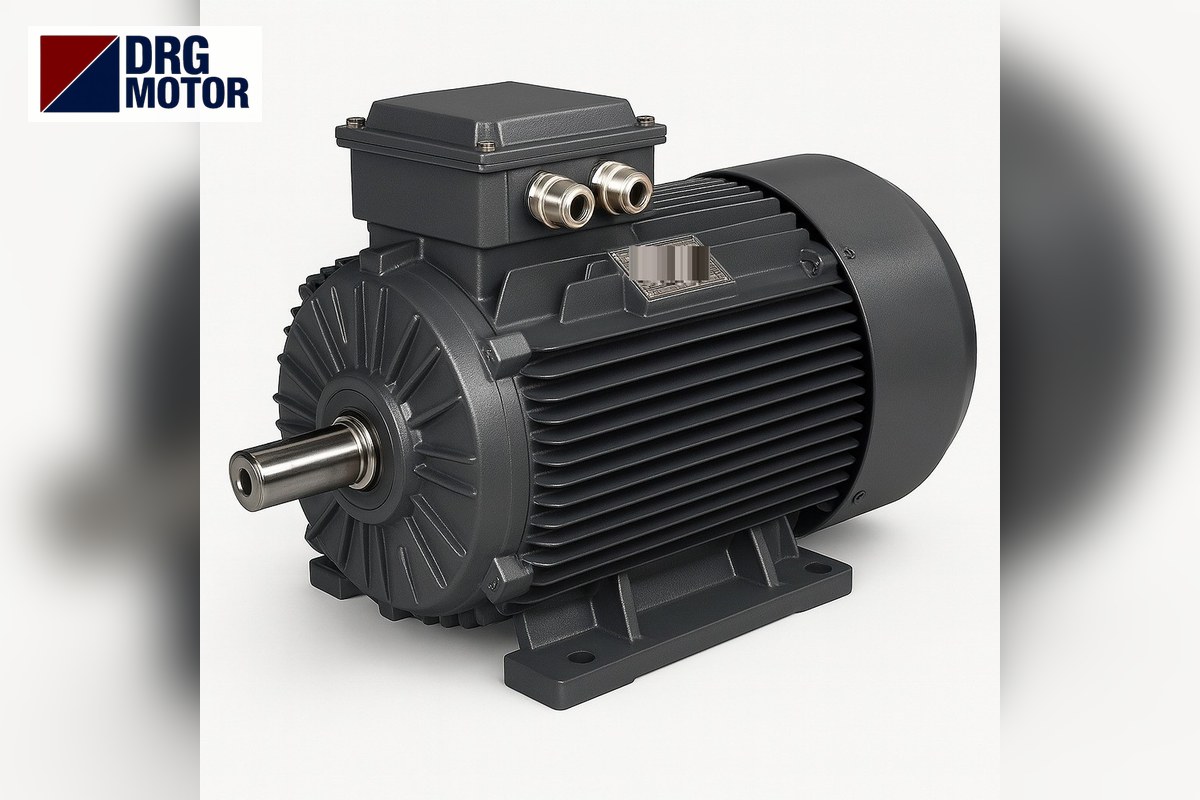

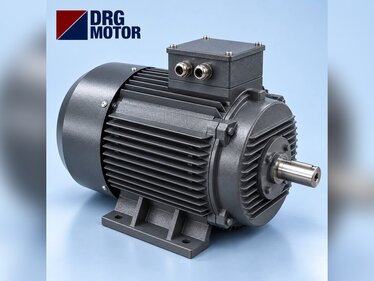
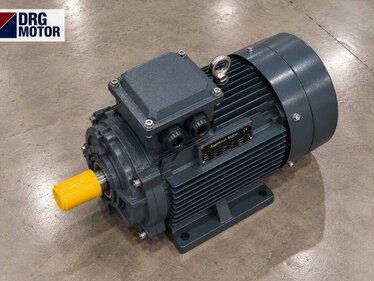
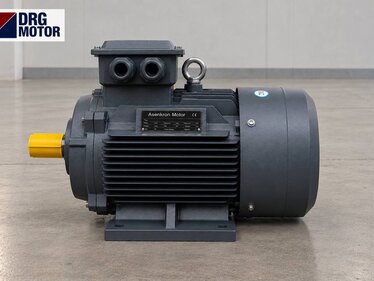
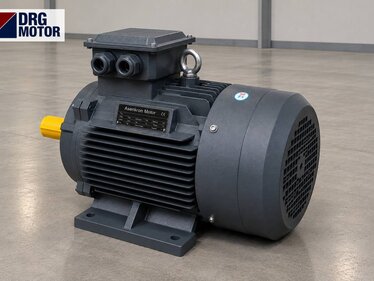
When a small compressor or booster pump needs a 4 HP motor, the correct rating is 3 kW (3 kW ≈ 4.02 HP). DRG Motor covers this power with four models: at 3000 rpm the standard DRG-100L-2 and the one-frame-smaller compact DRG-90L-2K, at 1500 rpm the DRG-100L2-4, and at 1000 rpm the DRG-132S-6. A booster pump usually takes the 3000 rpm model, a small belt-driven compressor the 1500 rpm model; all of them are listed on our Buy Electric Motors Online page.
Two things change the choice most: the speed required by the driven machine and the space available for the motor. The compact version exists to fit a 90L frame instead of 100L on narrow booster-set bases and compressor platforms; its electrical values are identical to the standard 2-pole model, its dimensions are not. Have a qualified electrician connect the motor to the supply and the pressure switch.
First Decision by Application: Which Model Goes Where?
| Application | Coupling | Suggested model | Reason |
|---|---|---|---|
| Booster set (centrifugal pump) | Direct to pump body, B5/B35 | DRG-100L-2 | Pumps are designed for 2-pole speed |
| Booster set with a narrow base | Direct, limited space | DRG-90L-2K | Same current and torque, 90L frame |
| Piston compressor (belt-driven) | Pulley and belt, B3 | DRG-100L2-4 | Small transmission ratio, 45.5 Nm starting torque |
| Slow drive with heavy start | Pulley or coupling | DRG-132S-6 | Rated torque 29.6 Nm |
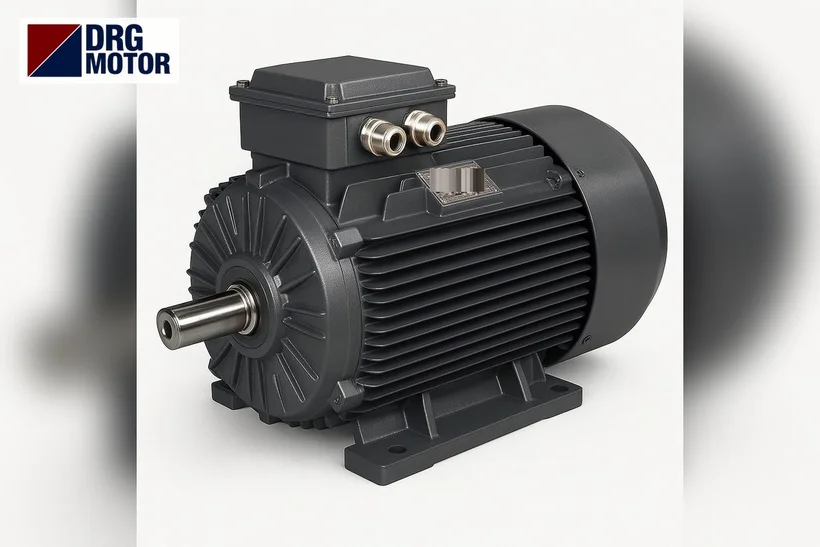
Four Models Side by Side: Current, Torque and Starting Ratios
| Model | Poles | Rated rpm | Frame | Current 380 V (A) | Current 400 V (A) | cos φ | Tn (Nm) | Ts/Tn | Is/In | Price |
|---|---|---|---|---|---|---|---|---|---|---|
| DRG-100L-2 | 2 | 2895 | 100L | 6.02 | 5.71 | 0.87 | 9.9 | 2.2 | 7.8 | See Prices |
| DRG-90L-2K (compact) | 2 | 2895 | 90L | 6.02 | 5.71 | 0.87 | 9.9 | 2.2 | 7.8 | See Prices |
| DRG-100L2-4 | 4 | 1450 | 100L | 6.34 | 6.02 | 0.82 | 19.8 | 2.3 | 7.6 | See Prices |
| DRG-132S-6 | 6 | 968 | 132S | 7.20 | 6.84 | 0.74 | 29.6 | 2.0 | 6.8 | See Prices |
What stands out in the table is that the compact model's row is identical to the standard 2-pole model: compactness changes mechanical dimensions, not electrical values. Overload setting and the current in a 220 V delta connection are a separate topic, covered in our article how many amps a 3 kW motor draws. All four nameplates read 230/400 V (Δ/Y), so on a 380–400 V supply they are connected in star.
The 6-pole DRG-132S-6 is a separate class at this power: since it delivers the same 3 kW at 968 rpm, its rated torque rises to 29.6 Nm, but with cos φ down to 0.74 it draws the highest current of the four, 7.20 A at 380 V, and moves up to a 132S frame with a 38 mm shaft. It is rarely needed for a compressor or booster set; it makes sense on a slow mixer, a slow conveyor or a drive with little room for a pulley.
Compact DRG-90L-2K vs Standard DRG-100L-2: Dimensional Difference
| Dimension (mm) | DRG-100L-2 (standard) | DRG-90L-2K (compact) | Difference |
|---|---|---|---|
| Shaft height H | 100 | 90 | 10 |
| Shaft diameter D × length E | 28 × 60 | 24 × 50 | 4 / 10 |
| Foot hole spacing A × B | 160 × 140 | 140 × 125 | 20 / 15 |
| Overall length L | 406 | 361 | 45 |
| Housing diameter AC | 205.4 | 182.4 | 23 |
| Foot hole K | 4–Φ12 | 4–Φ10 | – |
| Bearing | 6206-ZZ-C3 | 6205-ZZ-C3 | – |
The compact motor is 45 mm shorter and its shaft axis is 10 mm lower, which makes it easier to fit existing holes on a compressor platform or booster-set base. It has two important consequences, though. First, the shaft is 24 mm: a pulley or coupling hub bored for 28 mm does not fit the compact motor directly. Second, the foot holes differ: a base drilled for a standard 100L only takes the compact motor with new holes. Choose the compact model when space is the problem; otherwise the standard frame offers a wider choice of fittings.
Small Compressors: Pulley Ratio and Starting Load
On belt-driven piston compressors the head turns slower than the motor. Take as an example a compressor head that must run at 900 rpm:
- 1500 rpm model (1450 rpm): ratio 1450 ÷ 900 ≈ 1.61. With a 100 mm motor pulley the head needs about a 161 mm pulley.
- 3000 rpm model (2895 rpm): ratio ≈ 3.22. Even with an 80 mm motor pulley the head needs about a 257 mm pulley.
Ignoring losses, head torque is about 31.9 Nm in both cases (19.8 × 1.61 and 9.9 × 3.22); the difference is the space for the large pulley and the belt wrap angle. On a small motor pulley the belt slips and wears faster, so the 4-pole model gives a more balanced solution on belt-driven compressors. You can check the pulley calculation with the pulley and belt calculator.
The real stress point of a compressor is restarting while the tank is under pressure. If the unloader valve does not work, the motor starts against pressure every time; the 4-pole model's starting torque is 19.8 × 2.3 ≈ 45.5 Nm, but a faulty valve can exceed even that and trip the overload. If the overload trips often, check the valve first.
Two Poles for Booster Pumps: How to Check Pump Power
The shaft power of a booster pump can be estimated from flow and head: P (kW) = Q (m³/h) × H (m) ÷ (367 × pump efficiency). For 12 m³/h and 50 m head the hydraulic power is 12 × 50 ÷ 367 ≈ 1.63 kW. Taking a pump efficiency of 0.60 from the pump catalogue gives a shaft power of ≈ 2.72 kW, which a 3 kW motor covers. Because absorbed power can rise at the right-hand end of the pump curve (high flow, low head), repeat the calculation at the highest flow point; the pump and fan motor power calculator makes this easier.
A booster motor starts many times a day. The 2-pole model's starting current at 380 V is about 6.02 × 7.8 ≈ 47.0 A; this surge repeats briefly at every start. If the tank pre-charge is wrong or the diaphragm is punctured, the pump cycles too often and the motor heats up; in that case the problem is in the tank, not the motor.
Technical Factors Behind the Price of a 4 HP Motor
Differences between 3 kW motors come from the number of poles (6-pole moves up to a 132S frame), housing material (aluminium or cast iron), compact or standard frame, mounting type (B3, B5, B35) and shaft size. Once your application is clear, you can see the current price on the product pages in the table or among the 120 models in our online store.
Checklist for Compressor and Booster Pump Installation
- Has the speed required by the pump or compressor head been defined?
- Is the existing pulley or coupling hub bored for 24 mm or 28 mm?
- Are the base holes for 100L (160 × 140) or 90L (140 × 125)?
- Does the compressor unloader valve work?
- Have the booster tank pre-charge and diaphragm been checked?
- Is the star bridge fitted in the terminal box on a 380–400 V supply?
- Has the cable size been chosen for the distance? (Details: what size cable for a 3 kW or 4 kW motor)
Motors in This Power Rating
- DRG-100L-2 – 3 kW – 2895 rpm – 100L aluminium
- DRG-100L-2 – 3 kW – 2895 rpm – 100L cast iron
- DRG-90L-2K – 3 kW – 2895 rpm – 90L cast iron (compact)
- DRG-100L2-4 – 3 kW – 1450 rpm – 100L aluminium
- DRG-100L2-4 – 3 kW – 1450 rpm – 100L cast iron
- DRG-132S-6 – 3 kW – 968 rpm – 132S aluminium
- DRG-132S-6 – 3 kW – 968 rpm – 132S cast iron
Click to see current prices and order these motors nowSEE PRICES →
Frequently Asked Questions
How many kW is a 4 HP motor?
4 HP is about 2.98 kW; the standard motor rating is 3 kW. In catalogues and on nameplates a 4 HP motor is written as 3 kW.
What speed should a 4 HP booster pump motor have?
Centrifugal booster sets usually use a 2-pole motor of the 3000 rpm class; DRG-100L-2 and DRG-90L-2K have a rated speed of 2895 rpm. Always go by the speed on the pump nameplate.
Can a compact motor replace a standard motor?
Electrically yes; current, speed and torque are the same. Mechanically the shaft diameter (24 mm), shaft height (90 mm) and foot holes differ, so pulley, coupling and base compatibility must be checked.
Why does my 4 HP compressor motor keep tripping the overload?
The most common reason is starting under pressure: if the unloader valve does not relieve pressure between tank and head, the motor struggles at every start. Low voltage, a loose belt or a wrong overload setting give the same symptom.
For questions call +90 (542) 666 11 11, write to [email protected] or use our contact page. You can review other power ratings on the Buy Electric Motors Online page.