English
 Le français
 Türkçe




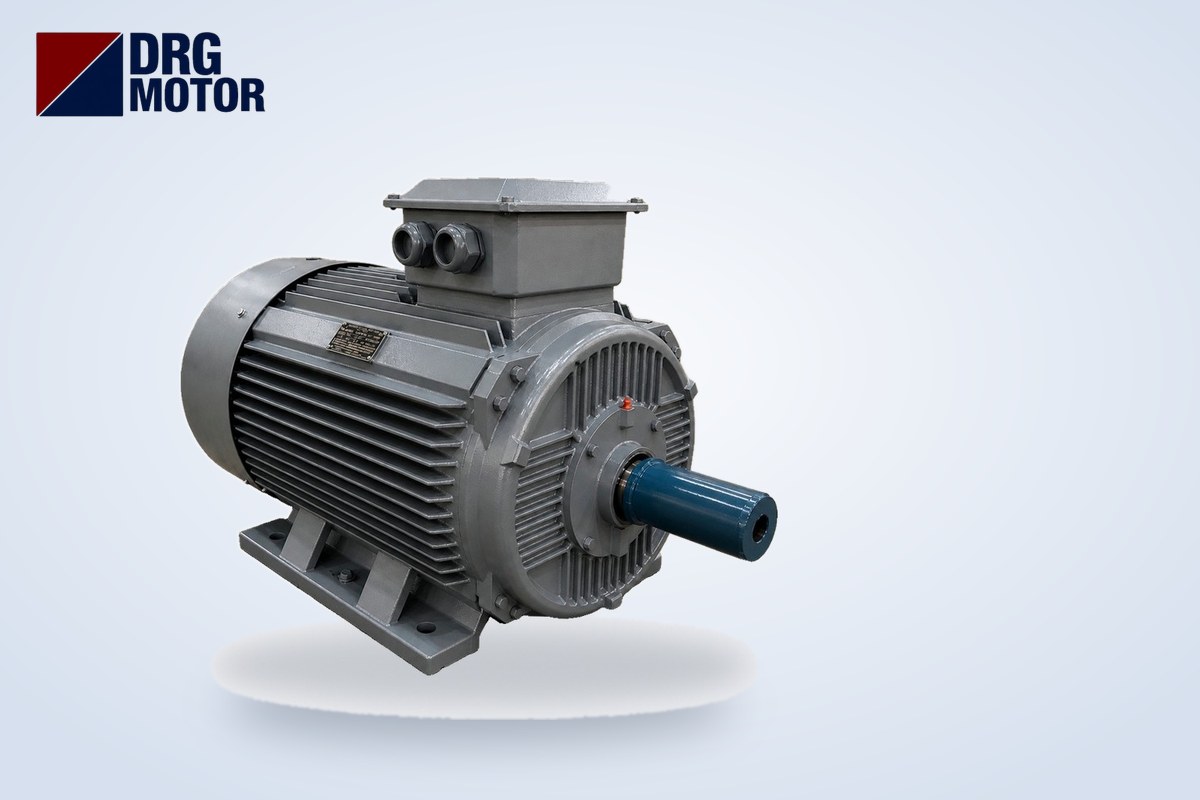

Yes, an 11 or 15 kW three-phase motor can be started direct-on-line; the motor is designed for full-voltage starting, and the limit is set by the supply feeding it, not by the motor. For example, the 15 kW, 1500 rpm DRG-160L-4 draws 28.8 A at 380 V and needs 7.8 times that on direct-on-line starting, about 224.6 A; for the 11 kW DRG-160M-4 the starting current is about 165.6 A. This current is drawn from the line, the transformer or the generator for the few seconds of starting. If the source can supply it without a significant voltage dip and the load needs the motor's full starting torque, direct-on-line starting is the right choice.
Three situations turn starting current into a problem: a weak or long supply line, generator supply, and the connection requirements of the distribution company serving the site. The tables below are calculated from the catalogue values of six models; make the decision for your own site by assessing these values together with transformer, line and load information. To compare models, see the 11 and 15 kW products on the Buy Electric Motors Online page.
How Many Amps Does an 11 or 15 kW Motor Draw on Direct-On-Line Starting?
Is in the table is the nameplate current (In) multiplied by the catalogue Is/In ratio. Apparent power is calculated with S = √3 × U × I (U = 380 V). All six models have 400/690 V windings and cast iron frames.
| Model | Power | Rated speed | In (380 V) | Is/In | DOL starting current Is | Running kVA | Starting kVA | Starting torque | |
|---|---|---|---|---|---|---|---|---|---|
| DRG-160M1-2 | 11 kW | 2945 rpm | 20.6 A | 8.1 | 166.9 A | 13.6 | 109.8 | 71.4 Nm | See Prices |
| DRG-160M-4 | 11 kW | 1465 rpm | 21.5 A | 7.7 | 165.6 A | 14.2 | 109.0 | 157.7 Nm | See Prices |
| DRG-160L-6 | 11 kW | 970 rpm | 23.1 A | 7.2 | 166.3 A | 15.2 | 109.5 | 216.6 Nm | See Prices |
| DRG-160M2-2 | 15 kW | 2945 rpm | 27.9 A | 8.1 | 226.0 A | 18.4 | 148.7 | 97.2 Nm | See Prices |
| DRG-160L-4 | 15 kW | 1465 rpm | 28.8 A | 7.8 | 224.6 A | 19.0 | 147.9 | 215.2 Nm | See Prices |
| DRG-180L-6 | 15 kW | 978 rpm | 30.9 A | 7.3 | 225.6 A | 20.3 | 148.5 | 293.0 Nm | See Prices |
Two practical conclusions follow from the table. First, although the pole number changes, the starting currents of motors of the same power are very close: about 166 A at 11 kW and about 225 A at 15 kW. Second, the apparent power at starting is roughly 7–8 times the running value; for the 15 kW 4-pole motor the running load of 19.0 kVA rises to about 147.9 kVA at starting. It is this short kVA peak that stresses the supply. For details of the current values, see How Many Amps Does a 15 kW Motor Draw? and How Many Amps Does an 11 kW Motor Draw?; this article focuses on choosing the starting method.
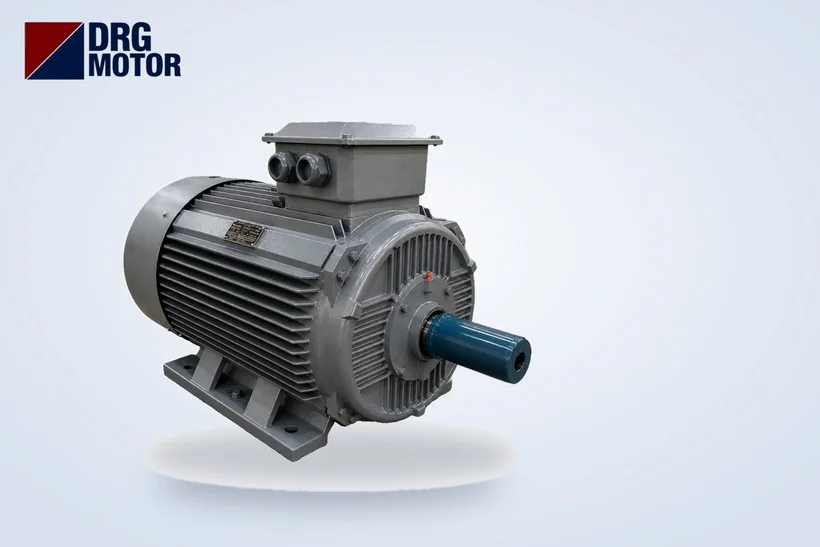
What Sets the Limit for Direct-On-Line Starting?
The motor winding and rotor are built to carry the starting current for a short time; once rated speed is reached, the current falls to the nameplate value. The problem is the voltage drop the same current causes on the supply side. Voltage drop depends on the transformer's rating and short-circuit impedance, the cross-section and length of the supply cable, and the other loads on the same line. If the voltage drops significantly during starting:
- The motor torque also falls (torque varies roughly with the square of voltage) and starting takes longer.
- Lighting on the same line flickers, contactor coils may drop out and electronic devices may restart.
- A long start can cause the overload relay to trip during starting.
That is why there is no single "maximum X kW" rule for direct-on-line starting. Limits based on starting current and motor power are set in the connection requirements of the distribution company serving the site and in the site's project conditions; the same 15 kW motor can start comfortably next to a strong transformer in an industrial zone yet cause trouble on a long rural line. Before deciding, ask the engineer who designed the electrical installation or the distribution company for these requirements. You can check the supply cable cross-section and voltage drop with the Motor Cable Size Calculator.
Can a 15 kW Motor Be Started Direct-On-Line on a Generator?
A generator is more sensitive than the grid, because its short-time current capability is generally lower than that of a transformer of the same rating. When choosing a generator, look at the starting kVA, not the running power of the motor: the 15 kW 4-pole motor needs about 19.0 kVA running and about 147.9 kVA on direct-on-line starting. At 11 kW these figures are about 14.2 and 109.0 kVA.
If the generator cannot supply this peak, voltage and frequency collapse, the motor fails to accelerate and the regulator hunts. The practical approach: ask the generator manufacturer in writing for the capacity stated for motor starting and the permitted voltage dip; if other loads are connected to the same generator, start the motor last and on its own. If capacity is insufficient, star-delta reduces starting current to one third, while a soft starter or frequency drive holds the current at a set limit.
Starting by Load Type: Fan, Pump, Conveyor
The load determines the method as much as the supply does. With direct-on-line starting the motor's full starting torque is available: 2.2 × 97.8 Nm ≈ 215.2 Nm for the 15 kW 4-pole motor. In star-delta this value falls to one third, about 71.7 Nm, which is below the motor's rated torque (97.8 Nm). For the 11 kW 4-pole motor, too, the starting torque in star is about 52.6 Nm against a rated torque of 71.7 Nm. In other words, a machine that starts under load may fail to accelerate in star.
| Load | Torque needed at starting | Starting time | Suitable method (if the supply is adequate) |
|---|---|---|---|
| Centrifugal pump (valve throttled or line full) | Low, rises with speed | Short | Direct-on-line; soft starter if water hammer is a problem |
| Fan, extractor | Low, rises with speed | Long with a large impeller (inertia) | Direct-on-line or star-delta; watch the overload trip class on long starts |
| Conveyor starting empty, mixer | Medium | Medium | Direct-on-line or star-delta |
| Loaded conveyor, crusher, reciprocating compressor | High, right at the start | Medium–long | Direct-on-line; star-delta is often not enough |
| Machine with frequent stop-start | Variable | Short but frequent | Depending on the number of starts, consider a soft starter or frequency drive |
Why does starting time matter? During starting the winding and rotor heat up under the starting current. Under light load this time is short; with a large-diameter fan or a heavy load it becomes longer. For long starts the overload relay trip class must be chosen to allow the start, and with frequent starts the motor's cooling time must be taken into account. The easiest way to measure it is to watch with a clamp meter, at first commissioning, how long it takes for the current to fall to the nameplate value.
Direct-On-Line, Star-Delta or Soft Starter: Decision Table
The comparison below uses the 380 V values of the 15 kW 4-pole DRG-160L-4. The torque in the soft starter row is calculated using the approximation that torque varies with the square of current: T ≈ Ts × (I / Is)². As an example, with a current limit of 3 × In = 86.4 A the torque is about 215.2 × (86.4 / 224.6)² ≈ 31.8 Nm, and with 4 × In = 115.2 A about 56.6 Nm.
| Method | Line current at starting | Starting torque | Motor requirement | When to choose it |
|---|---|---|---|---|
| Direct-on-line (DOL) | ≈ 224.6 A | ≈ 215.2 Nm | Any connection | Strong supply, loaded start, simple panel |
| Star-delta | ≈ 74.9 A (in star) | ≈ 71.7 Nm | 400/690 V nameplate running in delta on 380–400 V, 6 terminals, 2 cable sets | Light start, current limitation required |
| Soft starter | Set limit (example 86.4–115.2 A) | ≈ 31.8–56.6 Nm (example) | Single cable set, 3 terminals | Pumps (water hammer), reducing belt/gearbox shock, generators |
| Frequency drive | Around nameplate current | Around rated torque, speed adjustable | Motor and cable suitable for drive use | When speed control is also needed, very weak supply |
The example current limits in the table only illustrate soft starter settings; the actual setting is found at commissioning according to the starting torque of the load. To compare methods with your own values, use the Motor Starting Methods: Star-Delta tool.
How to Set Protection for Direct-On-Line Starting
With direct-on-line starting the motor is connected through one contactor and one cable set; the protective devices see the line current. There are three rules:
- Overload setting of the relay or motor protection circuit breaker = nameplate current. For the 15 kW DRG-160L-4, 28.8 A at 380 V (27.3 A at 400 V); for the 11 kW DRG-160M-4, 21.5 A (20.4 A at 400 V). The In/√3 correction used in star-delta does not apply here.
- Short-circuit protection must not trip during starting. The magnetic trip value of the motor protection circuit breaker and the fuse curve must carry the starting current of about 224.6 A at 15 kW and about 165.6 A at 11 kW for the duration of the start. Choose a breaker or fuse type designed for motor circuits; take the exact value from the device manufacturer's table.
- The contactor's AC-3 rating must not be lower than the nameplate current, with a margin for frequent starts.
For a worked sizing example use the Motor Overload, Fuse and Contactor Selection tool; it is designed specifically for direct-on-line starting. The cable must be coordinated with the selected short-circuit protection, meaning the protective device must open the circuit before the cable's current-carrying capacity is exceeded.
Checklist Before Direct-On-Line Starting
- Does the motor nameplate match the supply? Is a 400/690 V motor connected in delta on 380–400 V?
- Has transformer or generator capacity been assessed against the starting kVA (15 kW: ≈ 147.9 kVA, 11 kW: ≈ 109.0 kVA)?
- Have the starting current requirements of the distribution company serving the site and of the site project been obtained?
- Have the supply cable cross-section and length been checked for voltage drop?
- Is the overload set to nameplate current, and is the short-circuit protection of a type that will not trip at starting current?
- Does the load need starting torque (loaded conveyor, crusher)? If so, has star-delta been avoided?
- At the first start, was the time for the current to fall to the nameplate value measured, and was any voltage dip observed on other equipment on the same line?
- Is the number of starts per hour known; if starts are frequent, has a soft starter or drive been considered?
Motors in This Power Range
- DRG-160M-4 – 11 kW – 1500 rpm – 160M cast iron frame
- DRG-160L-4 – 15 kW – 1500 rpm – 160L cast iron frame
- DRG-160M2-2 – 15 kW – 3000 rpm – 160M cast iron frame
- DRG-180L-6 – 15 kW – 1000 rpm – 180L cast iron frame
- DRG-160M1-2 – 11 kW – 3000 rpm – 160M cast iron frame
- DRG-132M-4K – 11 kW – 1500 rpm – 132M aluminium frame
Click to see current prices and order these motors nowSEE PRICES →
Frequently Asked Questions
Can a 15 kW motor be started direct-on-line?
Yes. A 15 kW 4-pole motor draws about 224.6 A and 147.9 kVA on direct-on-line starting at 380 V. If the transformer or generator can supply this peak without a significant voltage drop and the distribution company's requirements allow it, direct-on-line starting is suitable.
How many amps does an 11 kW motor draw on direct-on-line starting?
11 kW motors have a nameplate current of 20.6–23.1 A at 380 V and draw about 165.6–166.9 A on direct-on-line starting across the 2, 4 and 6-pole models. For the 4-pole DRG-160M-4 the value is about 165.6 A.
Is star-delta mandatory for a 15 kW motor?
Not from the motor's point of view. Star-delta is used when the supply cannot handle the starting current or site requirements call for it; it reduces starting current to about 74.9 A and starting torque to about 71.7 Nm. On a machine that starts under load, this torque may not be enough.
What is the overload setting for direct-on-line starting?
The overload is set to the motor nameplate current: 28.8 A at 380 V for the 15 kW DRG-160L-4 and 21.5 A for the 11 kW DRG-160M-4. There is no division by √3 as in star-delta, because the relay measures the line current.
Contact us for the starting method and motor that suit your site's supply: +90 (542) 666 11 11, [email protected], contact page. For all 11 and 15 kW models and other ratings, browse the 120 models in our online store.