English
 Le français
 Türkçe




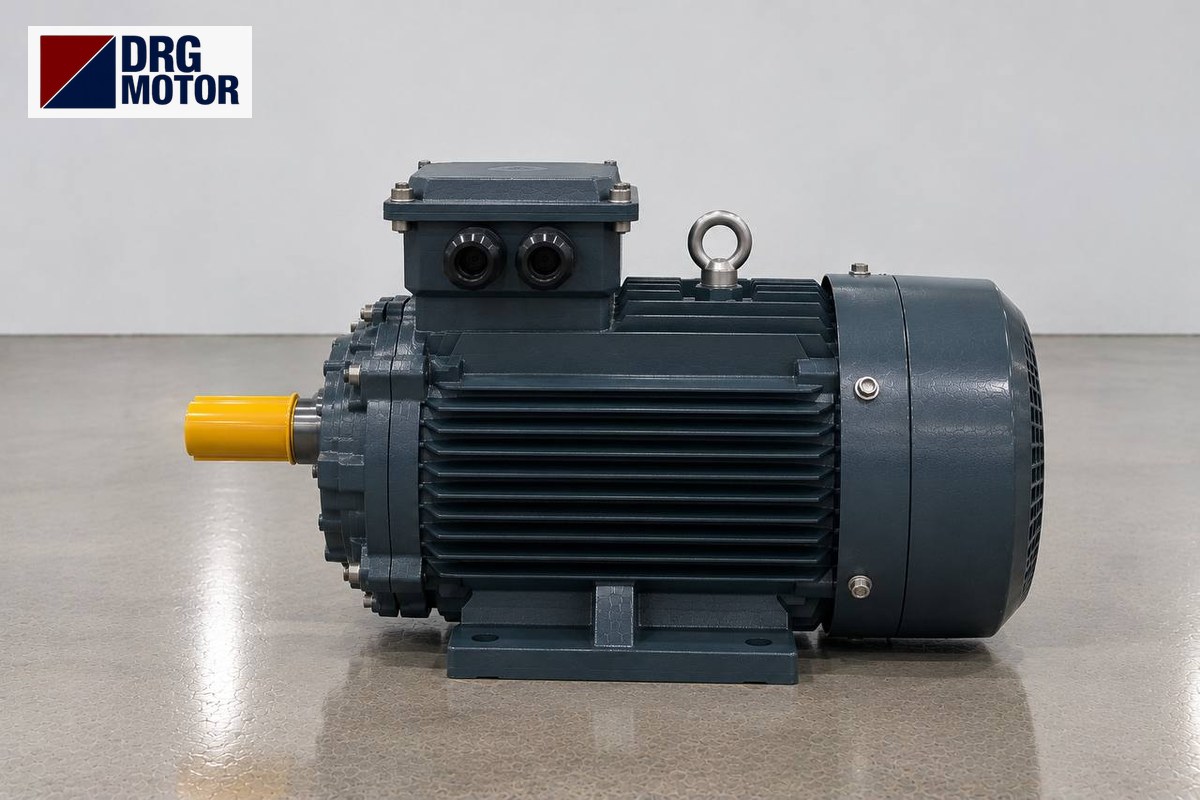

A spiral dough kneader does two jobs: the spiral arm pulls and folds the dough while the bowl turns slowly. For this reason the machine usually carries a main (spiral) motor and a small bowl motor; the main motor is most often a 4-pole, 1500 rpm three-phase motor. On medium bakery kneaders the main motor is generally a few kW and the bowl motor below 1 kW; the exact value is on the machine's nameplate or in the manufacturer's data. For example, the 4 kW, 1500 rpm DRG-112M-4 runs at 1450 rpm, draws 7.95 A at 400 V and 8.37 A at 380 V, and delivers 26.3 N·m rated torque at the shaft.
Dough stiffness changes motor selection the most: soft bread dough and low-hydration dough for flatbreads or bagels demand very different torque in the same bowl. The second factor is speed: in second speed the spiral turns roughly twice as fast and the power rises with it. Electrical work such as motor connection, single-phase to three-phase conversion and drive installation must be done by a qualified electrician; this article explains the selection and checking logic. You can see suitable models with dimensions and current values on our Buy Electric Motors Online page.
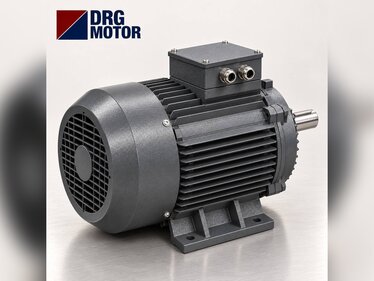
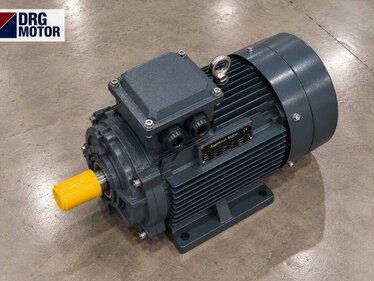
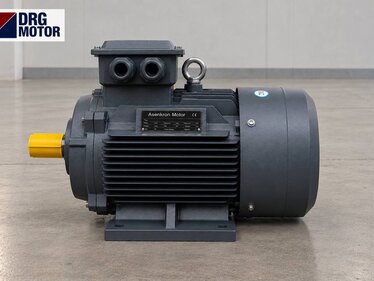
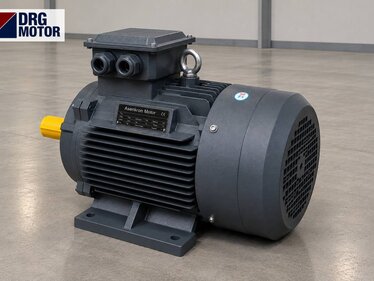
DRG Motor offers cast iron and aluminium frame three-phase motors from 0.25 to 355 kW. Below we cover the role of each motor in a kneader, power sizing from torque, two-speed options, the single-phase supply issue and the points to check when replacing a motor.
Which motor does what in a spiral kneader?
Spiral (main) motor
The spiral arm pulls the dough towards the bowl wall, cuts and folds it. Most of the load is here. The motor is usually connected to the spiral by belt and pulley, on some machines by a belt plus a gear stage. A belt drive softens the sudden torque peaks of stiff dough to some extent; if the belt slips, it warns you before the motor does.
Bowl motor
The bowl turns slowly, from a few to a few dozen revolutions per minute. The bowl motor is therefore small but works through a high-ratio gearbox or a multi-stage belt arrangement. On some machines the bowl turns one way only, on others both ways; reverse is used to gather the dough under the spiral.
Small machines may use a single motor driving both spiral and bowl via belts. In that case the motor power is chosen for the sum of both loads.
Main motor power: sizing from torque
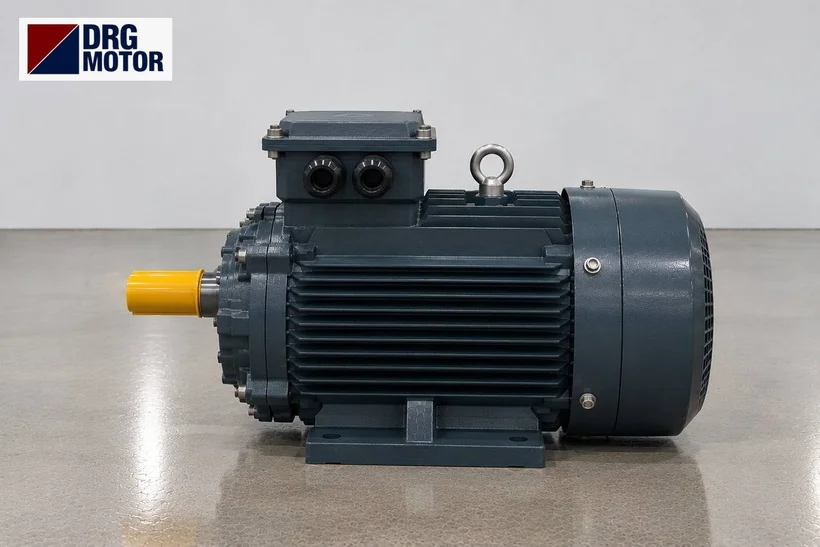
A kneader is a constant-torque load: the stiffer the dough, the more torque the spiral shaft needs. The most reliable way to find power is P = T · n / 9550 (P in kW, T in N·m, n in rpm). The values below are assumptions; on your machine take spiral speed from the pulley diameters and torque from the manufacturer's data or from the current of the existing motor.
- Assumption: spiral speed 200 rpm in second speed, 150 N·m on the spiral shaft with stiff dough.
- Power at the spiral shaft: 150 × 200 / 9550 = 3.14 kW.
- Assuming η = 0.9 for belt and bearing losses, motor power: 3.14 / 0.9 = 3.49 kW → next standard size 4 kW.
- Pulley ratio: 1450 / 200 = 7.25. The DRG-112M-4 transmits 26.3 × 7.25 × 0.9 ≈ 171.6 N·m rated torque to the spiral shaft; since the starting torque ratio is Ts/Tn = 2.2, this can briefly reach ≈ 377.5 N·m when starting with a full bowl.
- Comparison: the 3 kW DRG-100L2-4 (19.8 N·m) gives ≈ 129.2 N·m with the same ratio; it stays below the assumed 150 N·m and struggles with stiff dough.
The bowl follows the same method. Assumption: bowl at 12 rpm, 250 N·m on the bowl shaft, η = 0.75 for gearbox and belt losses. Power is 250 × 12 / 9550 = 0.31 kW, or 0.31 / 0.75 = 0.42 kW at the motor; the 0.55 kW DRG-801-4 (1400 rpm) is enough. The total ratio needed is 1400 / 12 ≈ 117, giving 3.75 × 117 × 0.75 ≈ 328 N·m at the bowl shaft. You can check pulley diameters with the pulley and belt calculator.
How to get two speeds: two-speed motor or drive
In kneaders, first speed is for mixing and second speed for developing the dough. There are three ways to get two speeds:
- Two-speed motor: a pole-changing (Dahlander connection) motor with a special winding, giving for example 1500 and 3000 rpm in the same frame. Each speed has its own power and current, and the control circuit needs two contactors. The standard models in our online store are single-speed; when replacing a two-speed motor, give both power and both current values from the old nameplate.
- Single-speed motor + drive: a 1450 rpm motor gives second speed at 50 Hz and first speed at about 725 rpm at 25 Hz. On a constant-torque load the motor can still deliver rated torque at low frequency, but its own fan slows down and cooling drops; keep this in mind for recipes with long first-speed phases. The VFD frequency calculator shows the frequency–speed–torque relation.
- Mechanical stages: a single-speed motor with two belt or gear stages. Simple, but the machine must stop to change speed.
An added benefit of a drive is soft starting: with a full bowl the starting current (Is/In = 7.8 for the DRG-112M-4) is not reflected onto the supply and belt slip is reduced.
Three-phase kneader motor on a single-phase supply
The most common question in neighbourhood bakeries is what to do when the building has no three-phase supply. The motor's winding voltage decides:
- Models up to 3 kW are wound for 230/400 V (e.g. DRG-100L2-4, DRG-100L1-4). They can be connected in delta (Δ) and run from a drive with single-phase input and 230 V three-phase output. The current rises in that case: ≈ 6.02 × 400 / 230 ≈ 10.5 A for the 3 kW model and ≈ 7.9 A for the 2.2 kW model (calculated).
- Models from 4 kW upward are wound for 400/690 V (DRG-112M-4). They run in delta at 400 V and cannot deliver rated torque from a drive with 230 V output. At this power a three-phase 400 V supply is needed.
- Running a three-phase motor on single phase with a capacitor greatly reduces starting torque and causes starting problems with a bowl full of stiff dough. We do not recommend it for kneaders.
The wiring diagram and drive settings must be handled by a qualified electrician; always read the Δ/Y voltage on the nameplate before connecting.
Bakery conditions: flour dust, cleaning water and the motor compartment
In kneaders the motor sits inside the machine body, in a closed compartment. That is good, but it brings two risks: the compartment heats up and flour dust builds up on the fan cover grille. A clogged grille cuts off the motor's cooling air. Our catalogue models are IP55 protected with class F insulation; this protects against flour dust and splashing during cleaning, not against hosing the motor down.
- Open the compartment weekly, or more often in busy periods, and clean the fan grille with a dry brush.
- When washing the bowl, make sure water does not run into the motor compartment; if water collects on the bottom cover, clear the drain path.
- Keep the terminal box cover and cable gland tight; flour and moisture create tracking paths on the terminals.
We covered protection and surfaces in food plants separately in our article on IP55 motor supply for the food industry; here we give only kneader-specific points.
Motor replacement checklist
- Nameplate: note kW, speed, voltage (230/400 or 400/690 V) and current; if the plate is unreadable, match by shaft diameter and frame size.
- Mounting: foot (B3) or flange (B5)? Foot hole spacing and shaft height H must match.
- Shaft: D × E must fit the pulley hub; 28 × 60 mm on 100L and 112M frames, 38 × 80 mm on 132S.
- Pulley and belt: keep the same pulley diameter (otherwise spiral speed changes); belts at equal tension and pulleys aligned.
- Direction of rotation: spiral and bowl directions follow the machine design; check direction with an empty bowl on first start and, if needed, have a qualified electrician swap two phases.
- Overload setting: set the overload relay to the nameplate current; for selection use the overload, fuse and contactor selection tool.
- Safety: do not put the machine back into production before testing the lid safety switch and emergency stop with the new motor.
Which DRG motor for which kneader?
The table gives the powers most often found on bowl and spiral motors, following the sizing logic above. Confirm the choice against your machine's nameplate.
| Model | Power / speed | Frame | Current 400 V |
|---|---|---|---|
| DRG-801-4 | 0.55 kW · 1400 rpm | Aluminium · IEC 80 | 1.31 A |
| DRG-802-4 | 0.75 kW · 1420 rpm | Aluminium · IEC 80 | 1.75 A |
| DRG-100L1-4 | 2.2 kW · 1450 rpm | Aluminium · IEC 100L | 4.52 A |
| DRG-100L2-4 | 3 kW · 1450 rpm | Aluminium · IEC 100L | 6.02 A |
| DRG-112M-4 | 4 kW · 1450 rpm | Aluminium · IEC 112M | 7.95 A |
| DRG-132S-4 | 5.5 kW · 1460 rpm | Aluminium · IEC 132S | 10.7 A |
Catalogue data of the 4 kW model used in the example:
- Power: 4 kW
- Rated speed: 1450 rpm
- IEC frame: 112M
- Voltage: 400/690 V (Δ/Y)
- Current 380 V / 400 V: 8.37 A / 7.95 A
- cos φ: 0.82
- Rated torque: 26.3 N·m
- Starting torque Ts/Tn: 2.2
- Breakdown torque Tmax/Tn: 2.3
- Starting current Is/In: 7.8
- Shaft D × E: 28 × 60 mm
- Bearing: 6206-ZZ-C3
- Cable entry: 2 × M32×1.5
The same power is also available with a cast iron frame: DRG-112M-4 cast iron. In bakery machines the lighter aluminium frame makes mounting easier; cast iron can be preferred on heavy, vibrating machines.
Motors in this power range
- DRG-801-4 – 0.55 kW – 1400 rpm – Aluminium IEC 80
- DRG-100L2-4 – 3 kW – 1450 rpm – Aluminium IEC 100L
- DRG-112M-4 – 4 kW – 1450 rpm – Aluminium IEC 112M
- DRG-112M-4 – 4 kW – 1450 rpm – Cast iron IEC 112M
- DRG-132S-4 – 5.5 kW – 1460 rpm – Aluminium IEC 132S
Click to see current prices and order these motors nowSEE PRICES →
Frequently Asked Questions
What kW motor does a dough kneading machine need?
The exact value is on the machine's nameplate. Without a nameplate, calculate from spiral speed and shaft torque with P = T · n / 9550. In the example above, assuming 200 rpm and 150 N·m gives 3.49 kW, so a 4 kW motor is chosen.
How many amps does a 4 kW motor draw?
The 4-pole 4 kW DRG-112M-4 draws a rated current of 8.37 A at 380 V and 7.95 A at 400 V; at no load it stays below this. During starting the current briefly reaches 7.8 times the rated current.
Can a three-phase motor be fitted to a single-phase dough mixer?
Motors up to 3 kW wound for 230/400 V can be connected in delta and run from a drive with single-phase input. Models of 4 kW and above wound for 400/690 V need a three-phase supply. The connection must be done by a qualified electrician.
Why does a dough mixer motor overheat?
The most common causes are a clogged fan grille, a loose or overtightened belt, a motor undersized for stiff dough and long first-speed operation at low frequency. First compare the measured current with the nameplate value.
Send us a photo of your machine's nameplate and the pulley diameters and we will determine the right motor together: +90 (542) 666 11 11 · [email protected] · Contact. Dimensions and current values of all models are listed among the 120 models in our online store.