 English
 Le français
 Türkçe

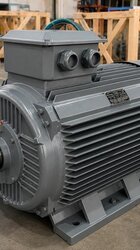
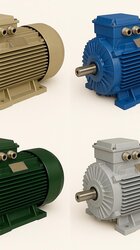
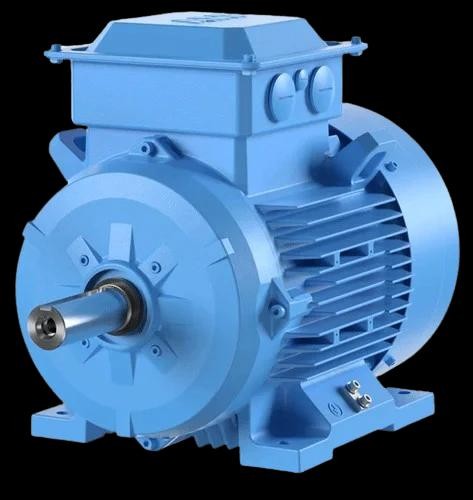

Cooling towers are critical equipment used to cool water in industrial plants, power stations and large air-conditioning systems. The cooling function of these towers depends on the fans that move the air and on the electric motors that drive them. Because a cooling tower fan motor works in continuous, humid and demanding conditions, it requires special attention. So how do you choose an electric motor for cooling tower fans?
In this article, DRG Motor looks at the selection criteria for cooling tower fan motors. You can also find guidance on motor selection for fan applications in our article on fan and blower motor selection.
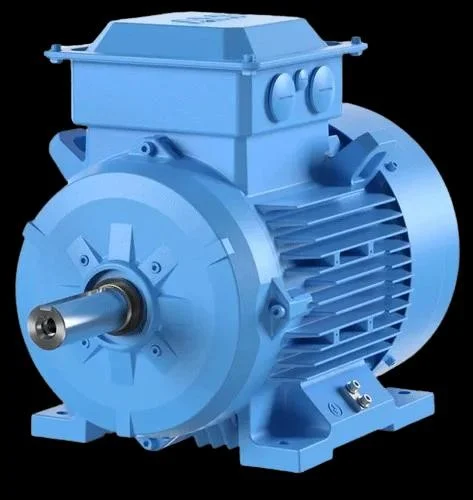
The Motor's Role in a Cooling Tower
In a cooling tower, the fan passes air over the hot water to cool it. The motor that turns this fan is the heart of the cooling process. If the motor stops, cooling stops and the dependent processes are disrupted. This is why a cooling tower motor must be reliable.
The continuity of cooling depends on the motor's reliability, and the right motor ensures uninterrupted cooling.
A Humid and Wet Environment
Cooling towers are environments of constant water and humidity. The fan motor is exposed to water splash and high moisture. This is why a high IP protection class and resistance to moisture are essential. Proper protection shields the motor from water and moisture.
We explain how to choose a protection class in our article on IP protection class selection. A high IP class is required in a cooling tower.
A High IP Protection Class
Cooling tower motors are generally selected in IP55 protection class or higher. This protection prevents water and moisture from entering the motor. Insufficient protection leads to rapid failure. A high IP class is the basic requirement of a cooling tower motor.
The correct protection class lets the motor run safely in a wet environment, which means long life.
Resistance to Corrosion
Constant moisture and water can cause corrosion on the motor's metal parts. This is why cooling tower motors must be protected with corrosion-resistant coatings and materials. Corrosion protection extends the motor's life, which means safe operation in a wet environment.
Corrosion is a significant threat to a cooling tower motor, and proper protection reduces that threat.
Continuous Operation
Cooling towers most often run without interruption; the need for cooling is constant. This is why the motors must be suited to continuous duty and be durable. A continuously running motor must operate safely for long hours, which secures the continuity of cooling.
We discuss the duty cycle in our article on nameplate details. A cooling tower demands continuous duty.
Correct Power and Air Flow
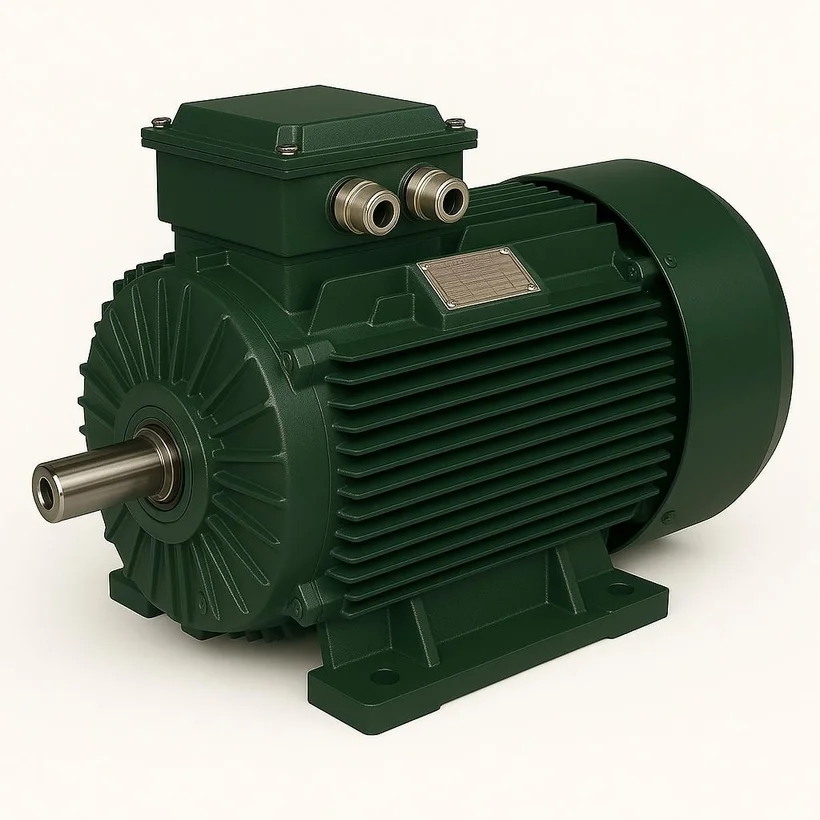
The power of a cooling tower fan motor is determined by the size of the tower and the required air flow. Insufficient power means inadequate cooling; excessive power means needless energy consumption. The right power delivers effective cooling, which determines the tower's efficiency.
You can find power options in our power (kW) and speed table. The right power is the foundation of cooling efficiency.
Vertical Mounting Position
Cooling tower fan motors are generally mounted in a vertical (V1) position. This position requires the shaft to carry the axial load. This is why the motor must be selected to suit vertical mounting and axial load. Correct mounting ensures the safe operation of the fan.
We explain mounting types in our article on mounting type selection. Vertical mounting is common in cooling towers.
Using a Gearbox
In large-diameter cooling tower fans, the motor generally works together with a gearbox due to speed limitations. The gearbox lets the fan turn at a suitable and safe speed. The correct motor-gearbox match is the foundation of cooling tower performance, and this combination delivers effective cooling.
We explain motor-gearbox matching in our article on motor and gearbox compatibility. A gearbox is used in large fans.
Speed Control with a Frequency Inverter
The need for cooling varies with ambient and load conditions. A frequency inverter (VFD) adjusts the fan speed to this need, delivering energy savings. The fan slows when cooling need is low and speeds up when it is high. This means significant energy savings.
We explain the advantages of the inverter in our article on the frequency inverter and energy saving. The inverter delivers savings in a cooling tower.
The Two-Speed Motor Option
Some cooling towers use two-speed motors for different cooling needs. By switching between high and low speed, these motors offer energy savings. Two speeds are a practical solution in cooling towers, which provides efficient operation.
We explain two-speed motors in our article on the two-speed electric motor. Two speeds offer flexibility in a cooling tower.
Insulation Class
Because of moisture and continuous operation, cooling tower motors must have a suitable insulation class. Class F insulation is generally preferred. The correct insulation class lets the motor run safely in a humid environment, which means long life.
We explain insulation class in our article on insulation class. The right insulation is important in a cooling tower.
Efficiency and Energy Cost
Because cooling towers run continuously, motor efficiency directly affects energy cost. High-efficiency motors deliver significant energy savings in cooling towers. In these continuously running systems, efficiency turns straight into profit. This is why an efficient motor should be preferred.
We cover efficiency classes in our article on high-efficiency electric motors. Efficiency is valuable in a cooling tower.
Sealed Bearings and Cabling
In cooling tower motors, sealed bearings and water-resistant cabling are important. These features prevent moisture and water from damaging the motor. The right components ensure safe operation in a wet environment, which extends the motor's life.
Water-resistant components are among the basic features of a cooling tower motor, which means reliable operation.
Vibration and Balance
Cooling tower fans must run balanced and vibration-free. An unbalanced fan or motor produces vibration that wears both the tower and the motor. A balanced rotor and quality bearings keep vibration to a minimum, which ensures long-lasting operation.
We explain vibration reduction in our article on reducing noise and vibration. Balance is important in a cooling tower.
Keeping the Motor Running
Cooling tower motors are often in hard-to-reach positions. This is why durable, low-maintenance motors are preferred. Regular maintenance lets the motor run safely in a humid environment, which supports the continuity of cooling.
We explain maintenance principles in our article on electric motor maintenance steps. Maintenance is important in a cooling tower.
Power Range
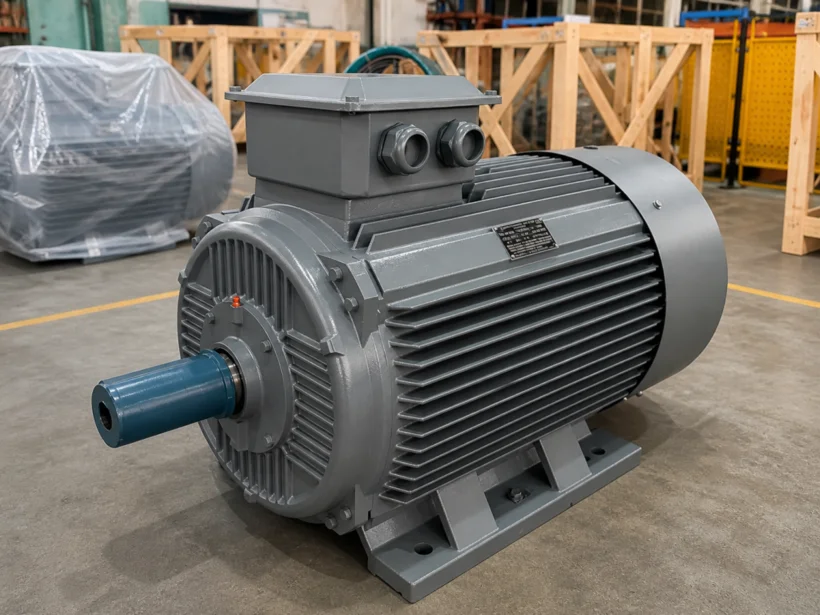
The motors used in cooling towers range across a wide power band, from small package-type towers to large industrial towers. The tower size determines the required motor power. The right power range is chosen according to the tower's need, which delivers effective cooling.
A motor at the right power lets a cooling tower run efficiently, which supports the facility's continuity.
Package-Type Cooling Towers
Smaller, package-type cooling towers run on relatively low-power motors. Compact, efficient motors are preferred in these towers. Small towers, too, require suitable protection because of their moisture and continuity requirements. The right motor lets package towers run efficiently.
Package-type towers require small but reliable motors, which makes correct selection important.
Open and Closed Circuit Towers
Cooling towers can be open or closed circuit; both need a fan motor. The circuit type affects the moisture and conditions to which the motor is exposed. The right motor is chosen according to the type and conditions of the tower, which delivers effective cooling.
The tower type affects motor protection and selection, which requires careful evaluation.
Protection Against Water Droplets
In a cooling tower, the fan motor may be continuously exposed to water droplets. Protection against these droplets is provided by a high IP class and proper sealing. Water droplets quickly damage an unprotected motor. The right protection eliminates this risk.
Water protection is among the most critical features of a cooling tower motor, which means safe operation.
Fan Balance and the Motor
A balanced cooling tower fan also lets the motor run vibration-free. An unbalanced fan places extra load on the motor and wears the bearings. This is why the fan and motor must be balanced together, which ensures a long-lasting system.
A balanced fan-motor group runs both quietly and durably, which is important in a cooling tower.
Cooling in Power Stations
Power stations cool large volumes of water with big cooling towers. In these applications, fan motors run at high power and continuously. Reliability and efficiency are critical in these large systems. The right motor secures the cooling continuity of the station.
Large-scale cooling requires powerful, reliable motors, which means uninterrupted operation.
In Air-Conditioning Systems
The air-conditioning systems of large buildings and facilities also use cooling towers. In these systems, fan motors are important for comfort and energy efficiency. Efficient, quiet motors are preferred in air conditioning, which delivers both comfort and savings.
Air conditioning benefits from quiet, efficient motors, which makes correct selection important.
Resistance to Temperature Changes
Because cooling towers operate outdoors, they are exposed to temperature changes. The motor must withstand both summer heat and winter cold. This is why motors that can run over a wide temperature range are preferred. The right motor runs safely in every season.
We discuss the effect of ambient conditions in our article on ambient temperature and altitude. Temperature resistance is important in a cooling tower.
Energy Monitoring
Energy monitoring of cooling tower motors catches inefficient operation and problems early. Monitoring shows whether the fan is running at an unnecessarily high speed. This delivers both energy savings and early fault detection. Monitoring is valuable in a cooling tower.
We explain energy monitoring in our article on energy monitoring. Monitoring delivers savings in a cooling tower.
Keeping a Spare Motor
Because cooling is a critical process, a fan motor failure can cause serious problems. This is why it is wise to keep a spare motor for critical cooling towers. A spare motor ensures that cooling does not stop in the event of a fault, which means continuity.
A spare motor supports production safety in a cooling tower, which is important in critical facilities.
Correct Speed Selection
Cooling tower fans generally run at low or medium speed. The right speed lets the fan run quietly and efficiently. A high speed means needless noise, while a low speed means inadequate cooling. The right speed delivers balanced cooling.
We explain speed and pole count in our article on pole count and speed. The right speed is important in a cooling tower.
A Total Cost Perspective
In selecting a cooling tower motor, energy and maintenance cost should be evaluated alongside the purchase price. An efficient, durable motor is the most economical over the long run. A cheap but unprotected motor fails quickly in a wet environment. This is why a total cost perspective matters.
We discuss the factors that determine price in our article on the factors that determine price. Total cost guides correct selection.
The Advantage of a Cast Iron Body
The humid, demanding conditions of a cooling tower require a durable housing. A cast iron body protects the motor from moisture, corrosion and vibration, and this is what gives a cooling tower motor its long life. A solid housing is the foundation of durability in a wet environment.
We explain the advantages of a cast iron body in our article on the cast iron electric motor. A solid housing is important in a cooling tower.
The Right Protection Combination
In cooling tower motors, a high IP class and a suitable insulation class are evaluated together. This combination protects the motor from both moisture and heating. The right protection combination ensures safety in a wet, continuously running environment, which means long life.
Protection and insulation together fully protect a cooling tower motor, which ensures reliable operation.
Efficient Cooling Management
A frequency inverter and an efficient motor together deliver significant energy savings in a cooling tower. Adjusting the fan speed to the cooling need prevents needless consumption. This means both efficient cooling and low cost. Smart management is valuable in a cooling tower.
Efficient cooling management delivers both energy and water savings, which means a sustainable solution.
Sourcing a Cooling Tower Motor from the Right Supplier
It is important to buy a cooling tower motor from a reliable supplier that understands the requirements of a humid environment. A trustworthy dealer recommends a protected, durable motor suited to your application. This delivers both efficient cooling and continuity. The right supplier matters in a cooling tower.
We explain how to choose the right supplier in our article on choosing an electric motor dealer. A reliable source means the right motor.
The Right Choice with Expert Support
Cooling tower motor selection requires moisture, continuity and efficiency requirements to be evaluated together. Consulting an expert helps you identify the motor best suited to your tower. The right support delivers both efficient cooling and long life. Expert evaluation is the key to a correct selection.
At DRG Motor, we provide technical support in motor selection for your cooling tower. The right choice delivers uninterrupted, efficient cooling.
Air Flow and Cooling Efficiency
The efficiency of a cooling tower depends directly on the air flow the fan provides. A motor at the right power and speed delivers sufficient air flow, allowing the water to cool effectively. Insufficient air flow lowers cooling performance. This is why motor selection directly determines cooling efficiency.
Correct air flow supports both cooling efficiency and water savings, which brings direct gains to the business.
DRG Motor for Cooling Tower Fan Motors
At DRG Motor, we offer high-IP, durable and efficient motors suited to the humid, continuous and demanding conditions of cooling towers. Our aim is to keep your cooling system running uninterrupted and efficient. By evaluating your tower size, air flow and operating conditions, we recommend the motor best suited to you.
To choose the most suitable fan motor for your cooling tower and receive technical support, you can contact DRG Motor and review our range on our products page or our homepage. The right motor is the guarantee of your cooling system's uninterrupted operation.