 English
 Le français
 Türkçe

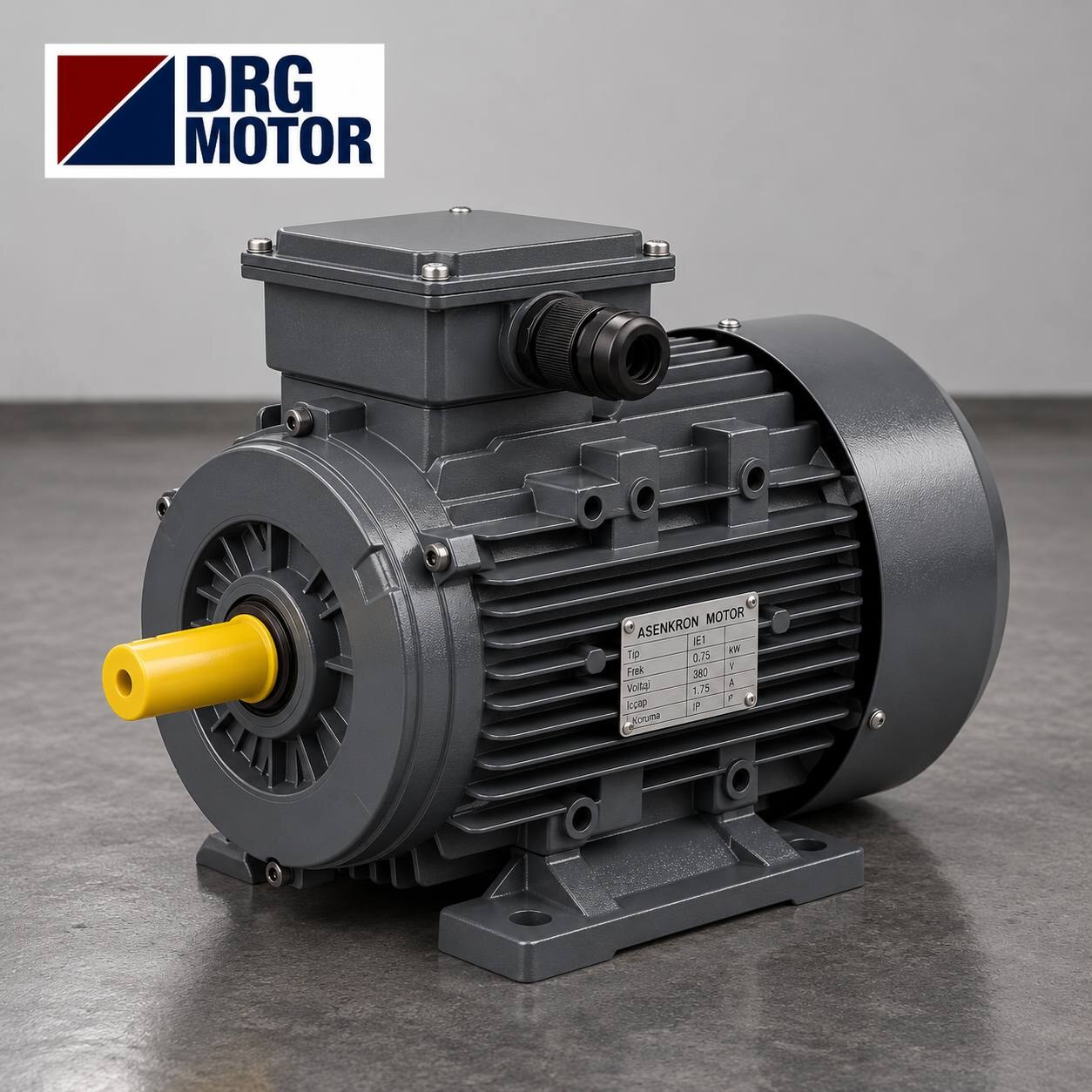

One of the concepts most frequently encountered when selecting an electric motor is the pole count. Two motors of the same power, when they have different pole counts, turn at completely different speeds and suit completely different applications. The pole count is the fundamental factor that determines a motor's speed and is one of the keys to correct motor selection. So how does the pole count determine an electric motor's speed, and which pole count is preferred for which application?
At DRG Motor, in this article we examine the relationship between pole count and speed and its effect on motor selection. You can also find the concepts of power and speed in our article on what an electric motor is.
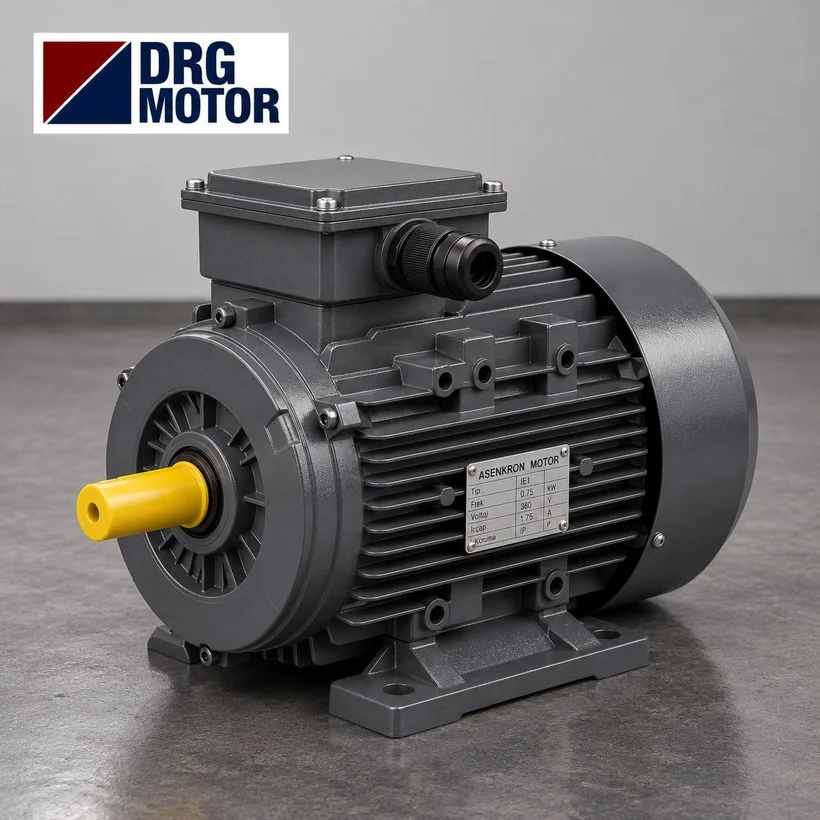
What Is Pole Count?
The pole count expresses the number of magnetic poles formed in the motor's stator. These poles are created by the arrangement of the windings and are always an even number. The pole count determines how the motor's magnetic field rotates and therefore the motor's speed. The pole count is thus a fundamental design feature of the motor.
As the pole count rises, the motor's speed falls; as it falls, the speed rises. This inverse relationship forms the basis of motor selection.
Synchronous Speed and Its Formula
A motor's synchronous speed is the rotation speed of the magnetic field and depends on the frequency and the pole count. At a 50 Hz mains frequency, the synchronous speed is set by the pole count. As the pole count rises, the synchronous speed falls. This calculation shows the motor's theoretical speed.
The synchronous speed is the maximum theoretical speed the motor can reach. The actual speed is slightly lower than this; this difference is called slip.
2 Poles and High Speed
Two-pole motors turn at a synchronous speed of roughly 3000 rpm at 50 Hz and are the highest-speed motors. This high speed is ideal for pumps that move water quickly and for applications requiring high speed. Two-pole motors are fast but produce lower torque at the same power.
Centrifugal pumps requiring high speed and some compressors run with two-pole motors. They are preferred in applications where speed is the priority.
4 Poles and Medium Speed
Four-pole motors turn at a synchronous speed of roughly 1500 rpm and are the most widely used motors. This medium speed is ideal for many general applications, offering a balanced point between speed and torque. Most fans, pumps and general industrial applications run with four-pole motors.
For applications requiring a balance of speed and torque, four poles are the most suitable choice. This is therefore the most preferred pole count.
6 Poles and Low Speed
Six-pole motors turn at a synchronous speed of roughly 1000 rpm and are low-speed motors. This low speed produces higher torque at the same power. Conveyors, crushers and applications requiring high torque prefer six-pole motors.
Applications requiring slow but powerful rotation benefit from six-pole motors. This choice stands out where torque is the priority.
8 Poles and Very Low Speed
Eight-pole motors run at an even lower speed of roughly 750 rpm and produce very high torque. These motors are used for special applications requiring very heavy and slow rotation. Low speed means high torque and allows heavy loads to be turned slowly. In very special and heavy applications, eight-pole motors come into play, offering the highest torque at the lowest speed.
Why Does Pole Count Lower the Speed?
As the pole count rises, the magnetic field requires more stages to complete one full revolution. This means the magnetic field rotates more slowly, so the motor runs at a lower speed. More poles mean slower but more powerful rotation. This relationship is physically fixed.
The pole count therefore directly determines the motor's speed character. Choosing the speed is, in effect, choosing the pole count.
What Is Slip?
In asynchronous motors, the rotor turns slightly more slowly than the magnetic field; this difference is called slip. Slip is what creates the necessary force in the rotor and turns the motor. The actual speed is therefore slightly lower than the synchronous speed. For example, a four-pole motor turns at roughly 1450 rather than 1500 rpm.
Slip is a natural part of how asynchronous motors work. The speed value on the nameplate usually shows this actual speed.
The Relationship Between Pole Count and Torque
As the pole count rises, the torque a motor produces at the same power also rises. Because when power is constant, torque increases as speed falls. Low-speed (high-pole-count) motors are therefore preferred in applications requiring high torque. Torque and speed are in an inverse relationship.
This relationship is critically important when turning heavy loads. High torque is the advantage of high-pole-count motors.
The Effect of Frequency on Speed
Besides the pole count, the motor's speed also depends on the mains frequency. At a standard 50 Hz, specific speeds are produced; when the frequency changes, the speed changes too. A frequency inverter makes it possible to adjust the motor's speed by changing the frequency. This lets a motor with a fixed pole count run at different speeds.
We explain inverter speed control in our article on the frequency inverter and energy saving. The inverter provides speed flexibility.
How Is the Pole Count Read From the Nameplate?
Although a motor's pole count is not usually written directly on the nameplate, it is understood from the speed value. Roughly 2800-2900 rpm means 2 poles, 1400-1450 rpm means 4 poles and 900-950 rpm means 6 poles. The speed value on the nameplate is the practical way to determine the pole count. This information also helps in finding the right spare motor.
Reading the nameplate values correctly lets you understand the pole count. We cover nameplate reading in our article on nameplate details.
The Advantages and Disadvantages of High Speed
High-speed (two-pole) motors offer fast rotation and a generally more compact build. However, they produce lower torque and can make more noise in some applications. High speed suits applications where speed is the priority. In heavy work requiring torque, it falls short.
High speed should therefore be chosen according to the application's need for speed. In the right place, high speed provides an advantage.
The Advantages of Low Speed
Low-speed (high-pole-count) motors offer high torque and generally quieter operation. They turn heavy loads slowly but powerfully. However, they can be larger and more expensive at the same power. Low speed is ideal for applications where torque is the priority.
Applications such as crushers, conveyors and mills benefit from low speed. In the right place, low speed provides power.
Reducing Speed With a Gearbox
Sometimes when very low speed is required, a gearbox is placed between the motor and the equipment. The gearbox lowers the motor's speed and increases torque. In this way, even a high-speed motor can run at low speed and high torque with a gearbox. The gearbox meets speed and torque needs flexibly.
Geared motors are common in conveyors and similar applications. This combination provides the desired speed and torque.
Pole Selection by Application
The correct pole count is determined according to the application's need for speed and torque. Two poles are preferred in pumps requiring high speed, four poles in general applications, and six or eight poles in heavy work requiring high torque. This choice ensures efficient and correct motor operation. The wrong pole count means a mismatch with the application.
You can find power and speed options in our power (kW) and speed table. The right pole count is part of the right choice.
Pole Selection in Pumps
Pumps generally run with two- or four-pole motors because they require high speed. High-flow centrifugal pumps prefer two poles, while some pumps run more efficiently with four poles. The pump's design determines the appropriate pole count. We cover pump motor selection in our article on water pump electric motor selection.
Pole Selection in Conveyors and Crushers
Conveyors and crushers generally run with four-, six- or eight-pole motors because they require high torque. Low speed provides the torque needed to carry heavy loads safely. In these applications, the pole count directly affects carrying capacity. For an example of a high-torque application, you can look at our article on stone-crushing plant motors.
Pole Count and Efficiency
The efficiencies of motors with different pole counts can also differ. In general, motors are most efficient when running near their rated load. The correct pole count ensures the motor runs in harmony with the application and efficiently. The wrong speed leads to a loss of efficiency. We discuss the importance of efficiency classes in our article on high-efficiency electric motors.
Can the Pole Count Be Changed?
A motor's pole count is set during production and cannot easily be changed afterwards. When a different speed is required, either a motor with a different pole count is chosen or a frequency inverter is used. Some special motors can run at two different pole counts as two-speed designs. In general, however, the pole count is fixed.
The correct pole count must therefore be determined at the purchasing stage. A wrong choice may require replacing the motor.
The Right Choice for the Right Speed
In the end, the motor's speed is determined by the pole count and should be chosen according to the application's need. The question of whether speed or torque is the priority determines the correct pole count. This choice ensures the motor runs efficiently, correctly and for a long time. The right speed is the foundation of a successful application.
Correctly analysing the needs of your application is the key to choosing the right pole count, which provides the best performance.
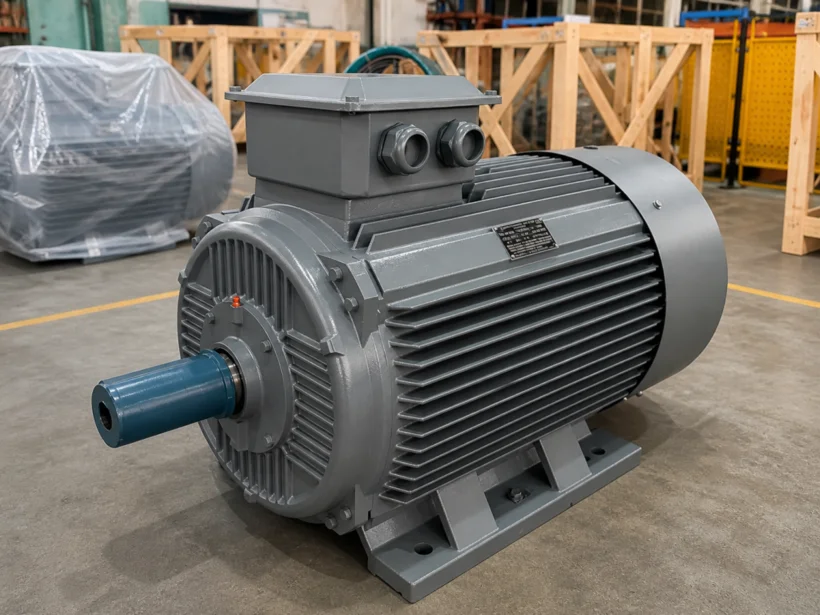
Two-Speed Motors
Some special motors are produced in a two-speed design that can run at two different pole counts. These motors offer two different speeds in a single unit, providing flexibility. For example, a ventilation system can run at high or low speed as needed. Two-speed motors are a practical solution for certain applications.
These motors offer an alternative to the frequency inverter for speed adjustment. However, they provide only two fixed speeds; for infinite adjustment an inverter is needed.
Speed and Energy Consumption
The motor's speed also affects energy consumption, especially in applications such as pumps and fans. In these systems, energy consumption falls noticeably when the speed drops. Correct speed selection is therefore also important for energy savings. Speed determines both performance and consumption.
Adjusting the speed with a frequency inverter makes these savings possible. The right speed is optimal for both the work and the energy.
The Relationship Between Speed and Noise
In general, high-speed motors produce more noise, while low-speed motors run more quietly. In environments where noise matters, the choice of speed is also evaluated from this angle. A low-speed motor provides both quietness and high torque, which is an advantage in terms of comfort.
In applications requiring quiet operation, the choice of speed affects the noise. The right speed also takes comfort into account.
Common Mistakes in Speed Selection
The most common mistake in speed selection is looking only at power and ignoring speed. Motors of the same power but different speeds are for different applications. The wrong speed selection causes the application to run inefficiently or fail to reach its target. Power and speed should therefore be evaluated together, and this mistake is prevented with correct analysis.
Speed and Motor Size
At the same power, low-speed motors are generally larger and heavier because they contain more poles and material. High-speed motors, on the other hand, are more compact. This size difference is taken into account for mounting space and cost. The choice of speed also affects the motor's physical size, which can be important in limited spaces.
Speed and Application Pace
The operating pace an application requires directly determines the motor's speed. A pump's flow rate, a fan's airflow or a conveyor's belt speed all depend on the motor's speed. The application's pace requirement is therefore the starting point of speed selection. The right pace yields the right result, and correctly determining it lets you choose the right-speed motor.
The Importance of Speed Control
While some applications are content with a fixed speed, others require variable speed. In applications needing variable speed, speed control is provided with a frequency inverter. This control offers both flexibility and energy savings. Speed control is an important part of modern motor systems, while a motor with the correct pole count is sufficient for fixed-speed applications.
Speed and the Connected Equipment
The motor's speed must be compatible with the operating pace of the connected equipment. In directly coupled systems, the motor speed sets the equipment's pace; in geared systems, the pace is adjusted. This compatibility is critical for the correct operation of the system. The wrong speed causes the equipment to run inefficiently. When motor and equipment are evaluated together, the correct speed emerges.
Expert Support in Speed Selection
Choosing the right pole count and speed requires correctly analysing the application's need for speed and torque. In case of doubt, consulting an expert lets you determine the most suitable speed. The right support removes the risk of a wrong choice, which means an efficient application. At DRG Motor, we offer technical support to determine the most suitable speed for your application.
Speed and Production Efficiency
A motor running at the correct speed also ensures that the production process it is connected to is efficient. The wrong speed either slows production or fails to process the material correctly. The choice of speed therefore affects not just the motor but the entire production process. The right speed means efficient production and should be considered as part of production planning.
DRG Motor for the Right-Speed Motor
At DRG Motor, we offer a wide range of motors in 2, 4, 6 and 8 poles with different speed options. Our aim is to provide the motor at the speed best suited to your application's need for speed and torque. Pump, fan, conveyor or crusher: we recommend the motor with the right pole count for every application.
To select the motor with the speed and pole count best suited to your application and to receive technical support, you can contact DRG Motor and explore our range on the products page, or visit our home page. The right pole count ensures your motor is perfectly matched to the application.