English
 Le français
 Türkçe





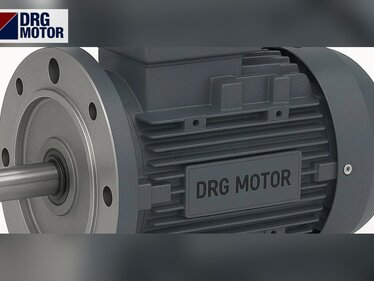
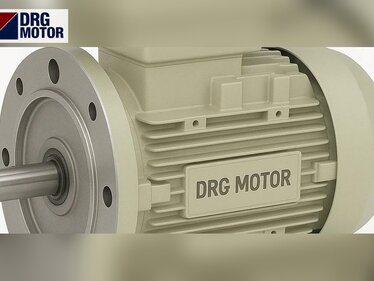
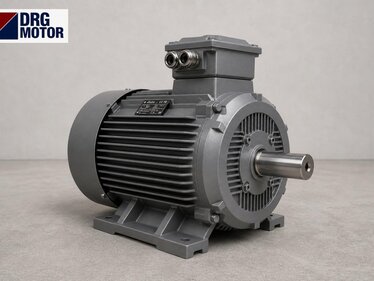
A B14 flange electric motor has a small-diameter flange on its front end shield with threaded (tapped) holes, and it is fixed to the machine with bolts screwed into those holes. The price and the model you order are set by power, speed and frame; B14 is the mounting option written on the order note. A correct quotation therefore needs three things: the motor's power and speed, the size of the flange on the mating part, and the mounting code stated clearly as "B14". B14 is listed among the mounting options on the product pages of our store; you can see current prices model by model on the Buy Electric Motors Online page.
Unlike the large B5 flange, the small flange does not fit into a single standard table: more than one B14 size can be used on the same frame, so we take the dimension from the machine you are connecting to, not from a catalogue row, and confirm it before the order. This article briefly explains what a B14 flange is, then covers in detail how to measure it and how to write it on the order.
For the technical difference between FF and FT holes see our article FF and FT hole difference on B5 and B14 flange motors, and for a general introduction to B14 motors see B14 flange electric motors; we do not repeat those topics here.
What is a B14 small flange, in short?
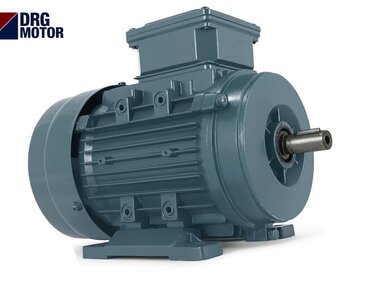
In IEC mounting codes, B14 describes a motor without feet and with a small flange at the front. The flange outer diameter is close to the motor housing and the holes are threaded; the bolt is passed from the machine side and screwed into the motor flange. Catalogues also call this flange "FT". The combined foot and small-flange mounting is coded B34.
The point most often confused on site is this: on a B5 flange the holes are plain and the bolt enters from the motor side; on a B14 the motor flange acts as the nut. Because the bolting direction changes, a B14 motor cannot be fitted to a B5 machine, or the other way round, without an adapter flange.
Where are B14 flange motors used?
- Small centrifugal and gear pumps: When the seat on the motor side of the pump casing is narrow, the flange diameter is kept small too.
- Worm and small helical gearboxes: On gearboxes with a compact input flange the motor is screwed directly onto the gearbox. For gearbox selection details see our article on choosing a flange motor for a gearbox.
- Hydraulic power units: The bell housing between motor and pump is often machined for the small flange.
- Drives built into machines: In tight spaces such as packaging, conveyor drums or mixers, the flange should not protrude beyond the housing.
The common thread is small and medium power. As the frame and the load grow, the connection usually moves to the large flange (B5) or to a foot-and-flange design.
How do you take the B14 dimension from the machine?
Measuring the mating part instead of picking a size from a catalogue prevents mistakes. Measuring order:
- Spigot diameter: Measure the diameter of the recess (or register) on the machine with a caliper. The pilot on the motor flange must fit this diameter closely.
- Bolt circle: Measure between the inner edges and between the outer edges of two opposite holes and average them; this gives the circle through the hole centres.
- Number of holes and bolt: Count the holes and note the thread size and length of the existing bolt. The bolt length must not exceed the thread depth in the motor flange.
- Shaft bore: Measure the bore and keyway width of the coupling or gearbox hub.
- Photo: A straight-on photo of the mating part with a ruler on it speeds up confirmation.
Who confirms the dimension, and how?
Send us the values you measured together with the motor power and speed; before the order we confirm that the B14 flange of the selected model matches your measurement. You can view dimensioned motor drawings in 2D and 3D on our technical drawings page. Do not order a B14 motor on power and speed alone without confirming the flange size.
What can you read from the old motor's nameplate?
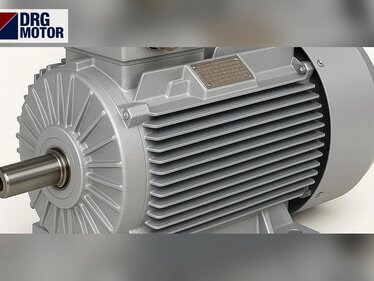
If the nameplate of the motor being replaced is legible, three items make the job easier: the mounting code (IM B14 or just B14), the frame code (e.g. 90L) and the rated values. For example, if the nameplate shows 2.2 kW, 2 poles and 90L, the match is the DRG-90L-2 model: rated speed 2895 rpm, rated current 4.35 A at 400 V, shaft 24×50 mm. If the frame code is the same, shaft and housing dimensions match; still confirm the bolt circle and spigot of the B14 flange on the mating part, because the nameplate does not give this dimension.
How do you specify B14 on the order?
The table below summarises which information we ask for in a B14 flange motor order, why, and where you can find it.
| Order item | Why is it needed? | Where do you get it? |
|---|---|---|
| Mounting code: B14 (IM B14, FT) | Prevents confusion with B5; the flange type follows from this code | Old motor nameplate or machine manual |
| Power (kW) and speed | Defines the frame size | Old motor nameplate or load calculation |
| Bolt circle and spigot diameter | A B14 flange can come in different sizes even on the same frame | Caliper measurement on the mating part |
| Number of holes and thread size | So that the bolt can be screwed into the motor flange | Size of the existing bolt |
| Shaft diameter, length and key | Fit into the coupling or gearbox hub | Measurement of the coupling hub |
| Mounting direction (horizontal / shaft down / shaft up) | Confirmation of bearings and sealing | Position on the machine |
| Housing material | Weight and ambient conditions | Aluminium or cast iron preference |
Example order note: "DRG-90L-2, B14 mounting, bolt circle and spigot size to be confirmed against the attached measurement, horizontal shaft." A note like this rules out confusion with a B5 motor of the same power from the start.
Common B14 ordering mistakes
- Writing only "flange motor": Most suppliers read "flange" as the large B5 flange; the small flange has to be written as a code.
- Not checking the old motor's bolt: A longer bolt bottoms out in the motor flange and the clamping force never reaches the flange.
- Assuming the flange stays the same when power goes up: Moving up one power step often means moving up one frame; the B14 flange size changes too.
- Hanging a heavy motor on a small flange: As the frame grows, the bolts of the small flange carry both the weight and the reaction torque; a large flange or foot mounting should then be considered.
Technical factors that affect the price of a B14 flange motor
- Power and pole number: At the same power a 6-pole motor needs a larger frame than a 2-pole one.
- Housing material: Small powers are available with aluminium and cast iron housings; the store lists both as separate products.
- Mounting type: B14, B5, B3 or B35; the flange type defines the front end shield.
- Options: Requests such as PTC/PT100 thermal protection and a special mounting direction.
To compare models side by side on these factors, browse the 120 models in our online store and state your B14 requirement in the order note.
Pre-order checklist
- Is the mounting code written as "B14"?
- Were the spigot diameter and bolt circle measured on the mating part?
- Were the number of holes and the bolt thread size noted?
- Were the shaft diameter and key compared with the coupling hub?
- Does the motor voltage suit the supply? Motors up to 3 kW are wound 230/400 V and are star-connected on a 380 V supply.
- Was the dimension confirmation received before ordering?
Small-frame motors you can order with B14 mounting
- DRG-711-4 – 0.25 kW – 1340 rpm – 71, aluminium frame
- DRG-801-4 – 0.55 kW – 1400 rpm – 80, aluminium frame
- DRG-90S-4 – 1.1 kW – 1445 rpm – 90S, aluminium frame
- DRG-90L-2 – 2.2 kW – 2895 rpm – 90L, aluminium frame
- DRG-100L1-4 – 2.2 kW – 1450 rpm – 100L, aluminium frame
- DRG-112M-4 – 4 kW – 1450 rpm – 112M, aluminium frame
Click to see current prices and order these motors nowSEE PRICES →
Frequently Asked Questions
Can a B14 flange replace a B5 flange?
No. On B5 the holes are plain and the flange is large; on B14 the holes are threaded and the flange is small. One can only replace the other with an adapter flange, which also lengthens the shaft line.
Is the B14 flange size written on the motor nameplate?
Most nameplates show only the mounting code (IM B14), not the flange size. Taking the dimension from the mating part and confirming it before the order is the safest way.
Can a B14 flange motor run vertically?
Yes; if the shaft-down or shaft-up position is stated on the order, bearings and sealing are assessed accordingly. Vertical B14 use is common on small pumps and mixers.
What information is needed to order a B14 motor?
Power, speed, mounting code, spigot diameter, bolt circle, number of holes and thread size, shaft size and mounting direction. These are summarised in the table above.
You can list suitable frames by power and speed on the Buy Electric Motors Online page. Send your measurement photos to [email protected] or call us on +90 (542) 666 11 11; all contact channels are on our contact page. DRG Motor is a manufacturer and supplier of three-phase electric motors.