English
 Le français
 Türkçe




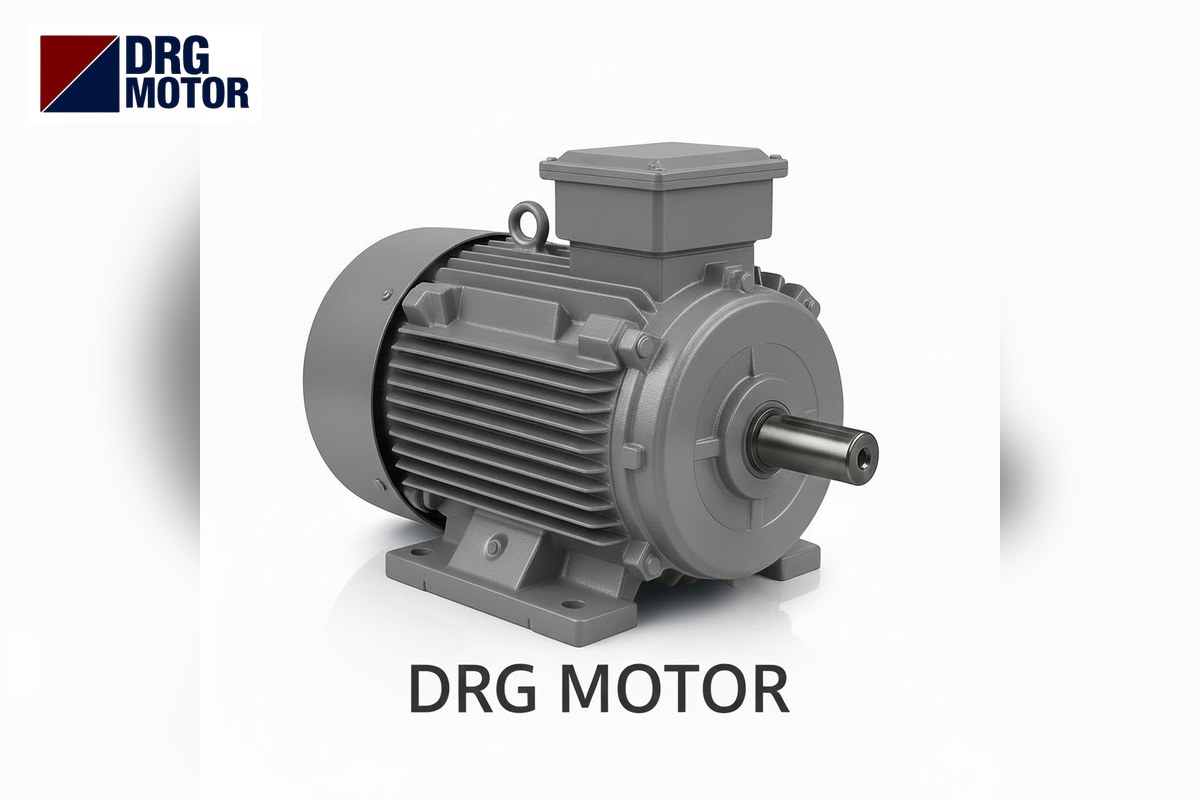

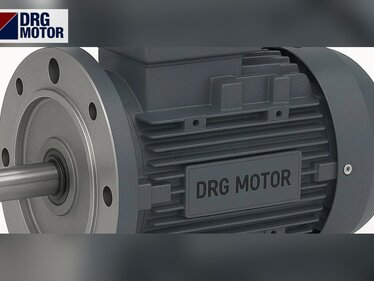
The answer to "small flange or large flange?" is not written on the motor but on the face of the machine you are connecting to: if the holes on the machine are plain clearance holes and you can fit the bolts from the machine side, you need a small flange (B14); if the holes are tapped or there are studs and the bolt will enter from the motor side, you need a large flange (B5). The second check is the bolt circle; if the circle you measure is clearly smaller than the catalogue B5 value of the frame you need, the connection in front of you is most likely a small flange. The price of a small flange electric motor, like that of a large flange model, depends on power, speed and frame; current prices model by model are on the Buy Electric Motors Online page.
This article is a decision guide: it puts the two flanges side by side on the same criteria and explains how to work out from the machine's mounting face which one is needed and when you should change your choice. The definition and ordering details of the B14 flange are a separate subject; for the overall picture of mounting types see our B3, B5, B14 and B35 comparison.
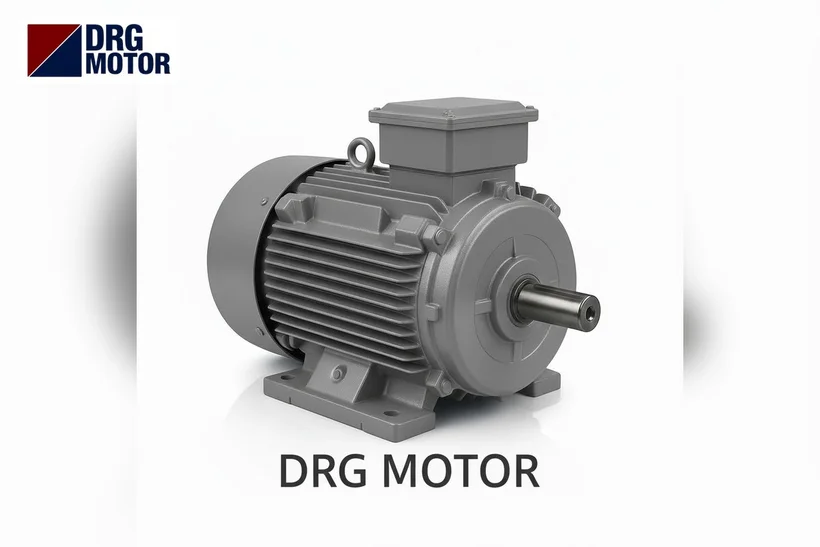
Small versus large flange: decision table
Below are the seven criteria to check when deciding. Most rows can be answered by looking at the machine; you need the motor catalogue only for the bolt circle row.
| Decision criterion | Small flange (B14 / FT) | Large flange (B5 / FF) |
|---|---|---|
| Fixing holes on the machine | Plain (clearance) holes; bolt enters from the machine side | Tapped holes or studs; bolt enters from the motor side |
| Access to bolts | From the machine side | From the motor side, behind the flange |
| Bolt circle | Smaller than the B5 value of the same frame | Catalogue M value (e.g. 215 mm for 100L–112M) |
| Space taken | Stays within the housing diameter, shorter overall | Projects beyond the housing diameter |
| Typical load | Small frame, low weight | Medium and large frames, high reaction torque |
| Dimension data | No catalogue table; measure the mating part and confirm | Read directly from the B5 table |
| Typical layout | Pump bell housing, compact gearbox, built-in drive | Gearbox input, vertical fan, large pump |
Deciding in three steps from the machine's mounting face
- Look at the holes: If the motor-side face of the machine has tapped holes or protruding studs, the motor flange must have plain holes for the bolt to pass through; that is the large flange. If the holes are plain and a nut or bolt head sits behind them, the motor flange must be threaded; that is the small flange.
- Measure the bolt circle: Average the inner and outer edge readings of two opposite holes and compare the result with the M value in the reference table below.
- Check the spigot diameter: If the spigot recess on the machine equals the B5 N value in the same row, the large flange is confirmed. If it is smaller, there is a small flange or a non-standard connection and the size needs confirming.
Comparing with B5 reference values
Because the catalogue has no standard dimension table for the small flange, we make the comparison against the known values of the large flange. If the bolt circle you measure is smaller than the M value in the row of the frame you need, a small flange is likely. Values in mm.
| Frame | Housing diameter AC | B5 bolt circle M | B5 spigot N | B5 outer diameter P | If your measured circle is smaller than M |
|---|---|---|---|---|---|
| 71 | 136 | 130 | 110 | 160 | Likely B14 – have the size confirmed |
| 80 | 167 | 165 | 130 | 200 | Likely B14 – have the size confirmed |
| 90L | 182.4 | 165 | 130 | 200 | Likely B14 – have the size confirmed |
| 100L | 205.4 | 215 | 180 | 250 | Likely B14 – have the size confirmed |
| 112M | 230 | 215 | 180 | 250 | Likely B14 – have the size confirmed |
| 132S | 258.4 | 265 | 230 | 300 | Likely B14 – have the size confirmed |
Example: you are replacing a 3 kW, 2-pole pump motor; this power corresponds to frame 100L, whose large flange has a 215 mm bolt circle and a 180 mm spigot. If the bolt circle you measure on the pump bell housing is close to 215 mm, the large flange DRG-100L-2 is ordered as B5; if it is clearly smaller, the same model is ordered as B14 and your measurement is confirmed before the order. You can review the drawings on our technical drawings page.
Which flange makes more sense for each application?
- Hydraulic unit and pump bell housing: If the bell housing is machined for the motor's small flange, stay with the small flange; if you are redesigning the bell housing, a large flange makes mounting and bolt access easier.
- Worm gearbox: On small gearboxes the input is usually made for the small flange; the input flange code in the gearbox catalogue decides.
- Vertical fan and extractor: The motor hangs from its flange, so the load increases; on medium frames the large flange is preferred.
- Drive built into a machine: If the flange must not project beyond the housing in a tight space, the small flange comes first.
- Replacing an existing motor: The safest path is to keep the same flange; changing the flange means changing the mating part as well.
When you should change your choice
When you need more power, the flange decision opens again. One power step up is often one frame up: a 2-pole motor going from 2.2 kW to 3 kW moves from frame 90L to 100L, and the large flange bolt circle rises from 165 mm to 215 mm. The small flange grows in a similar way. In that case check whether the mating part fits the new flange. Verifying the required power with our pump and fan motor power calculator avoids moving up a frame unnecessarily.
Lowering the speed has the same effect. At 1.5 kW, DRG-90S-2 (2895 rpm) and DRG-90L-4 (1445 rpm) are frame 90 motors whose large flanges share the 165 mm bolt circle, while the 6-pole DRG-100L-6 (949 rpm) moves to frame 100L and the 215 mm circle. If you are thinking of switching to a lower-speed motor instead of changing the pulley ratio, make the flange decision again for that frame.
It is possible to switch from one type to the other with an adapter flange, but the shaft line gets longer and the position of the coupling hub changes. Before treating an adapter as a permanent solution, see whether the mating part can be changed to suit the correct flange.
Common mistakes in the decision
- Deciding by the flange outer diameter: What matters is the hole type, the bolt circle and the spigot diameter.
- Treating the flange as fixed when power goes up: If the frame changes, the flange size changes too.
- Hanging a heavy vertical motor on a small flange: A smaller bolt circle puts a higher force on the bolts for the same reaction torque.
- Ordering a small flange without size confirmation: The small flange can come in different sizes on the same frame.
How the flange choice affects price, and other technical factors
- Frame, power and pole number: These set the price; the flange type does not change the frame.
- Housing material: Up to 11 kW there are aluminium and cast iron options.
- Mounting type: B14, B5, B3 or B35 defines the front end shield and housing design.
- Options: PTC/PT100 thermal protection, notice of vertical operation.
To compare models on these criteria, browse the 120 models in our online store and state your flange choice in the order note.
Decision checklist
- Are the holes on the machine tapped or plain?
- From which side can you reach the bolts?
- Is the measured bolt circle equal to or smaller than the frame's B5 M value?
- Does the spigot recess equal the B5 N value?
- Will the motor run vertically, and will the flange carry the load?
- Does a power increase require a frame change?
- If a small flange was chosen, was the size confirmed before ordering?
2-pole motors you can order with a small or large flange
- DRG-801-2 – 0.75 kW – 2880 rpm – 80 frame, aluminium
- DRG-90S-2 – 1.5 kW – 2895 rpm – 90S frame, aluminium
- DRG-100L-2 – 3 kW – 2895 rpm – 100L frame, aluminium
- DRG-112M-2 – 4 kW – 2905 rpm – 112M frame, aluminium
- DRG-132S1-2 – 5.5 kW – 2930 rpm – 132S frame, aluminium
Click to see current prices and order these motors nowSEE PRICES →
Frequently Asked Questions
Is a small flange motor smaller than a large flange motor?
No, the motor housing is the same. The only difference is the diameter and hole type of the flange on the front end shield; power, speed and shaft size do not change on the same frame.
How do I know which flange my machine has?
Check whether the holes are tapped or plain, and measure the bolt circle and spigot diameter. If the bolt circle is smaller than the frame's B5 value, a small flange is likely.
Can a large flange motor be fitted in place of a small flange?
Not directly; the bolt circle and bolting direction differ. It is possible with an adapter flange, but the shaft line gets longer.
Small or large flange for a vertical fan?
Because the motor hangs from its flange, the large flange is safer on medium and large frames; on light fans with small frames a small flange can also be used.
You can filter suitable models by power and speed on the Buy Electric Motors Online page. Send a photo and the measurements of your machine's mounting face to [email protected] or call +90 (542) 666 11 11; other channels are on our contact page. DRG Motor is an electric motor manufacturer and supplier.