English
 Le français
 Türkçe




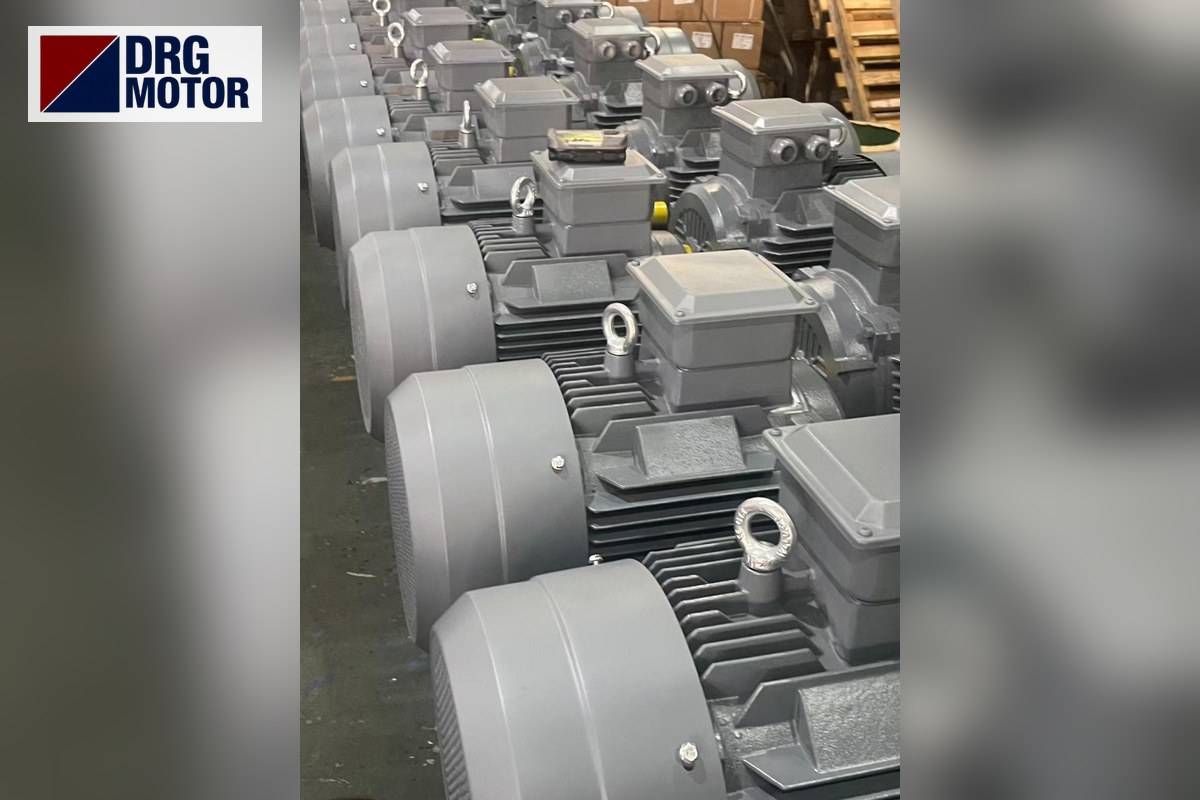

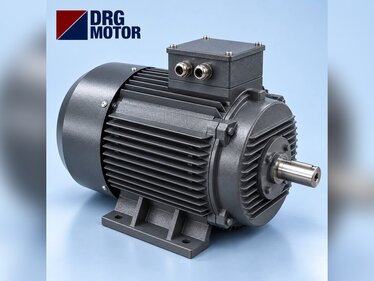
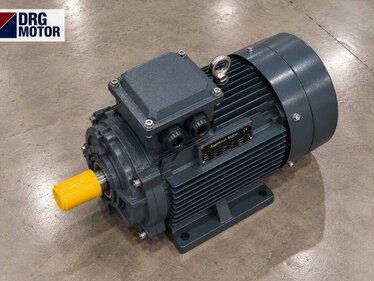
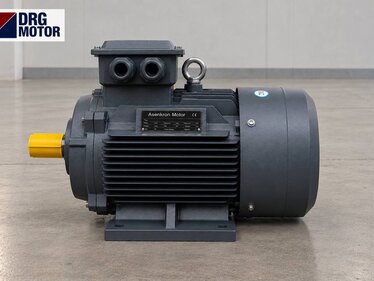
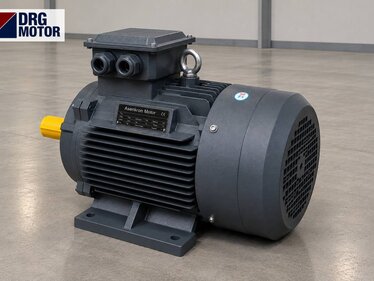
A 40 HP (30 kW) three-phase electric motor draws between 52.1 A and 56.2 A at full load on a 400 V supply, depending on the number of poles; at 380 V the figure rises to 54.9–59.1 A. For the most common choice, the 1500 rpm DRG-200L-4, the 400 V current is 53.8 A, and on a short run (30–40 m) a 16 mm² copper cable is sufficient in the worked example. The current, cos φ and product pages of all three models are below; for current prices and ordering, all 120 models are listed on our Buy Electric Motors Online page.
The reason the current differs at the same 30 kW is the power factor: cos φ is 0.89 on the 2-pole motor and 0.83 on the 6-pole one. As cos φ falls, more reactive current flows through the line for the same shaft power, and the cable, breaker and overload relay must carry that difference. So size the cable and panel from the nameplate current of the model you buy, not from a generic "40 HP" figure. The panel connection and the final cable size decision must be made by a qualified electrician.
40 HP Motor Current Chart by Voltage and Pole Number
| Model | Poles / rated speed | Current 380 V | Current 400 V | Current 415 V | cos φ | Is/In | Store |
|---|---|---|---|---|---|---|---|
| DRG-200L1-2 | 2 / 2960 rpm | 54.9 A | 52.1 A | 50.3 A | 0.89 | 7.6 | See Prices |
| DRG-200L-4 | 4 / 1475 rpm | 56.6 A | 53.8 A | 51.8 A | 0.86 | 7.3 | See Prices |
| DRG-225M-6 | 6 / 980 rpm | 59.1 A | 56.2 A | 54.1 A | 0.83 | 6.9 | See Prices |
The currents in the table are full-load values. The motor draws less at partial load, but cable and protection are sized for full-load current. If your transformer supplies close to 415 V, a measured current below the 400 V value is normal. To compare other ratings, see the motor current chart.
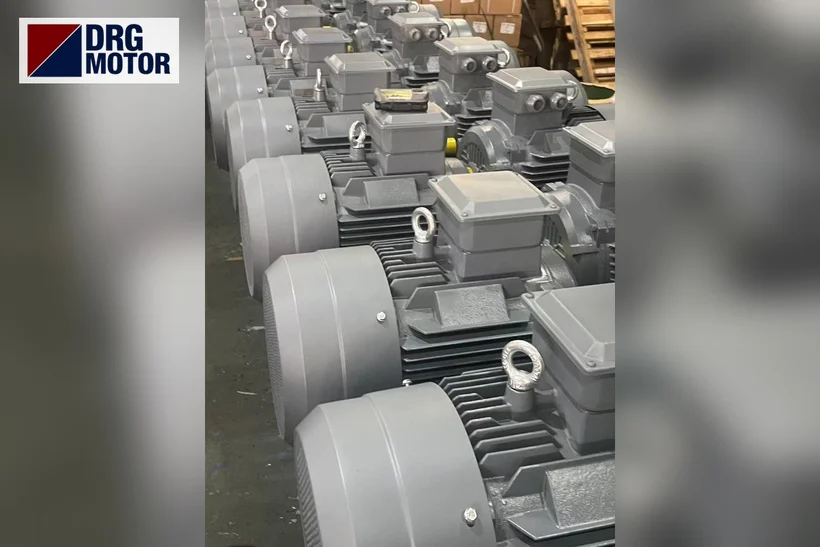
Which Feed Mill Machine Uses a 30 kW Motor, and at What Speed?
In feed plants, 30 kW is most often found on three machines, and each calls for a different pole number:
Hammer mill
Because hammer tip speed sets the grinding fineness, the rotor is usually coupled directly to the motor and the 3000 rpm class is used. The DRG-200L1-2 runs at a rated 2960 rpm with a rated torque of 96.8 Nm. The mill rotor is heavy, so run-up takes longer; plan the overload trip class and starting current accordingly.
Pellet press and mixer
The pellet die and the mixer need high torque at low speed, with a belt drive or gearbox in between. The 1500 rpm DRG-200L-4 delivers 194.2 Nm rated torque, the 1000 rpm DRG-225M-6 292.3 Nm. The 6-pole model comes in a larger frame (225M, shaft 60×140 mm); if your base frame was drilled for 200L, the foot holes will not match.
Choosing 40 HP for Large Fans and Extractors
On drying, cooling and dust extraction fans, the motor speed must equal the fan's design speed. Under the fan laws, airflow changes in proportion to speed and power with the cube of speed. If you drive a fan designed for 1500 rpm with a 1000 rpm motor, airflow drops to about 0.66 times and absorbed power to 0.29 times: the fan runs but does not deliver the required air. Conversely, connecting a 1000 rpm fan to a 1500 rpm motor overloads the motor. Because the fan wheel is heavy with a high moment of inertia, run-up at 30 kW can take several seconds, during which the motor draws 7.6–6.9 times its rated current. Our ventilation fan motor guide covers power and speed selection by fan type.
Cable Size for a 30 kW Motor: Step-by-Step Example
The calculation below is a worked example for the DRG-200L-4, assuming 400 V, PVC-insulated copper cable and an ambient of about 30°C. Installation method, the number of cables in the same tray and the ambient temperature reduce current-carrying capacity; the final size must be set in the project by a qualified electrician.
- Design current: 53.8 A × 1.25 = 67.2 A.
- Current-carrying capacity: the first size that covers 67.2 A is 16 mm² (table value 80 A). The result is the same at 380 V: 56.6 × 1.25 = 70.8 A.
- Voltage drop: ΔU = √3 × I × (L/1000) × R × cos φ. With 16 mm² (R = 1.15 Ω/km) the 3% limit on the supply run is reached at about 130 m; with 25 mm² this distance is 206 m and with 35 mm² 286 m.
| Cable length | 16 mm² | 25 mm² | 35 mm² |
|---|---|---|---|
| 40 m | 0.92% | 0.58% | 0.42% |
| 80 m | 1.84% | 1.17% | 0.84% |
| 120 m | 2.76% | 1.75% | 1.26% |
| 160 m | 3.69% | 2.33% | 1.68% |
The table shows why, on long runs from the main panel to the mill room, cable size is set by distance rather than current: at 160 m, 16 mm² exceeds 3% and you must move up to 25 mm². To calculate with your own values, use the motor cable size calculator; our cable sizing article for 37 and 45 kW gives the results for the next rating up.
Starting Current, Star-Delta and the Terminal Box
With direct-on-line starting, the 1500 rpm model's starting current is about 393 A (53.8 A × 7.3); 396 A for the 2-pole and 388 A for the 6-pole. Although brief, this current affects the fuse curve and the transformer voltage dip; most plants start 30 kW motors in star-delta, which cuts starting current to roughly one third. The motors are wound for 400/690 V (Δ/Y): on a 400 V network they run in delta, which means they are suitable for star-delta starting.
In star-delta, two separate 3-core cables run to the motor, and each carries the phase current, which is the line current divided by √3: 53.8 / √3 ≈ 31.1 A. With the 1.25 factor this is 38.8 A; in terms of capacity 6 mm² (43 A) looks sufficient, but voltage drop grows quickly at this size, so always check the distance. All three models have a 2 × M50×1.5 cable entry; with two glands already provided, no extra drilling is needed for a star-delta connection. You can calculate contactor and overload currents with the star-delta starting tool.
30 kW Checklist Before Pulling Cable
- Read the current from the 380 V or 400 V line of the motor nameplate; the table spans 54.9–59.1 A.
- Measure the actual cable route from panel to motor in metres; an estimated distance misleads the voltage drop result.
- Define where the cable will run (duct, tray, underground) and how many cables run next to it.
- Choose the starting method in advance: one cable for direct-on-line, two cables for star-delta.
- Prepare cable glands that fit the 2 × M50×1.5 entry on the terminal box.
- Set the overload relay to the nameplate current; check the trip class on long-start mills and fans.
- At first start, measure all three phase currents with a clamp meter and compare them with the nameplate.
Which Technical Features Determine the Price of a 40 HP Motor?
At 30 kW the main factor is the pole number: the 6-pole model is built in the next frame up (225M), with a larger shaft and bearing (6313-C3). Beyond that, mounting (foot B3, flange B5 or both, B35), protection class and special shaft/flange requests change the price. At this rating all models have cast iron frames. You can see current prices on each model's product page and on the main page of our online store.
Motors in This Rating (40 HP / 30 kW)
- DRG-200L1-2 – 30 kW – 2960 rpm – 200L cast iron
- DRG-200L-4 – 30 kW – 1475 rpm – 200L cast iron
- DRG-225M-6 – 30 kW – 980 rpm – 225M cast iron
Click to see current prices and order these motors nowSEE PRICES →
Frequently Asked Questions
How many amps does a 30 kW motor draw?
At 400 V the 2-pole draws 52.1 A, the 4-pole 53.8 A and the 6-pole 56.2 A. On a 380 V network the values are 54.9, 56.6 and 59.1 A.
What cable size for a 40 HP motor?
In the worked example 16 mm² copper is sufficient on a short run; for the 1500 rpm model at 400 V, runs longer than about 130 m move to 25 mm² because of voltage drop. The result changes with installation conditions.
Can a 30 kW motor be started direct-on-line?
Technically yes, but the starting current rises to about 388–396 A. If transformer capacity is limited or other loads share the line, star-delta or a soft starter is preferred.
How many kW is a 40 HP motor?
On the market a 40 HP motor is sold as a 30 kW motor (1 HP ≈ 0.7457 kW; 40 HP ≈ 29.8 kW). Nameplates state the power in kW.
For model selection or your cable calculation, reach us at +90 (542) 666 11 11 or [email protected], or use our contact page. For motors in every rating and speed, visit Buy Electric Motors Online.