English
 Le français
 Türkçe




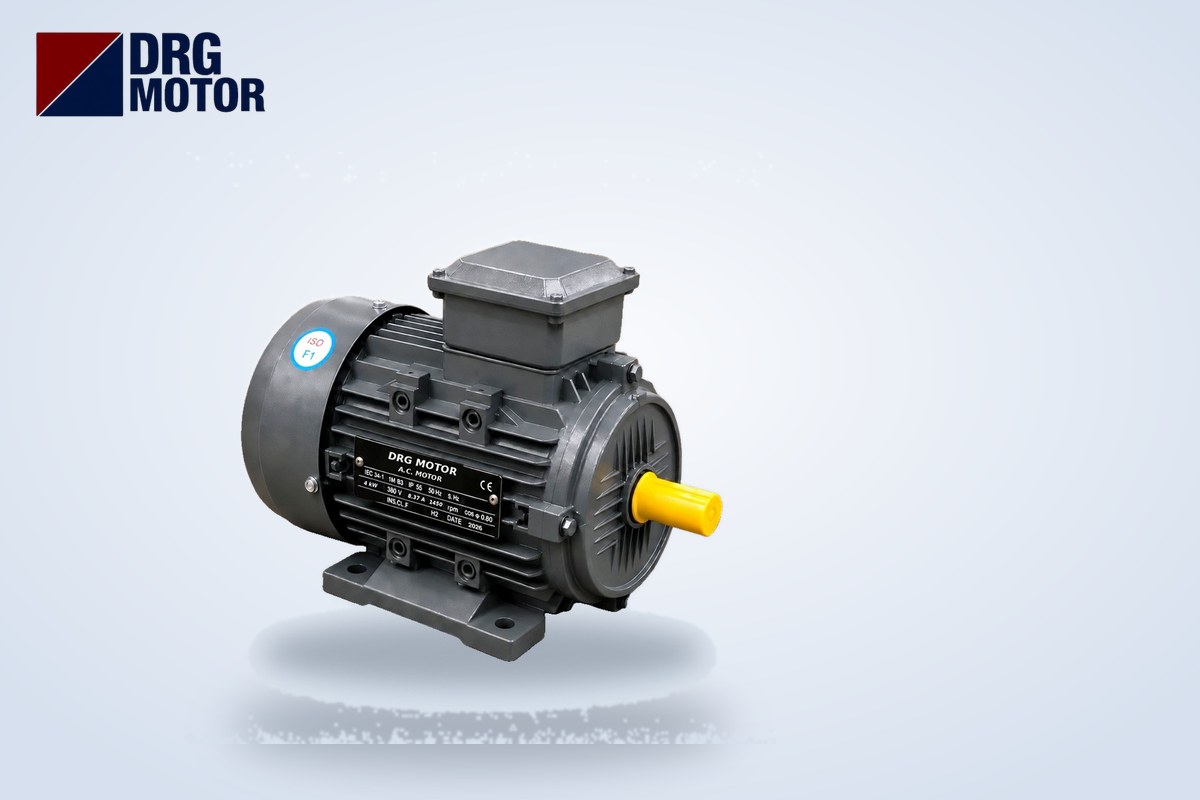

A burnt three-phase motor is confirmed by measurement: with the power cut and the terminal links removed, the resistance of the three phase windings (U1-U2, V1-V2, W1-W2) is measured, and the three values should be close to each other; then the insulation between each phase and the frame is measured with a megger. If one winding shows a clearly lower or infinite resistance, if there is continuity between windings or leakage to the frame, the motor is burnt. A burnt-varnish smell, an overload relay that keeps tripping and a motor that hums without turning are signs that you need to take these measurements; on their own they are not a diagnosis.
Judging by symptoms alone is misleading, because a motor that has not burnt can show the same signs: a motor missing one phase also hums, and a jammed pump also trips the overload. So the order is: first rule out the supply and the mechanical side, then measure the winding. If the motor really is burnt, you can find a new motor with the same nameplate ratings by power, speed and frame on our Buy Electric Motors Online page.
This article answers the question "is the motor burnt?"; we cover in detail why motors burn out in our article Why Do Electric Motors Burn Out? Causes.
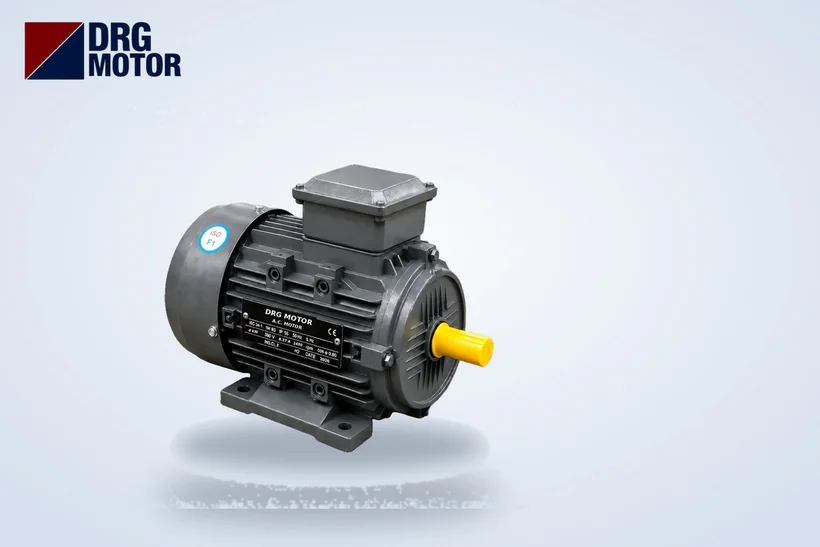
Signs a Burnt Motor Gives on Site
If you see any of the signs below, do not keep trying to restart the motor; every attempt enlarges the damage in a burnt winding and can harm the panel equipment.
- Smell and smoke: when winding varnish burns it gives off a sharp, characteristic smell. If the smell comes from inside when you open the terminal box, and the terminal leads are also blackened or melted, it is a strong sign.
- Overload or breaker trips immediately: if the protection opens as the motor starts or within a few seconds, there may be a short circuit in the winding. A residual current device tripping suggests the winding is leaking to the frame.
- Humming, not turning or turning with difficulty: if the motor makes noise without turning or starts very slowly, a winding fault is possible, but exactly the same symptom appears when a phase is lost.
- Frame hotter than normal: a motor running clearly hotter than before at the same load may indicate an early-stage turn-to-turn fault.
- Feeling electricity on the frame: if the earthing is weak, winding-to-frame leakage can be felt on contact. In this case do not touch the motor and cut the power immediately.
Before Measuring: Motor, Supply or Machine?
Before measuring the winding, two simple checks prevent an unnecessary motor replacement:
- Supply: an authorised electrician measures the voltage between the three phases at the terminal box. If the three values are not close or a phase is missing, the problem is in the fuse, contactor contact or cable; the motor may be healthy.
- Mechanical: with the power off, turn the shaft by hand (on a large motor, with the coupling disconnected). If the shaft is stiff, the bearing grinds or the machine is locked, it is the mechanical load that trips the overload.
If both checks are clear, it is time to measure the winding.
Winding Resistance Measurement Step by Step
Measurements must be carried out by an authorised, trained electrician following lockout-tagout rules.
- Cut and lock out the power: switch off the isolator, lock it and hang a tag. Confirm with a meter that there is no voltage at the terminals.
- Disconnect the motor cable: if the motor runs on a frequency inverter or soft starter, disconnect the motor cable from the device; especially during insulation testing, the test voltage can damage the electronics.
- Remove the links: take out the star or delta links and note or photograph their position. Resistance measured with the links fitted belongs to a combination of windings rather than a single winding, and the result cannot be interpreted.
- Measure each phase separately: measure the resistance between U1-U2, V1-V2 and W1-W2. Winding resistances are small values; on large motors the low-resistance range of an ohmmeter may not be enough, and a low-resistance meter (micro-ohmmeter) gives a more accurate result. Zero out the resistance of the test leads.
- Compare the three values: in a healthy motor the resistances of the three windings are very close to each other. The absolute value varies with the motor's power and winding; what matters here is not the magnitude but the balance between the three phases. Take the measurements while the motor is at one temperature; a hot winding reads higher than a cold one.
- Check between windings: with the links removed there must be no continuity between U1-V1, V1-W1 and W1-U1.
Winding-to-Frame Insulation Measurement (Megger)
Resistance measurement shows faults within the winding itself, while insulation measurement shows leakage from the winding to the frame or to another phase. An ordinary multimeter is not enough to detect this, because it measures at low voltage; an insulation tester (megger) applies a DC test voltage. On low-voltage motors in the 400 V class, the 500 V DC range is generally used; follow the instrument's manual.
- Measure each phase separately against the frame (a clean, unpainted point or the earthing screw).
- With the links removed, also measure between phases.
- Take and record the value once the reading has stabilised, not at the start of the test; comparing with previous measurements of the same motor is far more meaningful than a single reading.
- After the test, discharge the winding by briefly connecting it to the frame; the winding can hold the test voltage for a while.
Which value is acceptable is interpreted according to the motor's voltage, temperature and maintenance history; we explain the test method and how to evaluate the reading separately in our article Electric Motor Insulation Resistance (Megger) Test.
Checking for Unbalanced Current on a Running Motor
If the measurements are normal but doubt remains, measure the current of the three phases with a clamp meter while the motor runs under load. The three currents should be close to each other and should not exceed the nameplate current under load. The table below gives the nameplate currents of commonly used 4-pole cast-iron models; compare the value you measure with the In on your motor's nameplate.
| Model | Power | Speed | Rated voltage | Connection at 380 V | In 380 V | In 400 V | Is/In | Bearing |
|---|---|---|---|---|---|---|---|---|
| DRG-100L2-4 | 3 kW | 1450 rpm | 230/400 V (Δ/Y) | Y (star) | 6.34 A | 6.02 A | 7.6 | 6206-ZZ-C3 |
| DRG-112M-4 | 4 kW | 1450 rpm | 400/690 V (Δ/Y) | Δ (delta) | 8.37 A | 7.95 A | 7.8 | 6206-ZZ-C3 |
| DRG-132M-4 | 7.5 kW | 1460 rpm | 400/690 V (Δ/Y) | Δ (delta) | 15.0 A | 14.3 A | 7.5 | 6208-ZZ-C3 |
| DRG-160M-4 | 11 kW | 1465 rpm | 400/690 V (Δ/Y) | Δ (delta) | 21.5 A | 20.4 A | 7.7 | 6309-C3 |
| DRG-160L-4 | 15 kW | 1465 rpm | 400/690 V (Δ/Y) | Δ (delta) | 28.8 A | 27.3 A | 7.8 | 6309-C3 |
A current rise at start-up is normal: for example, for the DRG-112M-4 Is/In = 7.8, so with direct-on-line starting the starting current is about 7.8 × 8.37 ≈ 65.3 A. Do not mistake this for the running current and conclude the motor is burnt; measure imbalance after the motor has reached full speed. If one phase is persistently high, repeat the measurement while shifting the cables in turn at the motor terminals: if the high current stays with the same motor winding the problem is in the motor; if it moves with the supply phase, it is in the supply. You can find the rated currents of other power ratings on our motor current chart page.
Table for Interpreting Measurement Results
| Measurement result | Likely meaning | Next step |
|---|---|---|
| All three winding resistances close to each other, winding-to-frame insulation high | Winding most likely healthy | Check the supply, contactor, overload setting and mechanical load |
| One winding resistance clearly lower than the other two | Turn-to-turn short circuit in that phase | Treat the motor as burnt; do not run it |
| Meter shows infinity (open circuit) on one winding | Winding broken or internal lead burnt | Check the terminal lead and connection; if the fault is inside, the motor is defective |
| Continuity between windings (with links removed) | Phase-to-phase short circuit | Treat the motor as burnt |
| One or more phases show very low or zero insulation to frame | Winding leaking to frame | Do not energise; risk of leakage current and electric shock |
| Insulation low but windings balanced, motor stood in a damp place | Possibly a winding that has absorbed moisture | Measure again after drying; if the value does not recover, treat it as burnt |
| Measurements normal but phase currents unbalanced while running | Supply imbalance or an early-stage winding problem | Rotate the phases together with the cables and measure again: find out whether the imbalance follows the motor or the supply |
Rewind or Buy a New Motor? Decision Criteria
Once it is certain the motor is burnt, look at these questions to decide:
- Mechanical condition: if the shaft is bent, the bearing seat is worn, the frame or feet are cracked, or the stator laminations show burn marks, rewinding may not solve the problem.
- Motor history: a motor that has been rewound before and burnt again may still have an unresolved root cause; fitting the same motor back in the same place can lead to the same result.
- Downtime: how long the machine can stand still is often decisive; compare the time needed for rewinding with the lead time of a new motor.
- Cost comparison: put the rewinding quote side by side with the price of a new motor of the same power, speed and frame. At small power ratings the price of a new motor often makes the decision easier.
- Compatibility: when choosing a new motor, the nameplate kW, speed, frame (IEC), shaft D×E, mounting (B3/B5/B35) and connection must match. In our store, motors of 3 kW and below are rated 230/400 V (star at 380 V) and motors of 4 kW and above 400/690 V (delta at 380 V); check the old motor's terminal connection accordingly.
With the new motor, make sure the overload relay is set to the new nameplate current; you can check the right overload, fuse and contactor range with our motor overload, fuse and contactor selection tool.
Burnt Motor Checklist
- I have stopped trying to restart the motor, cut the power and locked it out.
- The three phase voltages were checked at the terminal box.
- The shaft was turned by hand; there is no mechanical jamming.
- The links were removed and the U1-U2, V1-V2, W1-W2 resistances measured and compared.
- Each phase was measured against the frame and the phases against each other with a megger, and the winding was discharged.
- In a system with a drive, the motor cable was disconnected from the device before measuring.
- A photo of the burnt winding and the measured values were recorded.
- The kW, speed, frame, shaft and connection of the new motor were compared with the old one.
Replacing a Burnt Motor: Commonly Used 4-Pole Models
- DRG-100L2-4 – 3 kW – 1500 rpm – 100L cast iron frame
- DRG-112M-4 – 4 kW – 1500 rpm – 112M cast iron frame
- DRG-132M-4 – 7.5 kW – 1500 rpm – 132M cast iron frame
- DRG-160M-4 – 11 kW – 1500 rpm – 160M cast iron frame
- DRG-160L-4 – 15 kW – 1500 rpm – 160L cast iron frame
Click to see current prices and order these motors nowSEE PRICES →
Frequently Asked Questions
Can you tell a motor is burnt with a multimeter?
Partly. A multimeter can show a broken winding and a clear resistance difference between the three phases, but it does not reliably show that the winding is leaking to the frame; for that you need a megger that applies a DC test voltage.
Will a burnt motor run?
Depending on the size of the fault, it may turn for a while, but it draws unbalanced current, heats up and trips the protection. If there is leakage to the frame there is a risk of electric shock; a motor found to be burnt should not be kept in service.
Should the three winding resistances of a three-phase motor be the same?
They are not expected to be exactly identical, but they should be very close to each other. If one value clearly differs from the other two, there is a turn-to-turn short circuit or a break in that phase.
The overload trips; is the motor burnt?
Not always. An incorrectly set overload relay, a missing phase or a jammed machine also trip the overload. First check that the overload setting matches the nameplate current, then the supply and the mechanical load; only then measure the winding.
If the measurements show that the motor is burnt, you can choose the equivalent with the same power, speed and frame from the 120 models in our online store.
Send us your measurement results or a photo of the motor nameplate and we will work out the right model together: phone +90 (542) 666 11 11, e-mail [email protected], contact page drgmotor.com/en/contact.